What’s The Beef Between Cardano And XRP? Here’s Why The Communities Are Clashing

bitcoinistPublished on 2026-01-22Last updated on 2026-01-22

Abstract

A public clash has emerged between the Cardano and XRP communities, stemming from a disagreement over US crypto regulation, specifically the proposed Digital Asset Market Clarity Act. The conflict began when Cardano founder Charles Hoskinson criticized Ripple CEO Brad Garlinghouse for his support of the bill, despite its perceived shortcomings. Hoskinson questioned the wisdom of granting regulatory power to institutions that have previously targeted crypto businesses. This drew pushback from the XRP community, which questioned his public attack instead of constructive engagement. The Clarity Act aims to define whether digital assets are securities or commodities and assign regulatory oversight. While XRP supporters see engagement as a necessary step forward, others like Hoskinson remain skeptical. The bill's future is further complicated by reports that the White House may withdraw support if Coinbase does not return to negotiations on certain provisions.

A disagreement over US crypto regulation has spilled into public view, drawing the Cardano and XRP communities into an unexpected clash. The reason is the Digital Asset Market Clarity Act, a proposed bill intended to define how digital assets are regulated in the United States.

The disagreement started after Charles Hoskinson openly criticized Brad Garlinghouse over his stance on the legislation, which led to pushback from prominent XRP community members. This comes just after reports have suggested growing frustration among lawmakers toward Coinbase over disagreements tied to the Clarity Act.

Hoskinson’s Criticism And Garlinghouse’s Position In Full Context

The tension came to the surface during a livestream in January 2026, where Hoskinson criticized Garlinghouse’s apparent support for advancing the Clarity Act despite its shortcomings. In the video, Hoskinson expressed skepticism about the bill’s direction and origins, remarking sarcastically, “And what we got is Elizabeth Warren wrote the bill, that’s leadership we can believe in.”

He went on to challenge the idea that passing an imperfect bill is preferable to continued uncertainty, pointing directly to the position of Ripple CEO Brad Garlinghouse. Hoskinson questioned whether handing regulatory power to the same institutions that previously sued, subpoenaed, or shut down crypto businesses could truly be considered progress.

Hoskinson’s remarks did not go unanswered. Vet, a notable XRP community member and XRP Ledger dUNL validator, reposted the video on X and criticized Hoskinson’s approach. Vet questioned why Hoskinson chose to publicly attack Garlinghouse instead of contributing constructively to the legislative process, writing, “How about focusing on helping shape the Clarity Bill instead of crashing out on Brad for no reason, Charles?”

Why The Clarity Act Matters To Both Communities

The Clarity Act is one of a few bills introduced during the current crypto-positive Trump administration that aims to bring structure to a regulatory environment that has been uncertain for years. The Clarity Act, in particular, was introduced to bring clarity around whether digital assets should be treated as securities or commodities and which agencies should oversee them.

The bill represents a necessary step toward legal certainty and institutional participation. Supporters of XRP tend to see engagement with lawmakers as a practical route forward after years of legal battles. However, others like Charles Hoskinson are of a different notion.

The Clarity Act is not without its issues. Sources close to the White House say the administration is considering pulling its support for the Clarity Act if Coinbase does not return to negotiations over stablecoin yield provisions. However, Coinbase CEO Brian Armstrong noted that Coinbase is actively working to find common ground with banks on yield-related issues.

A similar Act, called the Guiding and Establishing National Innovation for US Stablecoins Act, or the “GENIUS Act,” was signed into law in 2025 by President Donald Trump as part of efforts to create better regulatory clarity towards stablecoins in the United States.

Interestingly, Ripple CEO Brad Garlinghouse was part of the crypto industry leaders that expressed support for the Genius Act after it was signed into law.

XRP trading at $1.90 on the 1D chart | Source: XRPUSDT on Tradingview.com

Related Questions

QWhat is the primary reason for the clash between the Cardano and XRP communities?

AThe primary reason is a disagreement over the Digital Asset Market Clarity Act, a proposed US crypto regulation bill, which led to public criticism from Cardano's Charles Hoskinson directed at Ripple's Brad Garlinghouse.

QWhat specific criticism did Charles Hoskinson level against Brad Garlinghouse?

AHoskinson criticized Garlinghouse for supporting the advancement of the Clarity Act despite its shortcomings, questioning the wisdom of giving regulatory power to institutions that have previously taken aggressive actions against crypto businesses.

QHow did a prominent XRP community member respond to Hoskinson's comments?

AA notable XRP community member and validator named Vet reposted the video on X and criticized Hoskinson for publicly attacking Garlinghouse instead of constructively helping to shape the bill.

QWhat is the main goal of the Digital Asset Market Clarity Act?

AThe main goal of the Clarity Act is to bring regulatory clarity by defining whether digital assets should be treated as securities or commodities and determining which US agencies should oversee them.

QWhich other significant crypto regulation act was recently signed into law, and who supported it?

AThe GENIUS Act (Guiding and Establishing National Innovation for US Stablecoins Act) was signed into law by President Donald Trump in 2025. Ripple CEO Brad Garlinghouse was among the crypto industry leaders who expressed support for it.

Related Reads

Has Hook Summer Truly Arrived? sato, Lo0p, FLOOD Ignite the New Uniswap v4 Narrative

With the broader market showing signs of recovery, a new wave of interest has emerged around Ethereum-based meme coins. Following ASTEROID, tokens like sato, sat1, Lo0p, and FLOOD, built upon the Uniswap v4 Hook protocol, are capturing market attention. Their market capitalizations range from millions to tens of millions of dollars, injecting much-needed focused liquidity into a market lacking narratives. This article explores whether this trend signifies an incoming "Hook Summer" and its potential impact on UNI's price. Hooks are essentially plug-in smart contracts for Uniswap v4 liquidity pools, allowing developers to inject custom logic at key points in a pool's lifecycle (like initialization, adding/removing liquidity, swaps). This transforms the AMM into programmable building blocks. Key highlighted projects include: * **sato**: Peaked over $38M market cap. It utilizes a v4 curve for minting/burning; buying locks ETH as reserve to mint new tokens, while selling redeems ETH from the reserve and burns tokens. * **sat1**: Market cap briefly exceeded $10M, promoted as an "optimized sato," but later declined significantly. * **Lo0p**: Reached nearly $6.6M. It's a lending AMM protocol where buying LO0P tokens locks them as collateral, allowing users to borrow ETH from the pool reserve at 40% LTV, aiming to improve capital efficiency for idle ETH in LPs. * **FLOOD**: Peaked near $6M. Its mechanism directs asset reserves from buys into Aave v3 to generate yield, with fees and interest retained in the pool to potentially influence the token's price long-term. In the long term, the development of the Hook ecosystem can attract users and liquidity to Uniswap v4, benefiting UNI's fundamentals—especially combined with the recent activation of the protocol fee switch, where a portion of fees is used to burn UNI. However, in the short term, these Hook-based tokens are unlikely to directly drive significant UNI price appreciation. Their impact is moderated by factors like token sustainability, price volatility, and broader market and regulatory conditions. Currently, Uniswap v4's TVL ($595M) still trails behind v2 and v3, indicating adoption and growth will take time. The article concludes that while the Hook ecosystem provides long-term "nourishment" for UNI, its short-term role is more of a "catalyst" than a "booster." Readers are cautioned that these are early-stage experimental tokens and may carry unknown risks.

Odaily星球日报12m ago

Has Hook Summer Truly Arrived? sato, Lo0p, FLOOD Ignite the New Uniswap v4 Narrative

Odaily星球日报12m ago

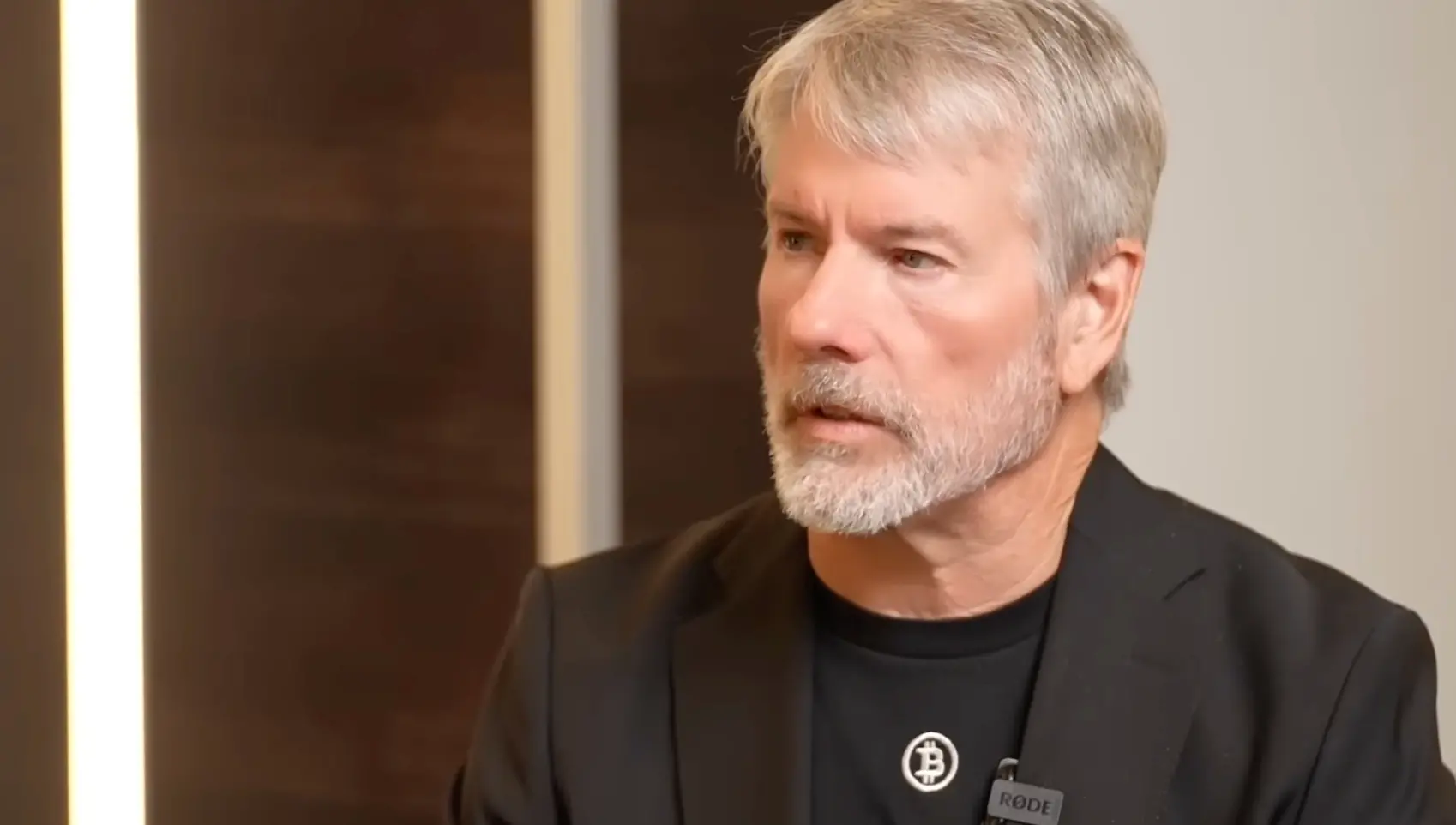
Interview with Michael Saylor: I Did Say I Would Sell Bitcoin, But Never a Net Sale

Interview with Michael Saylor: I Said We'd Sell Bitcoin, But Never Be a Net Seller In a recent podcast, MicroStrategy Executive Chairman Michael Saylor clarified the company's stance on potentially selling Bitcoin. Following MicroStrategy's earnings call statement about being prepared to sell BTC to fund dividends for its STRC (Strategic) credit product, Saylor emphasized the distinction between selling and being a "net seller." Saylor explained the core business model: MicroStrategy sells credit instruments like STRC and uses the proceeds to buy Bitcoin, which is viewed as "digital capital" expected to appreciate around 30-40% annually. A portion of these capital gains can then be used to pay the dividends on the credit products. He stressed that even if the company sells some Bitcoin for dividends, it simultaneously buys much more with new credit issuance. For example, after raising $3.2 billion from STRC sales in April, the dividend obligation was only $80-90 million, making the company a net buyer. The clarification aims to counter market narratives questioning the value of Bitcoin on MicroStrategy's balance sheet if it were never sold, and to dismiss claims of a "Ponzi scheme." Saylor reiterated his personal philosophy for investors: "Don't be a net seller of bitcoin" and ensure your Bitcoin holdings increase each year. Saylor also discussed Bitcoin's role as the foundation for "digital credit," noting that STRC has become the largest and most liquid preferred stock issue in the U.S., offering high risk-adjusted returns (Sharpe ratio). He highlighted Bitcoin's deep liquidity, stating that even large purchases by MicroStrategy do not move the market significantly, which is driven by macro factors, geopolitical tensions, and capital flows from ETFs and credit products. Finally, Saylor reflected on his early inspiration from sci-fi books, which motivated his path to MIT, and maintained his fundamental thesis on Bitcoin remains unchanged: it is superior digital capital enabling superior digital credit.

链捕手16m ago

Interview with Michael Saylor: I Did Say I Would Sell Bitcoin, But Never a Net Sale

链捕手16m ago

Beaten SK Hynix Employees in China: Year-end Bonus Less Than 5% of Korean Staff's

"SK Hynix Chinese Staff Hit Hard: Bonuses Less Than 5% of Korean Counterparts" Driven by the AI boom, South Korea's SK Hynix is experiencing record performance, with media reports predicting massive year-end bonuses for its employees, making them highly desirable in the matchmaking market. However, this prosperity starkly contrasts with the situation for the company's Chinese employees. According to reports, SK Hynix operates under a rule allocating 10% of operating profit for employee bonuses. While projections suggest Korean employees could receive bonuses reaching millions of RMB, a Chinese employee with over a decade of technical experience revealed the disparity: "If they get 3 million, Chinese staff get less than 5% of that." After adjustments based on KPI ratings, this employee's highest bonus was slightly over 100,000 RMB. Bonuses are paid annually in Korea but semi-annually in China. During the industry downturn in 2023-2024, Chinese employees received no bonus at all. The gap extends beyond bonuses. Recruitment posts for SK Hynix's Chinese factories (in Wuxi, Dalian, Chongqing) show engineer monthly salaries ranging from 10,000 to 35,000 RMB, with a 13th-month salary promised. Chinese employees also receive standard benefits like annual leave but lack stock incentives, which are reportedly unavailable to them. Furthermore, management positions in China are predominantly held by Korean personnel, though industry observers note a gradual increase in local middle managers over time. SK Hynix has confirmed the 10% bonus rule but cautioned that specific future bonus amounts remain unpredictable. The company forecasts strong demand for HBM and other high-value enterprise products for the next 2-3 years, driven by AI infrastructure investment. This focus on business-to-business markets may continue to constrain supply for consumer products, potentially prolonging price increases for components like memory.

链捕手30m ago

Beaten SK Hynix Employees in China: Year-end Bonus Less Than 5% of Korean Staff's

链捕手30m ago

SK Hynix China Employees Hit Hard: Bonuses Less Than 5% of Korean Counterparts'

"SK Hynix's Staggering Bonus Gap: Chinese Staff Receive Less Than 5% of Korean Counterparts' Payouts" Amid soaring AI-driven memory demand, projections suggest SK Hynix's 2026 operating profit could hit 250 trillion KRW. Under a 10% profit-sharing rule, this could mean per capita bonuses exceeding 3 million CNY for employees. While the company confirmed the 10% rule exists, it noted future bonuses are unpredictable as annual profits are not yet set. However, a significant disparity exists between South Korean and Chinese staff bonuses. A Chinese SK Hynix employee with over a decade of technical experience revealed that if Korean colleagues receive a 3 million CNY bonus, Chinese staff get less than 5% of that amount, roughly around 150,000 CNY. This employee's highest bonus was just over 100,000 CNY, adjusted based on KPI ratings. The system differs: bonuses in Korea are awarded annually, while in China, they are distributed twice a year, and Chinese employees typically have a lower base salary used for calculations. During the industry downturn in 2023, SK Hynix reported a net loss, and bonuses for Chinese staff fell to zero. Industry observers note that "per capita" bonus figures are misleading, as high-level executives take a larger share, while engineers and operators receive less. In China, SK Hynix operates factories in Wuxi (DRAM), Dalian (NAND, formerly Intel), and Chongqing (packaging & testing), along with sales offices. Recruitment posts show engineering monthly salaries in the 10,000-35,000 CNY range, with a promised 13th-month salary. Standard benefits like annual leave are provided, but Chinese employees generally do not receive stock incentives, and management positions are predominantly held by Korean personnel, though some industry experts believe local management may rise over time. Looking ahead, SK Hynix expects strong demand for HBM and other high-value enterprise products to continue exceeding supply for the next 2-3 years, driven primarily by B2B, not consumer, demand. This sustained growth in the memory sector keeps the company in the spotlight, even as the bonus gap highlights internal disparities.

marsbit50m ago

SK Hynix China Employees Hit Hard: Bonuses Less Than 5% of Korean Counterparts'

marsbit50m ago

Trading

Spot
Futures

Hot Articles

Discussions

Welcome to the HTX Community. Here, you can stay informed about the latest platform developments and gain access to professional market insights. Users' opinions on the price of ADA (ADA) are presented below.

活动图片