Whale moves $16M into altcoins – Are DeFi tokens near a bottom?

ambcryptoPublished on 2026-03-24Last updated on 2026-03-24

Abstract

A whale withdrew $16.06 million from Binance on March 24, 2026, to acquire a basket of DeFi-related altcoins, signaling potential early positioning amid a prolonged market downturn. The purchases included $4.07M in ENA, $3.64M in AAVE, $2.37M in AVAX, $2.13M in UNI, $2.05M in ONDO, and $1.81M in PENDLE. Most of these tokens remain more than 80% below their 2025 highs, but some show tentative signs of stabilization or minor bullish momentum. While one whale’s action doesn’t confirm a market-wide reversal, it suggests strategic accumulation at perceived lows. If these assets hold their current structure and begin to recover, it could indicate an early rotation into DeFi tokens.

Altcoins are under pressure, but whales are beginning to circle back in.

Most tokens remain far below their 2025 highs, while many holders have endured four years of pain with almost nothing to show for it. However, this wallet did not chase strength. It targeted battered DeFi-linked names near the floor. So, what exactly did it buy?

Whale pulls $16M in altcoins from Binance

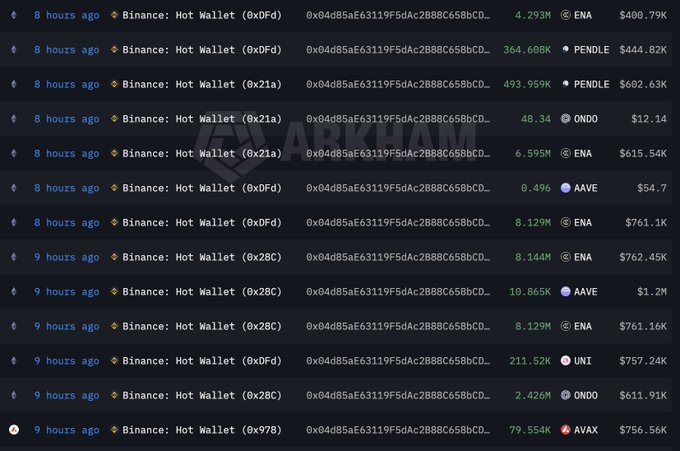
On the 24th of March 2026, whale 0x04d8 pulled $16.06 million from Binance.
Source: Lookonchain

The wallet loaded 43.49 million ENA valued at $4.07 million, 32,872 AAVE worth $3.64 million, 249,741 AVAX worth $2.37 million, 595,886 UNI worth $2.13 million, 8.07 million ONDO worth $2.05 million, and 1.49 million PENDLE valued at $1.81 million.

Was that random? No. The wallet leaned hard into DeFi-linked names. Therefore, this looked less like blind gambling and more like early positioning. Someone stepped into weakness while most of the market kept staring at broken charts and broken confidence.

Big bet lands on DeFi-linked names

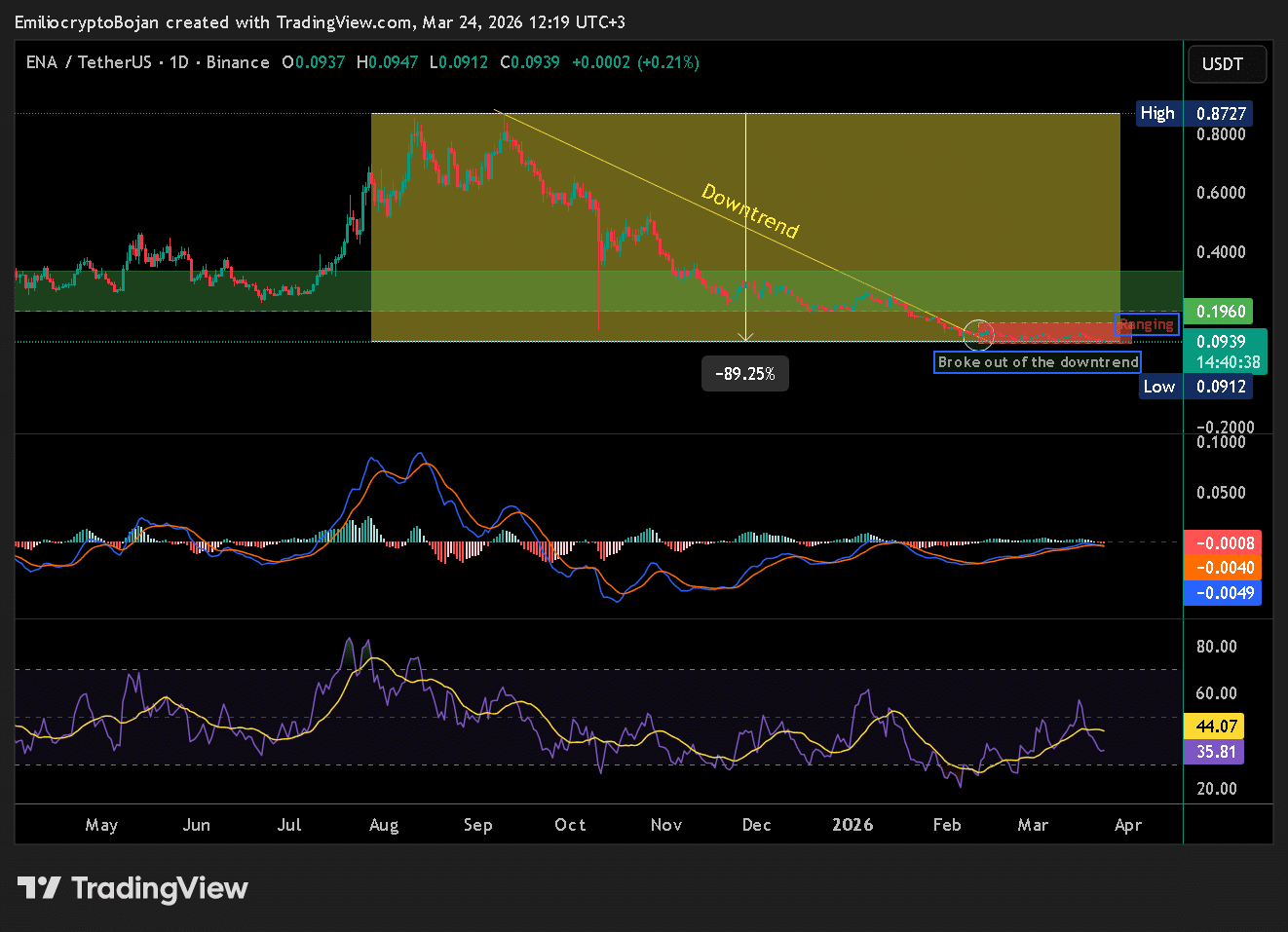
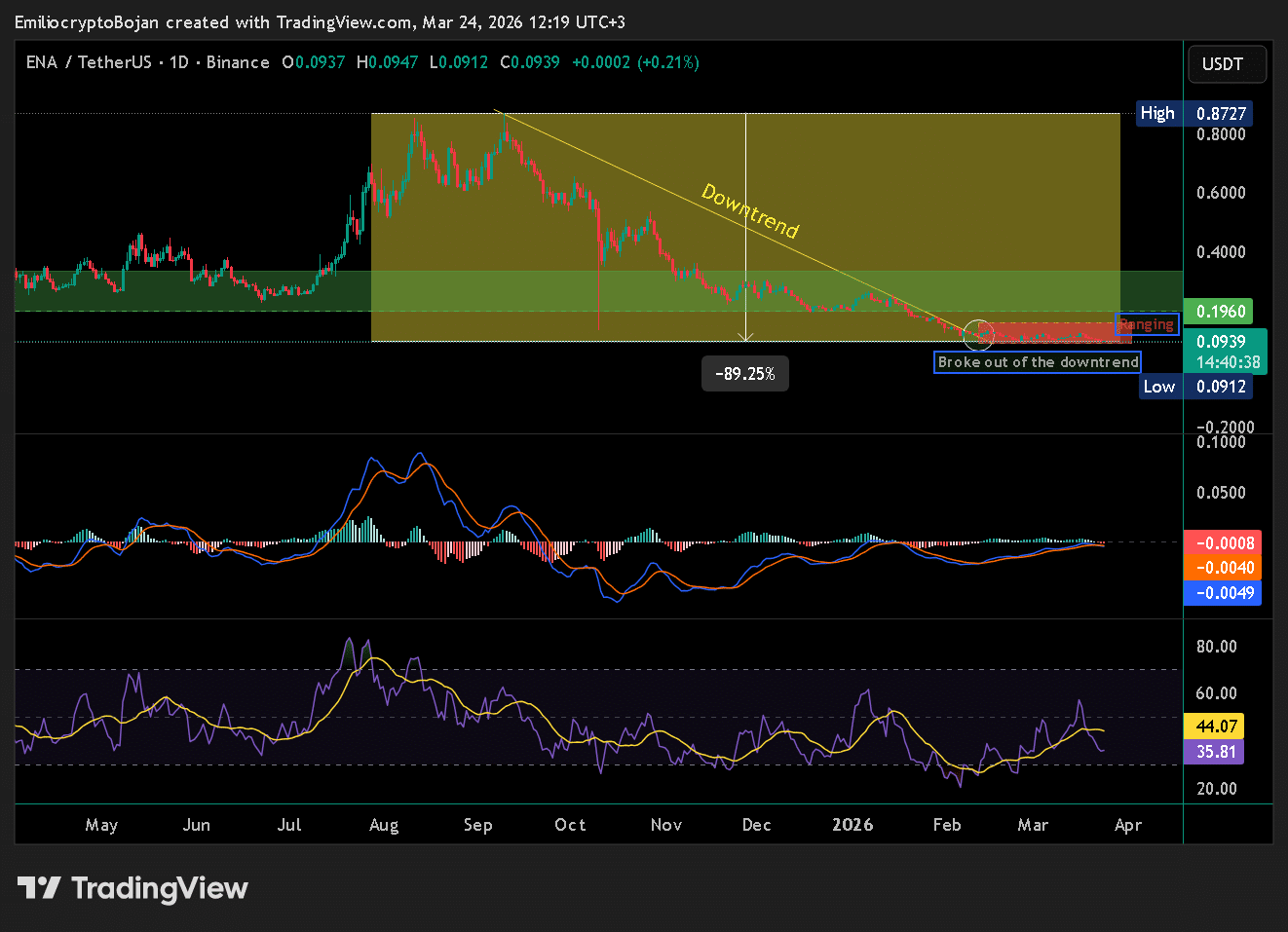
At press time, Ethena [ENA] had broken out of its downtrend after an 89% collapse from its 2025 high near $0.8727, then started ranging sideways near the lows.
Source: TradingView

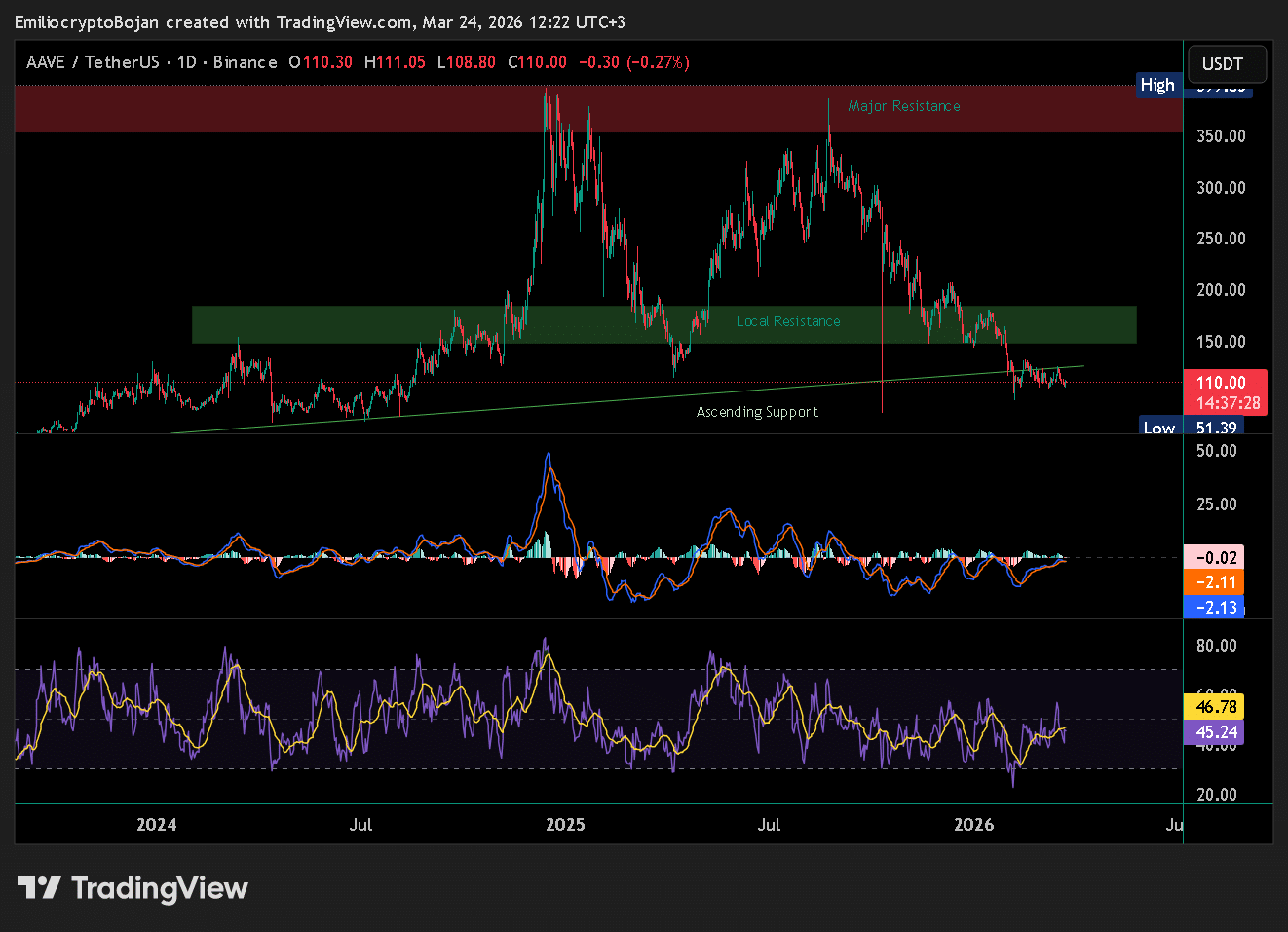
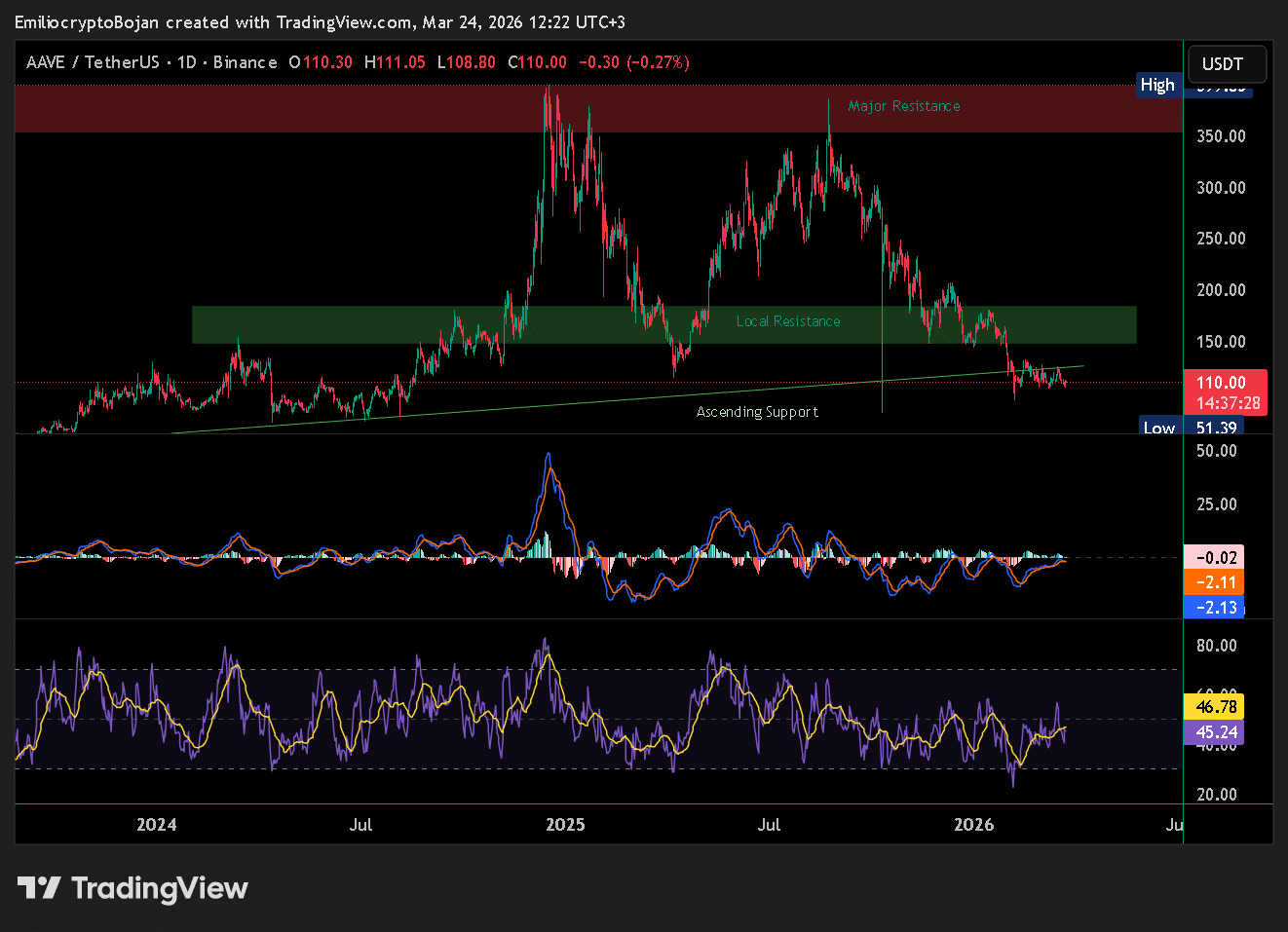
Aave [AAVE] showed signs of weakness. After peaking near 399 in 2024 and 387 later, it completed a double top, dropped hard, and even lost ascending support around 123.
Source: TradingView

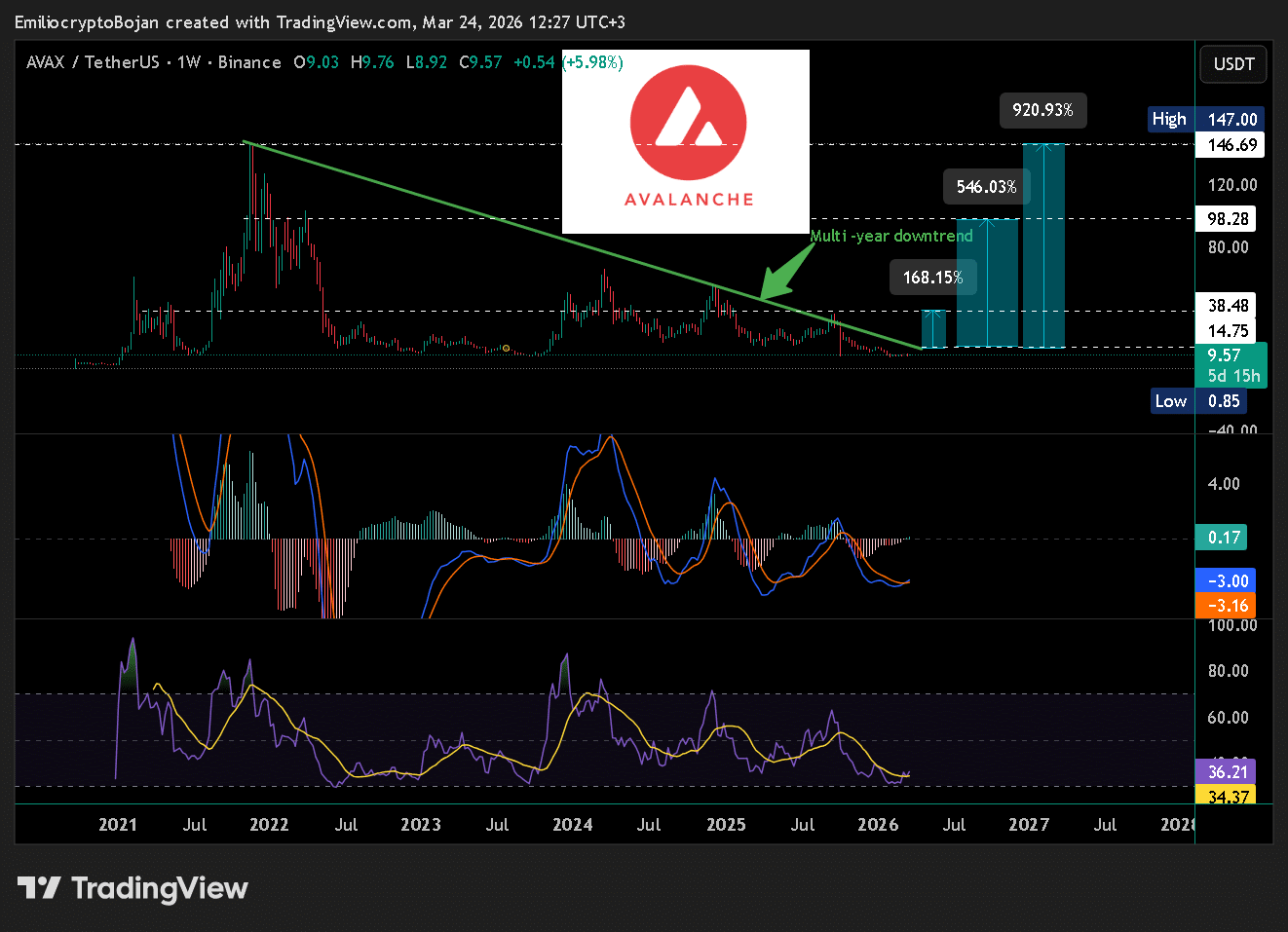
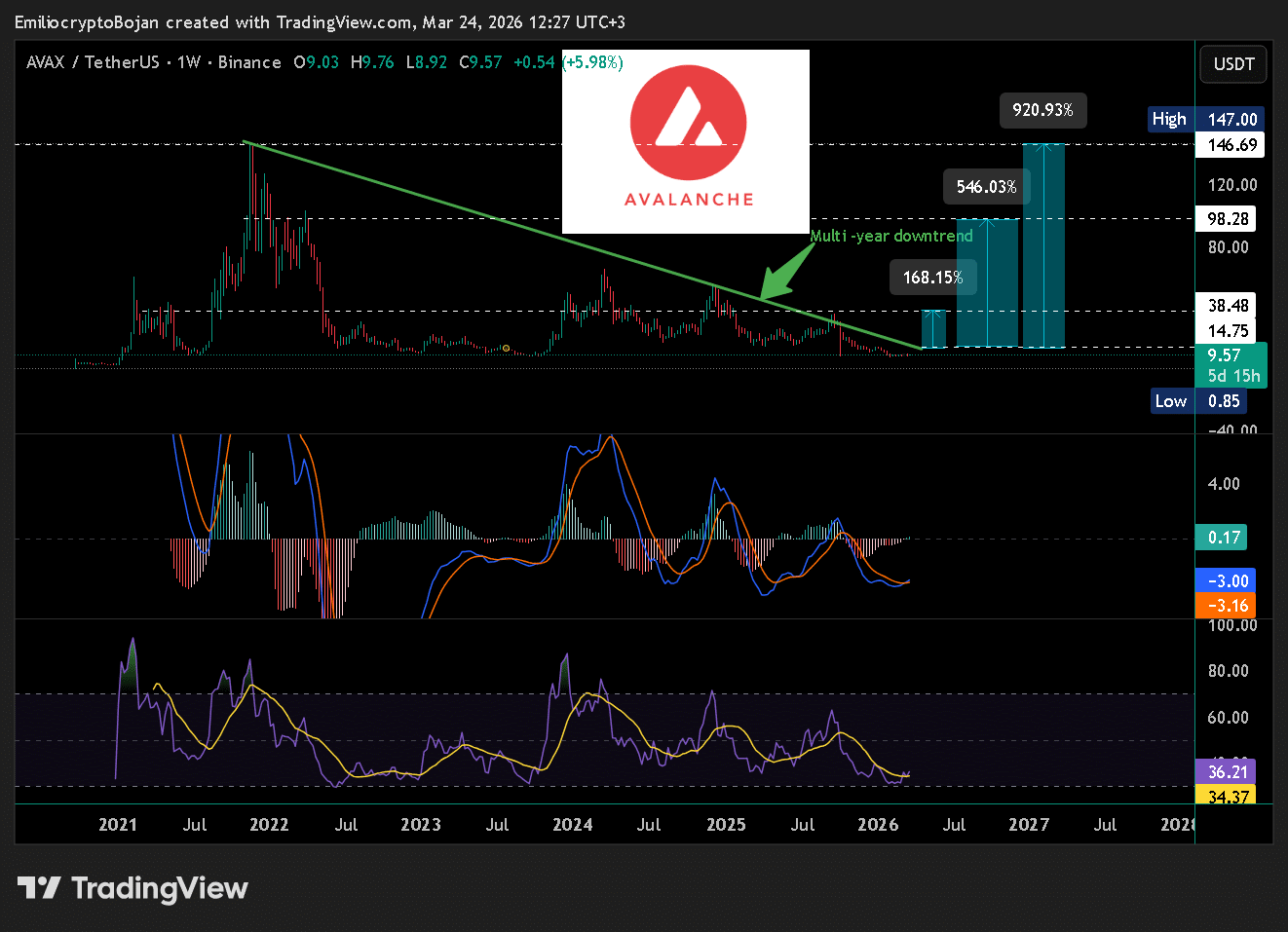
Avalanche [AVAX] looked more constructive. It had flashed a bullish MACD crossover and started pressing against a multiyear downtrend, with $14.75 and $38.48 as early targets if that line broke.
Source: TradingView

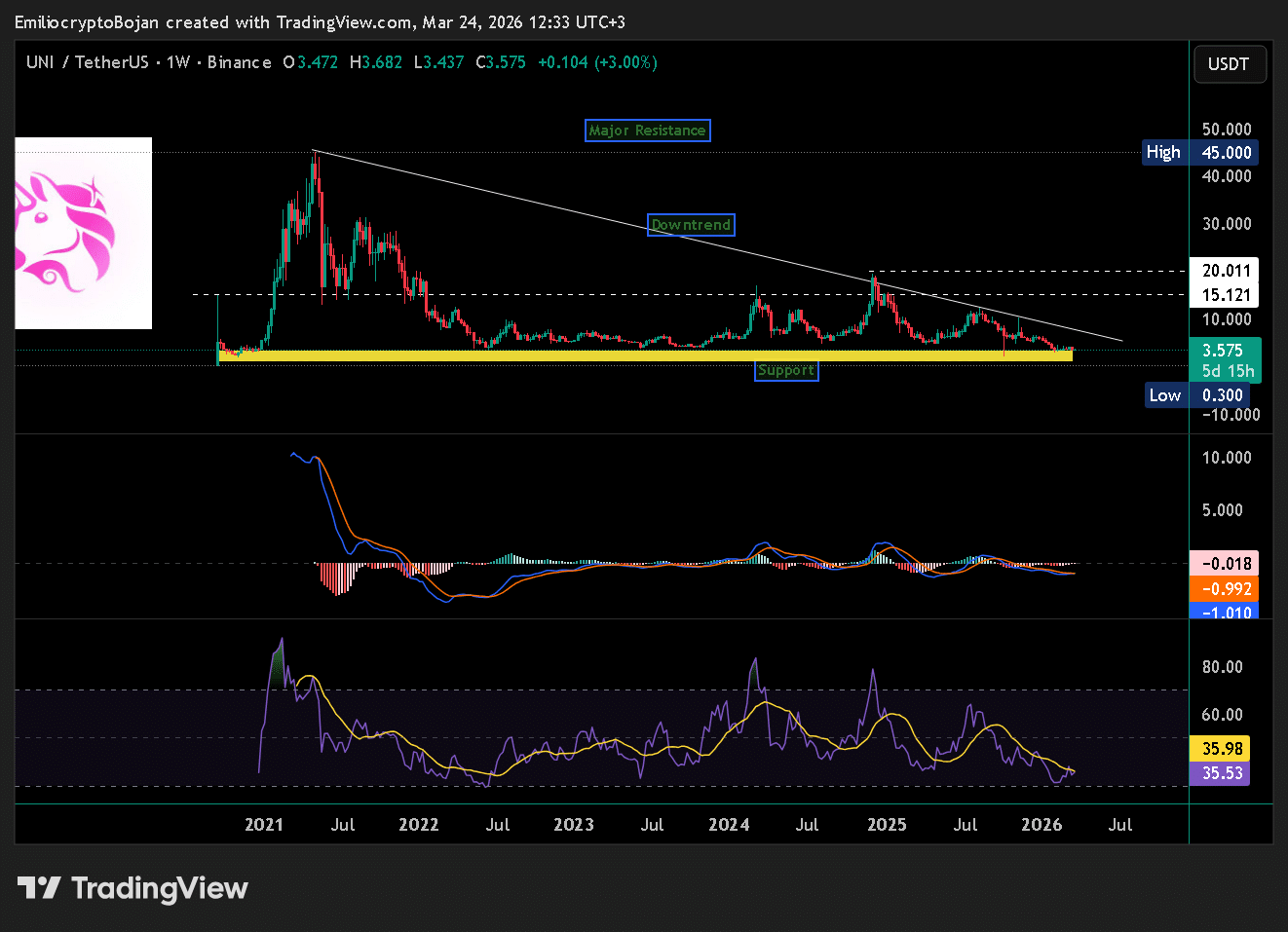
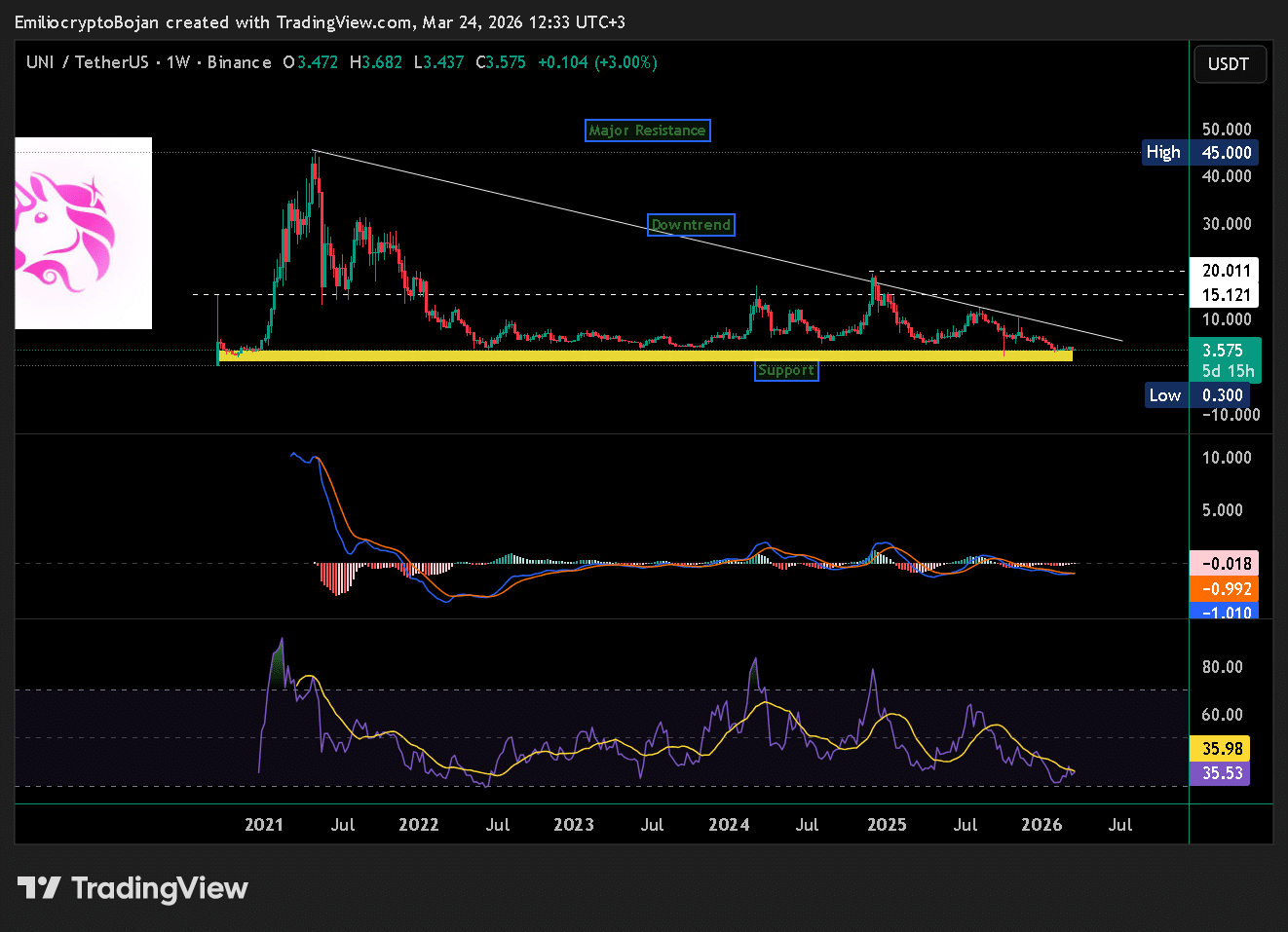
Uniswap [UNI] followed a similar script, still trading near support while leaning toward its own multiyear downtrend, with $15 and $20 standing out before any real test of $45.
Source: TradingView

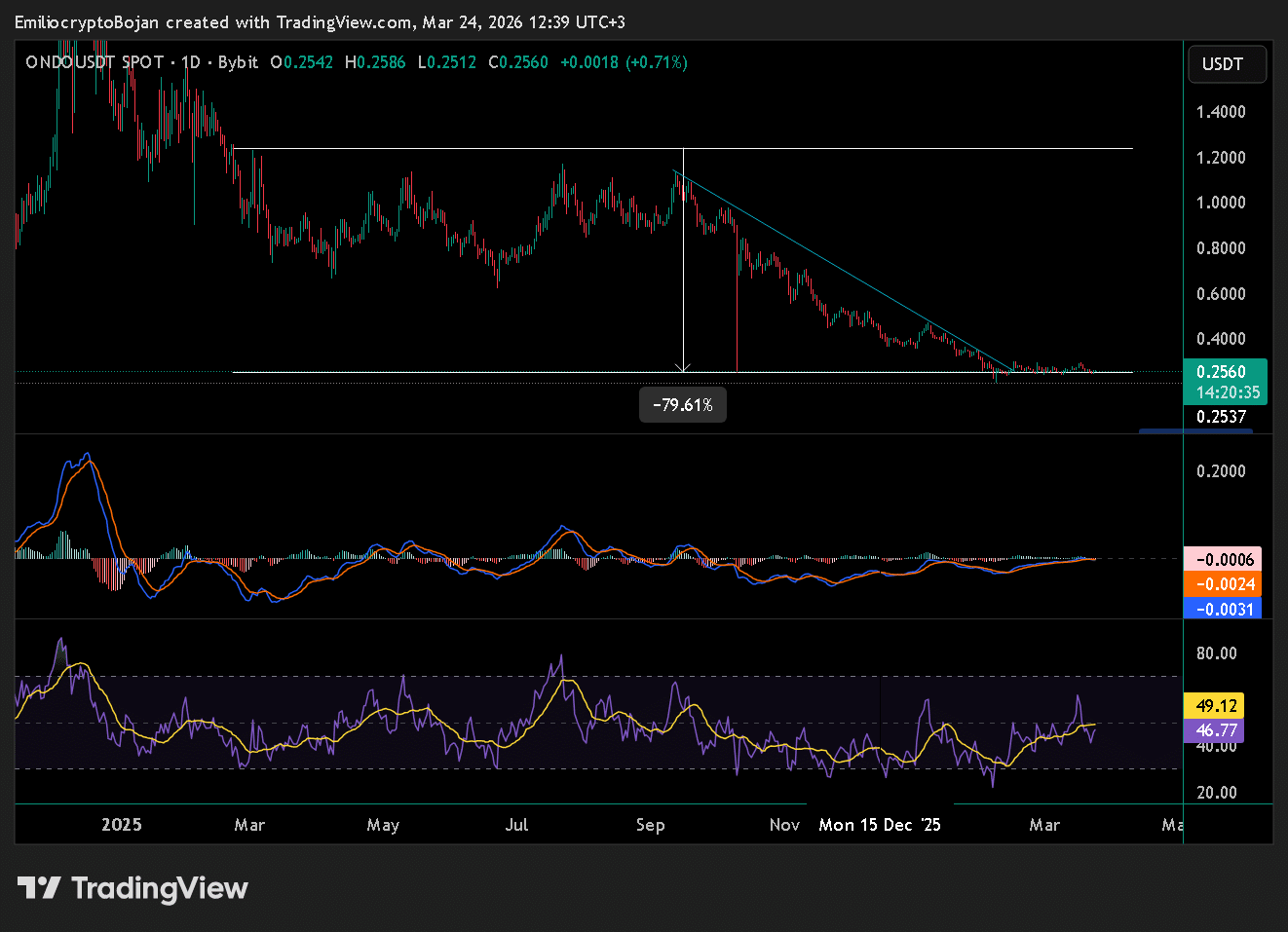
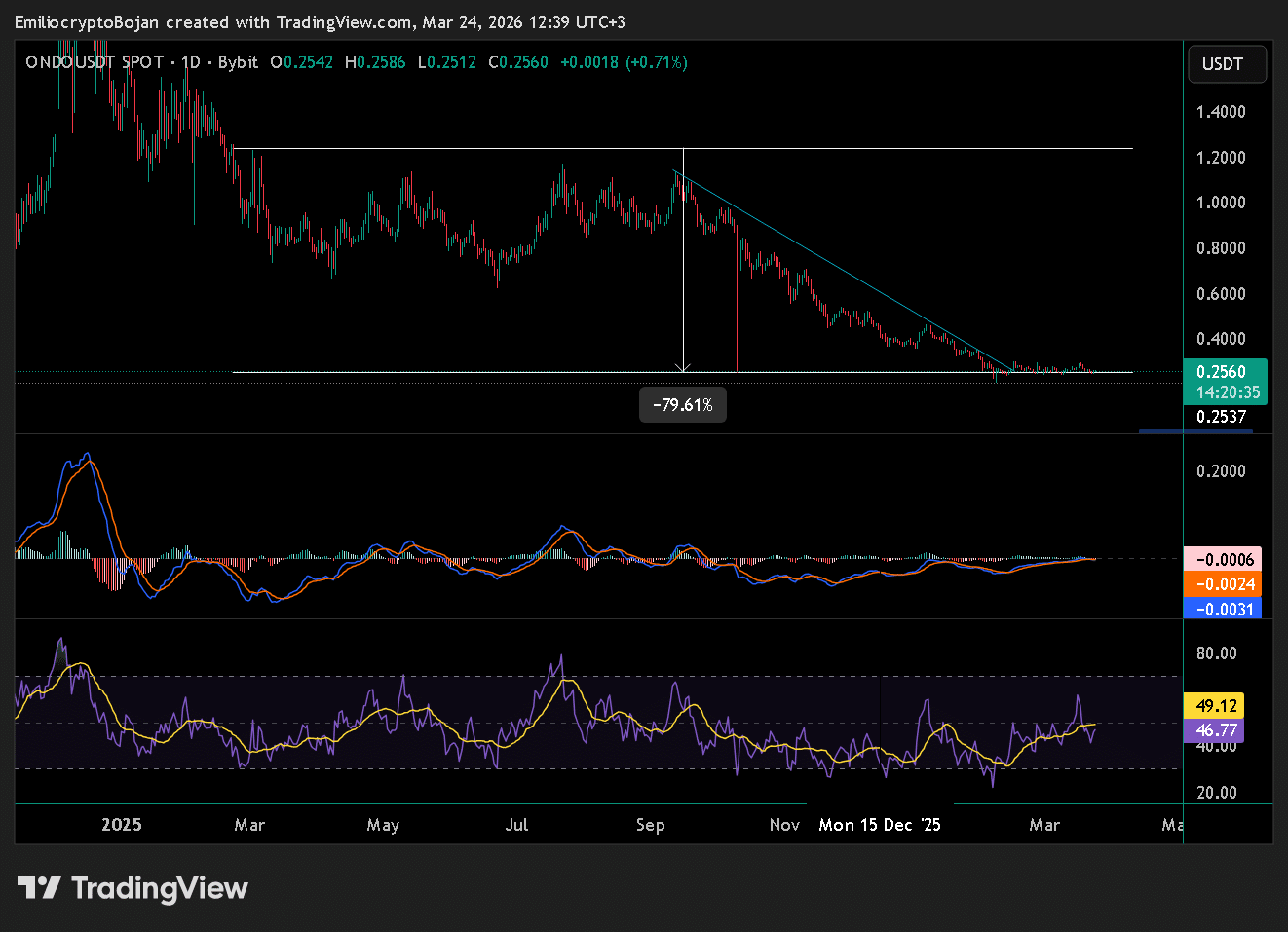
Ondo [ONDO] had already broken out of its downtrend after a 78%+ drawdown from its 2025 high and then moved sideways.
Source: TradingView

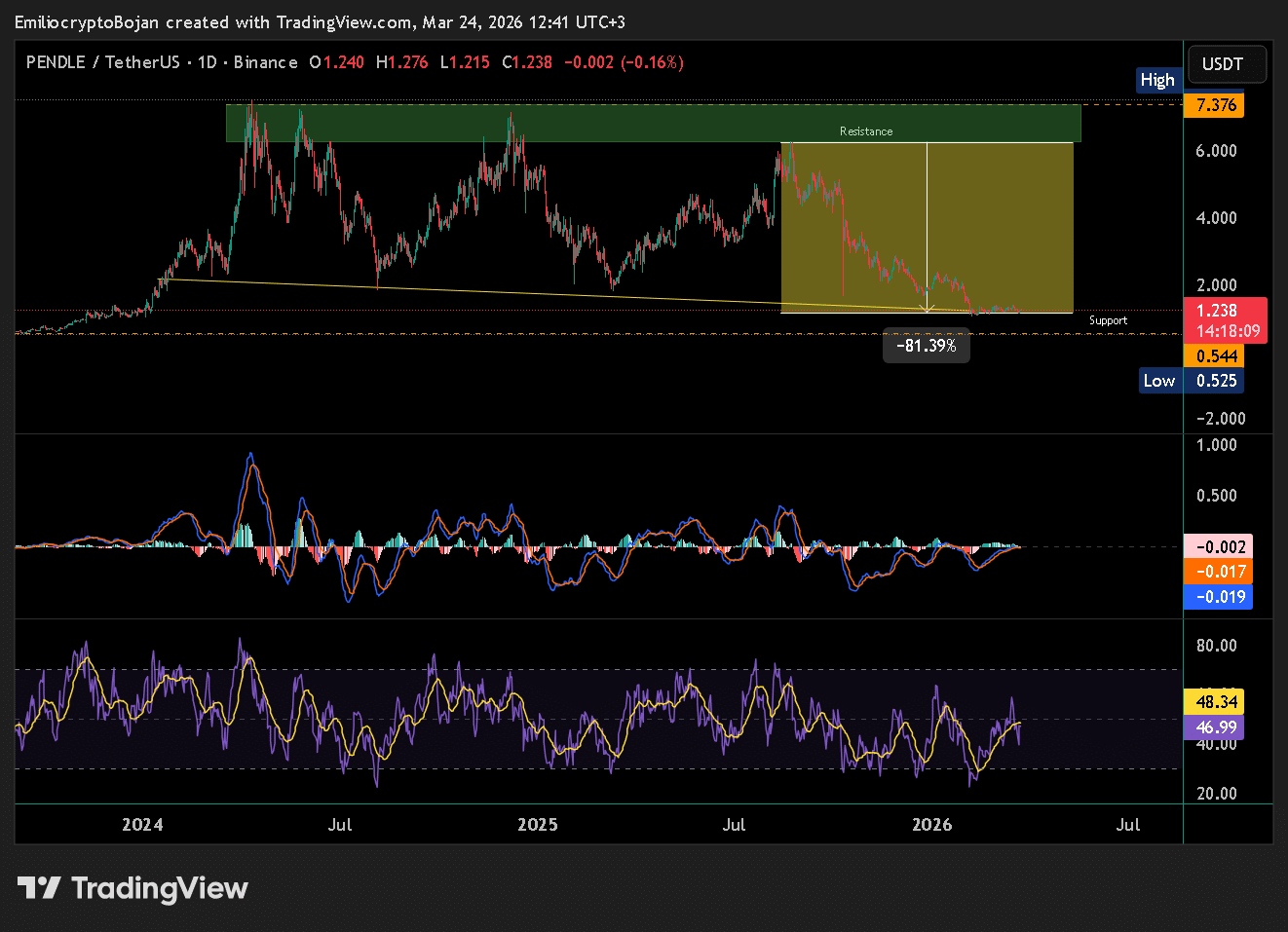
Pendle [PENDLE] stayed above the $1 support zone, while lower-timeframe momentum started picking up.
Source: TradingView

Even so, most of these names were still trading more than 80% below their 2025 highs.

Is a DeFi rotation about to begin?

Was this the sign of a DeFi rotation? Not yet. One wallet did not repair a market that had punished altcoin holders for years. However, these were the kind of withdrawals whales made near bottoms, not tops.

The real takeaway is that the wallet bought into altcoin weakness. If these assets continue to hold sideways and begin reclaiming structure, talk of a DeFi rotation will quickly stop sounding premature.


Final Summary

  • This whale targeted damaged DeFi names at depressed levels, and that made the move serious.
  • If structure kept improving across this basket, the market could be witnessing early rotation.

Related Questions

QWhat specific altcoins did the whale purchase with the $16 million withdrawn from Binance, and what were their respective values?

AThe whale purchased 43.49 million ENA ($4.07M), 32,872 AAVE ($3.64M), 249,741 AVAX ($2.37M), 595,886 UNI ($2.13M), 8.07 million ONDO ($2.05M), and 1.49 million PENDLE ($1.81M).

QAccording to the article, what common characteristic did all of the purchased tokens share?

AAll of the purchased tokens were DeFi-linked names, indicating the whale was making a targeted bet on the decentralized finance sector.

QWhat was the technical condition of Avalanche (AVAX) at the time of the article, and what were its potential price targets?

AAvalanche (AVAX) had flashed a bullish MACD crossover and was pressing against a multiyear downtrend. The early price targets if the downtrend broke were $14.75 and $38.48.

QDoes the article conclude that a DeFi market rotation is definitively underway based on this single whale's action?

ANo, the article states that one wallet does not repair a market and that it is not yet a sign of a DeFi rotation. However, it notes that these are the types of withdrawals whales make near bottoms.

QWhat is the key takeaway from the whale's investment strategy as described in the final summary?

AThe key takeaway is that the whale targeted damaged DeFi names at depressed levels, making the move serious. If the price structure improves across this basket of tokens, it could signal an early stages of a market rotation.

Related Reads

Can Generative Models Finally Be Trained End-to-End? The Core Is a For Loop

This article introduces a novel training paradigm for generative models called Explorative Modeling (XM), which enables true end-to-end training. Traditionally, powerful generative models like autoregressive and diffusion models are not trained end-to-end. They are trained to predict a single small step but require iterative multi-step sampling for inference. This "exposure bias" leads to error accumulation and limits performance. The core challenge XM addresses is "mode blurring." In generative tasks, a single input (e.g., "generate a dog") corresponds to many valid outputs (multiple modes). Standard training objectives like reconstruction loss force the model to average these modes, producing unrealistic, blurry outputs. To avoid this, existing models break generation into many small, almost deterministic steps, sacrificing end-to-end training. XM tackles this by restructuring the training loop itself. Its key insight is to amplify "generative expressivity." For each training input, instead of generating one sample, the model generates K candidate outputs. Only the candidate closest to the real data is used for computing the loss and updating the model via backpropagation. This simple "best-of-K" mechanism is implemented as a short for-loop. By exploring multiple possibilities, the model learns to distribute its guesses across different modes rather than collapsing to their uninformative average. The paper demonstrates that "exploration" acts as a new, powerful scaling axis. Gains from XM increase with model size, data scale, and compute. Experiments show improvements in FID scores for image generation and significant efficiency gains, sometimes outperforming larger models without exploration. When pushed to the limit, XM enables fully single-step, end-to-end generative models. In robotics tasks, an "Explorative Policy" matched the performance of a 100-step Diffusion Policy with a single forward pass, drastically improving inference speed. While the best-of-K concept is not entirely new, the authors' contribution lies in formally understanding it as a direct method to boost generative expressivity without fragmenting the generation process. This work suggests that as models scale, enhancing exploration during training may become crucial for overcoming fundamental performance bottlenecks.

marsbit10m ago

Can Generative Models Finally Be Trained End-to-End? The Core Is a For Loop

marsbit10m ago

Annual Salary of Millions Competing for Electricians, Meta Rushes to Open Its Own Technical School

The AI boom is facing an unexpected bottleneck: a severe shortage of skilled construction workers and electricians. As tech giants like Meta, OpenAI, and Alphabet race to build massive data centers—such as OpenAI's $16 billion "Stargate" project—they are hitting a critical labor wall. The U.S. needs an estimated 130,000 more electricians, 240,000 construction workers, and 150,000 supervisors by 2030 for AI infrastructure alone, but tens of thousands of electrician jobs go unfilled each year. While AI companies offer high premiums, with electricians earning up to $280,000 annually, worker scarcity still causes massive losses—delays on a single project can cost $14.2 million per month. The complexity of building AI data centers, which require immense power (equivalent to powering hundreds of thousands of homes), sophisticated electrical systems, and advanced liquid cooling solutions, demands highly skilled technicians who are in short supply. To combat this, companies are investing heavily in training. Meta has committed $115 million to a free training school offering tuition, housing, and stipends, targeting 5,000 new workers. OpenAI is partnering with unions to secure skilled labor. These efforts are paying off, with a significant rise in Gen Z interest in trade schools over college. However, the power demands are staggering. AI data centers are driving a rapid surge in electricity consumption, projected to account for up to 12% of U.S. power use by 2028 and raising costs for consumers. Furthermore, the construction boom is project-based, leading to a potential future glut of trained workers once building peaks, which could depress wages industry-wide. The race for AI supremacy now depends as much on skilled hands as on advanced chips.

marsbit1h ago

Annual Salary of Millions Competing for Electricians, Meta Rushes to Open Its Own Technical School

marsbit1h ago

Trading

Spot
活动图片