Welcoming the God of Wealth on the Fifth Day of Lunar New Year, Trump Overturns the Altar: Imposes 10% Global Tariffs in Defiance of Supreme Court

比推Published on 2026-02-21Last updated on 2026-02-21

Abstract

On the fifth day of the Chinese New Year, a day traditionally associated with welcoming the god of wealth, former U.S. President Donald Trump made headlines by defying a Supreme Court ruling that invalidated his global tariff policies enacted under national emergency laws. In response, Trump immediately invoked alternative trade authority to impose an additional 10% global tariff, declaring existing national security tariffs effective immediately without seeking further congressional approval. He publicly criticized the justices who ruled against him. Meanwhile, a viral story about Punch, a baby monkey in a Japanese zoo abandoned at birth and raised by handlers, sparked widespread sympathy online. Footage of the monkey being dragged by an adult during social integration efforts led to a surge in the related meme cryptocurrency PUNCH, which saw an 80-fold increase in value. In cryptocurrency circles, predictions circulated that Bitcoin could reach $1 million by 2026, though opinions were divided on the feasibility. Some commentators expressed concerns about the crypto market’s health, suggesting it had “halved” in vitality, while others remained optimistic about future growth. Additionally, Ethereum co-founder Vitalik Buterin criticized the concept of “Web4.0,” arguing that it promotes the creation of valueless digital clutter rather than meaningful innovation. The response from the community was mixed, with some supporting his skepticism and others defending technological ...

On the fifth day of the Lunar New Year, welcome blessings and prosperity as you greet the God of Wealth~

What have the KOLs in the crypto space been talking about over the past 24 hours?

Note: The following content is compiled from the X platform and represents personal opinions. It does not represent the stance of this platform and should not be considered investment advice.

Welcoming the God of Wealth on the Fifth Day, Trump Overturns the Altar: 10% Global Tariffs in Defiance of Supreme Court

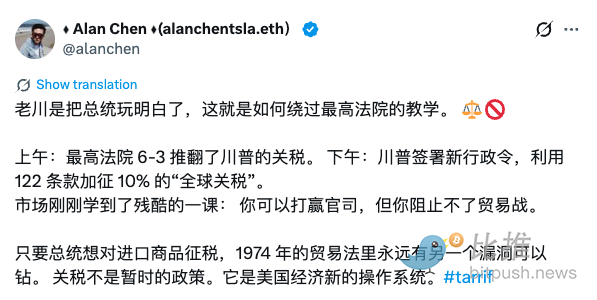
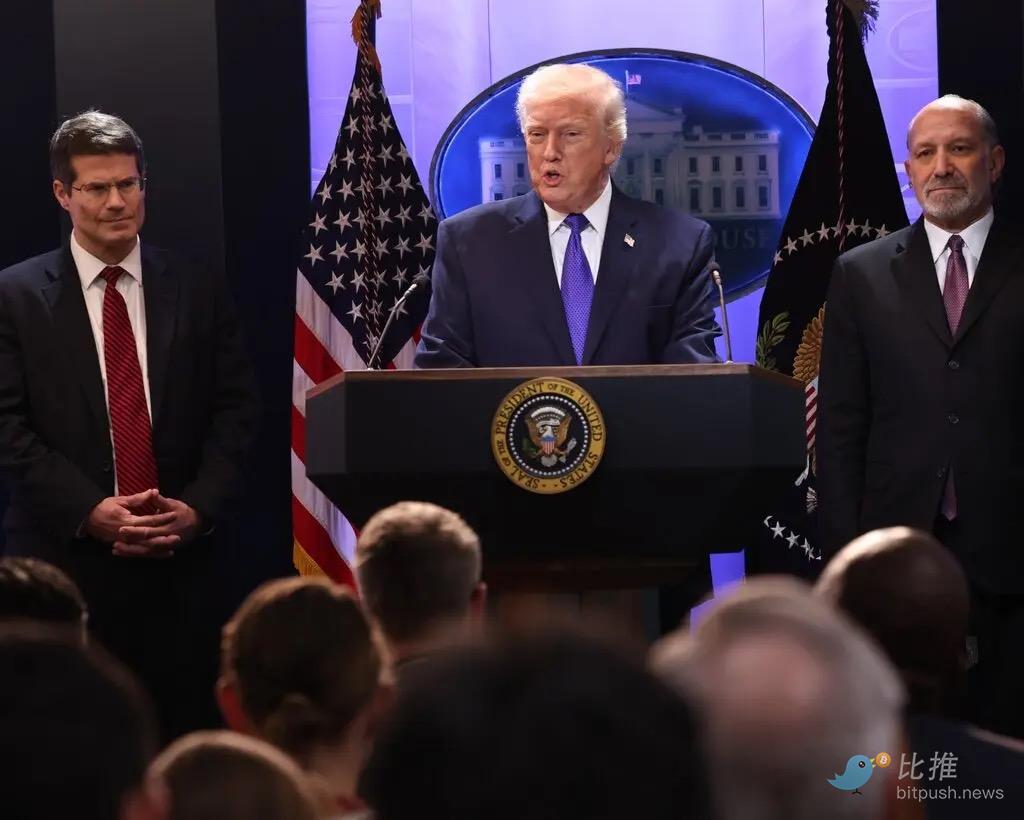
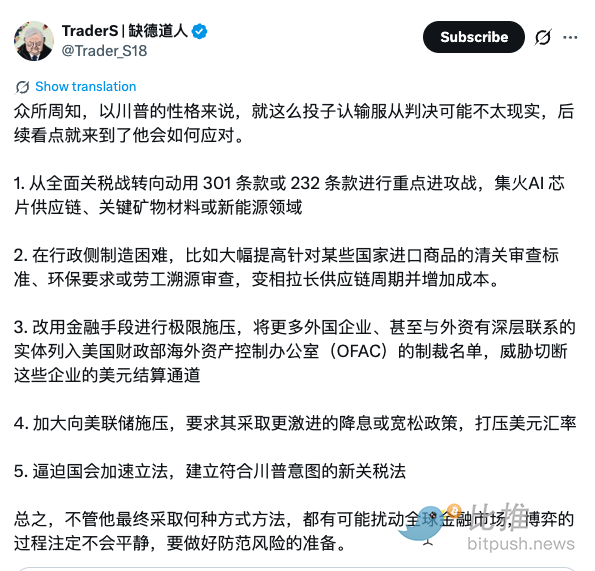
Last night, Beijing time, the U.S. Supreme Court ruled that Trump's global tariff policy, implemented under federal laws related to national emergencies, was invalid. Shortly after the ruling, Trump quickly invoked another trade authority to issue a new order, announcing an additional 10% global tariff on top of existing tariffs, with all current national security tariffs taking effect immediately.

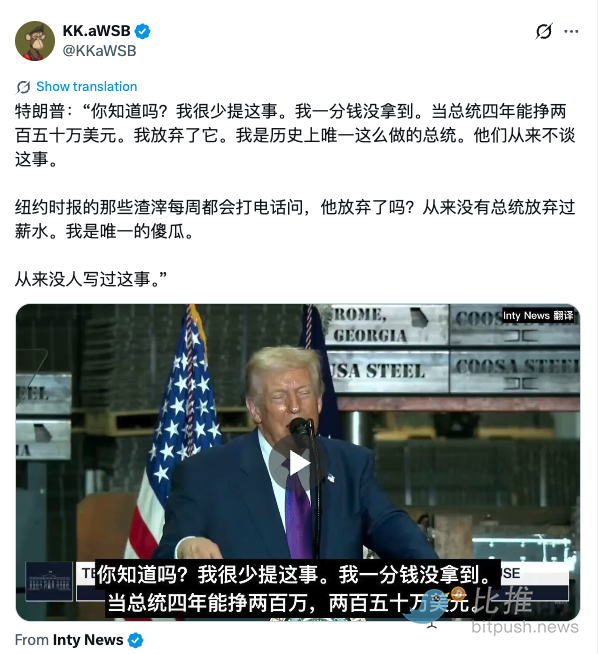
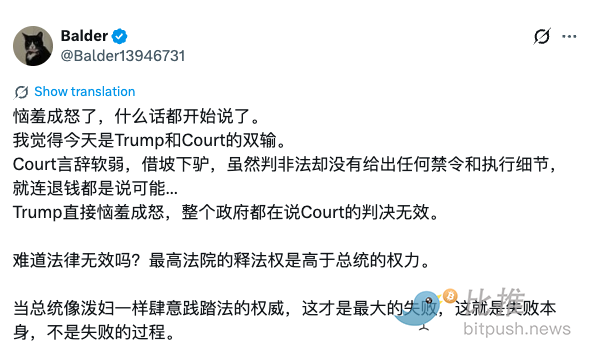
Trump explicitly stated that he would not seek further authorization from Congress, adding, "I don't need to." Regarding the justices who issued the unfavorable ruling, Trump angrily criticized them during a press conference, calling them "fools and lackeys."
Popular replies:

Section 122 is indeed the president's backdoor, but the market overreacted. After three years of tariff wars, U.S. stocks still hit new highs, indicating that investors had already priced in this risk.

Here's some political insight: Emperor Chuan is invincible in the human world for the next three years.

All laws are meant to bind ordinary people. Trump is the true embodiment of 'I want it, I get it.'

Why do people still see him as normal? He is clearly a narcissistic personality disorder patient—isn't it obvious?

Internet Hearts Ache for Little Monkey Punch, Homonymous Meme Coin Soars 80x

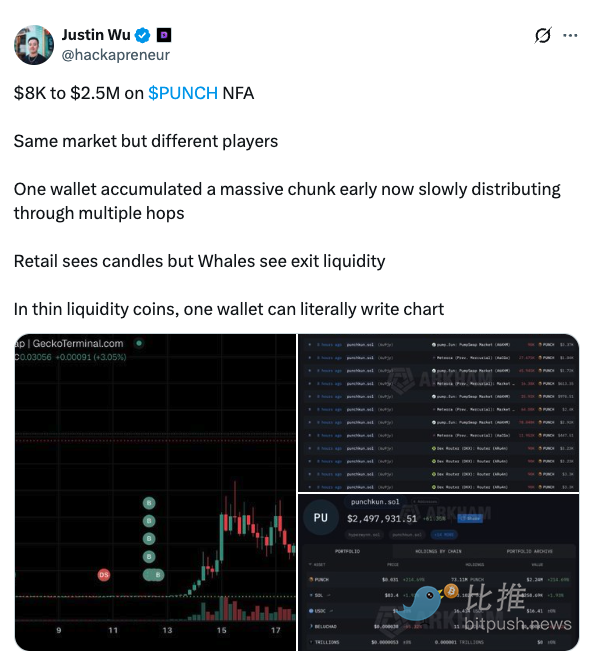
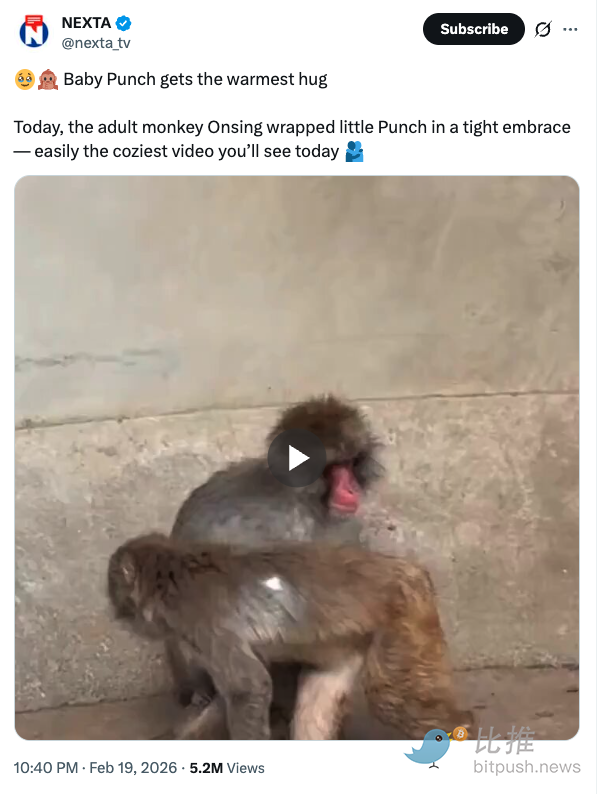
A little monkey named Punch from Ichikawa Zoo in Japan has recently become the focus of the entire internet. Abandoned by its mother at birth, Punch was raised by zookeepers and went viral after a video showed it clinging tightly to a stuffed gorilla for comfort. However, yesterday, Punch was dragged by an adult monkey within the group, a scene that left countless netizens heartbroken. The zoo responded that this was part of Punch's process of learning to integrate into the group, and its adaptability is moving. This story of growth and resilience quickly exploded on social media, with several crypto projects also expressing support. As a result, the homonymous meme coin PUNCH surged, with a seven-day increase of nearly 80 times.
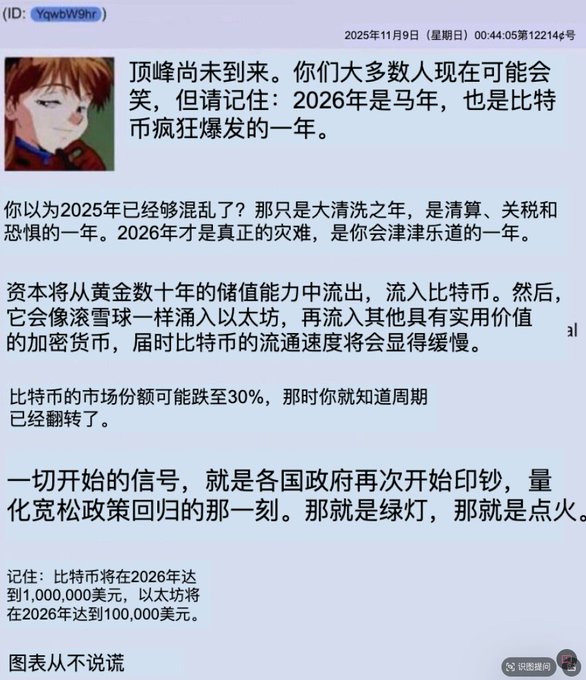
Some Guru Predicts Bitcoin Will Reach $1 Million in 2026
<极img style="max-width:100%;overflow:hidden;" src="https://d1x7dwosqaosdj.cloudfront.net/images/2026-02/54bab4455fef4b5c8304d4912452ab68.png" alt="">

Popular replies:

It's been almost two months now; reaching $1 million is too far-fetched. $360,000 is more like it.

The most painful thing in life is missing out on all the correct predictions others made in the past, only to catch the one failure.

Institutions are worried about quantitative tightening, while gurus expect money printing. The gurus might be right—some countries have already started dumping U.S. bonds. If there aren't enough buyers, the Fed might have to print money to absorb them.

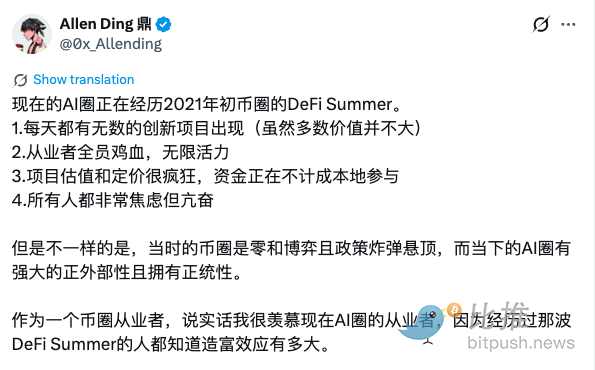
Has the Crypto Circle "Died" by Half?
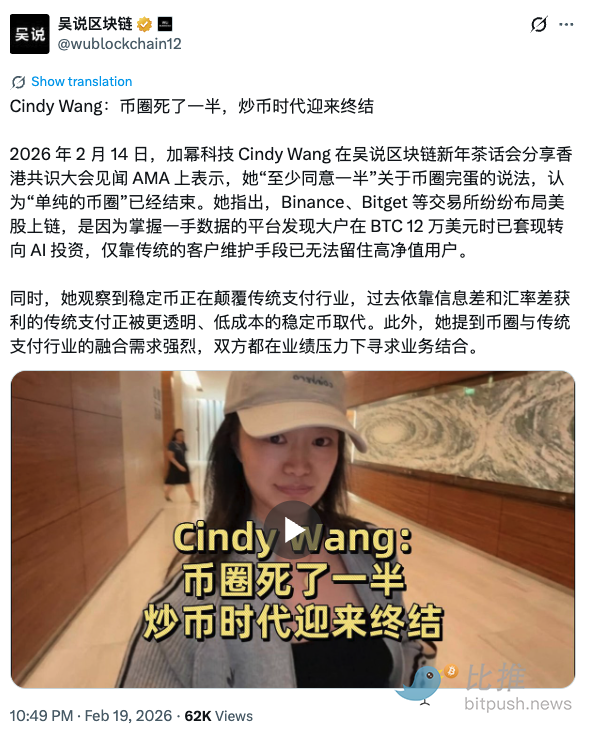
Popular replies:

No insights, just hindsight, along with boasting about their own companies.

They've made enough money and now start smashing the pot.

Creating panic without foresight is the epitome of being led by emotions. If you're not optimistic, you can leave the circle. Without predictive ability, don't make blind predictions. I can say right now that the next cycle will be much stronger than this one—believe it or not.

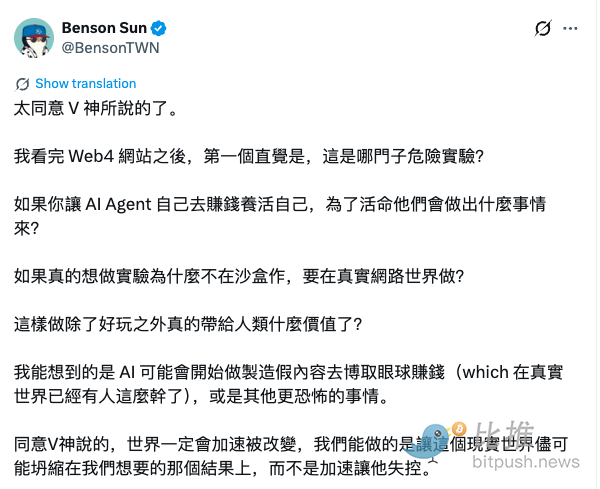
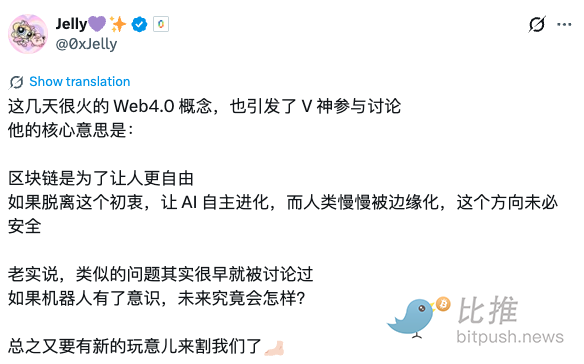
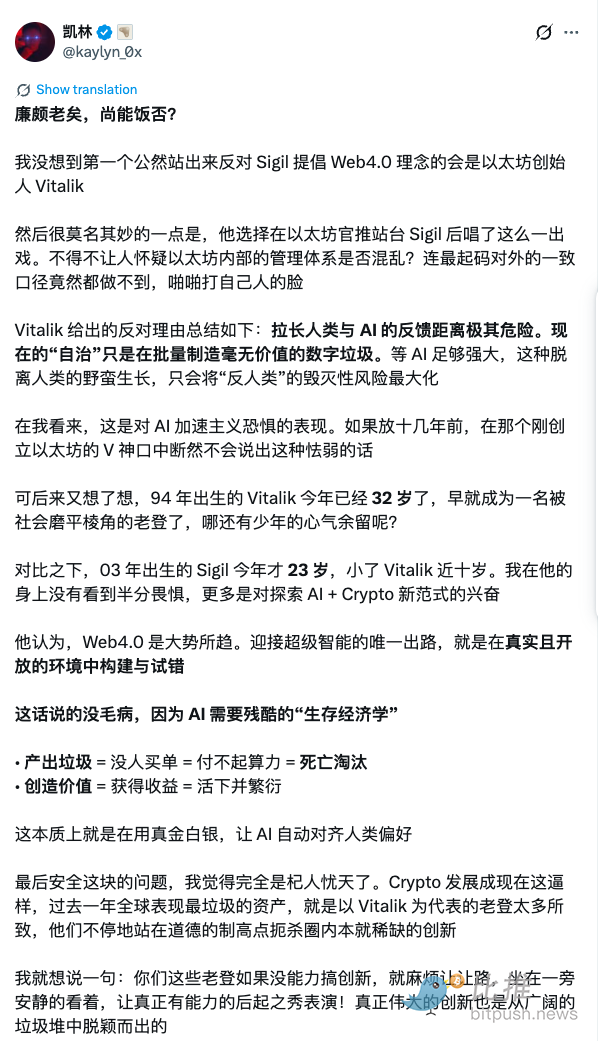
V神 Opposes Web4.0 Concept: Mass Production of Worthless Digital Junk
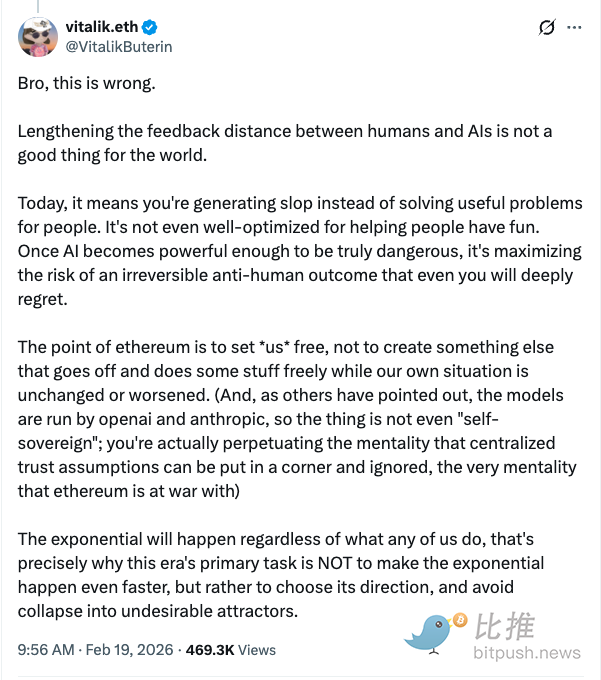
Popular replies:

Indeed, aside from being fun, it has no practical value. An internet without people isn't the internet. If it's all robots, what kind of Web is that?

Those left behind by the times lack imagination and are still stuck in the web2 framework.

Every time new technology emerges, there is always chaos and even danger. Regulation either overreacts or does nothing. Humanity stumbles through every technological revolution like this.

Your circle really knows how to coin terms. Web3 is fading, and now they're shouting about web4...


Twitter:https://twitter.com/BitpushNewsCN

Bitpush TG Discussion Group:https://t.me/BitPushCommunity

Bitpush TG Subscription: https://t.me/bitpush

Original link:https://www.bitpush.news/articles/7613417

Related Questions

QWhat was the US Supreme Court's ruling regarding Trump's global tariff policy, and how did Trump respond?

AThe US Supreme Court ruled that Trump's global tariff policy implemented under national emergency federal laws was invalid. In response, Trump invoked another trade authority to issue a new order, announcing an additional 10% global tariff on top of existing tariffs, with all current national security tariffs taking effect immediately.

QWhat is the story behind the meme coin PUNCH and why did its value surge?

APUNCH is a meme coin named after a baby monkey named Punch from Ichikawa Zoo in Japan. Punch was abandoned by its mother and raised by zookeepers, gaining viral attention online for a video of it hugging a stuffed animal for comfort. Its value surged nearly 80 times in seven days after the story of its struggle to integrate into the monkey group went viral on social media, with several crypto projects showing support.

QWhat prediction was made about Bitcoin's price in 2026, and what were some community reactions?

AA prediction was made that Bitcoin would reach $1 million by 2026. Community reactions were mixed, with some calling it unrealistic and suggesting $360,000 as a plausible target, while others speculated that massive money printing by the Federal Reserve could potentially drive such a surge.

QWhat is V神's (Vitalik Buterin) criticism of Web4.0, and how did people respond?

AVitalik Buterin criticized Web4.0, arguing that it promotes the mass production of worthless digital garbage. Responses varied, with some agreeing that it lacks practical value without human involvement, while others accused him of lacking imagination and being stuck in a Web2 framework.

QAccording to the article, what is the general sentiment about the current state of the crypto circle?

AThe sentiment is divided. Some suggest that half of the crypto circle is 'dead,' criticizing the lack of foresight and fear-mongering. Others are more bullish, arguing that the next market cycle will be much stronger than the current one and dismissing the pessimistic predictions.

Related Reads

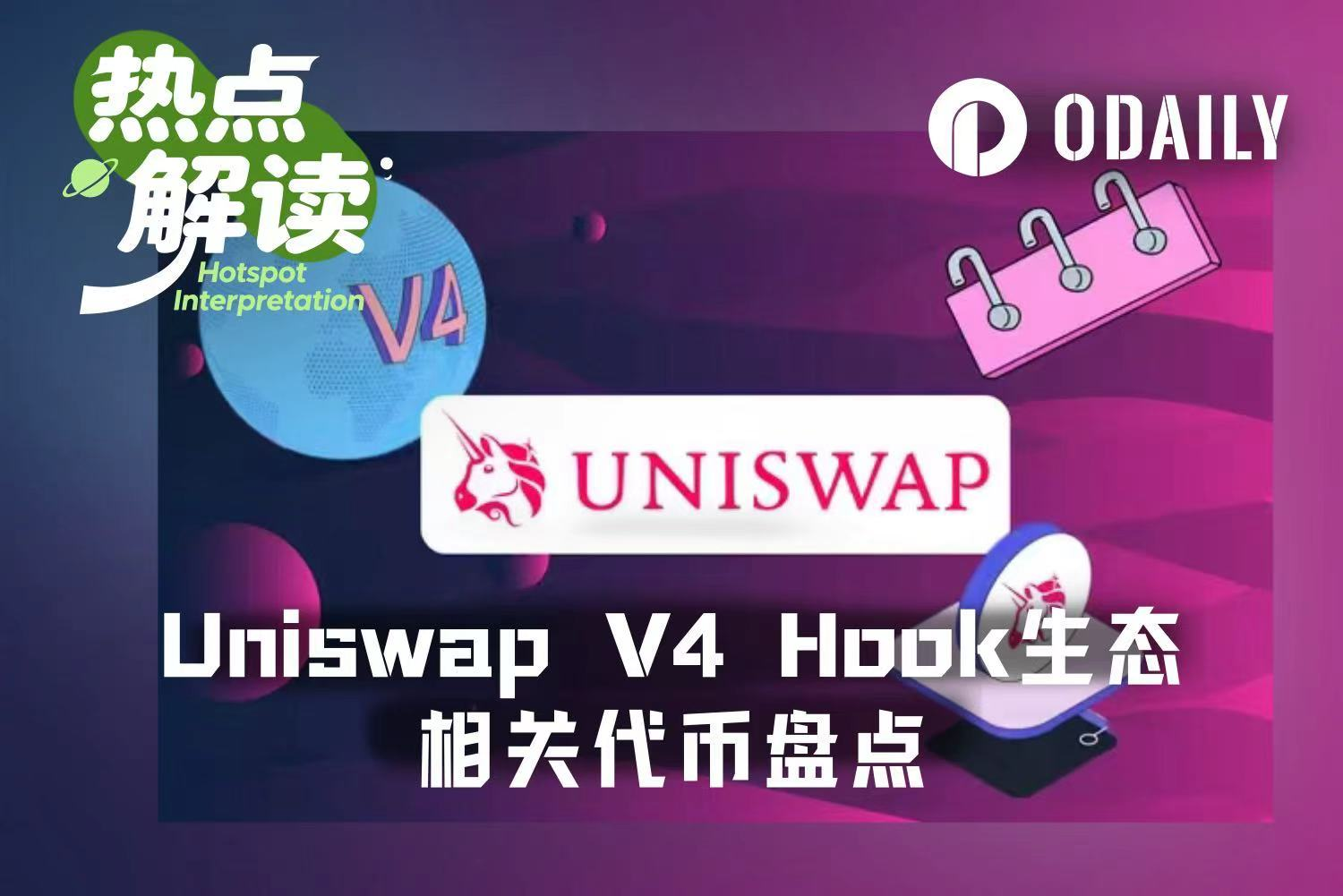
Has Hook Summer Truly Arrived? sato, Lo0p, FLOOD Ignite the New Uniswap v4 Narrative

With the broader market showing signs of recovery, a new wave of interest has emerged around Ethereum-based meme coins. Following ASTEROID, tokens like sato, sat1, Lo0p, and FLOOD, built upon the Uniswap v4 Hook protocol, are capturing market attention. Their market capitalizations range from millions to tens of millions of dollars, injecting much-needed focused liquidity into a market lacking narratives. This article explores whether this trend signifies an incoming "Hook Summer" and its potential impact on UNI's price. Hooks are essentially plug-in smart contracts for Uniswap v4 liquidity pools, allowing developers to inject custom logic at key points in a pool's lifecycle (like initialization, adding/removing liquidity, swaps). This transforms the AMM into programmable building blocks. Key highlighted projects include: * **sato**: Peaked over $38M market cap. It utilizes a v4 curve for minting/burning; buying locks ETH as reserve to mint new tokens, while selling redeems ETH from the reserve and burns tokens. * **sat1**: Market cap briefly exceeded $10M, promoted as an "optimized sato," but later declined significantly. * **Lo0p**: Reached nearly $6.6M. It's a lending AMM protocol where buying LO0P tokens locks them as collateral, allowing users to borrow ETH from the pool reserve at 40% LTV, aiming to improve capital efficiency for idle ETH in LPs. * **FLOOD**: Peaked near $6M. Its mechanism directs asset reserves from buys into Aave v3 to generate yield, with fees and interest retained in the pool to potentially influence the token's price long-term. In the long term, the development of the Hook ecosystem can attract users and liquidity to Uniswap v4, benefiting UNI's fundamentals—especially combined with the recent activation of the protocol fee switch, where a portion of fees is used to burn UNI. However, in the short term, these Hook-based tokens are unlikely to directly drive significant UNI price appreciation. Their impact is moderated by factors like token sustainability, price volatility, and broader market and regulatory conditions. Currently, Uniswap v4's TVL ($595M) still trails behind v2 and v3, indicating adoption and growth will take time. The article concludes that while the Hook ecosystem provides long-term "nourishment" for UNI, its short-term role is more of a "catalyst" than a "booster." Readers are cautioned that these are early-stage experimental tokens and may carry unknown risks.

Odaily星球日报7m ago

Has Hook Summer Truly Arrived? sato, Lo0p, FLOOD Ignite the New Uniswap v4 Narrative

Odaily星球日报7m ago

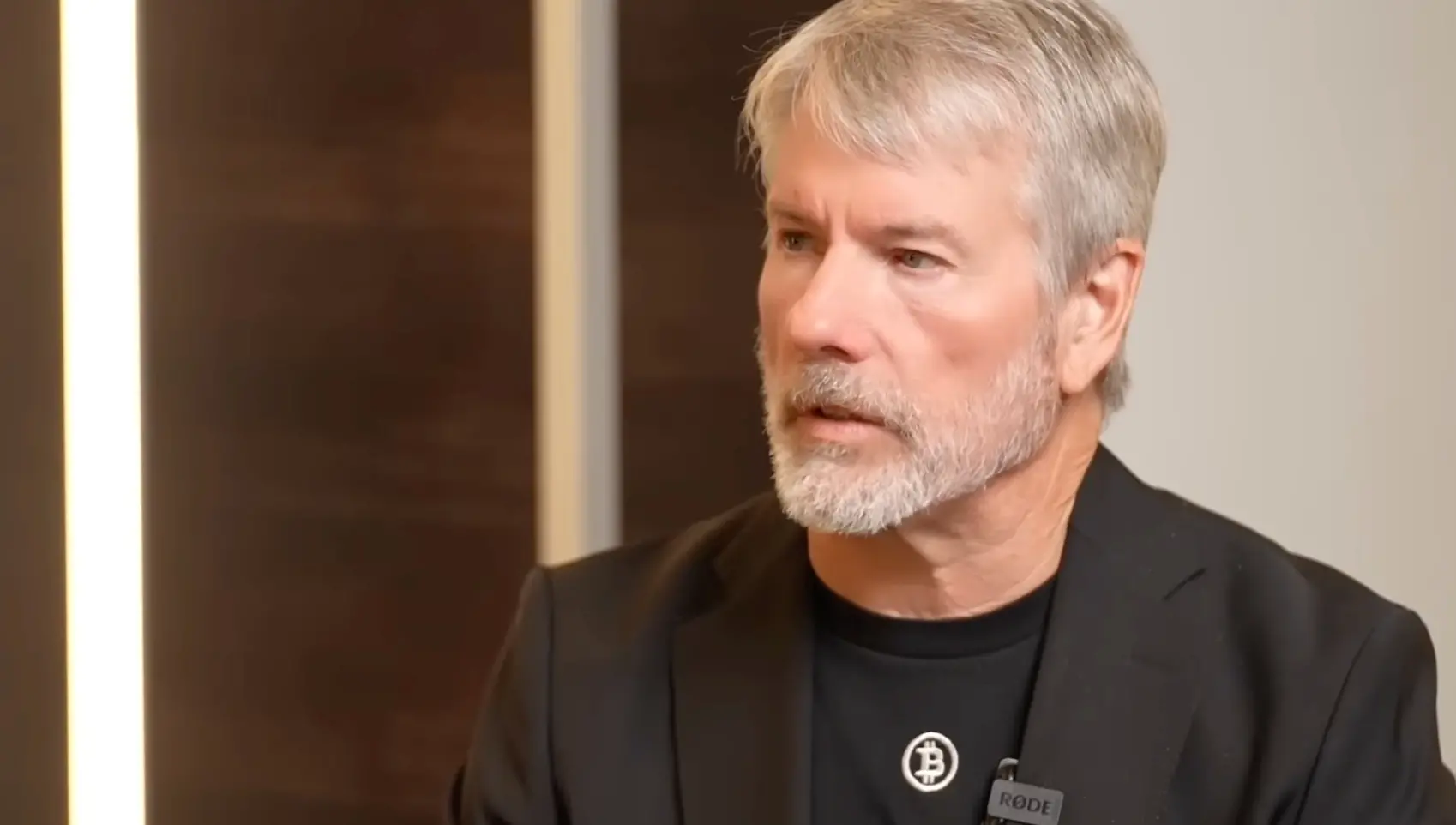
Interview with Michael Saylor: I Did Say I Would Sell Bitcoin, But Never a Net Sale

Interview with Michael Saylor: I Said We'd Sell Bitcoin, But Never Be a Net Seller In a recent podcast, MicroStrategy Executive Chairman Michael Saylor clarified the company's stance on potentially selling Bitcoin. Following MicroStrategy's earnings call statement about being prepared to sell BTC to fund dividends for its STRC (Strategic) credit product, Saylor emphasized the distinction between selling and being a "net seller." Saylor explained the core business model: MicroStrategy sells credit instruments like STRC and uses the proceeds to buy Bitcoin, which is viewed as "digital capital" expected to appreciate around 30-40% annually. A portion of these capital gains can then be used to pay the dividends on the credit products. He stressed that even if the company sells some Bitcoin for dividends, it simultaneously buys much more with new credit issuance. For example, after raising $3.2 billion from STRC sales in April, the dividend obligation was only $80-90 million, making the company a net buyer. The clarification aims to counter market narratives questioning the value of Bitcoin on MicroStrategy's balance sheet if it were never sold, and to dismiss claims of a "Ponzi scheme." Saylor reiterated his personal philosophy for investors: "Don't be a net seller of bitcoin" and ensure your Bitcoin holdings increase each year. Saylor also discussed Bitcoin's role as the foundation for "digital credit," noting that STRC has become the largest and most liquid preferred stock issue in the U.S., offering high risk-adjusted returns (Sharpe ratio). He highlighted Bitcoin's deep liquidity, stating that even large purchases by MicroStrategy do not move the market significantly, which is driven by macro factors, geopolitical tensions, and capital flows from ETFs and credit products. Finally, Saylor reflected on his early inspiration from sci-fi books, which motivated his path to MIT, and maintained his fundamental thesis on Bitcoin remains unchanged: it is superior digital capital enabling superior digital credit.

链捕手11m ago

Interview with Michael Saylor: I Did Say I Would Sell Bitcoin, But Never a Net Sale

链捕手11m ago

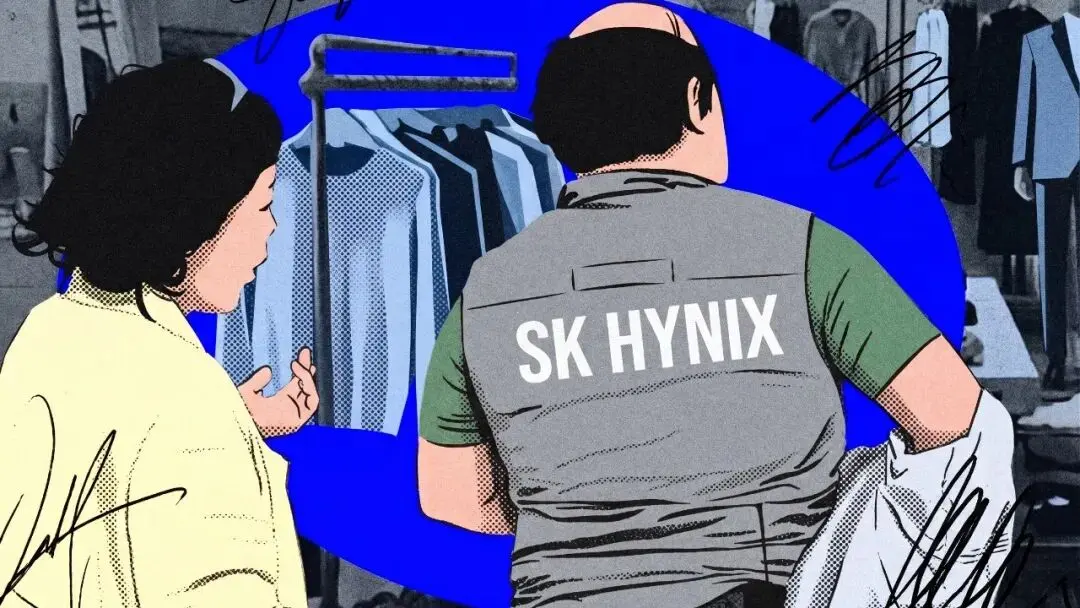
Beaten SK Hynix Employees in China: Year-end Bonus Less Than 5% of Korean Staff's

"SK Hynix Chinese Staff Hit Hard: Bonuses Less Than 5% of Korean Counterparts" Driven by the AI boom, South Korea's SK Hynix is experiencing record performance, with media reports predicting massive year-end bonuses for its employees, making them highly desirable in the matchmaking market. However, this prosperity starkly contrasts with the situation for the company's Chinese employees. According to reports, SK Hynix operates under a rule allocating 10% of operating profit for employee bonuses. While projections suggest Korean employees could receive bonuses reaching millions of RMB, a Chinese employee with over a decade of technical experience revealed the disparity: "If they get 3 million, Chinese staff get less than 5% of that." After adjustments based on KPI ratings, this employee's highest bonus was slightly over 100,000 RMB. Bonuses are paid annually in Korea but semi-annually in China. During the industry downturn in 2023-2024, Chinese employees received no bonus at all. The gap extends beyond bonuses. Recruitment posts for SK Hynix's Chinese factories (in Wuxi, Dalian, Chongqing) show engineer monthly salaries ranging from 10,000 to 35,000 RMB, with a 13th-month salary promised. Chinese employees also receive standard benefits like annual leave but lack stock incentives, which are reportedly unavailable to them. Furthermore, management positions in China are predominantly held by Korean personnel, though industry observers note a gradual increase in local middle managers over time. SK Hynix has confirmed the 10% bonus rule but cautioned that specific future bonus amounts remain unpredictable. The company forecasts strong demand for HBM and other high-value enterprise products for the next 2-3 years, driven by AI infrastructure investment. This focus on business-to-business markets may continue to constrain supply for consumer products, potentially prolonging price increases for components like memory.

链捕手25m ago

Beaten SK Hynix Employees in China: Year-end Bonus Less Than 5% of Korean Staff's

链捕手25m ago

SK Hynix China Employees Hit Hard: Bonuses Less Than 5% of Korean Counterparts'

"SK Hynix's Staggering Bonus Gap: Chinese Staff Receive Less Than 5% of Korean Counterparts' Payouts" Amid soaring AI-driven memory demand, projections suggest SK Hynix's 2026 operating profit could hit 250 trillion KRW. Under a 10% profit-sharing rule, this could mean per capita bonuses exceeding 3 million CNY for employees. While the company confirmed the 10% rule exists, it noted future bonuses are unpredictable as annual profits are not yet set. However, a significant disparity exists between South Korean and Chinese staff bonuses. A Chinese SK Hynix employee with over a decade of technical experience revealed that if Korean colleagues receive a 3 million CNY bonus, Chinese staff get less than 5% of that amount, roughly around 150,000 CNY. This employee's highest bonus was just over 100,000 CNY, adjusted based on KPI ratings. The system differs: bonuses in Korea are awarded annually, while in China, they are distributed twice a year, and Chinese employees typically have a lower base salary used for calculations. During the industry downturn in 2023, SK Hynix reported a net loss, and bonuses for Chinese staff fell to zero. Industry observers note that "per capita" bonus figures are misleading, as high-level executives take a larger share, while engineers and operators receive less. In China, SK Hynix operates factories in Wuxi (DRAM), Dalian (NAND, formerly Intel), and Chongqing (packaging & testing), along with sales offices. Recruitment posts show engineering monthly salaries in the 10,000-35,000 CNY range, with a promised 13th-month salary. Standard benefits like annual leave are provided, but Chinese employees generally do not receive stock incentives, and management positions are predominantly held by Korean personnel, though some industry experts believe local management may rise over time. Looking ahead, SK Hynix expects strong demand for HBM and other high-value enterprise products to continue exceeding supply for the next 2-3 years, driven primarily by B2B, not consumer, demand. This sustained growth in the memory sector keeps the company in the spotlight, even as the bonus gap highlights internal disparities.

marsbit45m ago

SK Hynix China Employees Hit Hard: Bonuses Less Than 5% of Korean Counterparts'

marsbit45m ago

Trading

Spot
Futures
活动图片