Weekly Editor's Picks (0328-0403)

marsbitPublished on 2026-04-04Last updated on 2026-04-04

Abstract

Weekly Editor's Picks (0328-0403) provides a curated selection of in-depth analysis across macroeconomics, investment, Web3, AI, and crypto. Key topics include: the global economic recession redefined as a strategic state; Buffett’s cautious outlook and warning on nuclear risk; AI infrastructure investments driving inflation; Bitcoin reaching "escape velocity" as fiat weakens. In Web3 and AI, discussions cover AI agent engineering barriers, practical adoption challenges, and crypto-AI service trends. Prediction markets like Polymarket see low win rates, with AI tools identifying arbitrage. CeFi/DeFi analyses highlight Stripe’s AI payment strategy vs. PayPal’s struggles, and Hyperliquid’s innovative approach to derivatives. Bitcoin mining faces profitability crises, pushing firms toward AI infrastructure. Google’s quantum computing advances urge urgent crypto security upgrades. Also included: regional investor analyses, security incidents, and policy updates.

The information flow is too fast, and in-depth analysis articles are easily drowned out by hot topics. The 'Weekly Editor's Picks' column rescues this judgment-worthy content from the vast sea of information, filtering out the noise for you, leaving behind insights, and bringing inspiration.
Macro Situation

Has a Global Economic Recession Quietly Begun?

The author redefines recession from an 'economic outcome' to a 'strategic state.' It not only compresses growth and employment but also weakens a country's negotiating power, capital attractiveness, and external credibility, thereby losing the initiative in global games. Precisely because of this, governments are using fiscal, diplomatic, and even geopolitical means to replace monetary tools, essentially buying time for the growth slowdown and avoiding being forced to negotiate during a recession.

Under this framework, the market's core is no longer the interest rate path itself, but 'who can break free from constraints, and who remains trapped.'

This difference is first reflected in the foreign exchange and interest rate markets and further transmitted to asset prices and capital flows. When valuations continue to rise amid slowing growth, it may not be due to improved fundamentals but rather policy expectations that 'a recession will not be allowed to happen.'

Buffett's First Interview After Stepping Down: Now is Not the Time to Buy the Dip, Nuclear Weapons Will Be Used Sooner or Later

Sold Apple too early, but not buying now either.

Will not buy the dip in US stocks at this time.

The most dangerous situation is when the person with the nuclear button is about to die or is facing immense disgrace. In such a predicament, no one can predict what decision a person will make. Within the next hundred, maybe two hundred years, nuclear weapons will be used.

$700 Billion Poured into AI, Americans Taste the Bitter Fruit of Inflation First

The more AI investment, the higher the inflation, the further away rate cuts are, the higher the financing costs—but investment is still accelerating.

The arms race among big tech companies can no longer stop. One data center consumes as much electricity as an entire state.

$700 billion is pouring into AI infrastructure. Whether this money is the cause of inflation or the prelude to a productivity revolution depends on a question no one can yet answer: Will the models running in these data centers actually make the economy more efficient?

Conversation with Pantera Founder: Bitcoin Has Reached Escape Velocity, Traditional Assets Are Being Left Behind

It's not that gold hit a new high; it's that fiat currency is hitting a historic low.

The average age of first-time homebuyers in the US has already been delayed from 28 to 40.

We are facing a generational inflection point of monetary and state separation. Stablecoins are highly likely to take half of bank deposits within a decade. Bitcoin has reached escape velocity.

Investment & Entrepreneurship

Interviewing 10 Dubai Workers: Some Were Asked to Sign a "Life and Death Waiver"

On a practical level, Dubai is already in the midst of a battlefield.

Some Web3 workers are fleeing, some are holding fast, and others are signing waivers (company disclaimer) to return to Dubai, hoping to bet on high career returns amidst high risks.

The 've' Token Model 'Ebb Tide': Why Are Three Major Protocols Voluntarily Abandoning Their Former Trump Card?

The reason is not a theoretical error, but a failure in execution: low participation rates, captured governance rights, emissions flowing into unprofitable pools, token prices plummeting while usage grows.

Meanwhile, Curve's veCRV and Aerodrome's ve(3,3) are still healthy. But this model only works where the guided emissions can create real economic demand for liquidity.

Other protocols are choosing revenue-supported buybacks, deflationary supply mechanisms, or liquid governance tokens as alternatives to the ve token model.

Tiger Research: Analysis of the Current Situation of Retail Investors in Nine Major Asian Markets

Tiger Research covers 9 Asian markets with the largest user bases, analyzing barriers to entry for retail investors and exchange coping strategies. Core finding: Structural entry barrier differences exist in markets like South Korea, Japan, and Vietnam, and exchange localization strategy is a key variable for success. Valuable reference for projects looking at Southeast Asia expansion.

Also recommended: Odaily Interview with SharpLink: Ethereum's 'Productive Capitalist'.

Web3 & AI

What Exactly Are AI Agents Doing? Full Analysis of the 500k Line Claude Code Leak

The competitive moat for AI products may not be at the model layer, but at the engineering layer.
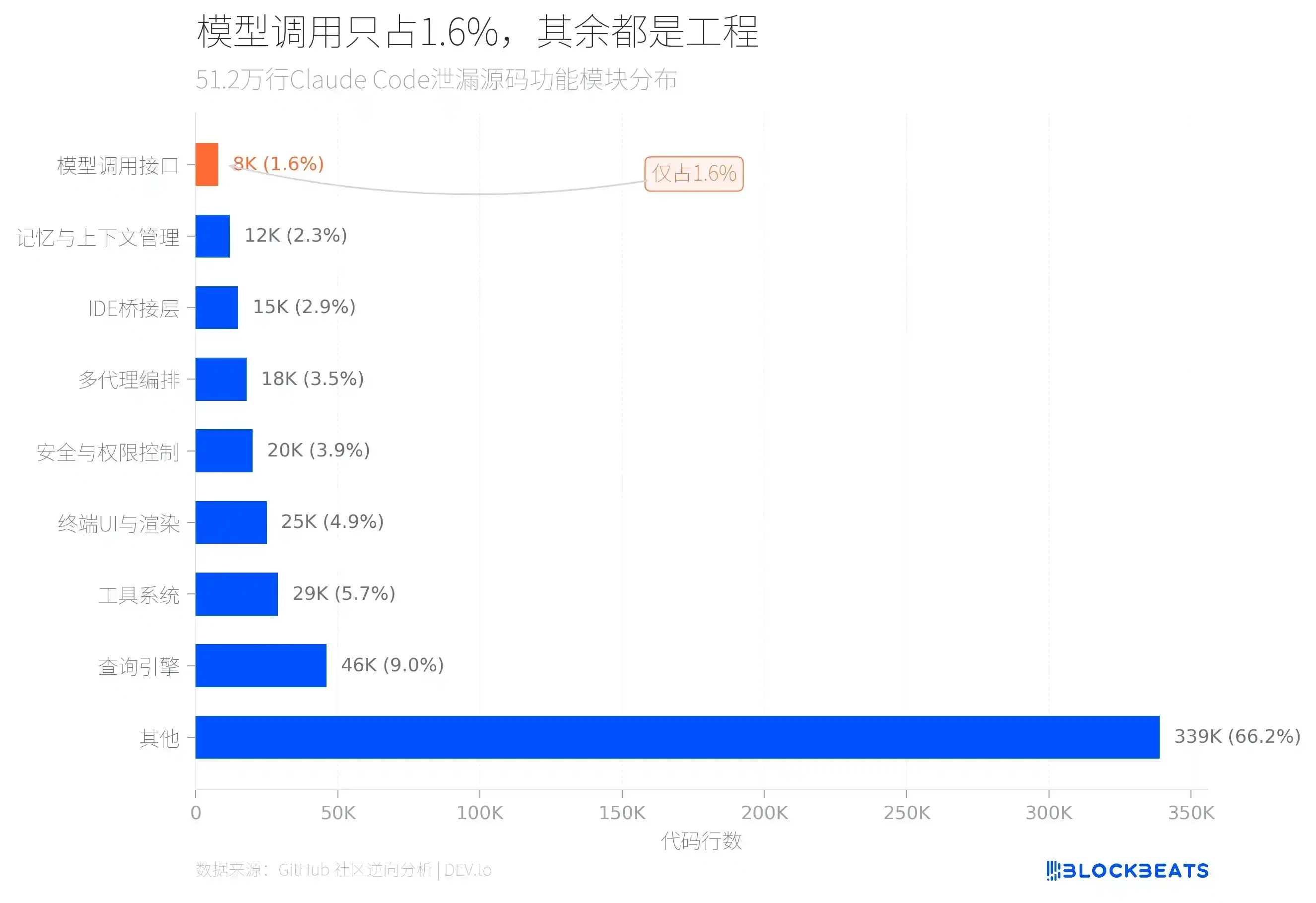
For AI products, model inference costs might not be the most expensive layer; failed cache management is.

Chased AI Tools for a Year, Zero Output: Reflections of a Serial Entrepreneur

Don't mistake 'trying new tools' for 'building something real.' When everyone can use the same models, the only moat is taste and depth, and taste can only be earned through real consequences and sustained focus.

Tiger Research: What AI Services Do Crypto Companies Offer?

Adoption motives vary by细分行业 (sub-sector): exchanges aim to prevent user churn; security companies aim to fill audit blind spots; payment infrastructure targets the emerging agent economy.

The "FOMO" and competitive pressure in the AI field are accelerating its application, far exceeding actual demand. Both real demand and competitive anxiety are at play.

Distinguishing between value-creating adoption and mere label-sticking adoption is the key question.

Prediction Markets

Only 43% Return on $1, Why Are 87% of Polymarket Players Losing Money?

"Longshot bias" is one of the most expensive mistakes in prediction markets. Traders often systematically overestimate low-probability events, paying too high a price for seemingly cheap contracts.

The traders who truly outperform prediction markets in the long run are not necessarily those with the "most accurate judgment," but those who can adjust their judgment the fastest and most reasonably when new evidence appears.

The Bayesian method essentially provides a scale for this "adjustment speed."

Stop Betting on Gut Feeling: AI is 'Picking Up Money' on Polymarket

The article introduces a method to identify arbitrage opportunities on Polymarket and execute them systematically: use Perplexity to complete research, locate the偏差 (deviation) between data and market pricing; use Claude to build trading logic, control risk, and execute automatically; finally, complete the trade and realize profits on Polymarket.

For ordinary participants, a more realistic path is to first find certainty through research, and then use systems to amplify gains.

Also recommended: Polymarket Smart Money Panorama: 26 Long-Term Trackable Addresses (Broken Down by Sector).

CeFi & DeFi

Stripe Up, PayPal Down: The New King of Payments Ascends

Stripe's judgment is straightforward: when AI Agents start making purchasing decisions for humans, whoever masters the payment channel抢先 (seizes first) masters the core lifeline of the AI economy. Stripe's超前 (forward-looking) vision puts it ahead of the entire payments industry.

PayPal, however, is步履蹒跚 (stumbling). PayPal's business model relies on "fund flow handling fees," while the stablecoin business model relies on "earning treasury interest on settled assets." There is a natural conflict between these two logics—every time PayPal promotes a PYUSD stablecoin payment, it is, to some extent, cannibalizing its own traditional fee income. This is a difficult problem to solve within PayPal's existing business framework.

BTC is Dying, Why Did HYPE Defy the Trend and Surge 20%?

The RWA trading market enabled by HIP-3 for Hyperliquid provides new value support.

Detailed Explanation of Hyperliquid HIP-4: Using Prediction Markets and Options Trading to Encroach on Traditional Finance

The market overall is in a downward trend, yet HYPE has shown极强的 (extremely strong) stability. The important reason is undoubtedly Hyperliquid's robust fundamentals, focus on generating revenue, and continuous use of profits to buy back HYPE.

HIP-3 (the perpetual contract market deployed by builders) has already shown a clear pattern: when the infrastructure is permissionless and already market-validated, liquidity tends to aggregate towards stronger teams, regardless of whether they receive additional ecosystem support.

The same logic will apply to HIP-4. HIP-4 focuses on "outcome trading," which will introduce prediction markets and certain types of options to Hyperliquid—these products can provide non-linear income outcomes without liquidation risk.

No protocol in the past was good enough to truly bring sustainable options trading into the crypto world. Hyperliquid has done it, and its approach is different from every other platform. This platform has no investors, is free from any external pressure, and Jeff can freely decide what the company wants to do. In this regard, Hyperliquid is very much like Telegram—it doesn't need to spend much money on marketing; the key is the belief itself. If the product is good enough, people will eventually come to use it.

Hyperliquid has a chance to capture the entire cryptocurrency options market.

Winners will build products truly面向 (oriented towards) the real world, embedding cryptocurrency as an underlying implementation detail; losers will continue to cling to the old narrative of "crypto for crypto's sake" and expect the world to adapt to them instead.

Airdrop Opportunities and Interaction Guides

Popular Interaction Collection | New Abstract Badge Task; Noise Beta Version Launched (April 2nd)

Meme

Post-00s Earning A7 Monthly, Trapped Between Three Screens

Odaily interviewed Meme P youngsters who still achieved great results in 2026, and former Meme diamond hands, to understand their ways of making money and their work lives.

Bitcoin

Losing $19K per Mined Coin, Bitcoin Miners Collectively Defect to AI

The latest mining report from CoinShares shows that the weighted average cost for listed mining companies to mine one Bitcoin has risen to about $80,000, while the current BTC price is $68K-70K—a loss of $19K per coin mined.

The Bitcoin mining industry is undergoing its most fundamental transformation since its inception. The clearest signal is not hash rate or difficulty adjustment, but the balance sheet, and the way out is a comprehensive shift towards AI infrastructure.

When Bitcoin Miners Fly into Space

For currently operating Bitcoin mining companies, space mining does not pose an immediate competitive threat in the short term, but a large number of startups continue to try. This also shows that the significant cost reduction space it represents still holds great attraction and imagination for the industry. This also侧面反映出 (reflects from the side) that the entire industry is under structural cost pressure.

The logic of space mining is an ultimate extrapolation of the above trend: if cheap electricity on the ground will eventually narrow due to demand competition, then go to the place with the most abundant energy, which is the universe.

Security

Major Google Quantum Computing Breakthrough, The Crypto World Needs to 'Change Locks' Early

The Google quantum research team (Google Quantum AI), led by world-renowned quantum circuit expert Craig Gidney and others, recently made two moves.

First, on March 25th, Google formally proposed its post-quantum cryptography (PQC) migration timeline, targeting 2029. Second, on March 31st, Google Quantum AI specifically released a research report aimed at the cryptocurrency industry,直言 (stating bluntly) that according to the latest research, the resources required for future quantum computers to crack the elliptic curve cryptography protecting cryptocurrencies are far less than previously thought.

The industry's past judgment about the timeline needs correction. Google has set its own migration target for 2029, and Google Quantum AI also mentioned in the article that it is working with institutions like Coinbase, the Stanford Blockchain Research Institute, and the Ethereum Foundation to responsibly advance according to the 2029 timeline plan.

For every crypto project, this意味着 (means) a new security watershed. Those who can admit the problem earlier, promote upgrades, and complete the "lock change" will have a better chance of preserving their security boundaries in the next era.

Also recommended: Odaily Interview with Yu Xian: How Does the Leak of Anthropic's Nuclear-Level New Model Affect Crypto Security Offense and Defense?.

Weekly Hotspot Recap

Policy & Macro Markets

US lawmakers' offices plan to release a stablecoin收益 (income/profit)条款 (clause) draft next week; industry preparing counter-proposal;

CFTC clarifies 5 key enforcement priorities: "Crack down" on prediction market insider trading and market manipulation;

Views & Voices

Trump: Negotiations have made significant progress; Trump threatens to attack Iranian energy facilities, oil prices continue to rise, US stock index futures fall; Iranian President: We are prepared to end the war, but want guarantees; Iran will impose tolls on ships passing through the Strait of Hormuz;

Trump: Bitcoin has an important status, the US needs to maintain leadership;

10x: Bitcoin's "safe-haven myth" fails under US-Iran conflict, ETF funds reshape pricing logic;

Trader Eugene: Has stopped loss and exited, plans to reduce trading frequency;

Institutions, Big Companies & Top Projects

SpaceX有望 (is expected to) list in June, IPO target valuation exceeds $2 trillion, plans to raise up to $75 billion; OpenAI completes $122 billion financing, valuation reaches $852 billion;

Bitfarms plans to liquidate all Bitcoin on its balance sheet, fully转向 (transition to) AI infrastructure;

Aster adjusts token economic structure, significantly reduces monthly unlock scale;

edgeX airdrop Waterloo (failure);

MagicEden: Wallet will be delisted tomorrow and enter export-only mode;

Dmail Network will gradually cease operations starting May 15th, users need to export emails before then;

Security

Drift Protocol attacked, losses至少 (at least) $200 million (Detailed explanation).

Attached is the portal to the "Weekly Editor's Picks" series. See you next issue~

Related Questions

QAccording to the article, what is the new definition of a global economic recession and how does it affect a country's position in global negotiations?

AThe article redefines a recession from an 'economic outcome' to a 'strategic state' that not only compresses growth and employment but also weakens a country's negotiating power, capital attractiveness, and external credibility, causing it to lose initiative in global games.

QWhat is Warren Buffett's view on the current market and nuclear weapons as mentioned in the editor's picks?

AWarren Buffett stated it is not the time to buy the dip in the U.S. stock market. He also expressed that the most dangerous situation is when the person with the nuclear button is dying or facing immense disgrace, and he believes nuclear weapons will be used within the next one or two hundred years.

QWhat paradoxical relationship does the article highlight between AI investment and inflation in the U.S.?

AThe article points out a paradox where increased AI investment leads to higher inflation, which pushes interest rate cuts further away and increases financing costs, yet the investments continue to accelerate.

QWhat key security threat to the cryptocurrency world does Google Quantum AI's recent research highlight, and what is their proposed timeline for action?

AGoogle Quantum AI's research indicates that future quantum computers could crack the elliptic curve cryptography protecting cryptocurrencies with far fewer resources than previously thought. They have set a migration target of 2029 to post-quantum cryptography (PQC) and are collaborating with industry players to responsibly advance this timeline.

QAccording to the analysis of Polymarket, why are 87% of players losing money, and what is the key trait of successful traders?

AThe 'long-shot bias' is identified as the most expensive mistake, where traders systematically overestimate low-probability events and overpay for seemingly cheap contracts. Successful traders are not necessarily the most accurate in judgment but are those who can adjust their judgments the fastest and most rationally when new evidence appears, essentially employing a Bayesian method.

Related Reads

Trading

Spot
Futures

Hot Articles

What is SONIC

Sonic: Pioneering the Future of Gaming in Web3 Introduction to Sonic In the ever-evolving landscape of Web3, the gaming industry stands out as one of the most dynamic and promising sectors. At the forefront of this revolution is Sonic, a project designed to amplify the gaming ecosystem on the Solana blockchain. Leveraging cutting-edge technology, Sonic aims to deliver an unparalleled gaming experience by efficiently processing millions of requests per second, ensuring that players enjoy seamless gameplay while maintaining low transaction costs. This article delves into the intricate details of Sonic, exploring its creators, funding sources, operational mechanics, and the timeline of significant events that have shaped its journey. What is Sonic? Sonic is an innovative layer-2 network that operates atop the Solana blockchain, specifically tailored to enhance the existing Solana gaming ecosystem. It accomplishes this through a customised, VM-agnostic game engine paired with a HyperGrid interpreter, facilitating sovereign game economies that roll up back to the Solana platform. The primary goals of Sonic include: Enhanced Gaming Experiences: Sonic is committed to offering lightning-fast on-chain gameplay, allowing players and developers to engage with games at previously unattainable speeds. Atomic Interoperability: This feature enables transactions to be executed within Sonic without the need to redeploy Solana programmes and accounts. This makes the process more efficient and directly benefits from Solana Layer1 services and liquidity. Seamless Deployment: Sonic allows developers to write for Ethereum Virtual Machine (EVM) based systems and execute them on Solana’s SVM infrastructure. This interoperability is crucial for attracting a broader range of dApps and decentralised applications to the platform. Support for Developers: By offering native composable gaming primitives and extensible data types - dining within the Entity-Component-System (ECS) framework - game creators can craft intricate business logic with ease. Overall, Sonic's unique approach not only caters to players but also provides an accessible and low-cost environment for developers to innovate and thrive. Creator of Sonic The information regarding the creator of Sonic is somewhat ambiguous. However, it is known that Sonic's SVM is owned by the company Mirror World. The absence of detailed information about the individuals behind Sonic reflects a common trend in several Web3 projects, where collective efforts and partnerships often overshadow individual contributions. Investors of Sonic Sonic has garnered considerable attention and support from various investors within the crypto and gaming sectors. Notably, the project raised an impressive $12 million during its Series A funding round. The round was led by BITKRAFT Ventures, with other notable investors including Galaxy, Okx Ventures, Interactive, Big Brain Holdings, and Mirana. This financial backing signifies the confidence that investment foundations have in Sonic’s potential to revolutionise the Web3 gaming landscape, further validating its innovative approaches and technologies. How Does Sonic Work? Sonic utilises the HyperGrid framework, a sophisticated parallel processing mechanism that enhances its scalability and customisability. Here are the core features that set Sonic apart: Lightning Speed at Low Costs: Sonic offers one of the fastest on-chain gaming experiences compared to other Layer-1 solutions, powered by the scalability of Solana’s virtual machine (SVM). Atomic Interoperability: Sonic enables transaction execution without redeployment of Solana programmes and accounts, effectively streamlining the interaction between users and the blockchain. EVM Compatibility: Developers can effortlessly migrate decentralised applications from EVM chains to the Solana environment using Sonic’s HyperGrid interpreter, increasing the accessibility and integration of various dApps. Ecosystem Support for Developers: By exposing native composable gaming primitives, Sonic facilitates a sandbox-like environment where developers can experiment and implement business logic, greatly enhancing the overall development experience. Monetisation Infrastructure: Sonic natively supports growth and monetisation efforts, providing frameworks for traffic generation, payments, and settlements, thereby ensuring that gaming projects are not only viable but also sustainable financially. Timeline of Sonic The evolution of Sonic has been marked by several key milestones. Below is a brief timeline highlighting critical events in the project's history: 2022: The Sonic cryptocurrency was officially launched, marking the beginning of its journey in the Web3 gaming arena. 2024: June: Sonic SVM successfully raised $12 million in a Series A funding round. This investment allowed Sonic to further develop its platform and expand its offerings. August: The launch of the Sonic Odyssey testnet provided users with the first opportunity to engage with the platform, offering interactive activities such as collecting rings—a nod to gaming nostalgia. October: SonicX, an innovative crypto game integrated with Solana, made its debut on TikTok, capturing the attention of over 120,000 users within a short span. This integration illustrated Sonic’s commitment to reaching a broader, global audience and showcased the potential of blockchain gaming. Key Points Sonic SVM is a revolutionary layer-2 network on Solana explicitly designed to enhance the GameFi landscape, demonstrating great potential for future development. HyperGrid Framework empowers Sonic by introducing horizontal scaling capabilities, ensuring that the network can handle the demands of Web3 gaming. Integration with Social Platforms: The successful launch of SonicX on TikTok displays Sonic’s strategy to leverage social media platforms to engage users, exponentially increasing the exposure and reach of its projects. Investment Confidence: The substantial funding from BITKRAFT Ventures, among others, emphasizes the robust backing Sonic has, paving the way for its ambitious future. In conclusion, Sonic encapsulates the essence of Web3 gaming innovation, striking a balance between cutting-edge technology, developer-centric tools, and community engagement. As the project continues to evolve, it is poised to redefine the gaming landscape, making it a notable entity for gamers and developers alike. As Sonic moves forward, it will undoubtedly attract greater interest and participation, solidifying its place within the broader narrative of blockchain gaming.

1.1k Total ViewsPublished 2024.04.04Updated 2024.12.03

What is SONIC

What is $S$

Understanding SPERO: A Comprehensive Overview Introduction to SPERO As the landscape of innovation continues to evolve, the emergence of web3 technologies and cryptocurrency projects plays a pivotal role in shaping the digital future. One project that has garnered attention in this dynamic field is SPERO, denoted as SPERO,$$s$. This article aims to gather and present detailed information about SPERO, to help enthusiasts and investors understand its foundations, objectives, and innovations within the web3 and crypto domains. What is SPERO,$$s$? SPERO,$$s$ is a unique project within the crypto space that seeks to leverage the principles of decentralisation and blockchain technology to create an ecosystem that promotes engagement, utility, and financial inclusion. The project is tailored to facilitate peer-to-peer interactions in new ways, providing users with innovative financial solutions and services. At its core, SPERO,$$s$ aims to empower individuals by providing tools and platforms that enhance user experience in the cryptocurrency space. This includes enabling more flexible transaction methods, fostering community-driven initiatives, and creating pathways for financial opportunities through decentralised applications (dApps). The underlying vision of SPERO,$$s$ revolves around inclusiveness, aiming to bridge gaps within traditional finance while harnessing the benefits of blockchain technology. Who is the Creator of SPERO,$$s$? The identity of the creator of SPERO,$$s$ remains somewhat obscure, as there are limited publicly available resources providing detailed background information on its founder(s). This lack of transparency can stem from the project's commitment to decentralisation—an ethos that many web3 projects share, prioritising collective contributions over individual recognition. By centring discussions around the community and its collective goals, SPERO,$$s$ embodies the essence of empowerment without singling out specific individuals. As such, understanding the ethos and mission of SPERO remains more important than identifying a singular creator. Who are the Investors of SPERO,$$s$? SPERO,$$s$ is supported by a diverse array of investors ranging from venture capitalists to angel investors dedicated to fostering innovation in the crypto sector. The focus of these investors generally aligns with SPERO's mission—prioritising projects that promise societal technological advancement, financial inclusivity, and decentralised governance. These investor foundations are typically interested in projects that not only offer innovative products but also contribute positively to the blockchain community and its ecosystems. The backing from these investors reinforces SPERO,$$s$ as a noteworthy contender in the rapidly evolving domain of crypto projects. How Does SPERO,$$s$ Work? SPERO,$$s$ employs a multi-faceted framework that distinguishes it from conventional cryptocurrency projects. Here are some of the key features that underline its uniqueness and innovation: Decentralised Governance: SPERO,$$s$ integrates decentralised governance models, empowering users to participate actively in decision-making processes regarding the project’s future. This approach fosters a sense of ownership and accountability among community members. Token Utility: SPERO,$$s$ utilises its own cryptocurrency token, designed to serve various functions within the ecosystem. These tokens enable transactions, rewards, and the facilitation of services offered on the platform, enhancing overall engagement and utility. Layered Architecture: The technical architecture of SPERO,$$s$ supports modularity and scalability, allowing for seamless integration of additional features and applications as the project evolves. This adaptability is paramount for sustaining relevance in the ever-changing crypto landscape. Community Engagement: The project emphasises community-driven initiatives, employing mechanisms that incentivise collaboration and feedback. By nurturing a strong community, SPERO,$$s$ can better address user needs and adapt to market trends. Focus on Inclusion: By offering low transaction fees and user-friendly interfaces, SPERO,$$s$ aims to attract a diverse user base, including individuals who may not previously have engaged in the crypto space. This commitment to inclusion aligns with its overarching mission of empowerment through accessibility. Timeline of SPERO,$$s$ Understanding a project's history provides crucial insights into its development trajectory and milestones. Below is a suggested timeline mapping significant events in the evolution of SPERO,$$s$: Conceptualisation and Ideation Phase: The initial ideas forming the basis of SPERO,$$s$ were conceived, aligning closely with the principles of decentralisation and community focus within the blockchain industry. Launch of Project Whitepaper: Following the conceptual phase, a comprehensive whitepaper detailing the vision, goals, and technological infrastructure of SPERO,$$s$ was released to garner community interest and feedback. Community Building and Early Engagements: Active outreach efforts were made to build a community of early adopters and potential investors, facilitating discussions around the project’s goals and garnering support. Token Generation Event: SPERO,$$s$ conducted a token generation event (TGE) to distribute its native tokens to early supporters and establish initial liquidity within the ecosystem. Launch of Initial dApp: The first decentralised application (dApp) associated with SPERO,$$s$ went live, allowing users to engage with the platform's core functionalities. Ongoing Development and Partnerships: Continuous updates and enhancements to the project's offerings, including strategic partnerships with other players in the blockchain space, have shaped SPERO,$$s$ into a competitive and evolving player in the crypto market. Conclusion SPERO,$$s$ stands as a testament to the potential of web3 and cryptocurrency to revolutionise financial systems and empower individuals. With a commitment to decentralised governance, community engagement, and innovatively designed functionalities, it paves the way toward a more inclusive financial landscape. As with any investment in the rapidly evolving crypto space, potential investors and users are encouraged to research thoroughly and engage thoughtfully with the ongoing developments within SPERO,$$s$. The project showcases the innovative spirit of the crypto industry, inviting further exploration into its myriad possibilities. While the journey of SPERO,$$s$ is still unfolding, its foundational principles may indeed influence the future of how we interact with technology, finance, and each other in interconnected digital ecosystems.

54 Total ViewsPublished 2024.12.17Updated 2024.12.17

What is $S$

What is AGENT S

Agent S: The Future of Autonomous Interaction in Web3 Introduction In the ever-evolving landscape of Web3 and cryptocurrency, innovations are constantly redefining how individuals interact with digital platforms. One such pioneering project, Agent S, promises to revolutionise human-computer interaction through its open agentic framework. By paving the way for autonomous interactions, Agent S aims to simplify complex tasks, offering transformative applications in artificial intelligence (AI). This detailed exploration will delve into the project's intricacies, its unique features, and the implications for the cryptocurrency domain. What is Agent S? Agent S stands as a groundbreaking open agentic framework, specifically designed to tackle three fundamental challenges in the automation of computer tasks: Acquiring Domain-Specific Knowledge: The framework intelligently learns from various external knowledge sources and internal experiences. This dual approach empowers it to build a rich repository of domain-specific knowledge, enhancing its performance in task execution. Planning Over Long Task Horizons: Agent S employs experience-augmented hierarchical planning, a strategic approach that facilitates efficient breakdown and execution of intricate tasks. This feature significantly enhances its ability to manage multiple subtasks efficiently and effectively. Handling Dynamic, Non-Uniform Interfaces: The project introduces the Agent-Computer Interface (ACI), an innovative solution that enhances the interaction between agents and users. Utilizing Multimodal Large Language Models (MLLMs), Agent S can navigate and manipulate diverse graphical user interfaces seamlessly. Through these pioneering features, Agent S provides a robust framework that addresses the complexities involved in automating human interaction with machines, setting the stage for myriad applications in AI and beyond. Who is the Creator of Agent S? While the concept of Agent S is fundamentally innovative, specific information about its creator remains elusive. The creator is currently unknown, which highlights either the nascent stage of the project or the strategic choice to keep founding members under wraps. Regardless of anonymity, the focus remains on the framework's capabilities and potential. Who are the Investors of Agent S? As Agent S is relatively new in the cryptographic ecosystem, detailed information regarding its investors and financial backers is not explicitly documented. The lack of publicly available insights into the investment foundations or organisations supporting the project raises questions about its funding structure and development roadmap. Understanding the backing is crucial for gauging the project's sustainability and potential market impact. How Does Agent S Work? At the core of Agent S lies cutting-edge technology that enables it to function effectively in diverse settings. Its operational model is built around several key features: Human-like Computer Interaction: The framework offers advanced AI planning, striving to make interactions with computers more intuitive. By mimicking human behaviour in tasks execution, it promises to elevate user experiences. Narrative Memory: Employed to leverage high-level experiences, Agent S utilises narrative memory to keep track of task histories, thereby enhancing its decision-making processes. Episodic Memory: This feature provides users with step-by-step guidance, allowing the framework to offer contextual support as tasks unfold. Support for OpenACI: With the ability to run locally, Agent S allows users to maintain control over their interactions and workflows, aligning with the decentralised ethos of Web3. Easy Integration with External APIs: Its versatility and compatibility with various AI platforms ensure that Agent S can fit seamlessly into existing technological ecosystems, making it an appealing choice for developers and organisations. These functionalities collectively contribute to Agent S's unique position within the crypto space, as it automates complex, multi-step tasks with minimal human intervention. As the project evolves, its potential applications in Web3 could redefine how digital interactions unfold. Timeline of Agent S The development and milestones of Agent S can be encapsulated in a timeline that highlights its significant events: September 27, 2024: The concept of Agent S was launched in a comprehensive research paper titled “An Open Agentic Framework that Uses Computers Like a Human,” showcasing the groundwork for the project. October 10, 2024: The research paper was made publicly available on arXiv, offering an in-depth exploration of the framework and its performance evaluation based on the OSWorld benchmark. October 12, 2024: A video presentation was released, providing a visual insight into the capabilities and features of Agent S, further engaging potential users and investors. These markers in the timeline not only illustrate the progress of Agent S but also indicate its commitment to transparency and community engagement. Key Points About Agent S As the Agent S framework continues to evolve, several key attributes stand out, underscoring its innovative nature and potential: Innovative Framework: Designed to provide an intuitive use of computers akin to human interaction, Agent S brings a novel approach to task automation. Autonomous Interaction: The ability to interact autonomously with computers through GUI signifies a leap towards more intelligent and efficient computing solutions. Complex Task Automation: With its robust methodology, it can automate complex, multi-step tasks, making processes faster and less error-prone. Continuous Improvement: The learning mechanisms enable Agent S to improve from past experiences, continually enhancing its performance and efficacy. Versatility: Its adaptability across different operating environments like OSWorld and WindowsAgentArena ensures that it can serve a broad range of applications. As Agent S positions itself in the Web3 and crypto landscape, its potential to enhance interaction capabilities and automate processes signifies a significant advancement in AI technologies. Through its innovative framework, Agent S exemplifies the future of digital interactions, promising a more seamless and efficient experience for users across various industries. Conclusion Agent S represents a bold leap forward in the marriage of AI and Web3, with the capacity to redefine how we interact with technology. While still in its early stages, the possibilities for its application are vast and compelling. Through its comprehensive framework addressing critical challenges, Agent S aims to bring autonomous interactions to the forefront of the digital experience. As we move deeper into the realms of cryptocurrency and decentralisation, projects like Agent S will undoubtedly play a crucial role in shaping the future of technology and human-computer collaboration.

557 Total ViewsPublished 2025.01.14Updated 2025.01.14

What is AGENT S

Discussions

Welcome to the HTX Community. Here, you can stay informed about the latest platform developments and gain access to professional market insights. Users' opinions on the price of S (S) are presented below.

活动图片