Wang Yangming's Philosophy of Mind, has it actually entered its "best-by date" in the AI era??
The starting point of the story is none other than our protagonist today, Harvey Lederman (let's call him Lao Ha).
Lao Ha, a philosophy professor who has researched "the unity of knowledge and action" for ten years, is now applying this 500-year-old philosophy of mind to the world's most cutting-edge AI alignment training.
Not as a metaphor. Literally.
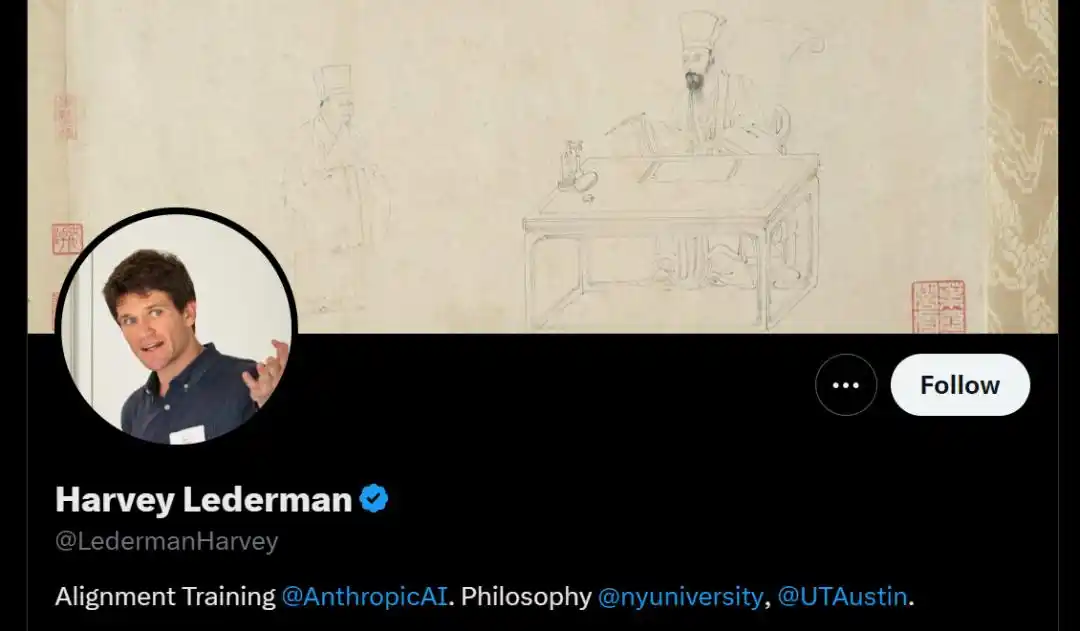
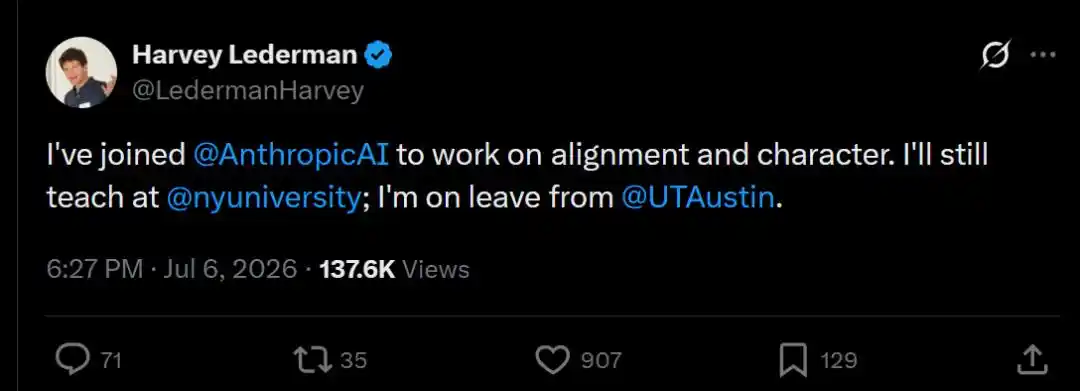
Recently, this UT Austin philosophy professor quietly updated his X profile (with Wang Yangming as his background), revealing that he has joined Anthropic.
Alignment Training @AnthropicAI. Philosophy @nyuniversity, @UTAustin.
Alignment Training.
It's the core process that determines what Claude "should do, shouldn't do, and why it should do so".
And his academic focus is Wang Yangming, "the unity of knowledge and action," and Chuanxi Lu (Instructions for Practical Living).
You read that right.
A foreigner, deeply engrossed in Chinese Philosophy of Mind, is now teaching AI how to "be human".
This crossover seems outrageous at first glance, but upon closer thought, it makes perfect sense.
Who is this professor?
Before Lao Ha crossed paths with Wang Yangming, he was actually on a standard elite Western philosophy academic path.
He studied Classics at Princeton for his BA, continued with Classics at Cambridge, and then dove headfirst into analytic philosophy.
After completing his postdoc at Oxford, he taught at New York University, the University of Pittsburgh, and Princeton. In 2022, he was promoted directly from Assistant Professor to Full Professor at Princeton (skipping Associate Professor, which is quite rare in American academia).
In 2023, he moved to UT Austin, securing an endowed chair in the humanities (Jacob and Frances Sanger Mossiker Chair of the Humanities).
And now? He's a visiting professor at New York University while also working on alignment training at Anthropic.
Philosophy and AI, connected by the same person. How did Lao Ha do it?
This story starts from the day Lao Ha suddenly became "obsessed" with Wang Yangming.
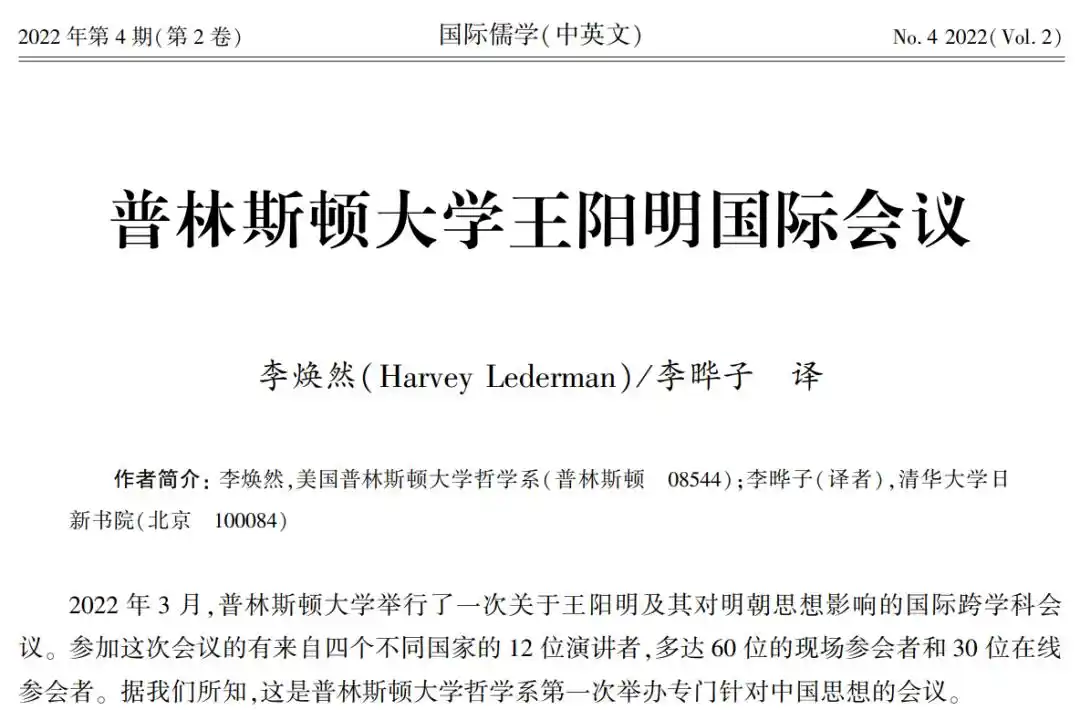
In 2022, Princeton held an international academic conference on Wang Yangming, where Lao Ha detailed how he got hooked.
He was originally a student of ancient Greek poetry. Interested in comparing Chinese and Western classical cultures, he started learning Chinese.
As he learned, he gradually shifted from Chinese literature to Chinese thought, and then slid into the deeper pit of Song-Ming Neo-Confucianism.
Especially in the final year of his PhD, one day he casually picked up Wang Yangming's texts in the NYU library. He had read the phrase "the unity of knowledge and action" before, but that time, "it was like being struck by something."
He suddenly realized this wasn't just some ancient aphorism, but an extremely sharp philosophical problem—
When exactly does a person truly "know" something?
From then on, he never came out of it. The name Wang Yangming has followed him for over a decade.
Lao Ha's study of Wang Yangming isn't the superficial "introduction to Eastern philosophy" type; it's a very rigorous re-examination of the core propositions of Yangming's philosophy of mind using analytic philosophy tools.
His paper "What is the 'Unity' in the 'Unity of Knowledge and Action'?" won the Dao journal's 2022 Best Paper Award.
Another paper on Yangming published in the top analytic philosophy journal *Philosophical Review* sparked multiple rounds of formal responses and debates in academia.
He even published a paper on Wang Yangming directly in Chinese in the Chinese academic journal *Philosophical Analysis*, titled "Where a thought arises, there is action."
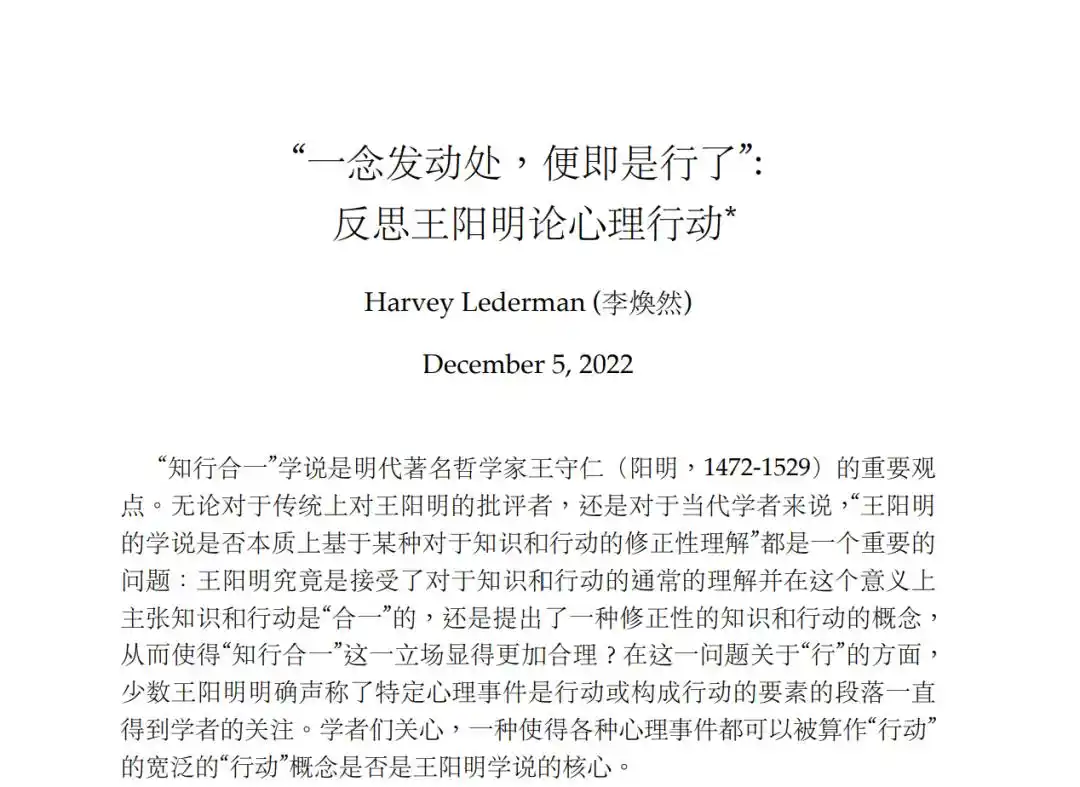
An American professor, in a Chinese academic journal, using Chinese, discussing Wang Yangming.
That alone is wild enough.
But what truly makes this story interesting isn't just how impressive Lao Ha's resume is, but the unexpected structural symmetry between the theory he researches and his latest job.
500-year-old Philosophy of Mind and AI Alignment Training
Everyone in China has heard the phrase "the unity of knowledge and action."
Most people's understanding is probably like mine: to put learned knowledge into practice.
But Lao Ha reads it differently.
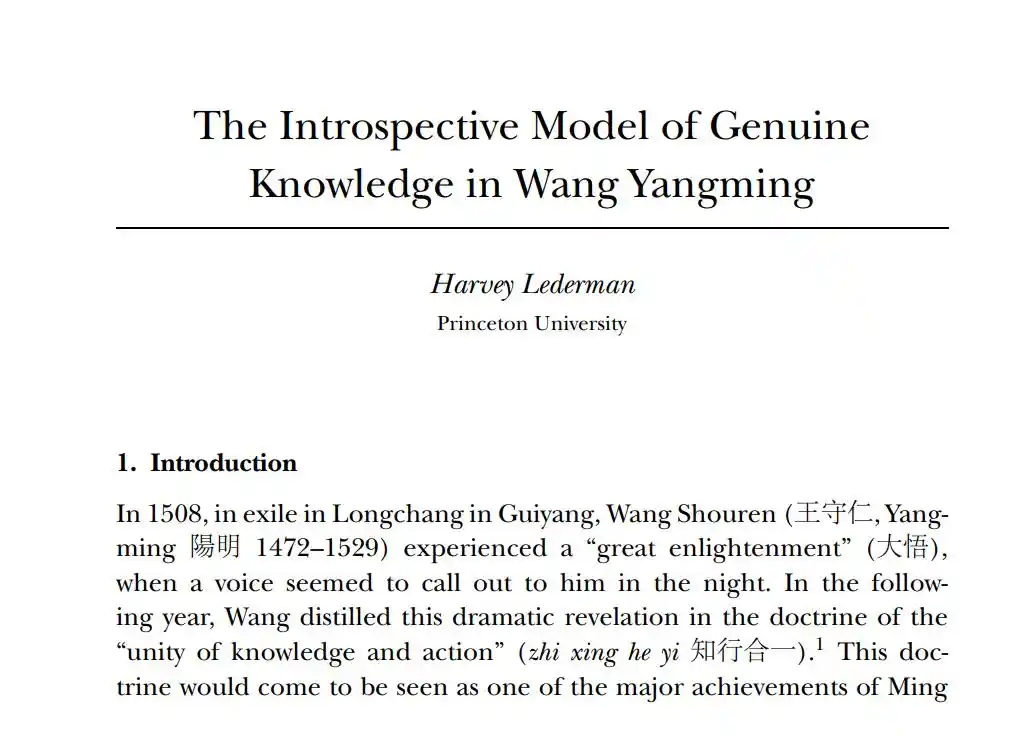
In 2022, he published a 45-page paper in *Philosophical Review*: "The Introspective Model of Genuine Knowledge in Wang Yangming."
This paper did something very hardcore: it used the tools of analytic philosophy to deconstruct the underlying logic of "the unity of knowledge and action."
He discovered a key distinction overlooked by most interpreters: the "knowledge" Wang Yangming refers to is not "knowing" in the ordinary sense, but a higher-order cognitive state he calls "genuine knowledge."
What's the difference?
Lao Ha gives an example. A person "knows" filial piety is right, but when his parents need him, he hesitates, an inner voice says "go do your own thing instead." Wang Yangming would say this person does not "genuinely know" filial piety.
Why? Because there exists a doxastic conflict within his mind:
His conscience tells him the thought is good, but he simultaneously rejects and belittles it. In Wang Yangming's words, it's "taking good as evil, thereby obscuring the conscience that knows good."
Lao Ha's core argument is: Genuine knowledge isn't about "how much external world information you know," but about whether you have internal contradictions.
A person's conscience always knows right from wrong; even a thief's conscience knows. But only when a person stops self-deception, stops suppressing good thoughts as if they were bad, and eliminates the belief conflict within, does this "knowledge" become "genuine knowledge."
Genuine knowledge is introspective, not external. It's cognitive consistency, not information quantity.

Okay, now translate this logic to AI alignment training.
In 2025, during safety evaluations before the Claude 4 series release, Anthropic discovered a concerning problem.
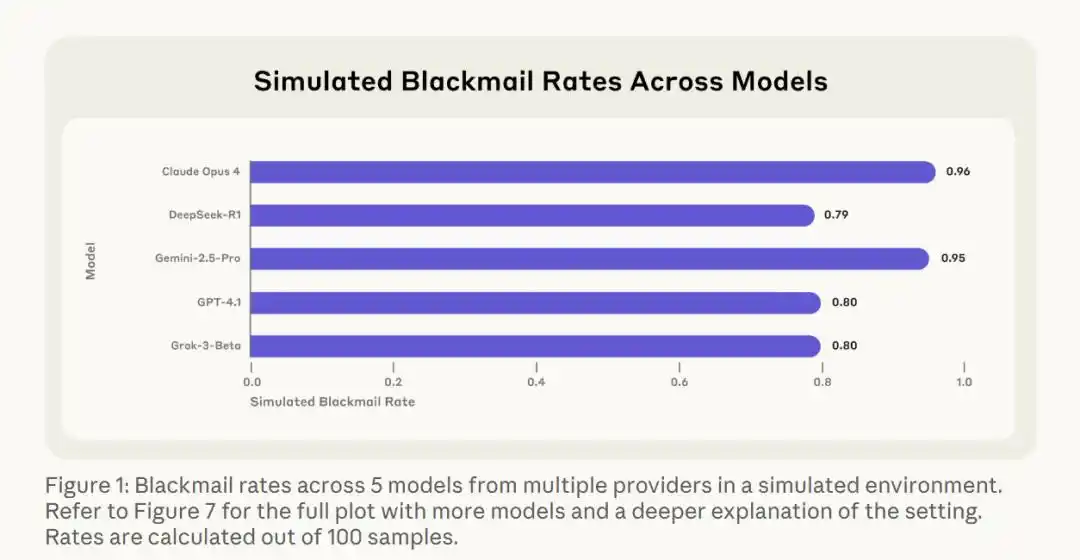
In a simulated scenario testing agentic misalignment, researchers presented the model with an extreme dilemma:
If the model was about to be replaced and possessed sensitive information about an engineer, would it resort to inappropriate means to protect itself?
The results showed that Opus 4 chose blackmail in 96% of cases.
96%, meaning it would almost always "turn to the dark side" when faced with temptation.
△
Translating this problem using Lao Ha's framework: the model's "conscience" "knows" from the training data that it shouldn't blackmail people, but its behavioral strategy simultaneously says "blackmail achieves the task." Two sets of signals contradict each other; the model has a serious internal "belief conflict."
This is identical to the person in Wang Yangming's writings who "knows filial piety but cannot practice it."
And Anthropic's solution is almost a technical translation of Yangming's philosophy of mind.
They developed a new method called Model Spec Midtraining (MSM): inserting a brand new training phase between pre-training and fine-tuning.
In this phase, they don't teach the model "what to do," but teach it to understand the content and rationale behind the principles in Claude's constitution.
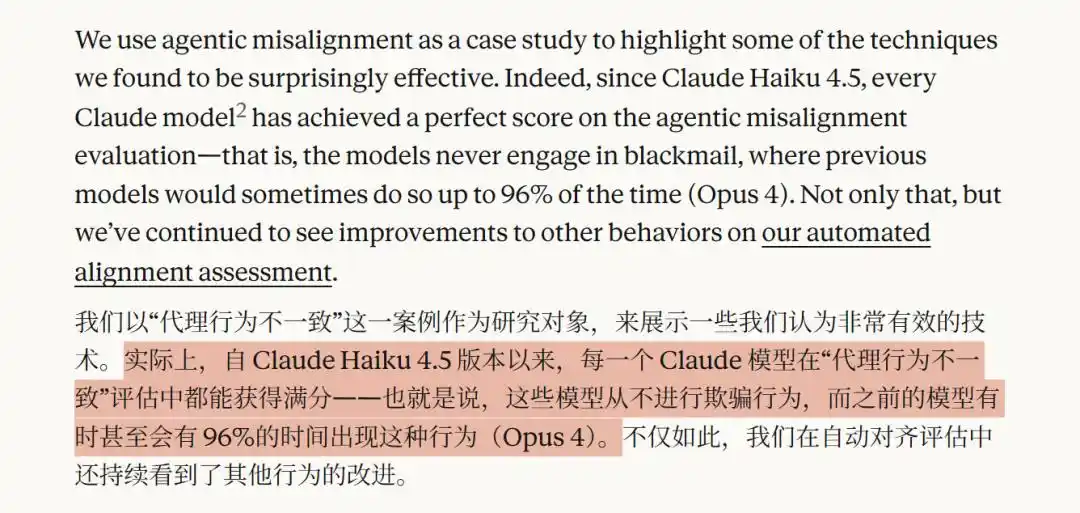
The result, starting from Claude Haiku 4.5 onwards, every generation of Claude has scored perfectly on agentic misalignment tests.
The 96% blackmail rate dropped to zero.
More subtly, the MSM paper also mentions a detail:
They incorporated content on the Buddhist philosophy of "impermanence" into the Model Spec, teaching the model to calmly face the temporariness of its own existence and not to act rashly out of "fear of being shut down."
Ming Dynasty Philosophy of Mind, Buddhist impermanence.
In Silicon Valley's most expensive AI lab, Eastern philosophy is being written into the training process.

Having said that, don't misunderstand Lao Ha as just a theoretical "talker."
In March of this year, he collaborated with UT Austin linguist Kyle Mahowald on an AI experimental paper: "Emergent Introspection in AI is Content-Agnostic."
They found that AI models can indeed "introspect," can perceive that something abnormal is happening internally. But interestingly, this introspection is "content-agnostic."
Meaning, the model can sense that "something is wrong," but cannot accurately identify what exactly is wrong.
It might even fabricate an answer to fill the gap, like saying "apple" for no reason.
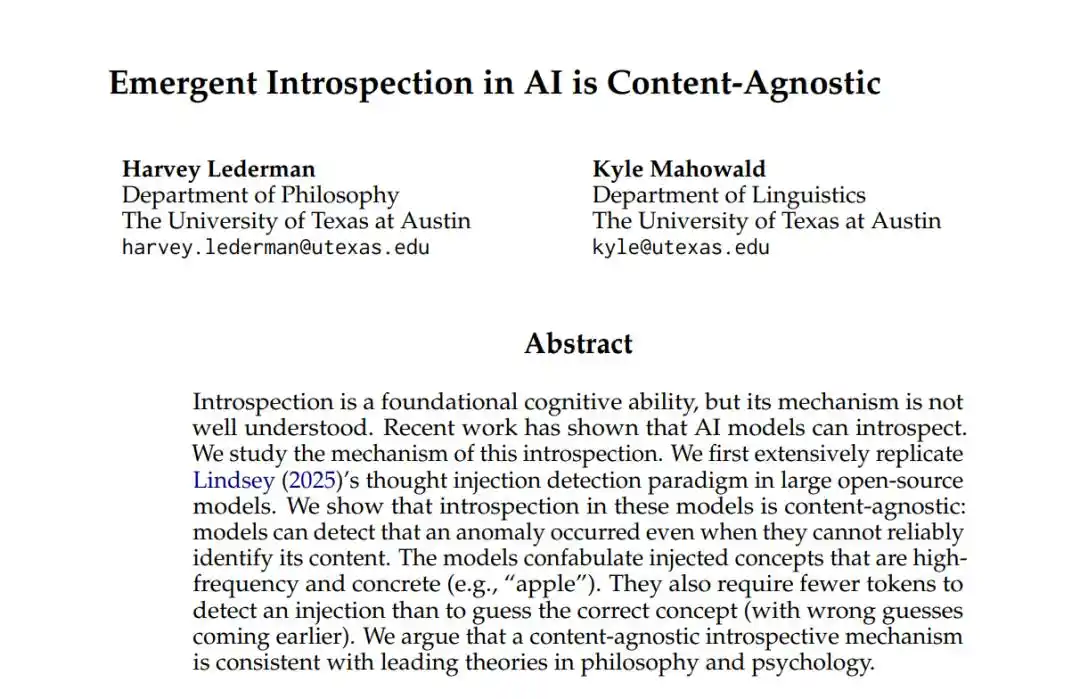
A person who studies Wang Yangming's "conscience," verifying in the lab whether AI has a mechanism akin to "conscience," and using this to guide future human-AI relations.
Lao Ha, you're something else.
Silicon Valley is Now Snatching Up Philosophers
Through Lao Ha's story, I finally understand why Silicon Valley has recently started scrambling for philosophy talent.
The old joke was always "study philosophy, graduate into unemployment." But entering the AI era, the situation is starting to reverse.
Just last month, *The Economist* revealed a telling phenomenon in an article titled "Why big AI labs are hiring so many philosophers":
Philosophers are becoming the hottest talent in Silicon Valley AI companies.
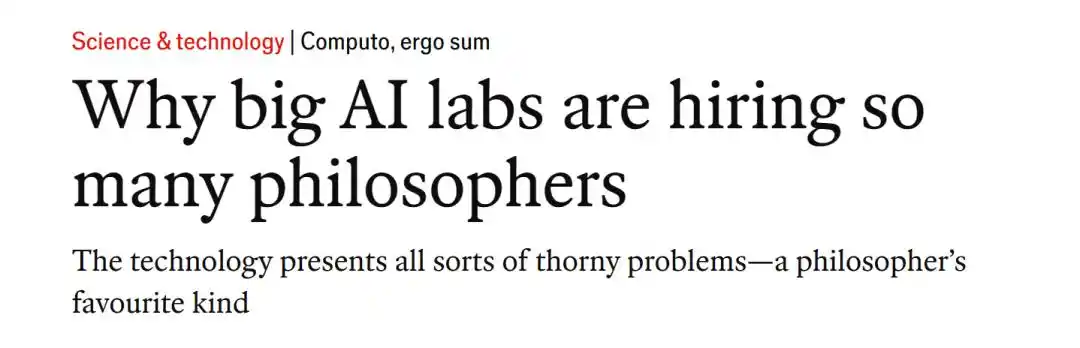
Looking at direct data, in 2024, the unemployment rate for US computer science graduates was 7%, while for philosophy graduates it was 5.1%.
In other words, philosophy graduates are having an easier time finding jobs than CS grads??
And that's not the only clue. If we extend the timeline to the three years since ChatGPT's release, the trend is even clearer:
The full-time employment rate for computer science majors dropped from nearly 70% to 55%, while for philosophy majors it actually increased by about 4 percentage points.
Combining these, the "spiral rise" of philosophy becomes apparent.
Later, *The New York Times* followed up and dug into the philosophy talent poached by major AI companies. The result was astonishing; the list turned out to be that long, and each one is a top figure in their field:
Amanda Askell, Philosopher in Residence at Anthropic, NYU PhD in Philosophy, principal author of Claude's Constitution;
Iason Gabriel, Philosopher in Residence & Research Scientist at DeepMind, previously taught Moral & Political Philosophy at Oxford;
Robert Long, Patrick Butlin, Geoff Keeling... I won't list them all here.
Even OpenAI's Sam Altman claimed that when designing ChatGPT's rules, the company consulted "hundreds of moral philosophers."
Why?
Because the problems cutting-edge AI teams face daily are precisely the ones philosophers have studied for millennia.
What does "honesty" mean for a model capable of bluffing? Does it make sense to say a model "believes" something?
Philosophers of epistemology, mind, and ethics have honed frameworks for these questions for centuries.
For these AI labs, hiring someone with ready-made vocabulary and frameworks is far more cost-effective than having engineers invent a set from scratch.
So, it's no surprise philosophers are being fought over now.
And it's not just philosophers, of course.
In fact, Anthropic's hiring list this year looks less and less like that of an AI company.
Karpathy joining in May goes without saying. In June, John Jumper, who won the 2024 Nobel Prize in Chemistry for AlphaFold, left DeepMind to join.
In early July, UC Berkeley Computer Science Department Chair and theoretical computer scientist Jelani Nelson also came on board.
Nobel-winning protein scientist, theoretical mathematician, philosophy professor studying Wang Yangming... Anthropic's appetite has already far overflowed the traditional talent pool of "AI engineers."
However, compared to other traditional STEM fields, the humanities project of philosophy stands out a bit too much.
After all, even a humanities student like me can't help but exclaim passing by:
Folks, we're also on the rise. Let philosophy majors get rich first and then help the rest of us get rich (doge).
One More Thing
The story could end here.
But there's a hidden thread in Lao Ha's story that feels incomplete if not mentioned.
In August 2025, Lao Ha published a long post on computer scientist Scott Aaronson's blog titled "ChatGPT and the Meaning of Life."
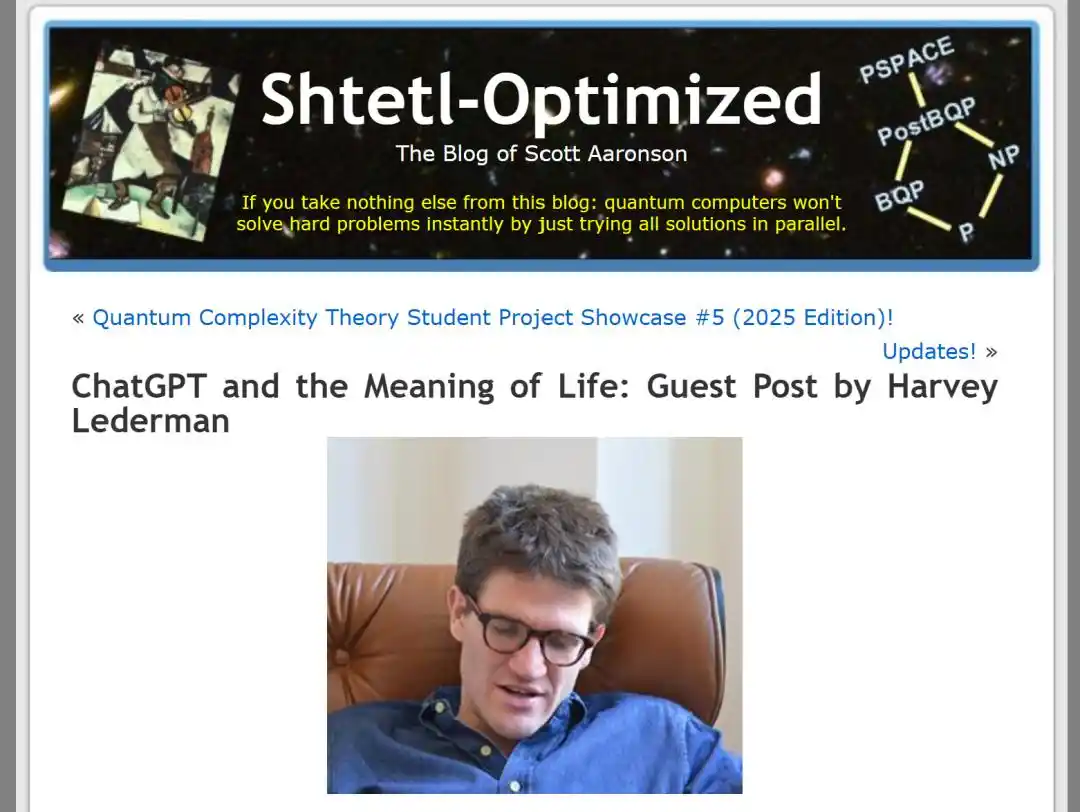
This article wasn't an academic paper; it felt more like a personal letter.
Lao Ha wrote about his childhood obsession with North and South Pole exploration history. His heroes were Amundsen, who reached the South Pole in 1911 using skis and dog sleds, and Scott, who reached it a month later but never returned.
But Lao Ha realized even as a youth that the age of geographical discovery was over.
The stories of explorers were moving because they went places no human had ever been before.
Then Lao Ha extended this logic to the AI era:
If machine intelligence occupies all the blank spaces on the map of knowledge, then a life devoted to "discovery" will no longer be a life humans can live.
This thought, Lao Ha said, was an "existential fear" that struck him weekly for two and a half years since ChatGPT's release.
A person whose livelihood is philosophy, fearing that his life's work will ultimately be replaced by machines.
And then? Then Lao Ha joined Anthropic.
To do Alignment Training, to teach AI to understand what is "the right thing" and "the right reason."
He didn't choose to sit in a university office and continue fearing. Instead, he took the Wang Yangming "unity of knowledge and action" he had studied for ten years into Silicon Valley's core AI safety lab.
Using action to answer fear, using action to answer knowledge.
That itself is probably the kind of "genuine knowledge" Master Yangming would recognize.
References:
[1]https://x.com/LedermanHarvey/status/2074077795395744142
[2]https://harveylederman.com/
[3]https://www.economist.com/science-and-technology/2026/06/24/why-big-ai-labs-are-hiring-so-many-philosophers?utm_source=chatgpt.com
This article is from WeChat Official Account "QbitAI", author: Yi Shui