Vietnam Begins 5-Year Crypto Licensing Pilot To Regulate Exchanges

bitcoinistPublished on 2026-01-22Last updated on 2026-01-22

Abstract

Vietnam has launched a five-year pilot program to license and regulate cryptocurrency exchanges, moving the sector from a legal "gray area" into a formal framework. The Ministry of Finance began accepting applications under new rules requiring exchanges to meet strict capital and operational criteria. These include a minimum charter capital of ~$380 million, with significant institutional ownership, and specific staffing and experience requirements for executives and technical personnel. Major financial and tech firms have already announced partnerships and preparations to enter the newly regulated market.

Vietnam has launched a pilot program to license cryptocurrency exchanges, aiming to bring the rapidly growing market into a formal legal framework after years of regulatory uncertainty.

Vietnam’s Crypto Licensing Pilot Begins

On Tuesday, Vietnam began its pilot licensing regime to officially regulate crypto trading platforms in the country for the first time, in an effort to gradually move the sector from the shadows into a properly supervised framework under the local financial authorities.

According to local reports, the Ministry of Finance issued Decision No. 96/QD-BTC on January 20, introducing procedures necessary for the implementation of Government Resolution No. 05/2025/NQ-CP.

The three new administrative procedures cover the issuance, modification, and revocation of licenses for entities operating crypto asset trading platforms. The Ministry announced that it began accepting applications from businesses seeking to offer crypto asset trading services.

For context, the country’s cryptocurrency market lacked a clear legal framework, existing in an unsupervised, “gray area.” Last year, the National Assembly passed the “Law on Digital Technology Industry,” which took effect on January 1, 2026, to create a foundation for authorities to develop suitable management policies.

In September, Vietnam’s Deputy Prime Minister Ho Duc Phoc signed Government Resolution No. 05/2025/NQ-CP, allowing a five-year pilot program for the issuance and trading of crypto assets.

As reported by Bitcoinist, under Resolution No. 05, organizations seeking to provide services for crypto trading markets must be registered with the financial authorities and fully comply with a strict set of rules, including a minimum contributed charter capital of VND10 trillion, worth around $380.66 million.

Notably, at least 65% of the charter capital must be held by institutional investors, with more than 35% contributed by at least two institutions such as commercial banks, securities companies, fund management companies, insurance companies, or technology enterprises.

The general director must have at least two years of experience in finance, while the CTO must have at least five years of experience in information technology. Moreover, firms must hire at least 10 technology staff with cybersecurity certificates and at least 10 staff with securities practice certificates working in other departments.

Financial Institutions Dive Into Digital Assets

Following the issuance of Resolution No. 05, major financial players, including securities companies and banking institutions, have announced their intention to participate in the pilot and enter the sector, noted the report.

In June, two SSI’s subsidiaries, SSI Digital Technology JSC and SSI Asset Management Company Limited, signed Memorandums of Understanding with Tether, U2U Network, and Amazon Web Services to develop a digital financial ecosystem in Vietnam based on blockchain and cloud computing platforms.

In addition, VIX Securities contributed capital to establish the VIX Crypto Asset Exchange and partnered with tech giant FPT Corp. to prepare its technology infrastructure.

Meanwhile, the banking sector saw MBBank enter a technical cooperation agreement with Dunamu, the operator of the Korean exchange Upbit, to establish a crypto exchange in Vietnam while jointly developing the legal framework and investor protection mechanisms.

Techcombank also established the Techcom Crypto Asset Exchange with a charter capital of several hundred billion VND. Similarly, VPBank stated it is fully prepared to begin operations as soon as it receives regulatory approval.
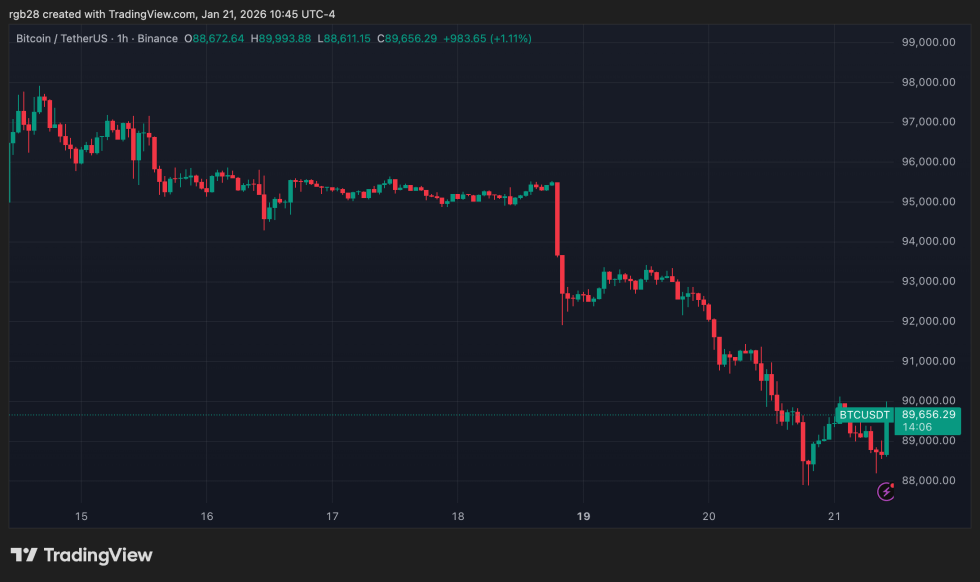
Bitcoin (BTC) trades at $89,656 in the one-week chart. Source: BTCCUSDT on TradingView

Related Questions

QWhat is the main purpose of Vietnam's new pilot program for cryptocurrency exchanges?

AThe main purpose is to bring the rapidly growing cryptocurrency market into a formal legal framework and regulate crypto trading platforms under the supervision of local financial authorities, moving the sector out of its previous unregulated 'gray area'.

QWhat is the minimum charter capital requirement for an organization to provide crypto trading services under Resolution No. 05?

AThe minimum charter capital requirement is VND10 trillion, which is worth approximately $380.66 million.

QWhat are the key experience requirements for the leadership of a licensed crypto exchange in Vietnam?

AThe general director must have at least two years of experience in finance, and the Chief Technology Officer (CTO) must have at least five years of experience in information technology.

QWhich major financial institutions have announced plans to participate in Vietnam's crypto pilot program?

AMajor players include SSI's subsidiaries (SSI Digital Technology JSC and SSI Asset Management Company Limited), VIX Securities, MBBank, Techcombank, and VPBank, which have partnered with companies like Tether, U2U Network, Amazon Web Services, FPT Corp., and Dunamu.

QWhat law created the foundation for Vietnam to develop management policies for the digital technology industry, including cryptocurrencies?

AThe 'Law on Digital Technology Industry' was passed by the National Assembly last year and took effect on January 1, 2026, creating the foundation for authorities to develop suitable management policies.

Related Reads

Base Claims Its Distribution Advantage Can Outlast Robinhood Chain's Initial Surge

Base, a layer-2 blockchain, argues that its established distribution network will outlast Robinhood Chain's initial popularity surge. While Robinhood Chain quickly attracted 230,000 daily active users and over $9 billion in DEX volume (primarily from meme coins) shortly after launch, its core feature of tokenized stocks saw minimal use. Base acknowledged shortcomings in focusing on social blockchain products and lagging in areas like perpetual contracts, predictions markets, and on-chain tokenized stocks—a move Robinhood got right. In response, Base highlights its nearly three-year head start in building infrastructure. It emphasizes its x402 payment protocol, which has processed 187.8 million agent payments, its $3.9 billion in stablecoin deposits (mostly USDC), and its integration with partners like Visa, Shopify, and JPMorgan for institutional and merchant settlements. Base contends these capabilities for corporate payments and stablecoin liquidity represent a more durable and defensible ecosystem than Robinhood's retail trading metrics. Coinbase plans to launch its own on-chain, share-backed tokenized stocks on Base, which would directly challenge Robinhood's key differentiating feature. Base's strategy bets that its deep-rooted distribution and institutional partnerships will prove harder to overcome than Robinhood's early, meme-driven volume, which may fade after the initial launch hype.

cryptonews.ru6m ago

Base Claims Its Distribution Advantage Can Outlast Robinhood Chain's Initial Surge

cryptonews.ru6m ago

The Turning Point of the AI Bull Market: Leverage Blow-ups, Overcapacity in Compute, Why This Macro Analyst is Fully Bearish

AI Bull Market Reaches Inflection Point: Analyst Turns Bearish Due to Leverage, Chinese Competition, and Overcapacity Fidenza Macro analyst Geo Chen explains his decision to sell all AI semiconductor and infrastructure holdings in June, offering a comprehensive bearish thesis. He argues the AI-driven bull market has peaked, citing several key factors. First, unsustainable buying pressure: a massive influx of "low-quality" capital from Korean retail investors using highly leveraged ETFs on stocks like SK Hynix created a parabolic, fragile rally. Recent liquidations have wiped out billions and impacted over a million accounts, removing a key market driver. Second, a competitive threat: the rapid rise of powerful, cost-effective open-source AI models from China, such as MoonShot AI's Kimi K3 and Alibaba's Qwen 3.8, is commoditizing intelligence. This undermines the pricing power and high-valuation financing prospects of closed-source leaders like OpenAI and Anthropic, potentially creating a "single point of failure" for the ecosystem. Third, an impending capacity glut: while AI compute and components are currently in shortage, Chen warns this is typical of a cycle top. Massive, committed capex from cloud providers will likely lead to a supply overhang within 1-2 years. Data shows token spending has already peaked and declined since June, while bond spreads for data center companies are widening, signaling rising credit risk. Chen also highlights broader macro headwinds: the protracted Iran conflict acts as a persistent stagflationary force, and the Federal Reserve under Chair Kevin Warsh is losing credibility in its inflation fight. Long-term Treasury yields breaking above 5.2% present a new challenge for equities. In summary, Chen believes the convergence of speculative excesses, competitive disruption, looming overcapacity, and adverse macroeconomic conditions marks a significant turning point for the AI investment theme.

marsbit21m ago

The Turning Point of the AI Bull Market: Leverage Blow-ups, Overcapacity in Compute, Why This Macro Analyst is Fully Bearish

marsbit21m ago

Trading

Spot
活动图片