U.S. Treasury moves forward with GENIUS Act – New rules protect stablecoin issuers

ambcryptoPublished on 2026-04-09Last updated on 2026-04-09

Abstract

The U.S. Treasury, through FinCEN and OFAC, has proposed a new rule under the GENIUS Act (signed into law in July 2025) that treats permitted payment stablecoin issuers similarly to banks under the Bank Secrecy Act. This aims to combat money laundering, terrorist financing, and sanctions evasion by imposing anti-money laundering obligations on issuers. The rule is designed to protect national security without hindering innovation in the payment system. This action follows multiple cases of illicit stablecoin use, including seizures of millions of dollars linked to scams and criminal activities. Treasury Secretary Scott Bessent stated the proposal strengthens U.S. leadership in digital finance while safeguarding the financial system.

As the crypto market braces for the passage of the CLARITY Act, a new rule under the GENIUS Act has come to the limelight.

In a joint proposal, the U.S. Department of the Treasury’s Financial Crimes Enforcement Network (FinCEN) and the Office of Foreign Assets Control (OFAC) brought a rule that treats payment stablecoin issuers similarly to banks.
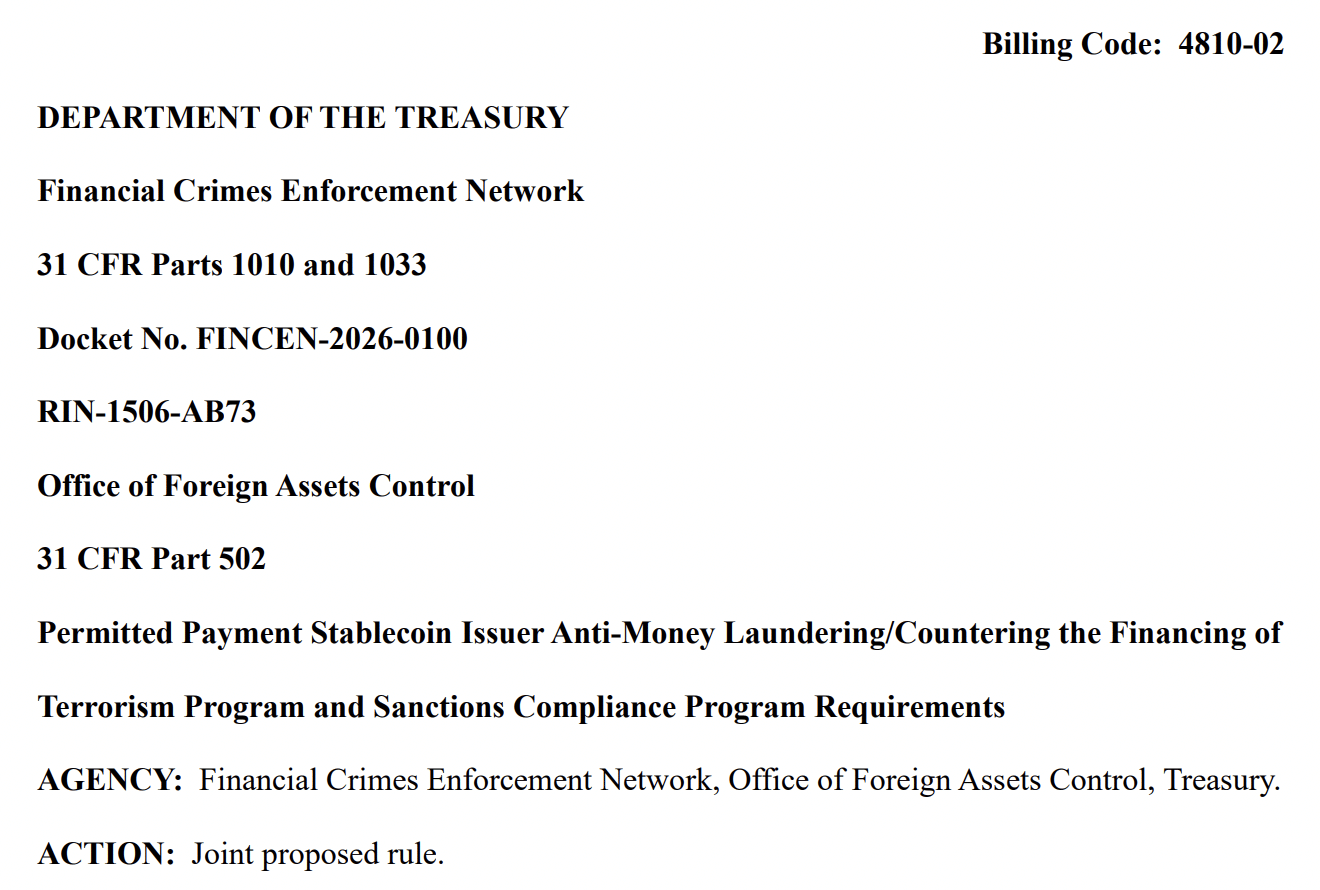
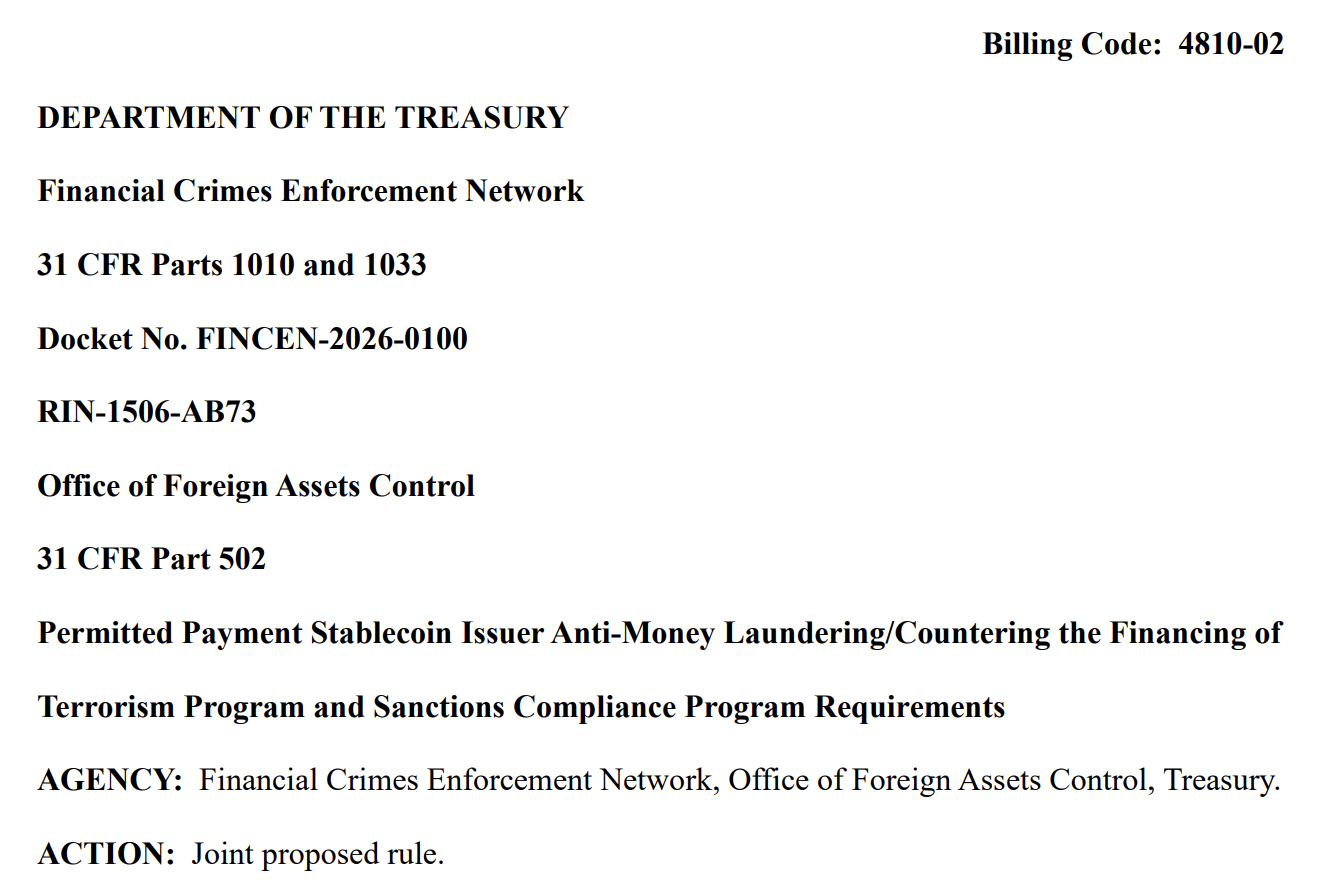
Source: www.fincen.gov

This was in the context of money laundering, terrorist financing, and sanction evasion.

For perspective, this proposed rule is part of the GENIUS Act, which was signed into law by U.S. President Donald Trump in July 2025.

What prompted the Treasury to come up with such a proposal?

Regulators believe payment stablecoin issuers can evolve the payment system in the U.S. However, given the scale and size of the financial system of the country, illicit actors find it easy to “jeopardize U.S. national security.”

Therefore, to combat such illicit financial risks, the rule ensures that permitted payment stablecoin issuers (PPSIs) are treated like financial institutions for purposes of the Bank Secrecy Act (BSA).

Needless to say, this would automatically impose the anti-money laundering (AML) obligations, which were earlier just for BSA.

Additionally, the proposal is also designed to be “fit for purpose, assist law enforcement, and minimize unnecessary burden.” That being said, all this is a part of the broader plan to “modernize BSA requirements” with consistent efforts from FinCEN.

Treasury Scott Bessent weighs in

Applauding such changes made under the U.S. President Donald Trump’s administration, Treasury Secretary Scott Bessent noted,

President Trump is strengthening American leadership in digital financial technology.

He further added,

This proposal will protect the U.S. financial system from national security threats without hindering American companies’ ability to forge ahead in the payment stablecoin ecosystem.

Illicit activities that targeted stablecoin in 2025 and before

This comes as the stablecoins had already been a center of target for many years. For instance, in June 2025, U.S. federal authorities seized $225.3 million worth of Tether’s USDT linked to the aforementioned scams.

Additionally, in July 2025, approximately $2 million worth of digital assets was unsealed by the DOJ, linked to a Palestine-based money exchange business. In November 2024, too, $5.5 million in stablecoins were seized from a drug trafficking operation.

Chainalysis’s recent report further confirmed these metrics, highlighting how in 2025 stablecoins accounted for “84% of all illicit transaction volume.”
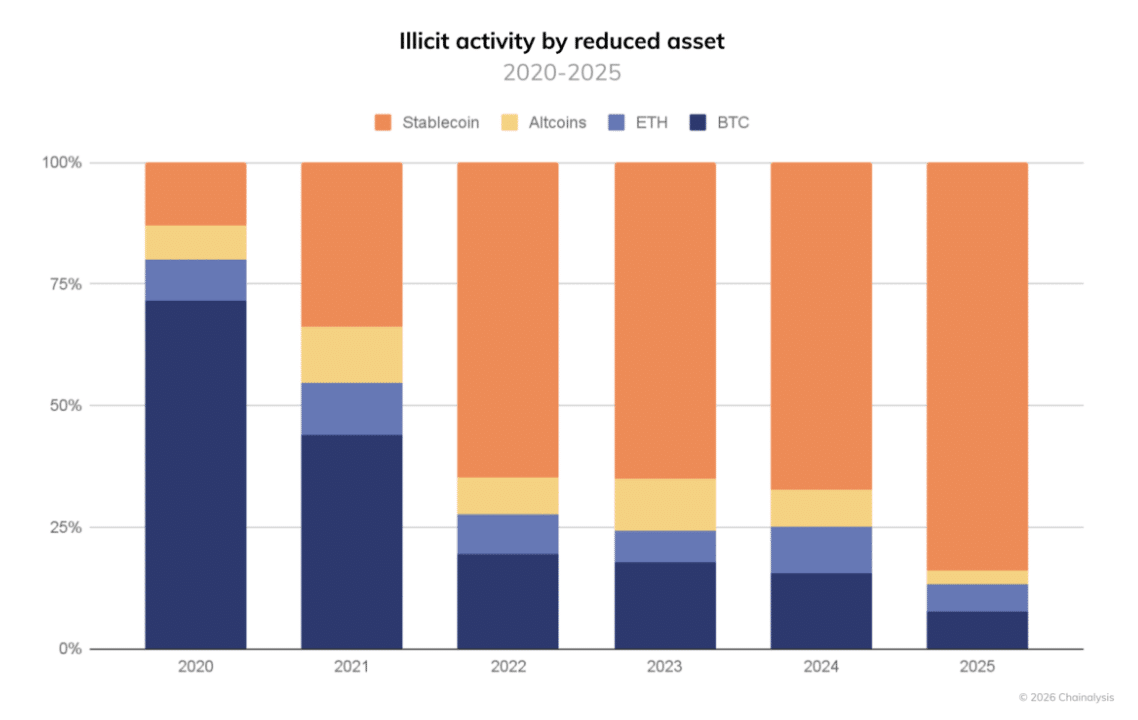
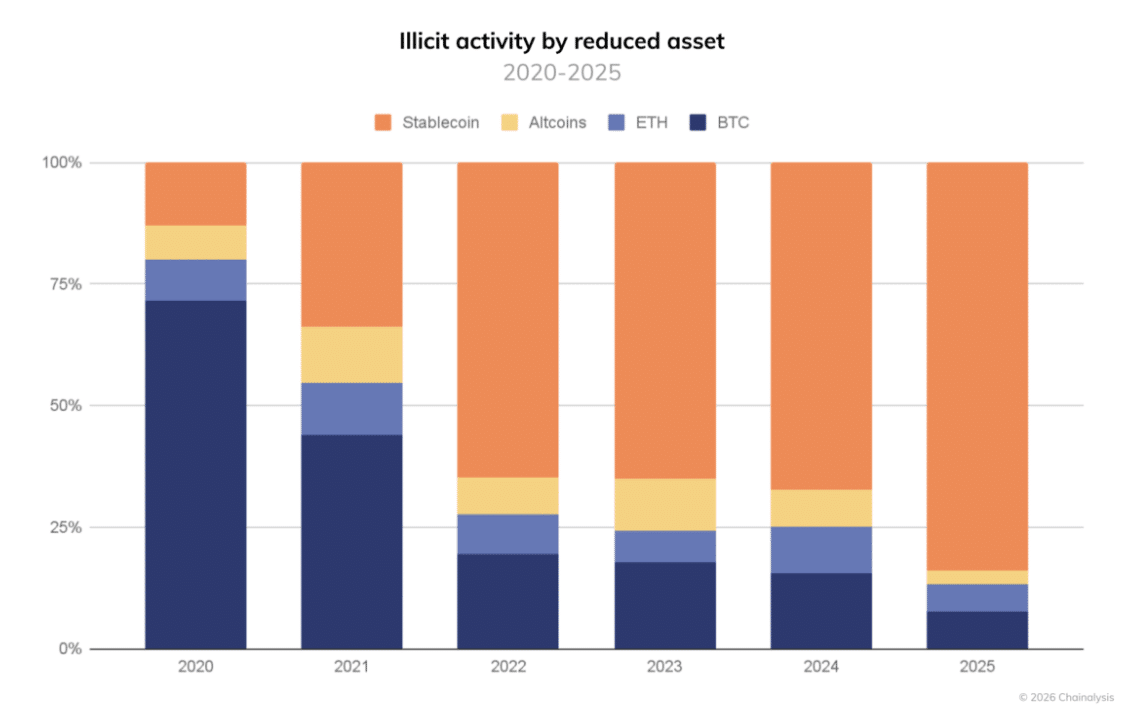
Source: Chainalysis

Final Summary

  • The joint efforts to bring in a proposed rule to address illicit activities in the stablecoin market underline the importance of the GENIUS Act passed in July 2025.
  • With millions being seized and confiscated by the DOJ, this was an alarming rule that should be passed for better crypto innovation in the U.S.

Related Questions

QWhat is the main purpose of the new rule proposed under the GENIUS Act?

AThe new rule treats payment stablecoin issuers similarly to banks for purposes of the Bank Secrecy Act, imposing anti-money laundering obligations to combat illicit financial risks like money laundering, terrorist financing, and sanction evasion.

QWhich U.S. government agencies jointly proposed the new rule for stablecoin issuers?

AThe Financial Crimes Enforcement Network (FinCEN) and the Office of Foreign Assets Control (OFAC) jointly proposed the rule.

QAccording to Treasury Secretary Scott Bessent, how will this proposal benefit the U.S. financial system?

AScott Bessent stated that the proposal will protect the U.S. financial system from national security threats without hindering American companies' ability to innovate in the payment stablecoin ecosystem.

QWhat percentage of illicit transaction volume did stablecoins account for in 2025 according to Chainalysis?

AStablecoins accounted for 84% of all illicit transaction volume in 2025 according to Chainalysis's report.

QWhen was the GENIUS Act signed into law and by whom?

AThe GENIUS Act was signed into law by U.S. President Donald Trump in July 2025.

Related Reads

The Full Story of How Crypto Unicorn Blockstream Is Mired in Serious Fraud Allegations

This article details serious allegations of fraud against Bitcoin infrastructure company Blockstream, founded by Bitcoin pioneer Adam Back. In June 2024, investigative account NatInfoSec published a report accusing Blockstream's mining note (BMN) program of potentially operating a multi-billion dollar scheme with Ponzi-like characteristics. The core allegations focus on Blockstream Mining Notes (BMNs), which offer investors fixed annual yields up to approximately 20% from Bitcoin mining. NatInfoSec's investigation raises several key issues: 1. **Suspicious Hashrate & Payout Capacity**: The analysis suggests Blockstream would need 20-45 EH/s of mining power to cover its BMN obligations, but its public dashboard shows only around 15 EH/s. Furthermore, no verifiable public evidence (e.g., grid connection records, import data) was found to support the massive mining operation required. 2. **Questionable Payout Source**: The BMN contract allows Blockstream to use Bitcoin from *any source* (Substitute Performance BTC) to fulfill investor payouts, raising concerns that payouts may not come from actual mining revenue. 3. **High-Risk, Fixed Returns**: Offering ~20% fixed yields in the volatile, cyclical Bitcoin mining industry is viewed as highly unusual and requires clear explanation. 4. **Undisclosed Criminal Record of Key Figure**: Christopher William Cook, a key figure in Blockstream's mining operations and CEO of spin-off Exacore, was found to have a federal felony conviction for mail fraud in 2008, a fact not disclosed in BMN offering documents. His background was also allegedly embellished. 5. **Potential Contagion to BSTR SPAC**: Questions were raised about whether these liabilities and Cook's record should have been disclosed in the SEC filings for Bitcoin Standard Treasury Company (BSTR), a separate Adam Back-associated firm planning a SPAC merger. The crypto community is divided. BitMEX Research validated Cook's criminal record and expressed concern over the high yields but found other evidence lacking or misleading, noting the legal separation between BMN, Blockstream, and BSTR. Blockstream defenders, like Samson Mow, argue the mining is real. Critics, however, emphasize the lack of independent, verifiable proof of the mining operation's scale and the true source of investor payouts. The article concludes that BMN remains shrouded in key unanswered questions regarding its actual size, the verifiability of its underlying mining assets and payouts, the source of its high yields, and the full role and disclosure concerning Chris Cook. Blockstream had not issued a comprehensive response at the time of writing.

marsbit7h ago

The Full Story of How Crypto Unicorn Blockstream Is Mired in Serious Fraud Allegations

marsbit7h ago

Trading

Spot
Futures
活动图片