US Senate Judiciary Committee Pushes To Strip Developer Safeguards From Crypto Bill

TheNewsCryptoPublished on 2026-01-19Last updated on 2026-01-19

Abstract

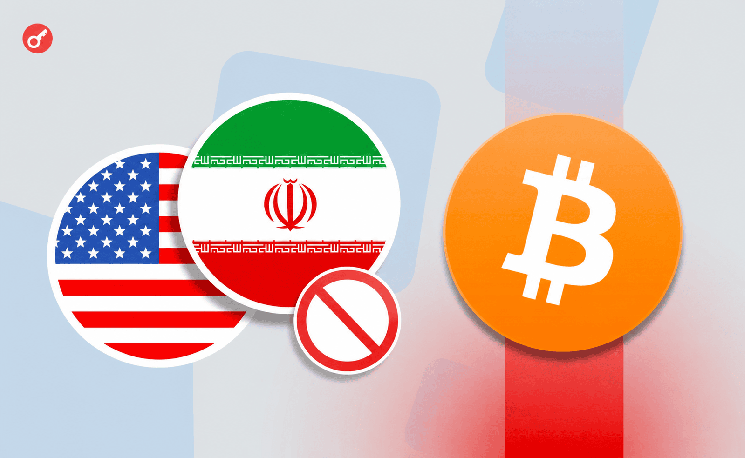
Senior members of the US Senate Judiciary Committee, including Chairman Chuck Grassley and ranking member Dick Durbin, have urged the Senate Banking Committee to remove developer safeguards from a proposed cryptocurrency market structure bill. They argue that provisions like the Blockchain Regulatory Certainty Act (BRCA)—which exempts non-custodial software developers from money transmission laws—could create enforcement gaps in combating money laundering and unlicensed financial activities. The Judiciary Committee claims jurisdiction over such criminal statutes and emphasizes that it was not consulted during the drafting process. The dispute reflects broader legislative challenges in crypto regulation, including stablecoin oversight and inter-agency coordination.

Senior members of the US Senate Judiciary Committee have called upon the Senate Banking Committee to exploit the so-called developer protections proposed in the current version of the cryptocurrency market structure bill, citing that the bill may obstruct the enforcement of federal law relating to money transmission.

The letter was written to members of the Senate Banking Committee and was signed by GOP Chairman Chuck Grassley, R-Iowa, and ranking member Dick Durbin, D-Illinois, where the two explain that some parts of the bill, in particular, the Blockchain Regulatory Certainty Act, or BRCA, would create “significant gaps in enforcement for decentralized platforms if not fixed.”

So, under this rule, software developers and providers who fail to exercise power over users’ funds will not be covered by national or state money transmission laws. Advocates of this rule believe that this rule protects software developers of non-custodial software from being held responsible for how their software is used by its users.

Senate Judiciary Committee leaders Chuck Grassley and Dick Durbin said the provisions on developer safeguards were left out of the larger crypto market structure bill because issues such as criminal law, unlicensed money transmission, and anti-money laundering enforcement are within the purview of the Judiciary Committee. The senators said that the committee was never consulted in advance about the inclusion of those provisions and underscored that any changes that impact federal criminal statutes have to go through the Judiciary Committee process.

Legislative Processes and Larger Context

Pro-developer protection lawmakers have argued that software developers who do not custody or control users’ funds should not be considered money transmitters, as is reflected in the BRCA introduced by Senators like Cynthia Lummis and Ron Wyden, which seeks to clarify that non-custodial developers are not subject to money transmission laws.

But the Senate Judiciary Committee’s leadership had concerns that including similar protections within the crypto market structure bill would muddle how the concept would be enforced and confuse how current criminal statutes—such as those dealing with money laundering and unlawful financial activity—are applied. They said it’s in their committee’s jurisdiction and should be pursued through separate legislation.

The market structure bill has also encountered some procedural issues and legislative challenges as various parties have expressed their disquiet regarding its breadth and structure. The current negotiations also encompass some outstanding issues regarding stablecoin regulation and sharing regulatory control between federal regulatory bodies such as the SEC and CFTC.

Such tendencies are part of larger Congress debates in forming digital asset legislation structure in matters such as the responsibility of developers, enforcement powers, and coordination in regulations, still under consideration by lawmakers as they continue to shape the framework of oversight of the US crypto industry.

Highlighted Crypto News:

Crypto Analyst Points to the Bloody Monday Factor After Crypto Market Slips

TagsBlockchainLawUS Senate

Related Questions

QWhat is the main concern raised by the US Senate Judiciary Committee regarding the cryptocurrency market structure bill?

AThe main concern is that the bill's developer protections, particularly the Blockchain Regulatory Certainty Act (BRCA), may create significant gaps in enforcement for decentralized platforms and obstruct the enforcement of federal laws related to money transmission, money laundering, and unlicensed money transmission.

QWhich senators signed the letter to the Senate Banking Committee opposing the developer safeguards in the crypto bill?

AThe letter was signed by GOP Chairman Chuck Grassley (R-Iowa) and ranking member Dick Durbin (D-Illinois) of the Senate Judiciary Committee.

QWhat does the Blockchain Regulatory Certainty Act (BRCA) propose for non-custodial software developers?

AThe BRCA proposes that software developers and providers who do not exercise control over users' funds should not be covered by national or state money transmission laws, protecting them from being held responsible for how their software is used.

QWhy did the Senate Judiciary Committee claim jurisdiction over the developer safeguards provisions?

AThe committee claimed jurisdiction because issues such as criminal law, unlicensed money transmission, and anti-money laundering enforcement fall within its purview, and it was not consulted in advance about including these provisions in the bill.

QWhat broader legislative challenges is the crypto market structure bill facing besides the developer safeguards issue?

AThe bill is facing procedural issues and challenges related to its breadth and structure, including ongoing negotiations on stablecoin regulation and the sharing of regulatory control between federal agencies like the SEC and CFTC.

Related Reads

Stocks Fell Even More Violently Than Crypto, Where Did the Money Go?

From June to late July 2026, global stock markets, particularly technology and semiconductor stocks, experienced severe declines, with South Korea's KOSPI index facing historic circuit breakers and shedding 40% from its June peak. Key catalysts included SK Hynix's earnings miss despite record profits and competitive pressures from China's CXMT IPO. A global forced deleveraging event unfolded, devastating highly leveraged instruments like the 2x leveraged SK Hynix ETF, which lost over 80% of its value. Surprisingly, Bitcoin showed relative stability during this period, rising roughly 15% from its July low. The article clarifies this wasn't due to an inflow of equity flight capital but because Bitcoin had already undergone a significant correction in May and June, with U.S. spot Bitcoin ETFs seeing record outflows. True safe-haven flows went to gold, severing Bitcoin's short-term "digital gold" narrative. The sell-off is characterized not as an AI story collapse but a liquidity-driven清算 of crowded leveraged positions, potentially halfway through according to some analysts. For substantial capital to return to Bitcoin, the article cites necessary conditions: eased global liquidity pressure, a soft-landing Fed rate cut, and regulatory clarity from the stalled U.S. CLARITY Act. The conclusion is that Bitcoin is not a current safe haven but a pre-cleared asset. Its decoupling from tech stocks highlights its potential future role as a non-correlated asset for institutional portfolios, positioning it favorably for when global capital reallocates post-crisis.

marsbit7m ago

Stocks Fell Even More Violently Than Crypto, Where Did the Money Go?

marsbit7m ago

"The Final Phase Before the New Cycle". What Will Happen to Bitcoin in August

"Bitcoin Faces Crucial Test in August: Experts Predict Consolidation or Further Decline" The price of Bitcoin (BTC) is expected to remain under pressure in August, with experts anticipating either consolidation within a narrow range or a potential drop below $60,000. Despite a double-digit recovery from its July low near $58,000, BTC ended the month trading around $63,500, still roughly 50% below its October 2025 peak of $126,200. Analysts cite several headwinds: a challenging macroeconomic environment with high US interest rates and persistent inflation, which makes fixed-income assets more attractive than speculative ones like crypto. Furthermore, competition for capital is intense, with many investors favoring AI-related stocks. This is reflected in significant outflows from US spot Bitcoin ETFs, with a record $4.5 billion leaving in June and a net outflow of $5.4 billion for the first half of the year. Historically, August is a weak month for crypto, with a median return of -7.49% from 2013 to 2025. Experts also note regulatory uncertainty in the US, particularly the stalled CLARITY Act, as a dampening factor. Despite the bearish near-term outlook, several experts view the current phase as the "last phase before a new Bitcoin cycle" begins, potentially in Q4 2024. This makes it a favorable time for accumulating Bitcoin for the long term. Key price levels to watch are support at $60,000-$61,000, with a break below $58,000 potentially leading to $53,000-$55,000. A move above $67,000 could target $70,000-$75,000, though this is considered a lower probability scenario.

cryptonews.ru13m ago

"The Final Phase Before the New Cycle". What Will Happen to Bitcoin in August

cryptonews.ru13m ago

What Structural Changes Have Occurred in the Cryptocurrency Industry by 2026?

By 2026, the crypto industry is undergoing profound structural shifts, moving beyond price speculation towards deeper integration with the real-world economy. Major changes are driven by four key areas. First, stablecoins, now a $300B+ market, are evolving from crypto-native trading tools into real-world payment and B2B settlement backbones, extending business chains and creating complex accounting and tax obligations. Second, global regulation is maturing. Frameworks like the EU's MiCA are moving from legislation to active enforcement, determining market access. Anti-money laundering rules, such as the Travel Rule, see wider adoption but face enforcement and cross-border challenges. Third, AI Agents are emerging as autonomous transaction entities. Protocols like Coinbase's x402 enable machine-to-machine micropayments using stablecoins, necessitating new frameworks for transaction authorization, tax attribution, and audit trails. Finally, tax transparency is entering an implementation phase. Initiatives like the OECD's CARF, EU's DAC8, and the US Form 1099-DA are shifting reporting burdens to platforms, requiring them to reconcile on-chain data with user identity and tax residency information. Collectively, these trends signify that crypto compliance is becoming foundational infrastructure, requiring consistent data and control systems to meet cross-border operational, regulatory, and audit demands.

marsbit34m ago

What Structural Changes Have Occurred in the Cryptocurrency Industry by 2026?

marsbit34m ago

Trading

Spot
活动图片