US President Donald Trump Imposes 25% Tariff on Iran-Linked Trade, Will Crypto Market Feel the Pinch?

TheNewsCryptoPublished on 2026-01-13Last updated on 2026-01-13

Abstract

US President Donald Trump has announced an immediate 25% tariff on all trade with countries doing business with Iran, calling the order final. This follows his recent approval of a bipartisan sanctions bill imposing a 500% tariff on nations purchasing Russian energy products. The move may hinder international trade, with China, India, Germany, the UAE, and the EU likely impacted. China has already opposed the measure as coercive. For the crypto market, the tariffs could increase trade costs and inflation, potentially preventing the Federal Reserve from cutting rates and sustaining market volatility. The global crypto market cap has dipped slightly to $3.13 trillion, with tokens like ETH and SOL seeing declines, while BTC posted minor gains. Investors are advised to remain cautious amid ongoing uncertainty.

US President Donald Trump has introduced a new tariff rate of 25%. Effective immediately, it comes days after he green-signaled a bipartisan sanctions bill. It remains to be seen if the move affects the global crypto market as investors stay on the lookout for volatility.

US President Donald Trump and New Tariff Rate

US President Donald Trump, via a post, announced a 25% tariff for countries doing business with Iran. He underlined that the tariff is effective immediately, adding that it applies to any and all business being done with the US. Trump’s post, which has drawn attention from different sectors, called this order final and conclusive.

The move comes days after Trump announced a one year cap on credit card interest rate to 10%. The proposal is scheduled to go into effect on January 20, 2026. If so, then it is estimated to lower interest rates significantly from 20-30%.

Impact of New Tariff Rate

The new tariff rate could hinder international trade with several countries, like China, India, and Germany. China, for now, has expressed its opposition to the application of a 25% tariff by calling it a coercive and ineffective move. Other countries that are likely to be impacted are the UAE and the European Union.

For the crypto market, investors could become more cautious before making any investment. The imposition of tariffs is often associated with making international trade expensive – thereby triggering inflation within the country. If so, then the US Federal Reserve may not cut rates, and the crypto market may remain highly volatile.

Crypto Market at the Moment

A 25% tariff comes days after US President Donald Trump approved a bipartisan sanctions bill. It essentially imposes a 500% tariff on countries that buy Russian energy products like oil. The crypto market has been on edge since then, with effects being evident while the article is being drafted.

The global crypto market cap has plunged by 0.02% to $3.13 trillion, with many top tokens seeing a drop in their respective values. For instance, ETH is down by 0.55% over the last 24 hours, and so is SOL by 1.23%. While BTC has gained 0.43% during this timeline, it remains down by 1.48% in the last 7 days.

Highlighted Crypto News Today:

Red Candles Stack Up for OFFICIAL TRUMP (TRUMP): Will Sellers Tighten Their Grip?

TagsCrypto MarketTARIFFTRUMP

Related Questions

QWhat is the new tariff rate imposed by US President Donald Trump and who does it target?

AUS President Donald Trump has imposed a new 25% tariff on countries doing business with Iran, effective immediately. It applies to any and all business being done with the US.

QWhat potential impact could this tariff have on the crypto market according to the article?

AThe article suggests the tariff could make investors more cautious, as tariffs often make international trade expensive and trigger inflation. This could lead the US Federal Reserve to not cut rates, resulting in high volatility in the crypto market.

QHow did the global crypto market cap and specific major cryptocurrencies perform at the time the article was written?

AThe global crypto market cap had plunged by 0.02% to $3.13 trillion. ETH was down 0.55%, SOL was down 1.23%, and while BTC had gained 0.43% in 24 hours, it was still down 1.48% over the previous 7 days.

QWhat other recent policy action did Trump take that is mentioned in the article, and when is it set to go into effect?

ADays before the tariff announcement, Trump announced a one-year cap on credit card interest rates to 10%. This proposal is scheduled to go into effect on January 20, 2026.

QWhich countries are mentioned as being potentially hindered by the new 25% tariff rate?

AThe article states that the new tariff could hinder international trade with several nations, specifically naming China, India, Germany, the UAE, and the European Union.

Related Reads

Jensen Huang's Message to Graduates: AI Won't Replace You, But Those Who Excel at Using AI Will

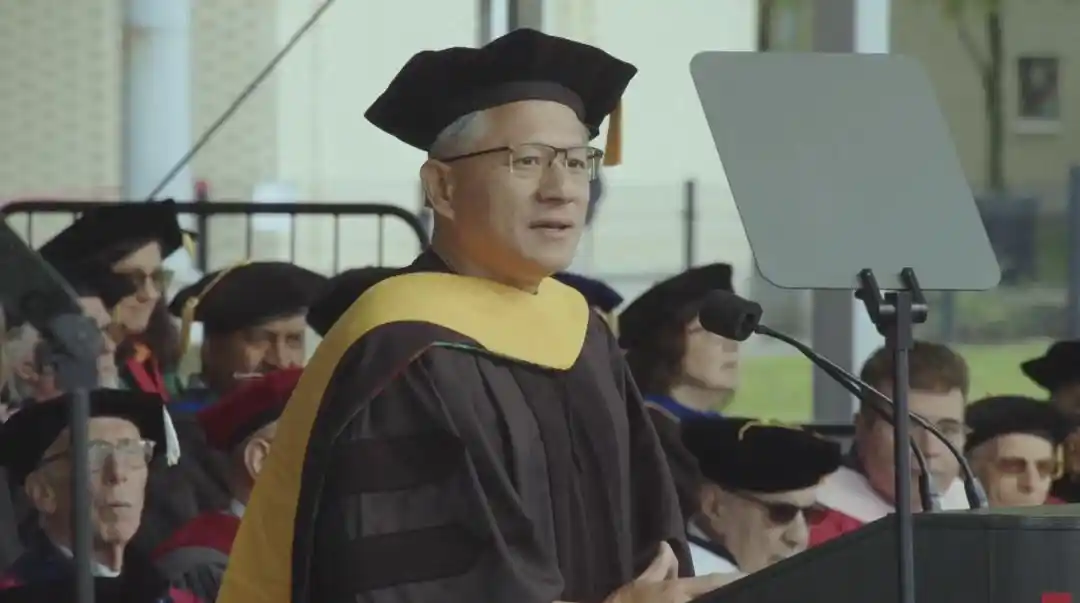
NVIDIA CEO Jensen Huang, addressing 2026 graduates at Carnegie Mellon University, emphasized that AI will not replace people, but those who leverage AI effectively will have an advantage. He delivered this message during a commencement speech where he also received an honorary doctorate, his seventh. Huang reflected on his personal journey as an immigrant, starting from humble beginnings as a dishwasher to co-founding NVIDIA. He shared early struggles, including a near-bankruptcy moment saved by honesty with Sega, highlighting resilience and learning from failure. He positioned the current era as the dawn of the AI revolution, a shift as significant as past computing waves. Huang explained that AI is redefining computing from human-written software to machine learning, creating a new industry focused on manufacturing intelligence. While acknowledging fears about job displacement, he argued that AI amplifies human capabilities rather than replaces human purpose. Tasks may be automated, but the core meaning of professions remains. Huang urged graduates to embrace this transformative time with responsibility and optimism. He stated that AI should democratize technology, bridging gaps and enabling broader participation in creation and problem-solving. His final advice was to actively engage with the opportunity: "So run, don’t walk," and to put their hearts into their work.

marsbit2m ago

Jensen Huang's Message to Graduates: AI Won't Replace You, But Those Who Excel at Using AI Will

marsbit2m ago

Three Scenarios for BTC's Future Direction and a Duel Between Two Strong Forces | Special Invited Analysis

**Title: Three Scenarios for BTC's Future Trajectory and a Key Duel | Invited Analysis** The market remains at a critical juncture. Over the past week, Bitcoin (BTC) consolidated broadly between $79,500 and $80,600, validating previous technical analysis. The current focus is on whether this marks the start of a new uptrend or a pause within a larger correction. **BTC Multi-Cycle Analysis & Three Possible Scenarios** BTC's daily chart structure, following its peak at $126,200 in October 2025, presents three primary technical scenarios based on Elliott Wave theory: 1. **Bullish Scenario (End of Correction):** The corrective A-B-C wave from $126,200 ended at the $60,000 low in February 2026. The current price action is the start of a major Wave I uptrend. A subsequent Wave II pullback would not break below $60,000. 2. **Bearish Scenario 1 (Complex Correction):** The correction is unfolding as an A-B-C-D-E pattern. The current move from $60,000 is a D-wave rally. After its completion, a final E-wave decline could potentially breach the $60,000 level. 3. **Bearish Scenario 2 (Larger Correction):** The entire move down from $126,200 to $60,000 was a large A-wave. The current rally is a B-wave correction within a larger A-B-C structure, to be followed by a C-wave decline below $60,000. *Analysis suggests Scenario 2 is less probable due to time disproportions between waves. The battle is effectively between the Bullish Scenario (1) and Bearish Scenario (3).* **Key BTC Levels & Weekly Strategy** On the 4-hour chart, BTC trades above a crucial consolidation zone ("Central Pivot C"). * **Key Resistance:** $83,500-$84,500; $89,000-$90,500. * **Key Support:** $78,500-$79,500 (pivot upper bound); $73,500-$75,000; $69,500-$70,500. **Weekly Outlook:** The market direction hinges on BTC's ability to hold above or break below the $78,500-$79,500 support zone. * **Mid-term Strategy:** Neutral/Wait-and-see stance due to unclear direction. * **Short-term Tactics:** Two contingency plans using 30% max capital: * **Plan A (Bullish):** Look for long entries if price holds above $78,500-$79,500 with confirming signals. Initial stop-loss below $78,500. * **Plan B (Bearish):** Consider short positions if price breaks below $73,500-$75,000 with confirming signals. Initial stop-loss above $76,500. **HYPE Analysis & Strategy** HYPE's daily chart shows a seven-segment structure from its January low of $20.46, forming a "rising pivot" zone. * **Key Level to Watch:** $45.76 (previous high). A break above would confirm the bullish structure remains intact. * **Short-term Strategy:** Focus on pivot zone boundaries ($38.41 upper, $34.44 lower). * **Long:** Consider on support near $38.41 with bullish confirmation signals. * **Short:** Consider on a break below $34.44 with bearish confirmation signals. * Position size must be below 30% with strict stop-loss discipline. **Risk Management Reminder:** Always set an initial stop-loss upon entry. Move stop-loss to breakeven at +1% profit, then trail it upwards to lock in profits dynamically. All views are based on technical analysis for informational purposes only and do not constitute investment advice. The market is inherently risky.

Odaily星球日报11m ago

Three Scenarios for BTC's Future Direction and a Duel Between Two Strong Forces | Special Invited Analysis

Odaily星球日报11m ago

Sequoia Interview with Hassabis: Information is the Essence of the Universe, AI Will Open Up Entirely New Scientific Branches

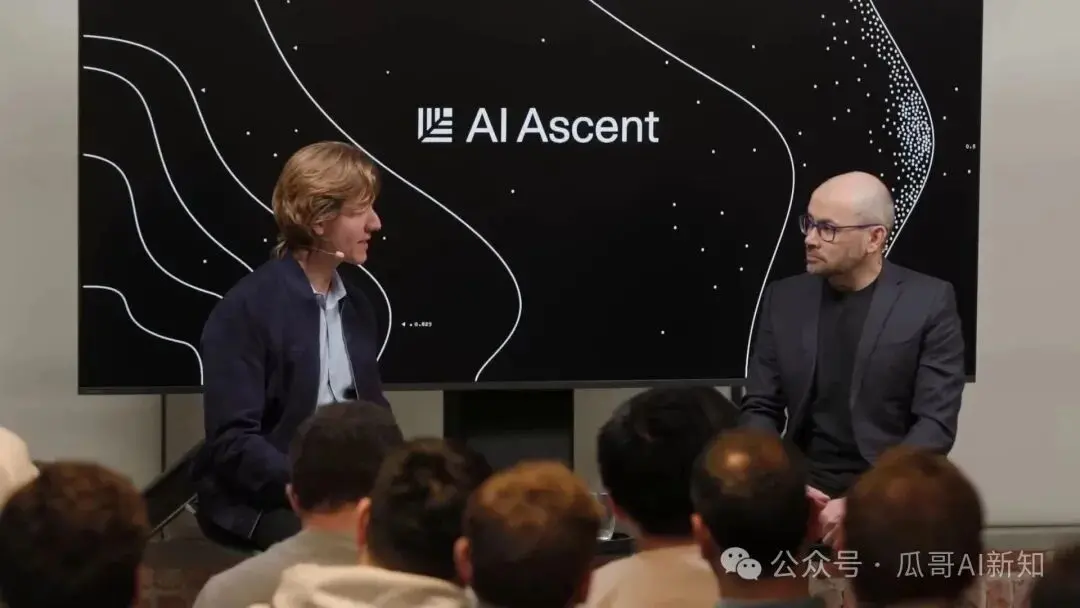
Demis Hassabis, co-founder and CEO of Google DeepMind and Nobel laureate, discusses the path to AGI and its profound implications in a Sequoia Capital interview. He outlines his lifelong dedication to AI, tracing his journey from game development (e.g., *Theme Park*)—a perfect AI testing ground—to neuroscience and finally founding DeepMind in 2009. He emphasizes the critical lesson of being "5 years, not 50 years, ahead of time" for successful entrepreneurship. Hassabis reiterates DeepMind's two-step mission: first, solve intelligence by building AGI; second, use AGI to tackle other complex problems. He highlights the transformative potential of "AI for Science," particularly in biology where tools like AlphaFold have revolutionized protein folding. He envisions AI-powered simulations drastically shortening drug discovery from years to weeks and enabling personalized medicine. Furthermore, he predicts AI will spawn new scientific disciplines, such as an engineering science for understanding complex AI systems (mechanistic interpretability) and novel fields enabled by high-fidelity simulators for complex systems like economics. He posits a fundamental worldview where information, not just matter or energy, is the essence of the universe, making AI's information-processing core uniquely suited to understanding reality. He defends classical Turing machines as potentially sufficient for modeling complex phenomena, including quantum systems, as demonstrated by AlphaFold. On consciousness, Hassabis suggests first building AGI as a powerful tool, then using it to explore deep philosophical questions. He believes components like self-awareness and temporal continuity are necessary for consciousness but that defining it fully remains an open challenge. He predicts AGI could arrive around 2030 and, once achieved, would be used to probe the deepest questions of science and reality, much as envisioned in David Deutsch's *The Fabric of Reality*.

链捕手29m ago

Sequoia Interview with Hassabis: Information is the Essence of the Universe, AI Will Open Up Entirely New Scientific Branches

链捕手29m ago

Morgan Stanley 2026 Semiconductor Report: Buy Packaging, Buy Testing, Buy China Chips, Avoid Traditional Tracks

Morgan Stanley 2026 Semiconductor Report: Buy Packaging, Buy Testing, Buy Chinese Chips; Avoid Traditional Segments. The core theme is the shift in AI compute supply from NVIDIA dominance to a three-track system of GPU + ASIC + China-local chips. The key opportunity is capturing share in this expansion, while non-AI semiconductors face marginalization due to resource reallocation to AI. Key investment conclusions, in order of priority: 1. **Advanced Packaging (CoWoS/SoIC) - Highest Conviction**: TSMC is the primary beneficiary of explosive demand, driven by massive cloud capex. Its pricing power and AI revenue share are rising significantly. 2. **Test Equipment - Undervalued & High-Growth Certainty**: Chip complexity is causing test times to double generationally, structurally driving handler/socket/probe card demand. Companies like Hon Hai Precision (Foxconn), WinWay, and MPI offer compelling value. 3. **China AI Chips (GPU/ASIC) - Long-Term Irreversible Trend**: Export controls are accelerating domestic substitution. Companies like Cambricon, with firm customer orders and SMIC's 7nm capacity support, are positioned to benefit from lower TCO (30-60% vs NVIDIA) and growing local cloud demand. 4. **Avoid Non-AI Semiconductors (Consumer/Auto/Industrial)**: These segments face a weak, structurally hindered recovery due to AI's resource "crowding-out" effect on capacity and supply chains. 5. **Memory - Severe Internal Divergence**: Strongly favor HBM (Hynix primary beneficiary) and NOR Flash (Macronix). Be cautious on interpreting price rises in DDR4/NAND as true demand recovery. The report emphasizes a 2026-2027 time window, stating the AI capital expenditure cycle is far from over. Key macro variables include persistent export controls and AI's systemic "crowding-out" effect on traditional semiconductor supply chains.

marsbit1h ago

Morgan Stanley 2026 Semiconductor Report: Buy Packaging, Buy Testing, Buy China Chips, Avoid Traditional Tracks

marsbit1h ago

Circle:Sluggish Market? The Top Stablecoin Stock Continues to Expand

Circle, the issuer of the stablecoin USDC, reported its Q1 2026 earnings on May 11th, Eastern Time. Against a backdrop of weak crypto market sentiment, USDC's average circulation in Q1 was $752 billion, with a modest 2% sequential increase to $770 billion by quarter-end. New minting volumes declined due to the poor crypto market, but remained high, indicating demand expansion beyond crypto trading. USDC's market share remained stable at 28% of the total stablecoin market, while competition from Tether's USDT persists. A key highlight was "Other Revenue," which reached $42 million, more than doubling year-over-year, though sequential growth slowed to 13%. This revenue stream, including fees from services like Web3 software, the Cipher payment network (CPN), and the Arc blockchain, is critical for diversifying away from interest income. Circle's internally held USDC share increased to 18%, helping to improve gross margin by 130 basis points to 41.4% by reducing external sharing costs. However, profitability was pressured as total revenue growth slowed, primarily due to the significant weight of interest income, which is tied to USDC规模 and Treasury rates. Adjusted EBITDA was $133 million with a 19.2% margin. Management maintained its full-year 2026 guidance for adjusted operating expenses ($570-$585 million) and other revenue ($150-$170 million). The long-term target for USDC's CAGR remains 40%, though near-term volatility is expected. The article concludes that while Circle's current valuation of $28 billion appears reasonable after a recent recovery, further upside depends on the pace of stable币 adoption and potential positive sentiment from the advancement of regulatory clarity acts like CLARITY.

链捕手1h ago

Circle:Sluggish Market? The Top Stablecoin Stock Continues to Expand

链捕手1h ago

Trading

Spot
Futures
活动图片