U.S. First Approved Perpetual Futures Launch Signals Wall Street Disruption

foresightnews_apiPublished on 2026-06-05Last updated on 2026-06-05

Abstract

The first regulated Bitcoin perpetual futures contract in the US was approved by the CFTC on May 29, marking a significant shift. While the global perpetual market, pioneered by BitMEX in 2016, has grown to over $90 trillion in annual volume, US institutions were previously barred. The newly approved US product, however, differs fundamentally from its offshore counterparts, offering only up to 10x leverage with full customer asset segregation, compared to the 50-100x leverage common overseas. This development is seen as a regulatory endorsement of the asset class, benefiting platforms like Hyperliquid, the largest decentralized exchange, which saw its token surge. Analysts note the rise of perps is disrupting traditional derivatives by offering 24/7 trading, no expiry, and lower fees, capturing short-term speculative demand and pressuring incumbent businesses like Coinbase's spot trading revenue. The article concludes that while perps won't fully replace options, their efficiency makes them superior for most leveraged directional trading.


Written by: Vaidik Mandloi

Compiled by: Saoirse, Foresight News


Perpetual futures (Perps) trading volume exceeded $90 trillion last year, a figure surpassing the combined economic output of the world's top ten largest economies by GDP. Perpetual contracts now account for three-quarters of total crypto derivatives trading volume, exhibiting growth unmatched by any other modern financial product.


However, prior to this, no entity in the U.S. could legally offer perpetual futures trading—a stalemate broken last Friday. On May 29, the U.S. Commodity Futures Trading Commission (CFTC) approved Kalshi to list the nation's first regulated Bitcoin perpetual futures contract; on the same day, regulators greenlit Coinbase to route its users to global perpetual and options products via the Dubai-based Deribit platform.


Following the news, HYPE, the native token of the leading on-chain perpetuals platform Hyperliquid, surged over 30% intraday. Hyperliquid is currently the largest decentralized perpetual futures exchange by volume and does not serve U.S. users. CFTC Chairman Michael Selig wrote in a CoinDesk op-ed, defining perpetual futures as "an indispensable tool for risk management and price discovery in the global crypto asset market." For those within the crypto industry witnessing this regulatory shift firsthand, the implications are profound. The article below details the far-reaching significance of this development.


What are Perpetual Futures? How Did They Grow to a $90 Trillion Market?


The conceptual blueprint for perpetual futures dates back to 1993 when Nobel laureate in economics Robert Shiller published a paper proposing a futures contract without an expiration date: allowing homeowners to hedge against falling property prices without needing to sell their actual homes.


Source: WSJ


Although theoretically valuable, implementation was not feasible under the derivative market rules of the time. The entire industry then was built around futures with fixed expiration and settlement dates, with clearing systems and margin controls designed for periodic settlement; agricultural futures settled monthly, bond futures aligned with coupon dates—the infrastructure for perpetual products was absent, leaving the theory confined to academic literature for decades.


In May 2016, Arthur Hayes, Ben Delo, and Sam Reed founded BitMEX in Hong Kong, realizing a refined version of Shiller's vision: launching Bitcoin futures with no expiry, introducing a funding rate mechanism to peg prices to the spot market, and offering leverage up to 100x. Within 18 months of launch, BitMEX became the world's leading crypto derivatives exchange.


How Perpetual Futures Work


Traditional futures specify a fixed delivery date. For example, a Bitcoin futures contract expiring in June 2026 forces settlement at the market price upon expiry in June. Traders wishing to maintain their position must roll over into the next contract cycle; frequent rolling incurs transaction costs and creates gaps in exposure.


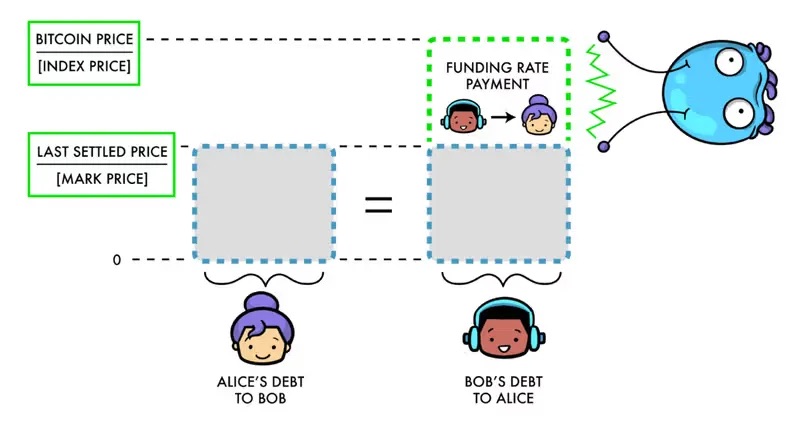
Perpetual futures eliminate the expiry mechanism entirely, allowing users to hold positions indefinitely, choosing to close them in five minutes or five months. Without the forced settlement of traditional futures to anchor prices to spot, perpetuals rely on the funding rate to continuously narrow the gap between the contract price and the underlying spot price, ensuring it reflects the true market.

Source: Paradigm.xyz


A core advantage driving the rapid rise of perpetual exchanges is liquidity aggregation. Traditional futures fragment liquidity across separate order books for quarterly contracts (March, June, September, December), while perpetuals concentrate all liquidity into a single order book, significantly enhancing trading efficiency. Financial markets benefit from an efficiency compounding effect: more traders lead to narrower bid-ask spreads, attracting further incremental capital.


Offshore perpetuals trading volume skyrocketed from $28 trillion in 2023 to over $90 trillion in 2025. Growth in decentralized, on-chain perpetuals was even more explosive, with volume reaching $6.7 trillion in 2025, a 346% year-over-year surge. In daily trading, perpetuals volume is 10 to 15 times that of spot markets, cementing crypto asset pricing dominance within derivatives. Daily Bitcoin price swings of around 5% often originate in perpetuals markets, where cascading liquidations of leveraged positions trigger waves of selling or buying, with spot prices following passively.


Before this U.S. regulatory approval, the perpetuals sector, which dictates market-wide pricing, remained closed to domestic U.S. institutions.


What Changes Does U.S. Approval Bring to the Industry Landscape?


While the U.S. has legalized perpetuals, the domestic regulated product differs significantly from the global offshore market version. Even Coinbase must route user orders through its Bermuda subsidiary to Deribit in Dubai. The offshore market, having accumulated vast liquidity over years in a regulatory gray area, is unlikely to flow back to the U.S. mainland in the short term.


U.S. regulated perpetuals are capped at 10x leverage, with customer funds fully protected under CFTC segregation rules. In contrast, offshore markets commonly offer 50x-100x leverage. At 100x leverage, $1 of capital controls a $100 position, where a 10% price move can double the capital or wipe it out. For the same 10% price movement, a standard one-month Bitcoin call option might only yield about 3x profit, due to upfront premium payment and time decay. High leverage is the core appeal of offshore perpetuals; the U.S. regulated version is conservative and fundamentally different.


This is key to understanding HYPE's rally post-CFTC approval: initial market fears of capital flowing from Hyperliquid to U.S. platforms like Kalshi and Coinbase proved unfounded. Hyperliquid generated $907 million in revenue last year with zero U.S. users. The two user bases are inherently distinct: retail speculators opening 50x short positions on meme coins overnight won't switch to a U.S. platform for 10x Bitcoin trades; institutional capital requiring regulated custody and asset segregation wouldn't have been on Hyperliquid in the first place.


The U.S. regulatory move essentially provides official validation of the legitimacy of the perpetuals sector where Hyperliquid operates, constituting a fundamental positive for the platform.


Currently, U.S. regulated exchanges are only approved to list Bitcoin perpetuals as a single asset. Hyperliquid, however, has long moved beyond crypto: through community governance proposal HIP-3, anyone can list perpetuals for virtually any asset on the platform, with many already live. In February, silver perpetuals daily volume spiked to $4 billion; in April, crude oil perpetuals volume briefly surpassed Bitcoin's at times.


ICE (Intercontinental Exchange, parent of NYSE) CEO Jeffrey Sprecher remarked at a Bernstein industry conference just before the CFTC approval: "The firm we're talking about, Hyperliquid, has already surpassed Nasdaq in size." ICE teams are now proactively engaging with Hyperliquid to study its product architecture and questioning regulators on why traditional exchanges cannot replicate such products. Wall Street is beginning to learn from a two-year-old, venture-capital-free decentralized exchange.


Perpetual Futures Are Encroaching on the Entire Traditional Derivatives Market


The deeper impact of this regulatory approval is that perpetual futures are no longer confined to the crypto sphere but are beginning to permeate all asset classes in financial markets.


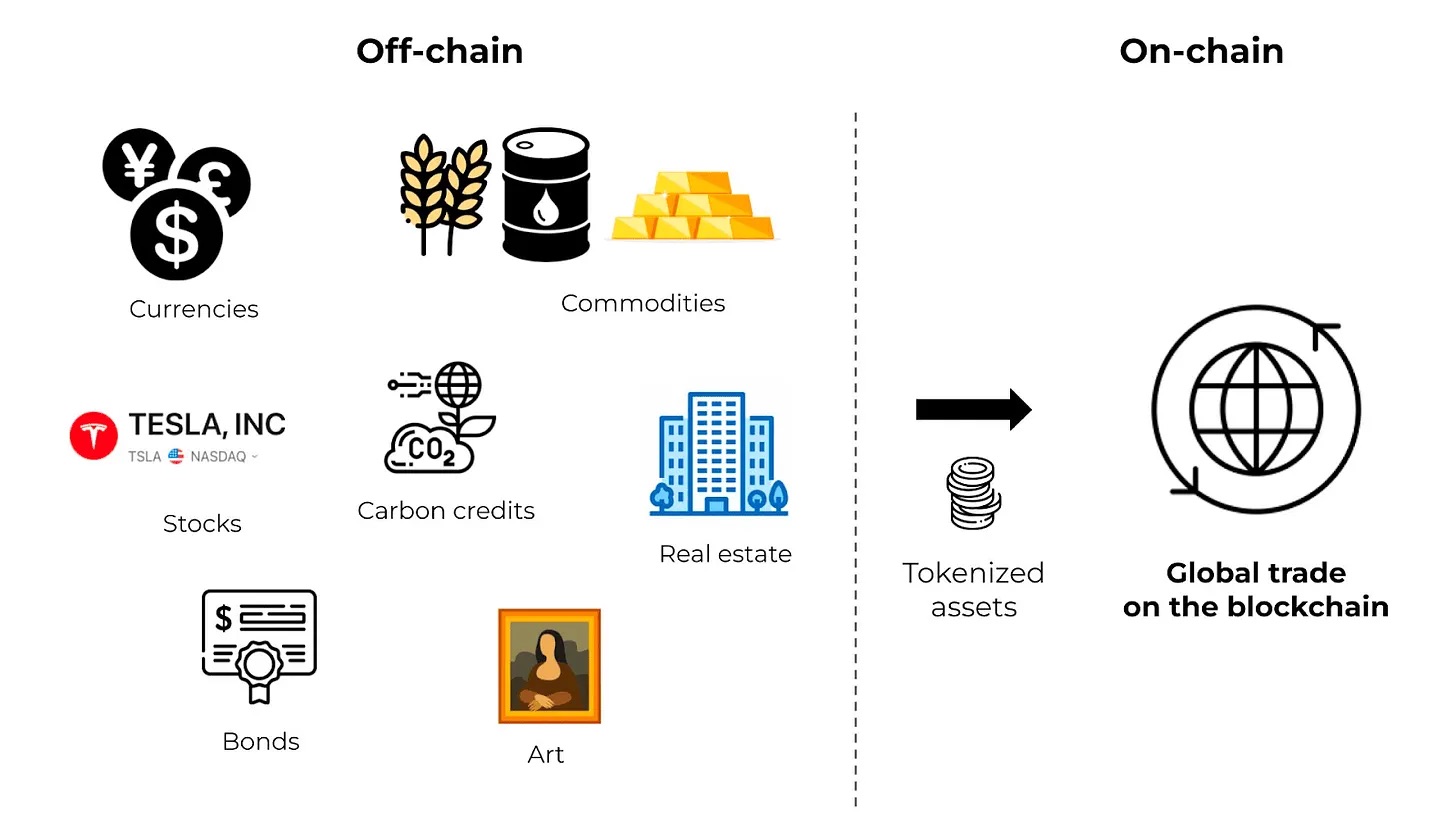
The product evolution path: from native Bitcoin, extending to all altcoins; then launching for commodities like gold, silver, crude oil; expanding to individual stocks like Nvidia and Tesla, and even shares of private companies like SpaceX and OpenAI; with HIP-4 proposal, the platform now lists prediction market perpetuals.

Source: EBC Financial Group


In just two years, perpetuals have evolved from a niche crypto innovation into a standardized financial product offering 24/7 trading, no expiry, elimination of intermediate clearing layers, and the ability to reference any global asset. Traditional derivatives were born in the era of physical floor trading, with exchanges having fixed daily closures, and contract cycles designed for paper-based settlement rules.


In today's digitally interconnected global market operating around the clock, traditional products with fixed trading hours inherently create price gaps. For instance, an oil trader wanting to position before a weekend geopolitical event has no tool on traditional regulated exchanges, whereas Hyperliquid allows opening a position at any time. The CFTC's official research notes also explicitly state: due to digital infrastructure and global nature, crypto-linked derivatives are naturally suited for 24/7 trading.


The ensuing industry race will focus on whether U.S. regulated traditional exchanges can iterate quickly enough to defend their market share. A fee comparison: traditional centralized exchange futures fees are around 4 basis points, while Hyperliquid charges just 2 basis points; spot fees are ~15 bps on traditional platforms vs. as low as 5 bps on Hyperliquid. Switching platforms takes users only minutes, and capital naturally migrates to lower-cost venues.


The week of the approval, Compass Point analysts downgraded Coinbase to Sell, citing intensifying competition in the derivatives space, continuously squeezing the platform's pricing power and profit margins. In Q1 2026, Coinbase's perpetuals business generated $50 million in revenue, but retail spot revenue fell to its lowest since Q3 2024: as perpetuals expand, they continuously cannibalize the higher-margin spot business.


The profitability logic across all derivative categories is being compressed by perpetuals. With perpetuals, investors avoid the frequent rolling of quarterly futures to maintain positions (incurring double fees each roll). Most short-term traders hold positions for only hours to days, making the no-expiry perpetual experience far superior to traditional contracts requiring periodic rolling.


Short-term options also face substitution pressure. Both short-dated options and perpetuals can be used for directional leveraged trades, with options' only advantage being capped loss limited to the premium paid. In 2025, the average daily volume for 0DTE (zero days to expiry) single-day options on U.S. stocks was 2.3 million contracts, with the vast majority merely speculating on short-term price moves—a demand that perpetuals can fulfill at lower cost.


This article does not claim perpetuals will completely replace options and traditional futures; options' unique capped loss and non-linear payoff profiles are irreplicable by perpetuals. However, for the majority of short-term leveraged speculative demand—which constitutes the largest market share—perpetuals offer a superior solution with lower costs and no expiry, a value proposition validated by their $90 trillion annual trading volume.


Related Questions

QWhat is the fundamental reason behind the explosive growth of perpetual contracts in the global crypto market, reaching over $90 trillion in volume?

AThe explosive growth is primarily due to two key advantages. First, perpetual contracts consolidate all liquidity into a single order book, unlike traditional futures which split it across multiple monthly/quarterly contracts, leading to superior trading efficiency and tighter bid-ask spreads. Second, their core feature of having no expiry date, combined with the funding rate mechanism that tethers the contract price to the spot price, provides a seamless, low-friction trading experience ideal for leverage and speculation, attracting massive liquidity.

QHow does the US-regulated perpetual contract differ fundamentally from the offshore perpetual contract ecosystem?

AThe US-regulated perpetual contract is a fundamentally different product category from the dominant offshore market. The key differences are leverage limits (10x maximum in the US vs. commonly 50-100x offshore), asset coverage (initially only Bitcoin in the US vs. a vast array of assets including altcoins, commodities, and equities on platforms like Hyperliquid), and regulatory environment (CFTC oversight with customer asset segregation in the US vs. largely unregulated offshore markets). The user bases are thus distinct, with US products catering to compliance-seeking institutions and offshore products serving high-leverage speculative traders.

QWhy did Hyperliquid's HYPE token surge 30% after the US CFTC approved compliant perpetual contracts, despite the platform having zero US users?

AHYPE surged because the CFTC approval was seen as a legitimization of the entire perpetual contract sector, providing a fundamental bullish signal for established leaders like Hyperliquid. It clarified that the US and offshore markets serve different user needs and are not in direct competition. The approval validated Hyperliquid's business model and alleviated fears of a liquidity exodus. Furthermore, the news highlighted Hyperliquid's innovative edge in offering a wider range of assets and lower fees compared to traditional and new compliant entrants.

QWhat broader financial market trend does the evolution of perpetual contracts on platforms like Hyperliquid represent beyond just cryptocurrencies?

AIt represents the trend of perpetual contracts evolving from a crypto-native instrument into a universal, 24/7, expiry-free, and streamlined financial product for any global asset class. The article shows it's expanding into commodities (silver, oil), equities (NVIDIA, Tesla), pre-IPO companies (SpaceX, OpenAI), and even prediction markets. This challenges traditional, time-bound derivatives (like quarterly futures and short-dated options) by offering a more efficient, low-cost solution for directional, leveraged speculation, which constitutes a massive portion of derivative trading volume.

QAccording to the article, what is the core competitive threat that perpetual contracts pose to traditional derivatives like futures and short-dated options?

AThe core competitive threat is cost and efficiency for the vast majority of short-term, directional, leveraged trading. Perpetual contracts, with their no-expiry design, eliminate the need and cost of frequent rolling/rollover associated with traditional futures contracts. For short-dated options (like 0DTE), which are often used just to bet on short-term price direction, perpetuals offer a cheaper, simpler alternative, as the only advantage of options—capped loss—is not needed for many speculative trades. Perpetuals are becoming the optimal vehicle for this high-volume demand, compressing the profitability of traditional products in these segments.

Related Reads

After Three Consecutive Quarters of Decline, Can the Crypto Market Find a Window for Stabilization in Q3?

The cryptocurrency market has just concluded its worst-performing quarter since 2022, with total capitalization dropping 12.6% to $2.1 trillion. All core metrics indicate capital is leaving the sector, not just rotating within it. Bitcoin fell 14.2% and Ethereum dropped 25.4% in Q2, breaking their previous correlation with US tech stocks. A key driver is the reversal in US spot Bitcoin ETF flows, which saw a net outflow of approximately $4.67 billion in Q2, including a record monthly outflow near $4.5 billion in June. While recent data suggests long-term holders are accumulating again, sustained ETF outflows mean continued selling pressure. Market focus is now singularly on the Federal Reserve. The upcoming July FOMC meeting is seen as the most critical event for Q3. A dovish signal could support Bitcoin reclaiming a $68,000-$84,000 range, while a hawkish stance might establish a new trading band around $50,000-$56,000. Additionally, regulatory uncertainty persists, with the progress of the crucial *CLARITY Act* stalling in the Senate, reducing its perceived 2026 passage probability to 40-45%. Despite the broad downturn, a few sectors showed growth. Prediction markets saw nominal volume surge 48.7% year-over-year to $113.8 billion, and tokenized collectibles transaction volume rose 143% quarterly to $1.4 billion. The Real-World Asset (RWA) tokenization sector also continued steady growth, now representing ~$28.1 billion in on-chain value. The market's foundation for an extreme crash appears limited, with Bitcoin price hovering near its 200-week moving average. However, the trading paradigm has shifted from narrative-driven speculation to decisions based on price action, policy developments, and interest rate expectations, making a broad sentiment-driven rally unlikely in the near term.

marsbit1h ago

After Three Consecutive Quarters of Decline, Can the Crypto Market Find a Window for Stabilization in Q3?

marsbit1h ago

BIT Trading Moment: BTC Still Suppressed by Weekly 200 EMA, Rejection May Restart Decline; Storage and Semiconductors that Surged Last Night Begin Falling in Evening Trading

**Crypto & Stock Market Wrap: Bitcoin Tests Resistance, Stocks Retreat After AI Surge** Bitcoin consolidates around $66,000, facing key resistance near $68,000—an area seen as a major psychological and technical hurdle where previous rallies have failed. Analysts note the cryptocurrency is caught between its 200-week moving average (~$63,333) and 200-week EMA (~$68,328). A clear break above $68k is needed to signal a stronger bullish trend, while a rejection could lead to a retest of $63k support. Market sentiment remains cautious, with low futures open interest pointing to a low-liquidity rebound rather than a full bull market. Bitcoin spot ETFs saw another $203 million inflow. US stock futures pointed lower after a strong Tuesday session led by a massive rebound in semiconductors and memory stocks. The rally was fueled by renewed optimism about AI-driven hardware demand, with Micron, SanDisk, and SK Hynix surging. However, those gains reversed in pre-market trading. Super Micro Computer (SMCI) soared over 20% after hours on strong guidance and a record backlog. Other standouts included Rocket Lab and nuclear energy plays Oklo and X-Energy. Rising oil prices (Brent above $91) and climbing Treasury yields (10-year near 4.64%), however, are reigniting inflation concerns and acting as a headwind for equities. In Asia, markets were mixed. South Korea's KOSPI pared early gains to close slightly higher as semiconductor stocks like SK Hynix gave back initial surges. Japan's Nikkei edged lower as the yen hit a fresh 38-year low against the dollar, raising fears of potential market intervention. Key events to watch include the Samsung Galaxy launch, AMD's AI event, and a slew of major tech earnings from Alphabet, Tesla, and IBM after the close on Wednesday, followed by the ECB meeting and Intel's earnings on Thursday.

marsbit1h ago

BIT Trading Moment: BTC Still Suppressed by Weekly 200 EMA, Rejection May Restart Decline; Storage and Semiconductors that Surged Last Night Begin Falling in Evening Trading

marsbit1h ago

Former CFTC Chairman, Circle President Tarbert: Preaching Long-Termism While Cashing Out $30 Million Himself

Former CFTC Chairman and Circle President Heath Tarbert has consistently advocated for a long-term vision in public, urging patience from investors as Circle’s stock price has fallen significantly from its peak. However, it has been revealed that since Circle’s IPO, Tarbert has continuously sold his CRCL shares through pre-arranged trading plans, cashing out approximately $30 million, without making any public market purchases. This contrast between his public messaging and personal actions has drawn criticism. Tarbert joined Circle in July 2023 as Chief Legal Officer, leveraging his regulatory experience to help guide the company through its IPO and expansion. Despite promoting stablecoins as long-term infrastructure, he established a 10b5-1 trading plan just before Circle went public, leading to substantial stock sales over the following year. In March 2026, he initiated another plan to sell more shares. His career trajectory highlights a pattern of moving between high-level regulatory roles and influential positions in the financial sector. After resigning as CFTC Chairman in early 2021, he joined Citadel Securities as Chief Legal Officer just 27 days later, during a period of intense regulatory scrutiny for the firm. He later joined Circle, aiding its efforts to navigate regulatory challenges for its public listing. While Tarbert's expertise in policy and compliance is valuable to companies like Circle, his actions—advocating long-term confidence while personally divesting—raise questions about the alignment between his public statements and his private financial decisions, leaving investors who followed his advice to bear the market risks.

marsbit1h ago

Former CFTC Chairman, Circle President Tarbert: Preaching Long-Termism While Cashing Out $30 Million Himself

marsbit1h ago

Gate Research Institute: The 'Wall Street-ization' Wave of Crypto Financial Products – Competition or Integration?

The article titled "Gate Research Institute: Are Crypto Financial Products Sparking a 'Wall Street' Wave—Competition or Convergence?" explores the evolving relationship between the crypto ecosystem and traditional finance (TradFi). The piece begins by reflecting on Bitcoin's original 2009 vision of decentralization, disintermediation, and moving away from banks. It then contrasts this with the 2024 landscape, where key crypto assets like Bitcoin are increasingly held through Wall Street products like ETFs issued by giants like BlackRock. The article questions whether this signifies that TradFi is systematically taking over the rights to issue, price, custody, and distribute crypto financial assets. The core argument is that this is not a zero-sum takeover but rather a bidirectional convergence where each side addresses the other's weaknesses. Crypto offers 24/7 global markets, programmable settlement, and open access but lacks compliant channels, institutional-grade custody, deep fiat liquidity, and mainstream distribution. TradFi possesses these but is constrained by legacy systems, limited operating hours, and slow settlement. Two primary convergence paths are highlighted: * **Path A (CEX to TradFi):** Exemplified by Gate, which has progressed from offering tokenized stocks and CFDs to providing direct, real stock trading (US, Hong Kong, South Korea) within its platform, using USDT. * **Path B (TradFi to Crypto):** Exemplified by Robinhood, which has integrated crypto trading, acquired exchanges like Bitstamp, and is moving traditional assets like stocks onto the blockchain via tokenization and its own Layer 2. Both paths are ultimately competing to become the next-generation, unified financial account—a "super account" where users can seamlessly trade cryptocurrencies, stocks, ETFs, RWA (Real World Assets), and tokenized treasury products in one interface. The growth of RWA and tokenized treasuries (e.g., BlackRock's BUIDL) is presented as the asset-layer fusion, providing stable, yield-bearing assets on-chain and acting as a bridge between the two worlds. In conclusion, the "Wall Street-ization" of crypto is framed as a mutual transformation. Decentralized ideals persist in the protocol layer, while at the application layer, a more efficient, global, and accessible unified capital market is emerging from this convergence. The future competition lies not between crypto exchanges and stockbrokers, but between platforms vying to offer the most comprehensive asset coverage, liquidity, and user experience within a single account.

marsbit1h ago

Gate Research Institute: The 'Wall Street-ization' Wave of Crypto Financial Products – Competition or Integration?

marsbit1h ago

Trading

Spot
活动图片




