UK, US, Canada launch Operation Atlantic to fight crypto scams: Report

ambcryptoPublished on 2026-03-18Last updated on 2026-03-18

Abstract

The US, UK, and Canada have launched Operation Atlantic, a joint initiative to combat crypto scams in real-time. Led by the US Secret Service, the UK's National Crime Agency, and Canadian authorities, the operation focuses on proactively detecting and preventing fraud, rather than just tracing stolen funds after the fact. The primary target is "approval phishing," where victims are tricked into signing malicious smart contracts that grant attackers access to their wallets. Authorities will collaborate with crypto exchanges and blockchain firms to monitor suspicious transactions and directly contact potential victims before funds are stolen. The operation also targets "pig butchering" scams, a long-term social engineering scheme. This initiative builds on previous efforts like Canada's Project Atlas. While Chainalysis reports scammers received around $14 billion in crypto in 2025, TRM Labs notes illicit activity still only represents about 1.2% of total market volume, indicating the legitimate crypto economy is growing faster. The operation highlights a shift toward cross-border, proactive law enforcement response to increasingly globalized crypto crime.

For years, crypto fraud was linked to hackers stealing funds that seemed to vanish on the blockchain. Now, that perception is changing. Three countries have joined forces to stop scams in real time.

Called Operation Atlantic, the initiative brings together the U.S. Secret Service, the UK’s National Crime Agency (NCA), and Canadian authorities.

Instead of only tracing stolen funds after a crime, the operation aims to detect and prevent scams before money is taken.

Main focus of Operation Atlantic

The main target is “approval phishing.” In this scam, victims are tricked into signing a transaction that quietly permits attackers to access their crypto wallets.

By working with private blockchain firms and analyzing real-time data, investigators are now trying to spot risky wallet activity. This marks a shift from reactive investigations to proactive prevention.

Stressing the seriousness of the situation, Brent Daniels, Deputy Assistant Director for the U.S. Secret Service’s Office of Field Operations, said,

Approval phishing and investment scams cost victims millions in financial loss each year.

In response to the rising threat of such crimes, Paul Foster, Deputy Director of Cyber at the UK’s National Crime Agency, added,

Criminals operate across borders, so our response must do the same.

What will the investigators do?

In this effort, authorities will work closely with crypto exchanges and Virtual Asset Service Providers (VASPs) to monitor suspicious transaction patterns.

When they identify a wallet at risk, investigators will contact the potential victim by phone or email before scammers complete the fraud.

Additionally, the other focus is “pig butchering” scams, a long-term social engineering scheme where criminals slowly build trust with victims.

After gaining confidence, scammers trick victims into signing transactions that grant access to their crypto wallets through malicious smart contracts.

To avoid confusion, while pig butchering refers to the broader manipulation strategy, approval phishing is the mechanism that allows scammers to actually drain funds once trust has been established.

Other such initiatives

That said, the initiative also builds on Project Atlas, a 2024 Canadian-led operation that targeted international crypto investment fraud networks.

Remarking on which, Detective Superintendent Jennifer Spurrell, Director of the Financial Crimes Services Bureau at the Ontario Provincial Police, noted,

Project Atlas demonstrated the power of coordinated disruption....As fraud becomes increasingly global, this level of collaboration is essential.

Concerning data sets on rising crypto frauds

Operation Atlantic shows that law enforcement is becoming faster and more coordinated, but crypto fraud still remains a major challenge.
Source: Chainalysis

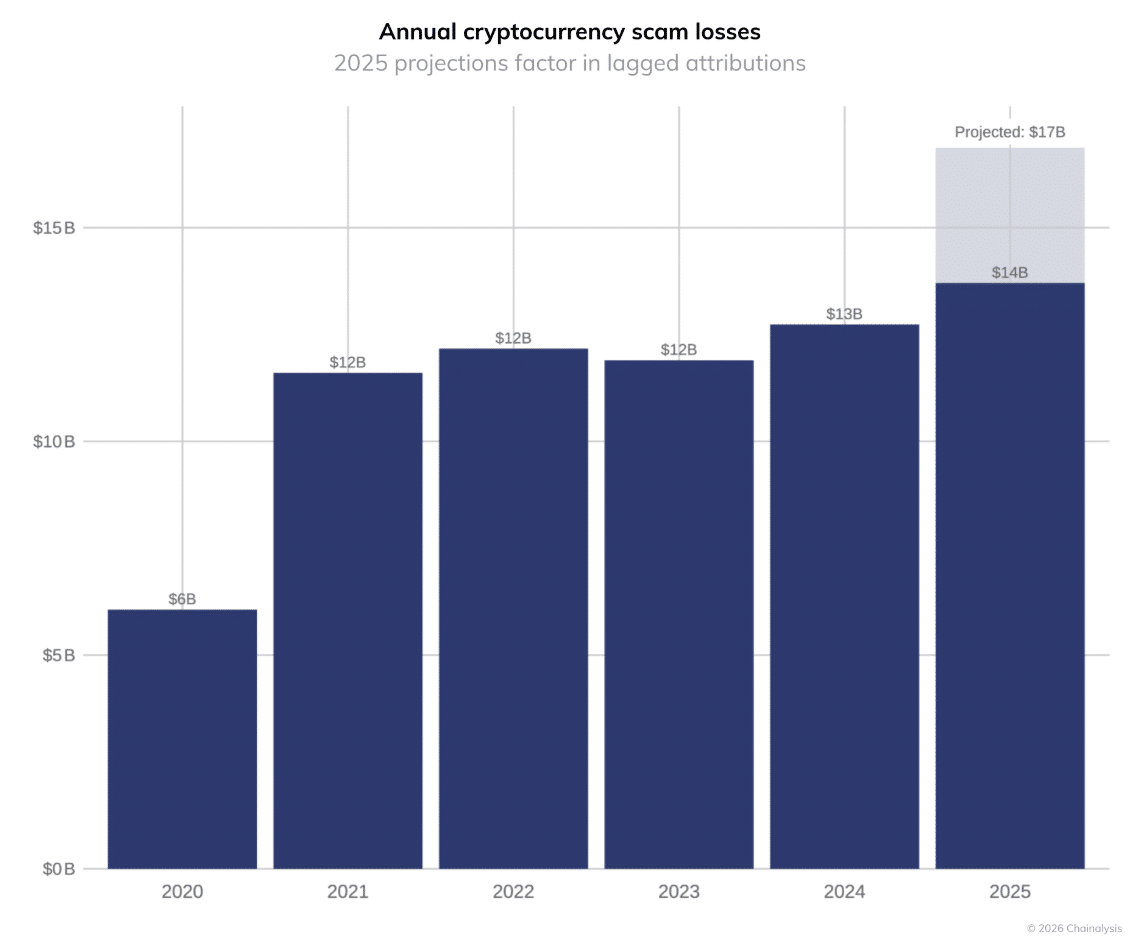
According to Chainalysis, scammers received around $14 billion in crypto in 2025, and investigators could identify over $17 billion as they uncover more illicit wallets.

However, TRM Labs reports a positive trend.
Source: TRM Labs

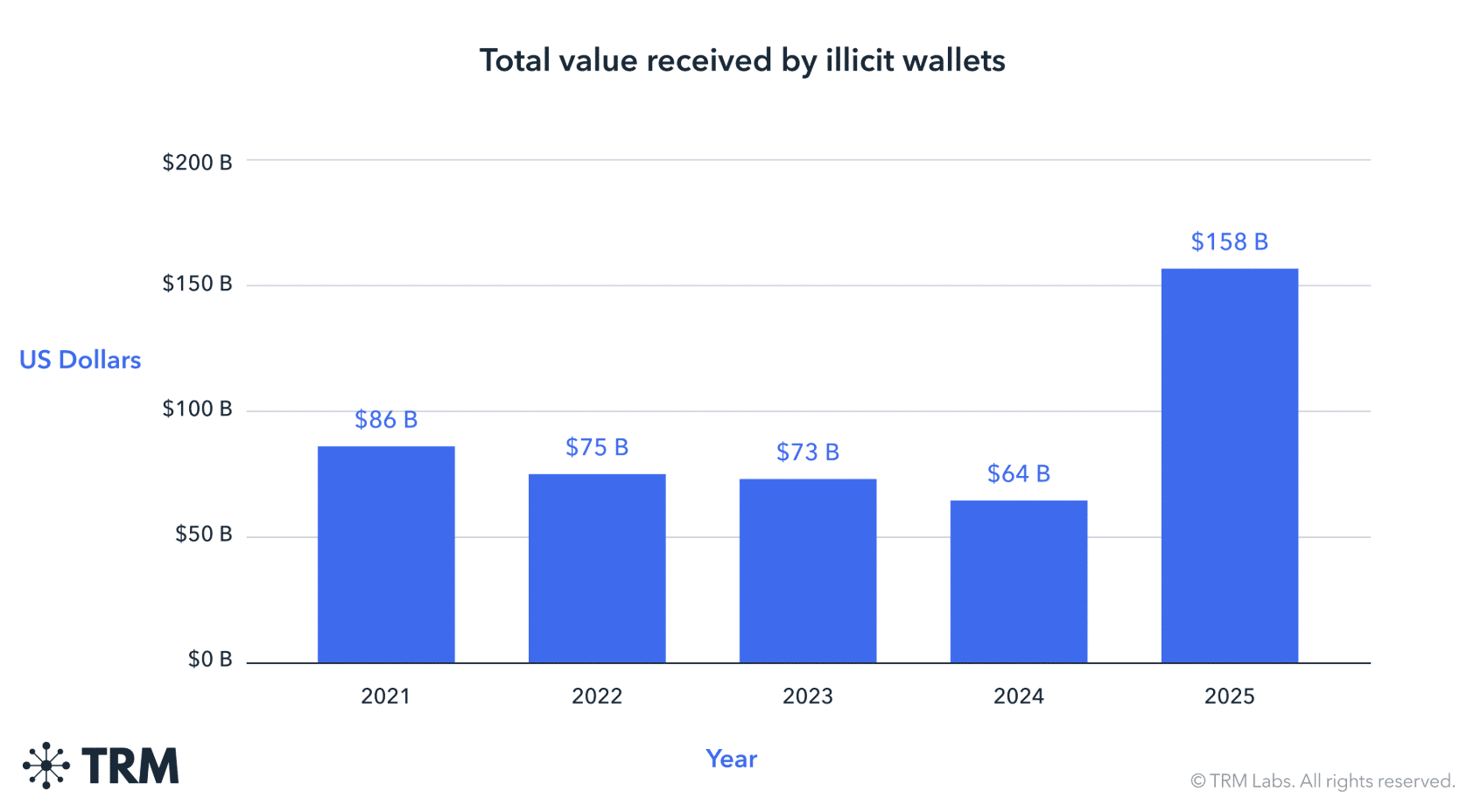
Illicit crypto activity reached $158 billion last year, but it accounted for only about 1.2% of total market activity. This suggests that despite rising fraud, the legitimate crypto economy is expanding at a much faster pace.


Final Summary

  • The rise of approval phishing scams exposes a key weakness in Web3 design, wherein many users do not fully understand the permissions they grant to smart contracts.
  • Billions lost to scams indicate that criminal networks are scaling just as quickly as the crypto industry itself.


Related Questions

QWhat is the name of the joint operation launched by the UK, US, and Canada to combat crypto scams, and which agencies are involved?

AThe operation is called Operation Atlantic. It involves the U.S. Secret Service, the UK’s National Crime Agency (NCA), and Canadian authorities.

QWhat is the primary type of scam that Operation Atlantic is targeting, and how does it work?

AThe primary target is 'approval phishing.' In this scam, victims are tricked into signing a transaction that secretly grants attackers access to their crypto wallets, allowing the scammers to drain funds.

QHow does Operation Atlantic aim to prevent crypto fraud differently from previous methods?

AInstead of only tracing stolen funds after a crime has occurred (reactive), the operation aims to proactively detect and prevent scams by monitoring real-time data and suspicious wallet activity, then contacting potential victims before the fraud is completed.

QAccording to the report, what was the estimated value of crypto received by scammers in 2025, and what positive trend was noted by TRM Labs?

AAccording to Chainalysis, scammers received around $14 billion in crypto in 2025. TRM Labs reported that while illicit crypto activity reached $158 billion, it only accounted for about 1.2% of total market activity, indicating the legitimate crypto economy is expanding at a much faster pace.

QWhat is the name of the previous Canadian-led initiative that Operation Atlantic builds upon, and what did it target?

AOperation Atlantic builds on Project Atlas, a 2024 Canadian-led operation that targeted international crypto investment fraud networks.

Related Reads

Will the Next Crypto Bull Run Start with On-Chain Trading of SpaceX?

This article presents a scenario-based forecast for the crypto industry from 2026 to 2029, arguing that the next major cycle will be driven not by technological narratives but by legal access to real-world assets. The author predicts that by mid-2026, pre-IPO perpetual contracts for top private companies like SpaceX, OpenAI, and Anthropic on platforms like Hyperliquid will become the primary gateway for accessing quality assets, as most crypto-native tokens fail to capture real value. The much-hyped AI x Crypto intersection largely fails except for prediction markets, which thrive on betting on AI model supremacy. By 2027, public blockchain foundations are forced to choose between catering to retail speculation or building compliant infrastructure for institutions, with many opting for the latter. Growth in stablecoins and tokenized private credit/equity hits a "triple ceiling" due to regulatory and political uncertainty rather than market demand. The pivotal shift is forecast for 2028. A major liquidation event in pre-IPO perpetuals exposes the structural flaw of synthetic markets lacking a real underlying asset anchor. In response, regulatory changes finally allow the public solicitation of private securities resales to verified accredited investors. This creates a legitimate secondary market for real company equity, which then becomes the core asset class of the new bull market, relegating synthetic perps to a niche role. By 2029, the industry becomes "boring" but foundational. Tokens without claims on real cash flows or assets cease trading. Stablecoin growth is steady but politically capped. Crypto infrastructure fades from view as it gets absorbed into traditional finance backends. The article's central thesis is that the key bottleneck for crypto's next phase is legal and regulatory channels for real asset ownership, not technology.

marsbit36m ago

Will the Next Crypto Bull Run Start with On-Chain Trading of SpaceX?

marsbit36m ago

The Value Distribution of Stablecoins

**Summary: The Value Distribution of Stablecoins** The article argues that stablecoins are evolving from mere trading tools into broader channels for dollar access. It divides the stablecoin ecosystem into four layers to analyze how value is distributed: 1. **Issuance Layer:** Mints stablecoins, holds reserve assets, and captures the spread between reserve yield and user costs (e.g., Tether, Circle). This layer currently earns the largest profit margin. 2. **Infrastructure Layer:** Connects stablecoins to the traditional financial system, handling fiat on/off-ramps, banking integration, compliance (KYC/AML), and asset management (e.g., Bridge, BVNK). This is the "unglamorous" but critical work, building the essential bridges between crypto and real-world finance. 3. **Acquiring/Distribution Layer:** Integrates stablecoins into merchant systems, manages payment flows, and provides enterprise financial software (e.g., Stripe, Coinbase). They act as the access point for businesses. 4. **Application Layer:** The end-users and businesses that ultimately use stablecoins for payments, settlements, or as a store of value. They benefit from convenience but have little pricing power. The core thesis is that while the issuance layer currently dominates profits, the often-overlooked **infrastructure layer holds significant long-term potential**. The real challenge and barrier to mass adoption is not the on-chain transfer of stablecoins (which is simple), but the complex "last mile" integration into existing business workflows, banking systems, and regulatory frameworks across different countries. Companies in this layer are currently in a "land grab" phase, investing heavily to build networks, secure bank partnerships, and establish compliance pathways. While their position is currently pressured by the profitable issuers above and distribution platforms below, the article suggests that if stablecoins become a default financial rail for businesses, the infrastructure providers who have done the hard work of integration will ultimately gain strong pricing power and become entrenched, essential players.

marsbit7h ago

The Value Distribution of Stablecoins

marsbit7h ago

The Value Distribution of Stablecoins

The Value Distribution of Stablecoins The article argues that stablecoins are evolving from a mere trading tool into a broad "dollar channel." It analyzes the industry's value chain through four layers: 1. **Issuance Layer (e.g., Tether, Circle):** The top layer that mints stablecoins, holds reserve assets, and captures the thickest interest rate spread. 2. **Infrastructure Layer (e.g., Bridge, BVNK):** Connects stablecoins to the traditional financial system, handling critical but complex "dirty work" like fiat on/off-ramps, banking integration, compliance (KYC/AML), and cross-border settlement. 3. **Acquiring/Distribution Layer (e.g., Stripe, Coinbase):** Embeds stablecoins into merchant systems, manages payment flows, and integrates with enterprise software. 4. **Application Layer:** End-users and businesses that ultimately use stablecoins for payments, settlement, or storing value. The author posits that while the issuance layer currently captures the most profit, the most overlooked and potentially critical layer is infrastructure. The core challenge for stablecoin adoption isn't the on-chain transfer (which is simple), but bridging the gap between blockchain and the real-world financial system. This involves solving practical problems for businesses: fiat conversion, reconciliation, tax handling, and user onboarding. Infrastructure companies are currently in a difficult "land-grab" phase—building networks, securing banking relationships, and achieving compliance country-by-country. They face pressure from both the profitable issuance layer above and distribution platforms below. However, the author suggests this layer is building a crucial moat. Once stablecoins become a default business rail, the infrastructure players who have done the hard work of integration may gain significant, durable value and pricing power.

链捕手7h ago

The Value Distribution of Stablecoins

链捕手7h ago

Trading

Spot
Futures
活动图片