UAE Telecom Powerhouse Embraces Dirham Stablecoin In New Payment Trial

bitcoinistPublished on 2025-12-12Last updated on 2025-12-12

Abstract

e& UAE, a major UAE telecom provider, has partnered with Al Maryah Community Bank to trial AE Coin, a central bank-licensed dirham-backed stablecoin, as a new payment method. The trial will allow customers to use the digital token to pay for a range of services, including mobile and home-service bills, prepaid and postpaid recharges, and purchases on e&'s digital platforms. The stablecoin will be integrated into the telco's existing payment systems, including mobile apps and self-service kiosks, offering an alternative to cards and bank transfers. Company executives highlighted benefits such as instant settlement, transparency, and frictionless access. This initiative aligns with the UAE's broader strategy to promote regulated blockchain payments and reduce cash dependency. The pilot will begin in selected e& channels, with no specified timeline for a wider rollout.

e& UAE, United Arab Emirates’ telecom giant, has signed a memorandum of understanding with Al Maryah Community Bank to trial AE Coin, a Central Bank-licensed stablecoin, as a payment option across the telco’s services.

According to company statements, the plan would let customers use an AED-backed token to pay for mobile and home-service bills, prepaid and postpaid recharges, and purchases on e& digital platforms.

Integration Across Consumer Touchpoints

Reports have disclosed that e& Group aims to plug AE Coin into its existing payment systems. The move would add the stablecoin as an alternative to cards and bank transfers on e&’s mobile apps and at smart self-service kiosks.
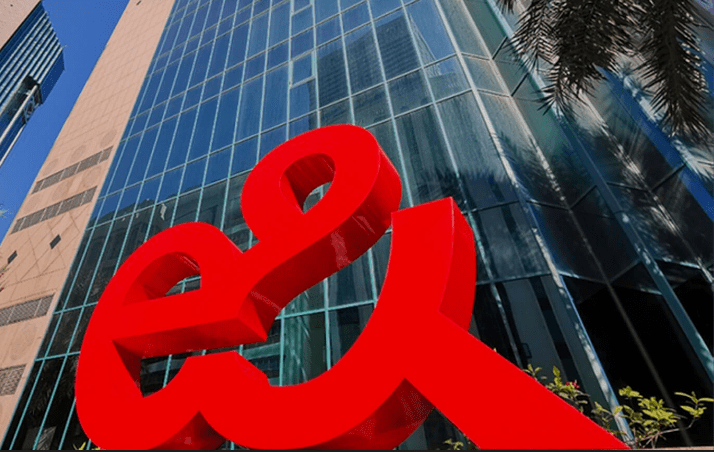
Image: Novatiq

e& UAE’s CEO, Hatem Dowidar, said the partnership with Al Maryah Community Bank will allow “instant settlement, complete transparency, and frictionless access” — language that signals the operator expects quicker finality and clearer audit trails for transactions.

For many users, that could mean fewer delays and simpler proof of payment when calling or browsing for services.

What The Partners Say

Based on reports, Al Maryah Community Bank’s chief executive, Mohammed Wassim Khayata, said the collaboration widens real-world uses for licensed virtual assets and opens the door to faster, more secure options for everyday payments.

Ramez Rafeek, General Manager of AED Stablecoin LLC, described AE Coin as created to support regulated and transparent digital payments.

Those comments frame the trial as an attempt to move a regulated token from niche experiments into mass consumer use. The pilot will start within selected e& channels; no national rollout timetable has been disclosed.

Total crypto market cap currently at $3.04 trillion. Chart: TradingView

Potential Impact On Users And The Market

Analysts and payments experts say a telecom of e&’s size could quickly expose millions of customers to stablecoin payments if the test succeeds.

According to the companies involved, integrating AE Coin would cover prepaid top-ups and postpaid billing, which are high-frequency transactions that could provide an immediate test bed for volume and reliability.

Observers note that real adoption will hinge on how easy customers find the process, how wallets are managed, and whether merchants accept the token beyond e&’s own services.

Alignment With National Goals

Reports indicate the trial fits into the UAE’s push for regulated blockchain payments and a less cash-dependent economy.

Regulators have been encouraging licensed solutions, and using a Central Bank-approved stablecoin inside a major consumer network sends a clear signal that authorities are open to controlled innovation.

If adopted more widely, the token could serve as another regulated payment choice alongside existing systems.

Featured image from Unsplash, chart from TradingView

Related Reads

How Many Tokens Away Is Yang Zhilin from the 'Moon Chasing the Light'?

The article explores the intense competition between two leading Chinese AI companies, DeepSeek and Kimi (Moon Dark Side), and the mounting pressure on Yang Zhilin, the founder of Kimi. While DeepSeek re-emerged after 15 months of silence with its powerful V4 model—boasting 1.6 trillion parameters and low-cost, long-context capabilities—Kimi has been focusing on long-context processing and multi-agent systems with its K2.6 model. Yang faces a threefold challenge: technological rivalry, commercialization pressure, and investor expectations. Despite Kimi’s high valuation (reaching $18 billion), its revenue heavily relies on a single product with low paid conversion rates, while DeepSeek’s strategic silence and open-source influence have strengthened its market position and valuation prospects, now targeting over $20 billion. Both companies reflect broader trends in China’s AI ecosystem: Kimi aims for global influence through open-source contributions and agent-based advancements, while DeepSeek prioritizes foundational innovation and hardware independence, notably shifting to Huawei’s chips. Their competition is seen as vital for China’s AI progress, with the gap between top Chinese and U.S. models narrowing to just 2.7% on the Elo rating scale. Ultimately, the article argues that this rivalry, though anxiety-inducing for leaders like Zhilin, is essential for driving innovation and solidifying China’s role in the global AI landscape.

marsbit4h ago

How Many Tokens Away Is Yang Zhilin from the 'Moon Chasing the Light'?

marsbit4h ago

TechFlow Intelligence Bureau: ChatGPT Helps Amateur Mathematician Crack 60-Year-Old Problem, CFTC Sues New York Regulator Over Coinbase and Gemini

An amateur mathematician, with the assistance of ChatGPT, has solved a combinatorial mathematics puzzle originally proposed by Hungarian mathematician Paul Erdős in the 1960s. This marks another milestone in AI-aided mathematical research, demonstrating the evolving capabilities of large language models in formal reasoning. In other AI developments, OpenAI introduced a new privacy filter tool for enterprise API usage, automatically screening sensitive data. Meanwhile, the Qwen3.6-27B model achieved 100 tokens per second on a single RTX 5090 GPU using quantization, significantly lowering the cost barrier for local AI deployment. In crypto and Web3, the U.S. CFTC sued New York’s financial regulator, challenging its oversight of Coinbase and Gemini—a first-of-its-kind federal-state regulatory clash. Following a vulnerability, KelpDAO and major DeFi protocols established a recovery fund. Tether froze $344 million in assets linked to Iran’s central bank upon U.S. Treasury request, highlighting the centralized control risks in stablecoins. Separately, Litecoin underwent a 3-hour chain reorganization to undo a privacy-layer exploit. In the U.S., former President Trump invoked the Defense Production Act to address power grid bottlenecks affecting AI data centers and dismissed the entire National Science Board, raising concerns over research independence. A retail trader gained 250% on a $600k Intel options bet amid AI-related speculation. Xiaomi announced its first performance electric vehicle, targeting rivals like Tesla. Meanwhile, iPhone users reported devices automatically reinstalling a hidden app daily, suspected to be MDM-related. A Chinese securities report noted that A-share institutional crowding has reached its second-longest streak since 2007, signaling high valuations and potential style rotation. The day’s developments reflect a dual narrative: AI is enabling unprecedented individual breakthroughs, while centralized power structures—whether governmental or corporate—are becoming more assertive, underscoring that decentralization is as much a political-economic challenge as a technical one.

marsbit5h ago

TechFlow Intelligence Bureau: ChatGPT Helps Amateur Mathematician Crack 60-Year-Old Problem, CFTC Sues New York Regulator Over Coinbase and Gemini

marsbit5h ago

Trading

Spot
Futures
活动图片