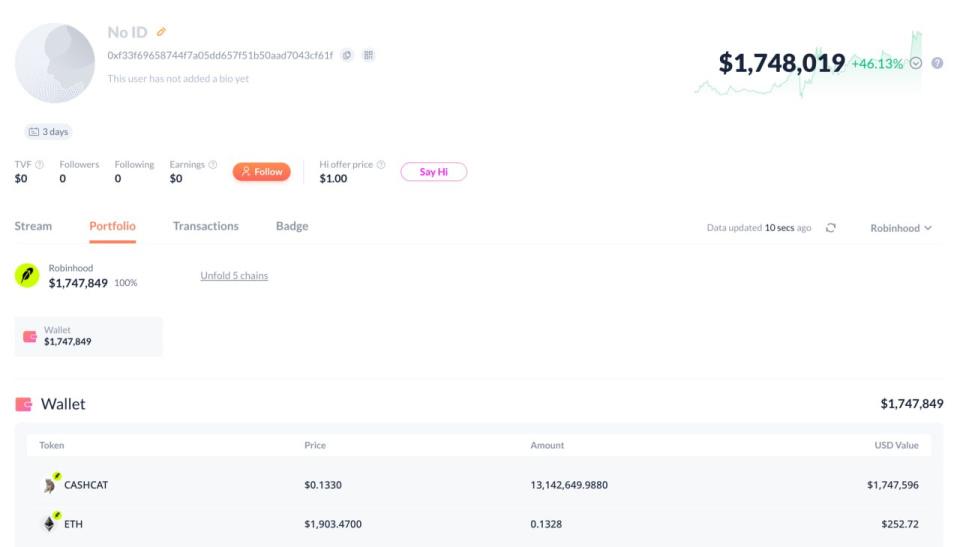
The first crypto investor previously spent $791,000 to purchase 13.14 million $CASHCAT. The current value of these tokens is $1.75, meaning the trader has made a profit of $956,000. The second trader bought 9.96 million $CASHCAT memecoins for $519. In 12 hours, this crypto market participant earned a profit of $985,000.
On Thursday, August 6, the memecoin's price surged sharply: at its peak, the 24-hour increase reached about 80%, and its market capitalization grew from $15 million to approximately $137 million. The spike coincided with $CASHCAT being added to the Robinhood trading app.
The day before, the largest decentralized exchange, Uniswap, launched a platform for issuing memecoins called Pools, which operates on the Robinhood Chain blockchain. The Robinhood Chain network itself went live on July 1 and was initially positioned as a platform for tokenized stocks and real-world assets — but memecoins quickly began appearing on it and eventually became the dominant product. Uniswap emphasized that only memecoins will be listed on Pools.
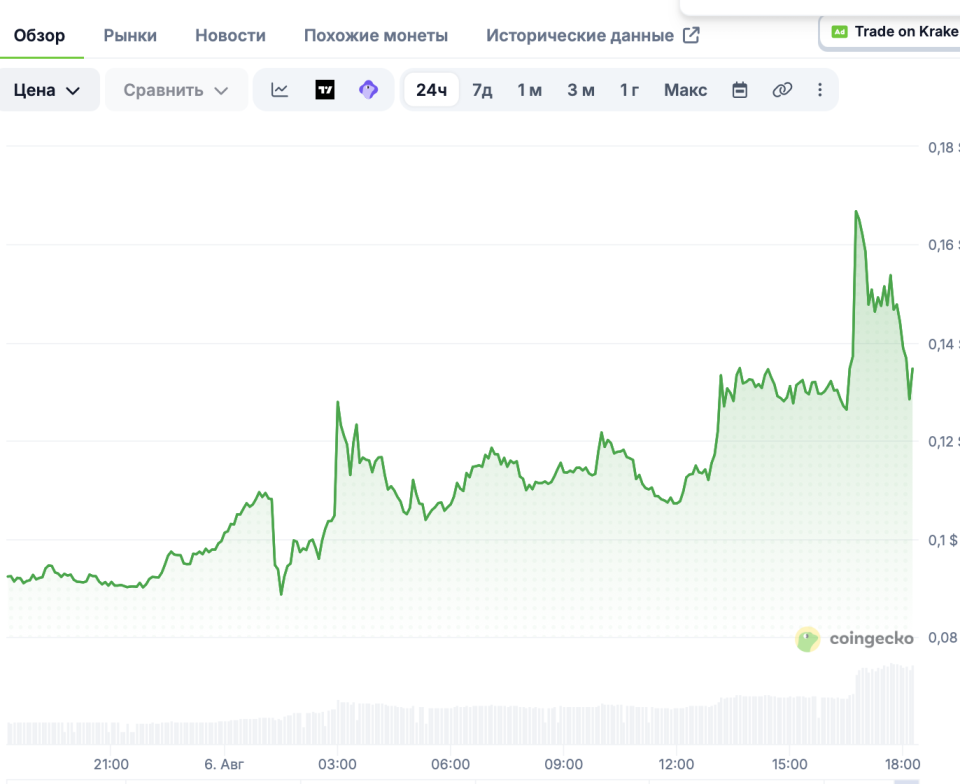
According to DeFiLlama, the Robinhood Chain ecosystem has significantly increased its activity: the total daily fees in the blockchain reached $3.29 million, of which $2.2 million came from Uniswap. $CASHCAT is the most popular token in the network: according to CoinGecko, the 24-hour trading volume exceeds $46 million. For comparison, the second most popular token, PIPEDOG, has a volume of $5.7 million, and the third, FRONG, has just over $4 million.
At the end of July, hackers breached the social media account of Robinhood CEO Vlad Tenev to promote the Vladhood (VLAD) memecoin. The hackers called the token the 'official mascot of Robinhood Chain.'