Trust Collapse: How an Insider Took Away a Hong Kong Teenager's $160 Million in BTC

比推Published on 2026-03-20Last updated on 2026-03-20

Abstract

In a high-profile case currently being heard in the UK High Court, Hong Kong-based financial influencer and former "stock prodigy" Yuen Bing-fai, also known as "Fire Fat Sam," has accused his estranged wife, Li Wun-yung, of stealing 2,323 BTC (worth approximately $162 million at the time of writing) from his cold wallet. Yuen alleges that Li, with the help of her sister, installed hidden cameras in their Brighton home to record him entering his PIN and seed phrase for his Trezor hardware wallet. The theft came to light after their daughter warned Yuen that her mother might be planning to take the Bitcoin. Secretly recorded conversations between Li and her sister, submitted as evidence, reportedly include discussions about transferring the BTC, laundering the funds, and avoiding police detection. The BTC was moved to 71 different addresses and has remained there since. Yuen, who gained fame through stock and crypto investments, claims to have acquired the Bitcoin between 2010 and 2013. The court has issued a global freezing order on the assets due to crypto's volatility. While Li denies the allegations, the judge noted the evidence appears "devastating" and allowed the civil case to proceed. The case has drawn significant media coverage and public attention, also reviving discussions about Yuen's controversial past, including his promotion of a failed cloud mining scheme in Hong Kong that led to investor losses and police investigations.

Author: Ma He, Foresight News

Original Title: Pillow Talk Turns to "Hacking": The Full Story of How Hong Kong's Teen Stock God Had $160 Million in BTC Stolen


If this story were made into a drama, it would absolutely be the most controversial and sensational family suspense series of early 2026—the protagonist is no ordinary person, but the once widely known Hong Kong financial KOL Fire Lyu Sen, real name Yuen Bing-fai, who was once crowned the "Teen Stock God".

He made his fortune early on through stock trading and Bitcoin, and his radio program "A Single Spark Can Start a Prairie Fire" was once highly popular among countless Hong Kong people. He also published an investment book titled "I Borrowed My First Ten Million from Buffett".

However, no one expected that a recent legal case would expose the most sensational family drama.

Pillow Partner Uses Hidden Camera to Steal Seed Phrase and Take BTC

In 2023, Fire Lyu Sen's divorce case reached the UK High Court. He accused his wife, Li Huanyong, with whom he is separating, of conspiring with her sister to secretly install hidden cameras in their Brighton mansion to film him entering his cold wallet PIN and storing the seed phrase, directly transferring 2,323 BTC.

The case, recently reported in Hong Kong's "Sing Tao Daily" and "Hong Kong Economic Times," as well as the UK's "Daily Mail" and "The Times," has sparked heated discussions among netizens in Hong Kong and other regions.
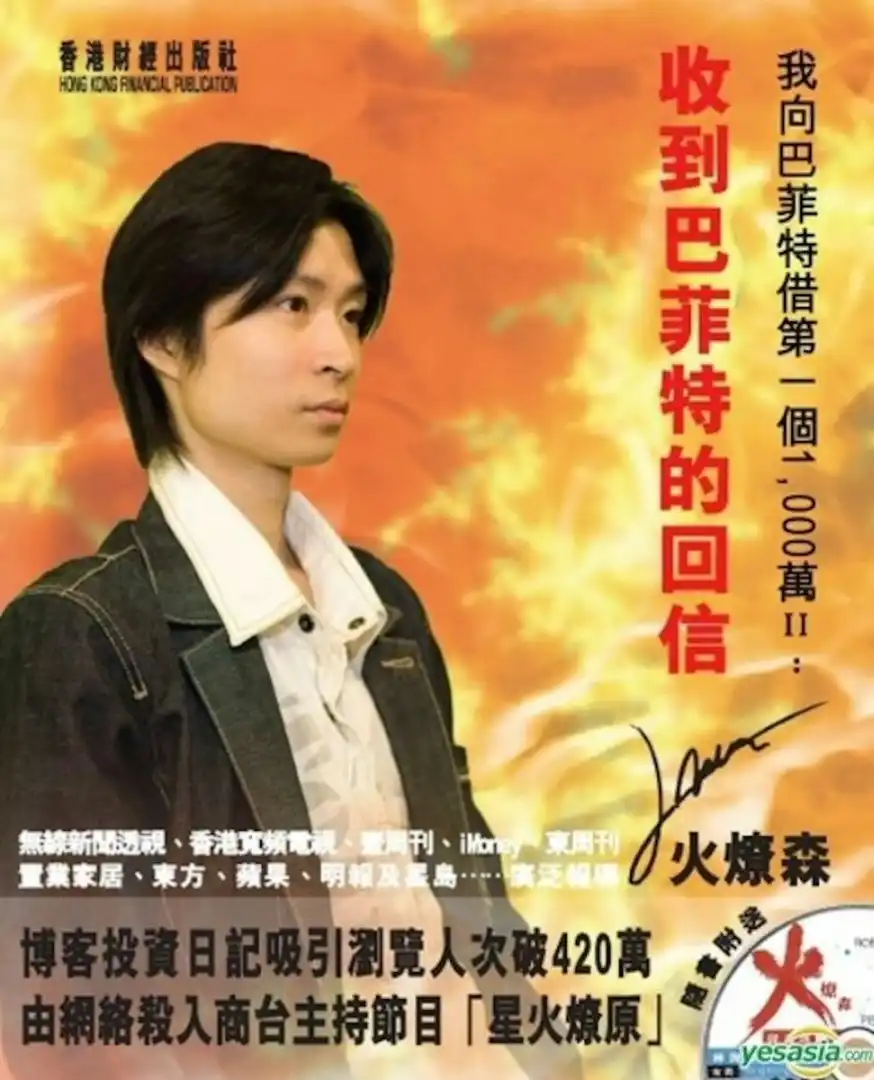
The incident dates back to 2023. At that time, Fire Lyu Sen and Li Huanyong were going through a divorce. In early July, the trigger was actually their eldest daughter. She privately told Fire Lyu Sen that her mother might be plotting something regarding the Bitcoin.

Fire Lyu Sen became immediately alert. He didn't confront her directly but instead secretly installed recording equipment at home to gather evidence.

According to court documents, the conversations between Li Huanyong and her sister were recorded verbatim. Li Huanyong said: "The Bitcoin has already been transferred to me, but will people find out you took it?"

A more crucial and accusatory dialogue: "It's fine, take it all."

They also discussed money laundering risks, using a second wallet, and the possibility of police attention... These conversations later became key evidence in court.

In his testimony submitted to the court, Fire Lyu Sen clearly stated that Li Huanyong had secretly installed hidden cameras in the mansion specifically to film him operating his Trezor cold wallet.

That cold wallet was not connected to the internet and was protected by a 6-digit PIN code. The core is a 24-word seed phrase. Anyone who obtains the seed phrase can restore the entire wallet on another device, and the funds change hands instantly.

Later, the 2,323 BTC actually moved—transferred in batches to 71 different addresses, and have remained untouched since. Fire Lyu Sen, dissatisfied, directly confronted Li Huanyong, but ended up being arrested himself. He pleaded guilty to one count of actual bodily harm and two counts of common assault. He immediately reported to the police, accusing Li Huanyong of stealing the coins. In December, Li Huanyong was arrested by UK police and released on bail. During the search, police found 10 cold wallets, 5 sets of seed phrases, and several luxury watches on her side, some of which were confirmed to be Fire Lyu Sen's property. However, the police stated there was no new evidence at the time and did not investigate further.

As of March 2026, the case has been formally transferred to the UK High Court for trial. Presiding Judge Cotter, after reviewing the transcript of the recordings, pointed out that the evidence held by the plaintiff was "devastating" and直言 (stated directly) that their chances of winning were extremely high.

Given the characteristic high volatility of cryptocurrency prices, the judge specially approved a worldwide freezing order, aiming to preserve the value of the related assets through an early trial. Although the defendant, Li Huanyong, has firmly denied knowledge of the asset transfer by submitting an affidavit, the court has ruled to allow this civil litigation process to continue.

Fire Lyu Sen's Rise and History of Controversy

However, behind Fire Lyu Sen's career achievements, there have also been numerous negative controversies.

He graduated from the Hong Kong Polytechnic University with a degree in accounting in 2003. In his early years, he worked as a commentator for Hong Kong radio stations and financial magazines. He gained fame for his accurate predictions around the 2007-2008 financial crisis (such as strategies like being bearish on the property market and bullish on gold/yen), earning him the title "Teen Stock God." He accumulated his initial capital through publishing multiple bestselling investment books, hosting financial programs, and personal stock investments.

Subsequently, his investment in Bitcoin took his wealth to a new level.

In his testimony to the UK High Court, Fire Lyu Sen claimed that he began purchasing and holding large amounts of Bitcoin as early as between 2010 and 2013 (when Bitcoin was from a few dollars to a few hundred dollars).

Hodling 2,323 Bitcoin until now, if calculated at a price of $100,000, it would be worth $232.3 million. At the current price of $70,000, it is worth approximately $163 million.

However, around 2017-2018, there were complaints from people who lost money investing in a virtual currency vending machine he promoted.

According to reports from multiple media outlets, Fire Lyu森 vigorously promoted a cryptocurrency called HE15 on his social platforms and in lectures. Investors needed to pay about HK$20,000 to HK$30,000 to purchase a so-called "cloud mining machine." This machine did not need to be taken home; it was operated by a hosting center, generating virtual currency daily, which could be exchanged for BTC or ETH on a trading platform associated with Fire Lyu Sen.

Starting mid-2018, the price of HE15 experienced a cliff-like drop, and the conversion channels were blocked. Investors found that their assets could not be withdrawn or were almost worthless. Some investors even discovered that the so-called "high-performance mining machines" actually had extremely low hardware specifications and were sold at prices far above market value.

In early 2019, over 100 victims sought help from the Hong Kong Democratic Party and reported to the police. The total amount involved was estimated to be at least over HK$20 million.

In April 2019, the Hong Kong Commercial Crime Bureau (CCB) took action and arrested several personnel from associated companies on suspicion of "conspiracy to defraud."

Fire Lyu Sen was identified as the KOL for this project at the time, but he himself subsequently moved to the UK.


Twitter:https://twitter.com/BitpushNewsCN

Bitpush TG Discussion Group:https://t.me/BitPushCommunity

Bitpush TG Subscription: https://t.me/bitpush

Original link:https://www.bitpush.news/articles/7621501

Related Questions

QWho is the main person involved in the $160 million Bitcoin theft case in Hong Kong?

AThe main person involved is Yuen Bing-fai, also known as 'Fire Fat Sam' or 'Stock Boy Genius', a former Hong Kong financial KOL.

QHow were the 2,323 Bitcoins stolen from Yuen Bing-fai?

AThe Bitcoins were stolen by his estranged wife, Li Woon-yung, who installed hidden cameras in their UK mansion to record him entering his Trezor cold wallet PIN and mnemonic phrase.

QWhat key evidence was presented in the UK High Court case regarding the Bitcoin theft?

AKey evidence included audio recordings where Li Woon-yung and her sister discussed transferring the Bitcoin, concerns about money laundering, and using a second wallet. Hidden cameras and the recovery of cold wallets and mnemonic phrases during a police search were also critical.

QWhat was the current value of the stolen Bitcoins at the time of the article, and what legal action was taken?

AAt the time of the article, the 2,323 Bitcoins were worth approximately $163 million at $70,000 per Bitcoin. The UK High Court issued a global freezing order, and the case was proceeding with civil litigation.

QWhat previous financial controversy was Yuen Bing-fai involved in before the Bitcoin theft case?

AYuen was involved in promoting the HE15 cryptocurrency and associated mining machines in 2017-2018, which led to investors suffering significant losses. Over 100 victims reported losses exceeding HK$20 million, and Hong Kong police arrested several individuals for conspiracy to fraud.

Related Reads

Morning Post | Trump Media Group Releases Q1 Financial Report; Top Three DeFi Applications Return Nearly $100 Million in Revenue to Token Holders in 30 Days; Michael Saylor Shares Bitcoin Tracker Info Again

**Title: Daily Briefing | Trump Media Group Releases Q1 Report; Top 3 DeFi Apps Return Nearly $100M to Token Holders; Michael Saylor Signals Potential Bitcoin Buy** **Summary:** Key developments in the past 24 hours include: * **Economic Outlook:** Goldman Sachs has pushed back its forecast for the next two Federal Reserve interest rate cuts to December 2026 and March 2027, citing persistent inflationary pressures from energy costs. This delayed timeline is expected to tighten liquidity flow into risk assets, including cryptocurrencies. * **DeFi & Revenue:** Data from DefiLlama shows that three leading DeFi applications—Hyperliquid, Pump.fun, and EdgeX—collectively distributed $96.3 million in revenue to their token holders over the last 30 days. This trend highlights a shift in the crypto community's focus towards real protocol earnings and sustainable economic models. * **Corporate Bitcoin Moves:** Michael Saylor, founder of MicroStrategy (note: referred to as 'Strategy' in the text, likely a typographical error), has signaled potential upcoming Bitcoin purchases by posting a "Bitcoin Tracker" update, following a pattern that typically precedes the company's official disclosure of new acquisitions. * **Market Integrity:** Prediction market platform Polymarket announced updates to address platform issues, including identifying and banning clusters of accounts involved in "ghost-fill" activities and implementing measures to prevent bulk account creation. * **Regulation:** The Bank of England Governor warned that stablecoin regulation could lead to tensions between US and international regulators. In South Korea, the National Tax Service has launched a pilot program to entrust seized virtual assets to private custody firms for management. * **Meme Token Trends:** GMGN data lists the top trending meme tokens on Ethereum (e.g., HEX, SHIB), Solana (e.g., FWOG, TROLL), and Base (e.g., SKITTEN, PEPE) over the past day. **Financial Note:** Trump Media & Technology Group reported a Q1 loss of approximately $4 billion, primarily attributed to unrealized losses on its Bitcoin and other digital asset holdings.

链捕手18m ago

Morning Post | Trump Media Group Releases Q1 Financial Report; Top Three DeFi Applications Return Nearly $100 Million in Revenue to Token Holders in 30 Days; Michael Saylor Shares Bitcoin Tracker Info Again

链捕手18m ago

Telegram Takes Direct Control of TON, Social Traffic Rewrites the Public Chain Narrative

Telegram founder Pavel Durov announced that Telegram will replace the TON Foundation as the core driver and largest validator of The Open Network (TON). Key initiatives include a sixfold reduction in transaction fees, performance upgrades, and improved developer tools within the next few weeks. This marks a strategic shift from Telegram merely providing user access to deeply integrating TON into its platform's core infrastructure. The goal is to transform Telegram's massive social traffic into sustainable on-chain activity. While viral mini-apps like Notcoin have demonstrated Telegram's ability to drive user adoption, TON aims to support frequent, low-value transactions inherent to social platforms—such as tipping, in-app payments, and game rewards. Ultra-low fees and sub-second finality (0.6 seconds) are crucial to making blockchain interactions seamless and nearly invisible within the Telegram user experience. However, Telegram's increased central role raises questions about network decentralization. Durov argues that Telegram's participation will attract more large validators, thereby enhancing decentralization. TON also offers high annual staking rewards (18.8%), aiming to retain capital within its ecosystem. The fundamental challenge for TON is no longer leveraging Telegram's user base, but becoming an indispensable, seamless infrastructure layer for Telegram's everyday applications—moving from an adjacent chain to an embedded utility.

marsbit20m ago

Telegram Takes Direct Control of TON, Social Traffic Rewrites the Public Chain Narrative

marsbit20m ago

OpenAI Post-Training Engineer Weng Jiayi Proposes a New Paradigm Hypothesis for Agentic AI

OpenAI engineer Weng Jiayi's "Heuristic Learning" experiments propose a new paradigm for Agentic AI, suggesting that intelligent agents can improve not just by training neural networks, but also by autonomously writing and refining code based on environmental feedback. In the experiment, a coding agent (powered by Codex) was tasked with developing and maintaining a programmatic strategy for the Atari game Breakout. Starting from a basic prompt, the agent iteratively wrote code, ran the game, analyzed logs and video replays to identify failures, and then modified the code. Through this engineering loop of "code-run-debug-update," it evolved a pure Python heuristic strategy that achieved a perfect score of 864 in Breakout and performed competitively with deep reinforcement learning (RL) algorithms in MuJoCo control tasks like Ant and HalfCheetah. This approach, termed Heuristic Learning (HL), contrasts with Deep RL. In HL, experience is captured in readable, modifiable code, tests, logs, and configurations—a software system—rather than being encoded solely into opaque neural network weights. This offers potential advantages in explainability, auditability for safety-critical applications, easier integration of regression tests to combat catastrophic forgetting, and more efficient sample use in early learning stages, as demonstrated in broader tests on 57 Atari games. However, the blog acknowledges clear limitations. Programmatic strategies struggle with tasks requiring long-horizon planning or complex perception (e.g., Montezuma's Revenge), areas where neural networks excel. The future vision is a hybrid architecture: specialized neural networks for fast perception (System 1), HL systems for rules, safety, and local recovery (also System 1), and LLM agents providing high-level feedback and learning from the HL system's data (System 2). The core proposition is that in the era of capable coding agents, a significant portion of an AI's learned experience could be maintained as an auditable, evolving software system.

marsbit1h ago

OpenAI Post-Training Engineer Weng Jiayi Proposes a New Paradigm Hypothesis for Agentic AI

marsbit1h ago

Your Claude Will Dream Tonight, Don't Disturb It

This article explores the recent phenomenon of AI companies increasingly using anthropomorphic language—like "thinking," "memory," "hallucination," and now "dreaming"—to describe machine learning processes. Focusing on Anthropic's newly announced "Dreaming" feature for its Claude Agent platform, the piece explains that this function is essentially an automated, offline batch processing of an agent's operational logs. It analyzes past task sessions to identify patterns, optimize future actions, and consolidate learnings into a persistent memory system, akin to a form of reinforcement learning and self-correction. The article draws parallels to similar features in other AI agent systems like Hermes Agent and OpenClaw, which also implement mechanisms for reviewing historical data, extracting reusable "skills," and strengthening long-term memory. It notes a key difference from human dreaming: these AI "dreams" still consume computational resources and user tokens. Further context is provided by discussing the technical challenges of managing AI "memory" or context, highlighting the computational expense of large context windows and innovations like Subquadratic's new model claiming drastically longer contexts. The core critique argues that this strategic use of human-centric vocabulary does more than market products; it subtly reshapes user perception. By framing algorithms with terms associated with consciousness, companies blur the line between tool and autonomous entity. This linguistic shift can influence user expectations, tolerance for errors, and even perceptions of responsibility when systems fail, potentially diverting scrutiny from the companies and engineers behind the technology. The article concludes by speculating that terms like "daydreaming" for predictive task simulation might be next, continuing this trend of embedding the idea of an "inner life" into computational processes.

marsbit1h ago

Your Claude Will Dream Tonight, Don't Disturb It

marsbit1h ago

Trading

Spot
Futures

Hot Articles

What is $BITCOIN

DIGITAL GOLD ($BITCOIN): A Comprehensive Analysis Introduction to DIGITAL GOLD ($BITCOIN) DIGITAL GOLD ($BITCOIN) is a blockchain-based project operating on the Solana network, which aims to combine the characteristics of traditional precious metals with the innovation of decentralized technologies. While it shares a name with Bitcoin, often referred to as “digital gold” due to its perception as a store of value, DIGITAL GOLD is a separate token designed to create a unique ecosystem within the Web3 landscape. Its goal is to position itself as a viable alternative digital asset, although specifics regarding its applications and functionalities are still developing. What is DIGITAL GOLD ($BITCOIN)? DIGITAL GOLD ($BITCOIN) is a cryptocurrency token explicitly designed for use on the Solana blockchain. In contrast to Bitcoin, which provides a widely recognized value storage role, this token appears to focus on broader applications and characteristics. Notable aspects include: Blockchain Infrastructure: The token is built on the Solana blockchain, known for its capacity to handle high-speed and low-cost transactions. Supply Dynamics: DIGITAL GOLD has a maximum supply capped at 100 quadrillion tokens (100P $BITCOIN), although details regarding its circulating supply are currently undisclosed. Utility: While precise functionalities are not explicitly outlined, there are indications that the token could be utilized for various applications, potentially involving decentralized applications (dApps) or asset tokenization strategies. Who is the Creator of DIGITAL GOLD ($BITCOIN)? At present, the identity of the creators and development team behind DIGITAL GOLD ($BITCOIN) remains unknown. This situation is typical among many innovative projects within the blockchain space, particularly those aligning with decentralized finance and meme coin phenomena. While such anonymity may foster a community-driven culture, it intensifies concerns about governance and accountability. Who are the Investors of DIGITAL GOLD ($BITCOIN)? The available information indicates that DIGITAL GOLD ($BITCOIN) does not have any known institutional backers or prominent venture capital investments. The project seems to operate on a peer-to-peer model focused on community support and adoption rather than traditional funding routes. Its activity and liquidity are primarily situated on decentralized exchanges (DEXs), such as PumpSwap, rather than established centralized trading platforms, further highlighting its grassroots approach. How DIGITAL GOLD ($BITCOIN) Works The operational mechanics of DIGITAL GOLD ($BITCOIN) can be elaborated on based on its blockchain design and network attributes: Consensus Mechanism: By leveraging Solana’s unique proof-of-history (PoH) combined with a proof-of-stake (PoS) model, the project ensures efficient transaction validation contributing to the network's high performance. Tokenomics: While specific deflationary mechanisms have not been extensively detailed, the vast maximum token supply implies that it may cater to microtransactions or niche use cases that are still to be defined. Interoperability: There exists the potential for integration with Solana’s broader ecosystem, including various decentralized finance (DeFi) platforms. However, the details regarding specific integrations remain unspecified. Timeline of Key Events Here is a timeline that highlights significant milestones concerning DIGITAL GOLD ($BITCOIN): 2023: The initial deployment of the token occurs on the Solana blockchain, marked by its contract address. 2024: DIGITAL GOLD gains visibility as it becomes available for trading on decentralized exchanges like PumpSwap, allowing users to trade it against SOL. 2025: The project witnesses sporadic trading activity and potential interest in community-led engagements, although no noteworthy partnerships or technical advancements have been documented as of yet. Critical Analysis Strengths Scalability: The underlying Solana infrastructure supports high transaction volumes, which could enhance the utility of $BITCOIN in various transaction scenarios. Accessibility: The potential low trading price per token could attract retail investors, facilitating wider participation due to fractional ownership opportunities. Risks Lack of Transparency: The absence of publicly known backers, developers, or an audit process may yield skepticism regarding the project's sustainability and trustworthiness. Market Volatility: The trading activity is heavily reliant on speculative behavior, which can result in significant price volatility and uncertainty for investors. Conclusion DIGITAL GOLD ($BITCOIN) emerges as an intriguing yet ambiguous project within the rapidly evolving Solana ecosystem. While it attempts to leverage the “digital gold” narrative, its departure from Bitcoin's established role as a store of value underscores the need for a clearer differentiation of its intended utility and governance structure. Future acceptance and adoption will likely depend on addressing the current opacity and defining its operational and economic strategies more explicitly. Note: This report encompasses synthesised information available as of October 2023, and developments may have transpired beyond the research period.

363 Total ViewsPublished 2025.05.13Updated 2025.05.13

What is $BITCOIN

Discussions

Welcome to the HTX Community. Here, you can stay informed about the latest platform developments and gain access to professional market insights. Users' opinions on the price of BTC (BTC) are presented below.

活动图片















