Trip.com Overseas Version Launches Stablecoin Payments, Supports USDT and USDC

marsbitPublished on 2025-12-25Last updated on 2025-12-25

Abstract

Trip.com, the overseas version of Chinese travel giant Ctrip, has launched a stablecoin payment option for its global users, supporting both USDT and USDC. The feature, confirmed by sources to Foresight News, is already operational. A user in Vietnam successfully booked a hotel using USDT in under 10 minutes, noting that prices for some bookings were even lower than on the main Ctrip platform or with traditional payment methods. The service is integrated via Singapore-based licensed crypto payment institution Triple-A and supports multiple blockchains including Ethereum, Tron, and Solana. A key advantage noted is enhanced privacy; for hotel bookings, only a name and email are required, though flights still need standard compliance information. This move is seen as a response to growing global user concerns and a major trust incident Ctrip faced recently. The article positions this within a broader trend of major corporations—including PayPal, Ant Group, Grab, and manufacturers like BYD and Toyota—adopting stablecoins. The driving forces are varied: for some, it's about becoming stablecoin issuers; for others, it's a pragmatic solution for users in regions with high inflation and limited access to international credit cards. The piece highlights severe currency devaluation in countries like Bolivia, Iran, and Turkey, where stablecoins are becoming a necessary alternative to unstable local currencies. Ultimately, stablecoin adoption is presented not as an idealistic choice, b...

Written by: Joe Zhou, Foresight News

Trip.com, the overseas version of Ctrip, is quietly entering the stablecoin payment arena.

On December 25, 2025, Foresight News learned that Trip.com's overseas version has launched stablecoin payment functionality for global users, currently supporting two dollar-denominated stablecoins: USDT and USDC. Two sources close to Trip confirmed this information to Foresight News.

After downloading and logging into Trip.com in Vietnam, the author successfully booked a hotel in Nha Trang, Vietnam, using USDT in less than 10 minutes.

More notably, after comparing prices from multiple local hotels, it was found that paying with USDT on the Trip.com App for some hotels was even cheaper than using the official Ctrip website or traditional payment methods.

Ctrip's Overseas Version Already Supports USDT/USDC

On December 24, 2025, the author booked a hotel in Nha Trang, Vietnam, using USDT on the Trip.com overseas app and successfully purchased a flight ticket from Nha Trang to Ho Chi Minh City with USDT on December 25th. The author has already checked into the hotel.

The author discovered that the flight ticket purchased with USDT on Trip.com was approximately 18% cheaper than the one bought on Ctrip. The hotel booked with USDT saved about 2.35% in costs.
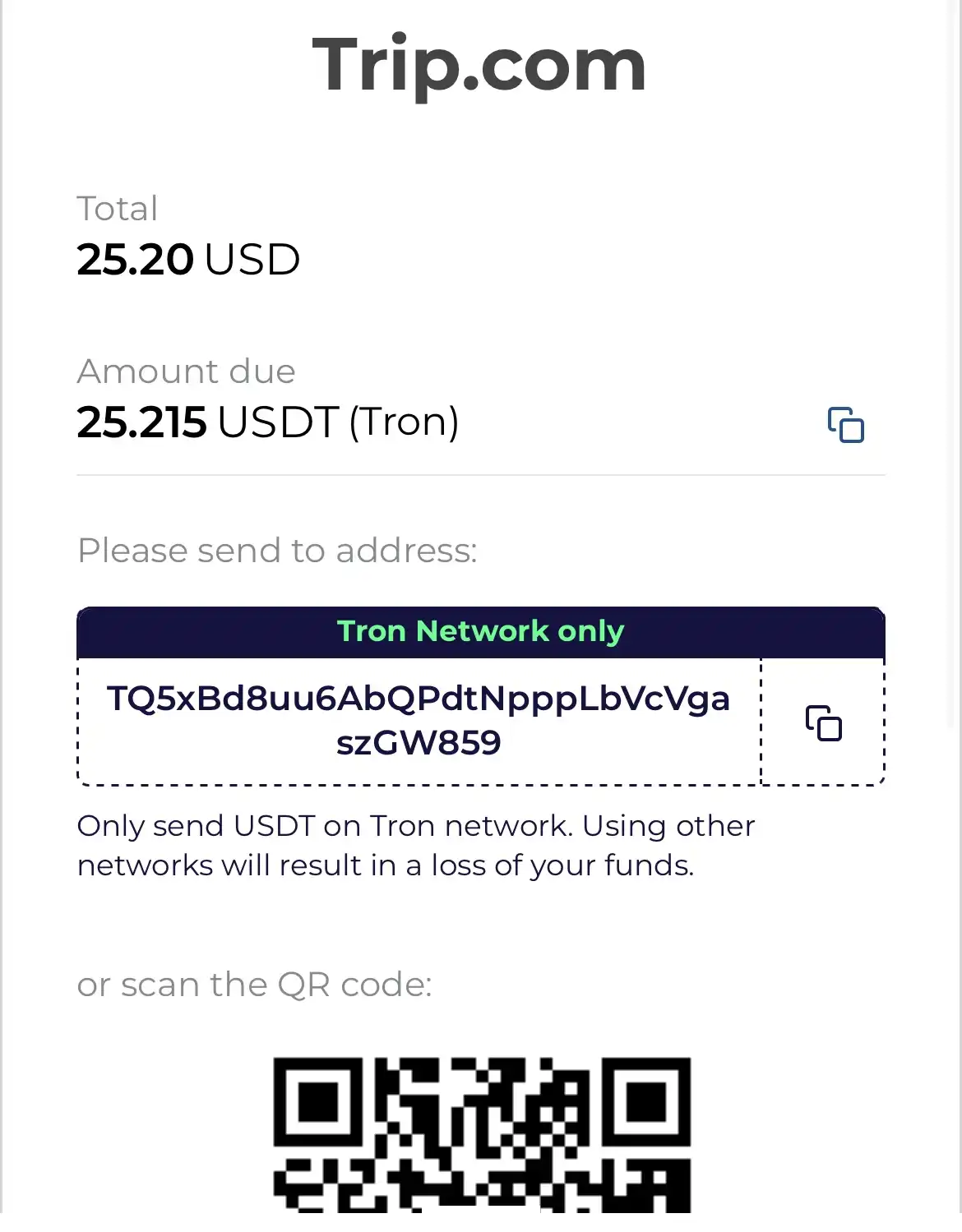
Trip has enabled USDT and USDC payments

Currently, Trip.com's crypto payments support multiple public chains including Ethereum, Tron, Polygon, Solana, Arbitrum One, and TON.

During the actual payment process, the author noticed the involvement of another payment company, Triple-A. This company provides crypto payment-related services to Trip.com. Public information shows that Triple-A is a licensed crypto payment institution headquartered in Singapore, primarily offering payment gateway and settlement services for cryptocurrencies and stablecoins.

Furthermore, the author learned that Triple-A is also collaborating with Singapore's internet giant Grab as a technical partner for crypto payment channels, enabling GrabPay users to directly top up their wallet balances using crypto assets within the Grab app.

Additionally, the author noted a detail:

When booking a hotel on Trip.com using USDT, detailed personal information is not required; only a name and email are needed to complete the order. This means that for hotel bookings using USDT, the platform can hardly obtain users' complete private information. Of course, purchasing flight tickets still requires filling in information such as nationality, passport number, and phone number—this is a compliance requirement of the aviation industry itself.

Privacy and data security have become major societal issues.

Just this month, the Ctrip Group encountered a relatively significant 'public trust incident'. In December, Ctrip Group signed a marketing cooperation agreement with the Cambodia National Tourism Board in Shanghai. After the news was announced, it raised concerns among some users about local security, telecom fraud risks, and personal information security, leading to numerous screenshots of users uninstalling the Ctrip App on social media.

In many regions overseas, users are far more sensitive to privacy and information security than in the domestic market. This might also be an important practical background for Trip.com's push for stablecoin payments.

For travelers worldwide without international credit cards, stablecoin payments offer a new path. According to public information, there are approximately 125 to 130 million credit card holders globally, with even fewer holding international credit cards. This means over 80% of the world's population cannot smoothly use the international credit card system.

Credit cards are not merely 'payment tools' but an entry point to the credit system, yet most people globally are not within this system. In many countries and regions, such as Southeast Asia, Latin America, Africa, and India, many individuals cannot be incorporated into the credit system, making it impossible for them to own credit cards.

Stablecoin payments are providing these individuals with a global payment path that bypasses the credit system.

Of course, the practical issues with stablecoins still exist: transaction fees remain relatively high and unstable.

During the actual payment process, the author found significant differences in fees between different wallets. When paying via Binance to Trip.com's USDT收款码, a fee of 1 USDT was required, with a minimum transfer threshold of 10 USDT; whereas using Bitget Wallet, the first transaction showed a 0 fee, but the second showed a fee of 2.39 USDT, with no minimum transfer amount set. These differences may be related to the public chain used (Tron) and its fee mechanism.

Why Are Giants Entering the Stablecoin Arena?

Ctrip Group is not the first company to enter the stablecoin赛道.

Previously, several global internet and payment giants have clearly布局 stablecoins, including Ant Group, JD.com, PayPal, Stripe, Meta (Facebook), Grab, and TADA.

Several banking giants have also publicly stated their entry into the stablecoin field, such as Bank of America and Morgan Stanley.

Some实体 manufacturing companies are also integrating stablecoin payments. Public reports indicate that some BYD dealers in Bolivia already support USDT payments; manufacturing companies like Toyota and Yamaha also accept stablecoin settlements in overseas markets. Tether CEO Paolo Ardoino has publicly confirmed this.

Advertisement for cooperation between BYD dealers and USDT

Internet giants,实体 manufacturing giants, and banking giants are all deploying stablecoins... their use cases for stablecoins vary.

An obvious trend is that payment giants like PayPal and Ant Group are no longer satisfied with merely being stablecoin payment gateways but hope to directly become stablecoin issuers. PayPal has already launched PYUSD; Ant Group is also推进 the application for a Hong Kong dollar stablecoin license. The boundary between payment institutions and currency issuance is being reshaped.

For实体 manufacturing enterprises like BYD and Toyota, there is no ideological judgment about stablecoins or crypto payments, only one practical question: which method are users more willing to pay with.

Fiat Currency Continues to Depreciate, Stablecoins Become a "Practical Solution"

In Bolivia, the official fiat currency, the Boliviano (BOB), depreciated against the US dollar by 65%–137% from late 2024 to mid-2025. It can be said that Bolivia's fiat currency depreciates every day.

In this environment, any company operating overseas cannot long bear the exchange loss from settling in the local currency. USDT has gradually become the de facto payment tool locally.

Bolivia is not an isolated case but a phenomenon playing out simultaneously in many countries worldwide.

The author visited Iran, Turkey, Egypt, and other countries this year and found that the cumulative depreciation of these economies' national currencies against the US dollar over the past three years generally exceeded 80%; over a five-year period, the currencies of Iran, Turkey, and Egypt have all depreciated by more than 200% against the dollar.

Currency depreciation is evolving from a 'local risk' in a few countries to a broader, more structural global phenomenon.
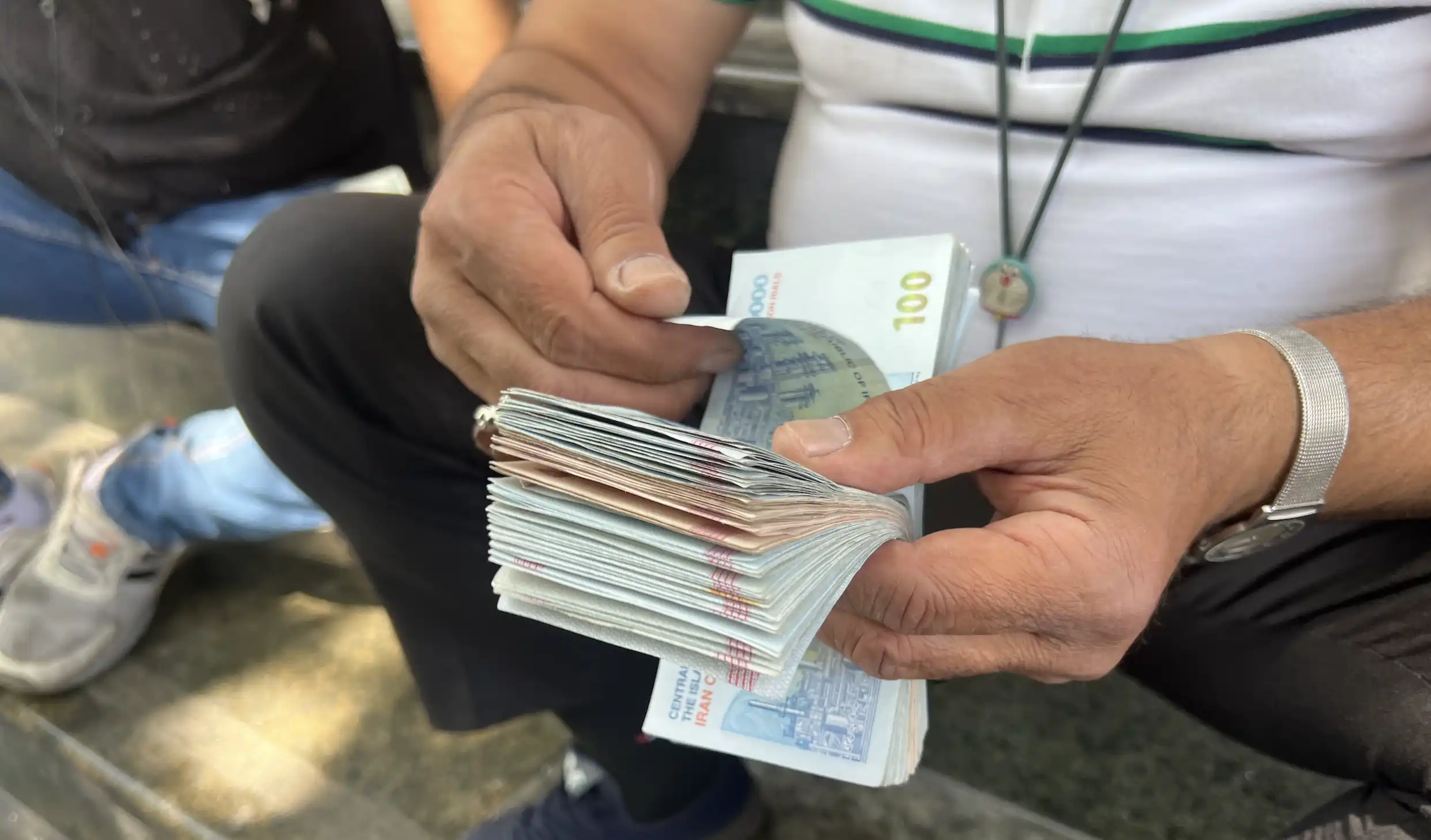
At a black market in Tehran, Iran, the author witnesses a currency exchange

More残酷ly, in the aforementioned countries, the speed of local currency depreciation has long surpassed the income growth rate of ordinary people. In real transactions, monetary disorder is directly changing payment methods.

This is precisely why consumer internet platforms like Trip.com Overseas and Grab; payment giants like PayPal and Ant Group; and实体 manufacturing companies like BYD and Toyota are beginning to experiment with introducing USDT and other stablecoins in different markets.

The world is partially crumbling, with some regions becoming unbalanced first.

When the existing financial system can no longer perform the functions of stability, settlement, and trust, a new economic system is pushed to the forefront by reality.

The new economic system is not designed but is 'forced' out by reality where the old system fails. The spread of stablecoins is not because they are ideal, but because in some places, they are already the least bad option available.


Related Questions

QWhat is the main development announced regarding Trip.com, and which stablecoins does it support?

ATrip.com, the overseas version of Ctrip, has launched stablecoin payments, supporting both USDT and USDC.

QWhich payment processing company is providing the crypto payment services for Trip.com, and what other major company are they known to partner with?

AThe payment processing company providing crypto payment services for Trip.com is Triple-A, which is also a technical partner for crypto payments with the Singaporean internet giant Grab.

QWhat is one of the key user benefits mentioned for using stablecoin payments on Trip.com, particularly for hotel bookings?

AA key benefit for hotel bookings is enhanced privacy, as users only need to provide a name and email address to complete an order, unlike traditional payments which require more personal information.

QAccording to the article, what is a major global economic problem that is driving the adoption of stablecoins like USDT in various countries?

AA major driver is the rapid devaluation of local fiat currencies in many countries, such as Bolivia, Iran, Turkey, and Egypt, where currencies have depreciated significantly against the US dollar, making stablecoins a more reliable payment method.

QBesides internet and payment companies, which other type of industry is mentioned as adopting stablecoin payments, and what is their primary motivation?

AManufacturing companies like BYD and Toyota are adopting stablecoin payments. Their primary motivation is not ideological but practical: using the payment method that customers are most willing to use to complete purchases.

Related Reads

Trading

Spot
Futures

Hot Articles

What is USDC(WORMHOLE)

USD Coin (Wormhole): A Comprehensive Overview Introduction In the rapidly evolving world of cryptocurrencies, USD Coin (Wormhole), referred to as $USDC(Wormhole), stands out as a pioneering solution within the DeFi (Decentralized Finance) landscape. Operating on several blockchain platforms, including Solana, USD Coin (Wormhole) is more than just a digital representation of the United States dollar. It embodies the innovative spirit of modern finance, enabling seamless cross-chain transactions and enhanced interoperability among diverse blockchain ecosystems through the advanced Wormhole protocol. What is USD Coin (Wormhole)? USD Coin (Wormhole) is a tokenized version of the US dollar designed to facilitate frictionless transactions across different blockchain networks. Its primary aim is to bolster liquidity and enhance the functionality of the DeFi ecosystem. By leveraging the Wormhole protocol, which establishes a robust cross-chain communication network, users can effortlessly transfer USDC tokens across various platforms. This cross-chain capability marks a significant advancement in cryptocurrency use, promoting a more interconnected and efficient ecosystem where assets can flow freely between different blockchains. The value proposition of USD Coin (Wormhole) lies not only in its stability, being pegged to the US dollar, but also in its ability to bridge gaps between disparate blockchain environments. This innovative approach fosters a greater level of participation among users and developers, paving the way for new and exciting applications within decentralized finance. Who is the creator of USD Coin (Wormhole)? The origins of USD Coin (Wormhole) are intricately tied to the Wormhole network, which was developed by Jump Crypto. While specific individual creators are not prominently documented, Jump Crypto is notable for its involvement in advancing blockchain technology and supporting its applications in finance. By creating the Wormhole network, Jump Crypto has played a vital role in promoting cross-chain asset transfers, enhancing the efficiency and diversity of cryptocurrency usage. Who are the investors of USD Coin (Wormhole)? The success of USD Coin (Wormhole) is supported by investments from several notable funds and organizations within the cryptocurrency realm. Key investors include: Coinbase Ventures: A prominent venture capital arm backed by one of the leading cryptocurrency exchanges in the industry, Coinbase Ventures provides essential capital and strategic support to promising blockchain projects. Arrington XRP Capital: Specializing in digital assets, Arrington XRP Capital recognizes the potential of innovative projects like USD Coin (Wormhole) and has invested accordingly to back its development. Jump Trading: As the parent organization of Jump Crypto, Jump Trading brings not only investment but a wealth of expertise in trading technology and market dynamics to bolster the Wormhole project. How Does USD Coin (Wormhole) Work? The operational framework of USD Coin (Wormhole) is intricately designed to facilitate effective cross-chain transactions, maximizing security and efficiency. Here’s a simplified overview of how it functions: Asset Locking: When a user wishes to transfer USDC from one blockchain to another, they first lock their tokens on the source blockchain. This process ensures that the assets are secure and are set to be either burned or moved later. Token Minting: After the tokens are locked, an equivalent amount of USDC is minted on the destination blockchain. This provides the user with access to their funds on a new platform, reflecting the flexibility that the Wormhole protocol enables. Cross-Chain Transfer: The Wormhole protocol efficiently facilitates the entire transfer process. It ensures that once the USDC is minted on the destination chain, the equivalent tokens are burned on the source chain. The result is a seamless transfer of value between two distinct blockchain environments. This cross-chain methodology ensures that transactions remain secure and transparent, significantly enhancing liquidity within the different DeFi ecosystems. Timeline of USD Coin (Wormhole) Understanding the evolution of USD Coin (Wormhole) provides vital context for its significance in the cryptocurrency arena. Here’s a timeline highlighting important milestones in the project’s history: 2021: The Wormhole project is launched, establishing a framework for cross-chain asset transfers and setting the stage for the development of USD Coin (Wormhole). 2022: The Wormhole network experiences a significant challenge with a security breach that results in a $325 million theft. However, the incident is later addressed and refunded by Jump Crypto, showcasing the project’s commitment to security and transparency. 2023: USD Coin (Wormhole) integrates with Circle’s Cross-Chain Transfer Protocol (CCTP), enhancing its capabilities for cross-chain transfers and further solidifying its place within the DeFi ecosystem. 2024: Ongoing development and expansion of the Wormhole network continue, aimed at increasing the utility and reach of USD Coin (Wormhole) as well as enhancing its operational framework. Key Features The success of USD Coin (Wormhole) can be attributed to several key features that differentiate it from other cryptocurrency offerings: Cross-Chain Interoperability At the core of USD Coin (Wormhole) is its ability to facilitate seamless transfers across multiple blockchain networks. This interoperability serves as a cornerstone for decentralized finance, allowing various platforms to interact with each other, thereby accelerating the evolution of financial services. Security Wormhole employs a well-designed Guardian Network comprised of node validators that ensure secure cross-chain transactions. This collective oversight minimizes the risk of fraud and provides users with confidence that their assets are protected during cross-chain transfers. Liquidity Enhancement By enabling USDC to circulate freely across different blockchains, USD Coin (Wormhole) enhances liquidity in the DeFi ecosystem. This increased liquidity can foster more efficient trading, contribute to better pricing strategies, and improve the overall market dynamics encompassing various digital assets. Conclusion USD Coin (Wormhole) is a pivotal innovation in the blockchain space, reinforcing the capabilities of decentralized finance (DeFi) and establishing a more connected financial ecosystem. With its robust framework for cross-chain transactions, security features, and strong backing from reputable investors, USD Coin (Wormhole) is positioned to play a key role in the future of cryptocurrency. As the digital finance landscape continues to evolve, USD Coin (Wormhole) not only embraces the future of interconnectivity among blockchain networks but also reaffirms the power of tokenization and blockchain technology in transforming how we perceive and utilize value in a digital world. By navigating the complexities of cross-chain functionality, it demonstrates a sophisticated approach to enabling financial inclusivity and innovation in the world of cryptocurrencies.

1.2k Total ViewsPublished 2024.04.01Updated 2024.12.03

What is USDC(WORMHOLE)

What is $USDC

Classic USDC: A Comprehensive Overview Introduction to Classic USDC In the rapidly evolving landscape of the cryptocurrency market, stablecoins have emerged as critical components, particularly in providing stability amid the volatility that characterizes digital assets. One such project is Classic USDC, a digital currency initiative that aims to deliver a stable and reliable medium of exchange. By maintaining a 1:1 peg with the US dollar, Classic USDC strives to offer users a dependable digital asset, equipped for various applications within the web3 and cryptocurrency ecosystems. What is Classic USDC? Classic USDC is fundamentally a stablecoin, which is a type of cryptocurrency designed to minimize the price volatility typically seen in the digital asset market. Specifically, Classic USDC aspires to represent the value of the US dollar closely, ensuring that users can leverage this digital currency for transactions, savings, and other financial activities without the fear of sudden price fluctuations that can otherwise plague many cryptocurrencies. The primary aim of Classic USDC is to provide a reliable and trustworthy digital equivalent of the US dollar, designed for seamless integration into a wide range of web3 applications, decentralized finance (DeFi) platforms, and other crypto-related financial systems. By delivering a stable digital currency, Classic USDC seeks to facilitate everyday commerce, make blockchain technology more user-friendly, and encourage the adoption of cryptocurrencies for mainstream usage. Creator of Classic USDC The identity of the creator or the development team behind Classic USDC remains largely unknown, and the lack of transparency has led to a degree of uncertainty regarding the project’s origins. While many cryptocurrency initiatives prominently showcase their founders and development teams, Classic USDC does not provide clear information about its creators, which poses challenges for potential users or investors weighing the project's credibility and reliability. Investors of Classic USDC Alongside the ambiguity surrounding its creators, Classic USDC also lacks specificity with regards to its investors. The financial backing of a project can often lend it credibility and stabilize its operations; however, the absence of documented investment foundations or organizations supporting Classic USDC raises questions about its funding structure. This lack of clarity could potentially hinder stakeholder confidence in the project. How Does Classic USDC Work? The operational mechanics of Classic USDC rely heavily on its reserve system, which is fundamental to the underpinnings of any stablecoin. Classic USDC undertakes to maintain a reserve of assets that directly correspond to the value of the digital currency in circulation. Specifically, for every Classic USDC token issued, an equivalent amount of backing assets is retained in reserve, whether in cash or near-cash equivalents. This strategy is designed to uphold the value of Classic USDC, offering reassurance to users that redeeming their tokens for US dollars is feasible at any time. This reserve structure aims to enhance the stability and reliability of Classic USDC, positioning it as a secure alternative in the cryptocurrency market. By ensuring that the value of Classic USDC is consistently correlated with the US dollar, the project aspires to engender trust among users who may be wary of the broader market dynamics. Timeline of Classic USDC The history of Classic USDC is marked by several key milestones that reflect its journey and evolution within the cryptocurrency ecosystem: 2021: The inception of Classic USDC is noted, introducing a new digital currency option designed for stability. During this year, the first records of the token’s activity surfaced and its initial price levels were established. 2024: Classic USDC begins to experience notable price fluctuations, as the crypto market overall grapples with various trends and user sentiment. Predictions regarding its future potential emerge, indicating a strong interest from market observers and analysts who foresee growth opportunities. Future Projections Experts speculate that Classic USDC may reach higher levels of adoption and stability in the years to come, with potential further developments anticipated around 2025 and 2026. However, these projections should be approached with cautious optimism, as the cryptocurrency market is inherently unpredictable, and various external factors may influence the trajectory of Classic USDC. Key Points About Classic USDC Stability: Classic USDC’s core proposition revolves around providing a digital currency that parallels the value of the US dollar, thereby ensuring stability in an often volatile marketplace. Reserve System: The project’s commitment to maintaining a reserve of assets to back its value underscores its reliability and operational soundness. Web3 and Crypto Integration: Classic USDC is engineered to facilitate easy integration within various applications, aiming to enhance the user experience and broaden the acceptance of cryptocurrency in everyday transactions. Future Growth Potential: While still emerging, Classic USDC holds prospective avenues for growth as awareness and utilization of stablecoins increases in the web3 and crypto contexts. Conclusion Classic USDC presents itself as a notable stablecoin initiative within the cryptocurrency sphere, striving to provide users with a reliable digital currency that embodies the stability of the US dollar. Despite uncertainties regarding its creators and financial backing, the underpinning principles of Classic USDC—centered on reserve-backed assurances—endeavour to position it as a trustworthy option for individuals and businesses navigating the digital economy. With an eye towards the future, market analysts are keen to observe how Classic USDC evolves in response to the shifting dynamics of the cryptocurrency landscape, potentially establishing itself as a significant player in the realm of stablecoins.

623 Total ViewsPublished 2024.05.01Updated 2024.12.03

What is $USDC

Discussions

Welcome to the HTX Community. Here, you can stay informed about the latest platform developments and gain access to professional market insights. Users' opinions on the price of USDC (USDC) are presented below.

活动图片