TradeXYZ and Hyperliquid: Unveiling the Symbiotic Relationship Under a 50% Revenue Share

marsbitPublished on 2026-08-05Last updated on 2026-08-05

Abstract

Market sentiment is cautious. AI investments are rewarded only when they drive growth without severely harming cash flow, while crypto markets face pressure from ETF outflows and rising yields. Within crypto, leadership has rotated to Solana and DEXs. Solana's ecosystem gained 8.5%, driven by tokens like META, while DEXs, led by Uniswap, rose 5.2%. A key debate centers on TradeXYZ's dominant role on the Hyperliquid exchange, where it generates over 50% of the volume in RWA perpetuals. TradeXYZ, an independent team, is required to share 50% of its HIP-3 protocol revenue with Hyperliquid. Concerns range from the sustainability of this split to Hyperliquid's long-term monetization. The argument that TradeXYZ might leave due to the 50% share is considered weak, as it would require rebuilding its entire platform and abandoning its user base, damaging its reputation. Conversely, Hyperliquid replacing TradeXYZ would signal bad faith to other builders. Their relationship is seen as symbiotic. Regarding monetization, Hyperliquid benefits not only from the 50% fee split but also from priority write fees, read fees from market makers, and second-order effects like increased USDC supply, which generates significant adjusted revenue. The more pertinent question is how both parties will transition from a growth-focused, low-fee model to a more stable, higher-fee structure.

The market is growing increasingly cautious. AI-related spending is only rewarded if it drives growth without severely eroding cash flow; meanwhile, the crypto market continues to face pressure from ETF outflows and rising yields.

Within crypto, leadership has rotated once again to Solana and DEXs. We delve into the ongoing discussion surrounding TradeXYZ, Hyperliquid, and how the value from HIP-3 is ultimately distributed.

Major benchmarks diverged over the past week. The S&P 500 and gold rose modestly by 0.74% and 0.65% respectively, while the Nasdaq was largely flat. BTC was the weakest performer, declining 3.0% for the week.
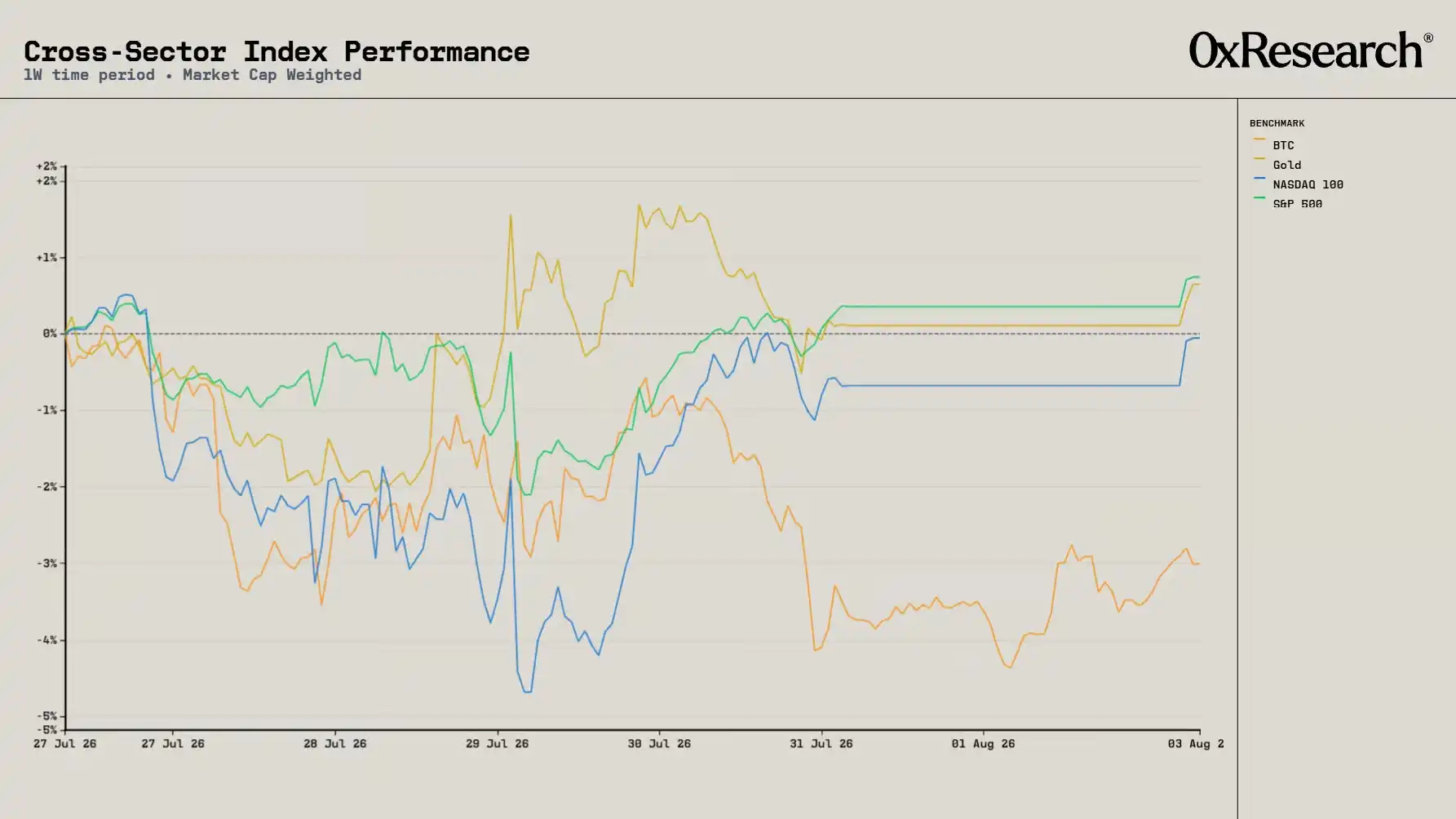
AI giants released a dense batch of earnings reports last week. Amazon surged over 15%, recording its strongest quarterly revenue growth in over four years, with AWS revenue growing 37% year-over-year to $42.2 billion. Microsoft also rose over 15%, with cloud business growth exceeding expectations and capital expenditure guidance coming in below Wall Street estimates. In contrast, Meta fell 10%, with Q2 free cash flow plummeting 91%, as AI-related capital expenditures weighed on profitability. A theme this earnings season is becoming clearer: the market is no longer simply rewarding AI investment, but rather rewarding companies that can demonstrate return on investment without sacrificing cash flow.

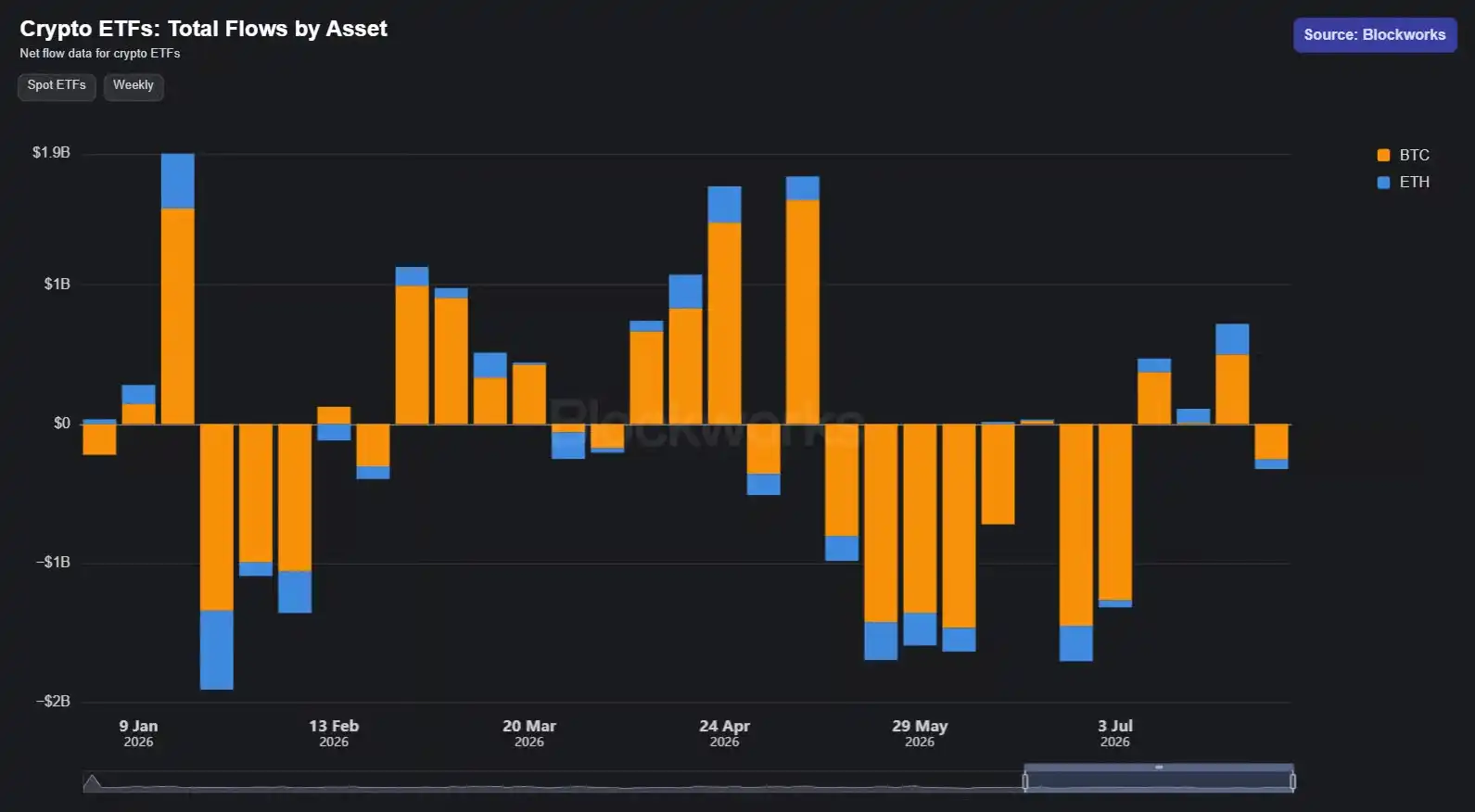
The crypto market remains under pressure. ETF flows turned net negative again, with BTC and ETH ETFs seeing net outflows of $255 million and $69 million respectively. Risk sentiment was also dampened by the bond market, with the US 30-year Treasury yield rising to 5.23%, its highest level since June 2007.
Leadership within crypto rotated once more. The Solana ecosystem performed best this week, rising 8.5%; the Ethereum ecosystem, after several strong weeks following the Robinhood Chain launch, fell 8.8%. The DEX sector came in second, rising 5.2%.

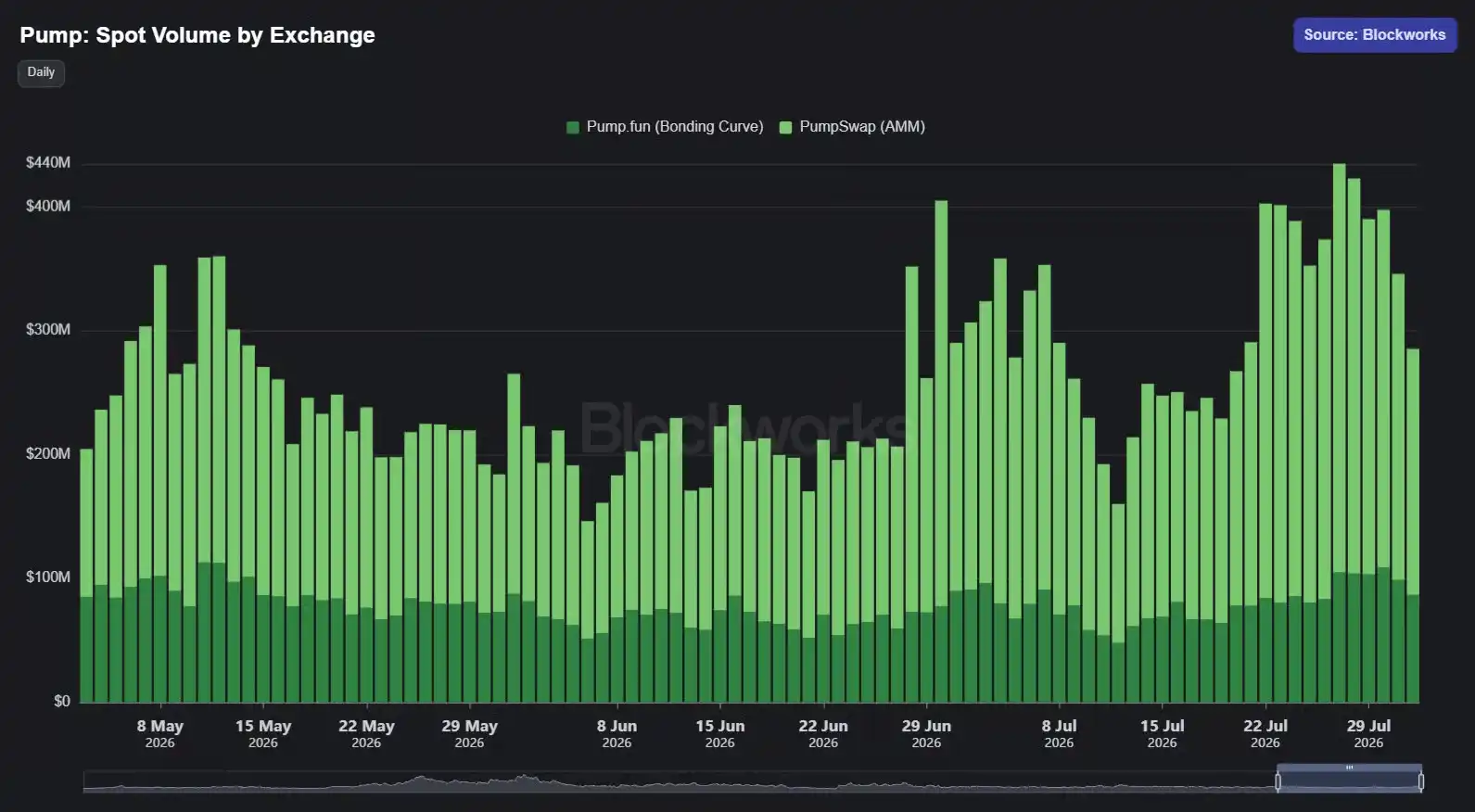
The Solana ecosystem was primarily driven by META, which surged 36% following its listing on Upbit; PUMP rose 3%, accounting for about one-third of the index's weight. More importantly, Pump.fun's trading volume and revenue continue to recover from their June lows, showing initial signs that "trench" activity may be returning.
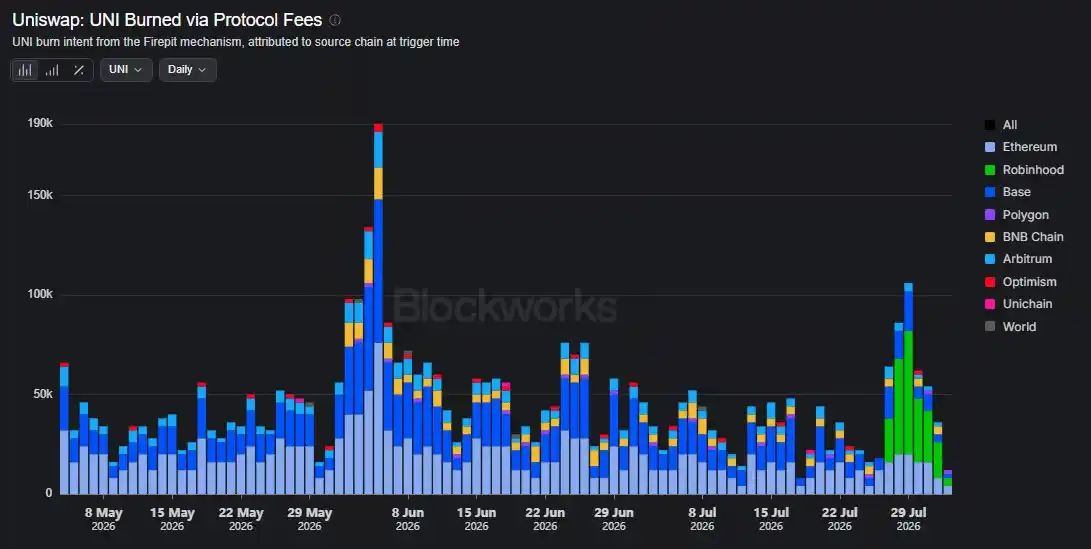
The DEX sector was led by Uniswap, which rose 6.5% for the week. UNI benefited from the fee switch expansion to Robinhood Chain, and the commencement of protocol fees for some v4 deployments.
Many interesting on-chain innovations recently (including the FWA we covered last week) are being built via Uniswap v4 hooks. Uniswap and its broader ecosystem are definitely worth watching.

The TradeXYZ Debate

As TradeXYZ continues to dominate crypto trading volume, with RWAs accounting for over 50% of Hyperliquid's trading volume, discussions about its alignment of interests and its high concentration on Hyperliquid have intensified. Concerns range from reasonable (how Hyperliquid monetizes HIP-3 in the long run) to rather far-fetched (TradeXYZ will leave Hyperliquid), so it's necessary to clarify the current relationship.

Let's be clear first: TradeXYZ is an independent team building on Hyperliquid. It is programmatically required to allocate 50% of its HIP-3 revenue to Hyperliquid, with the remaining half at its discretion. We've found that TradeXYZ (the same team as Unit) has consistently used, and continues to use, its HIP-1 spot revenue to buy back HYPE, but the HIP-3 revenue has not been used in the same way.
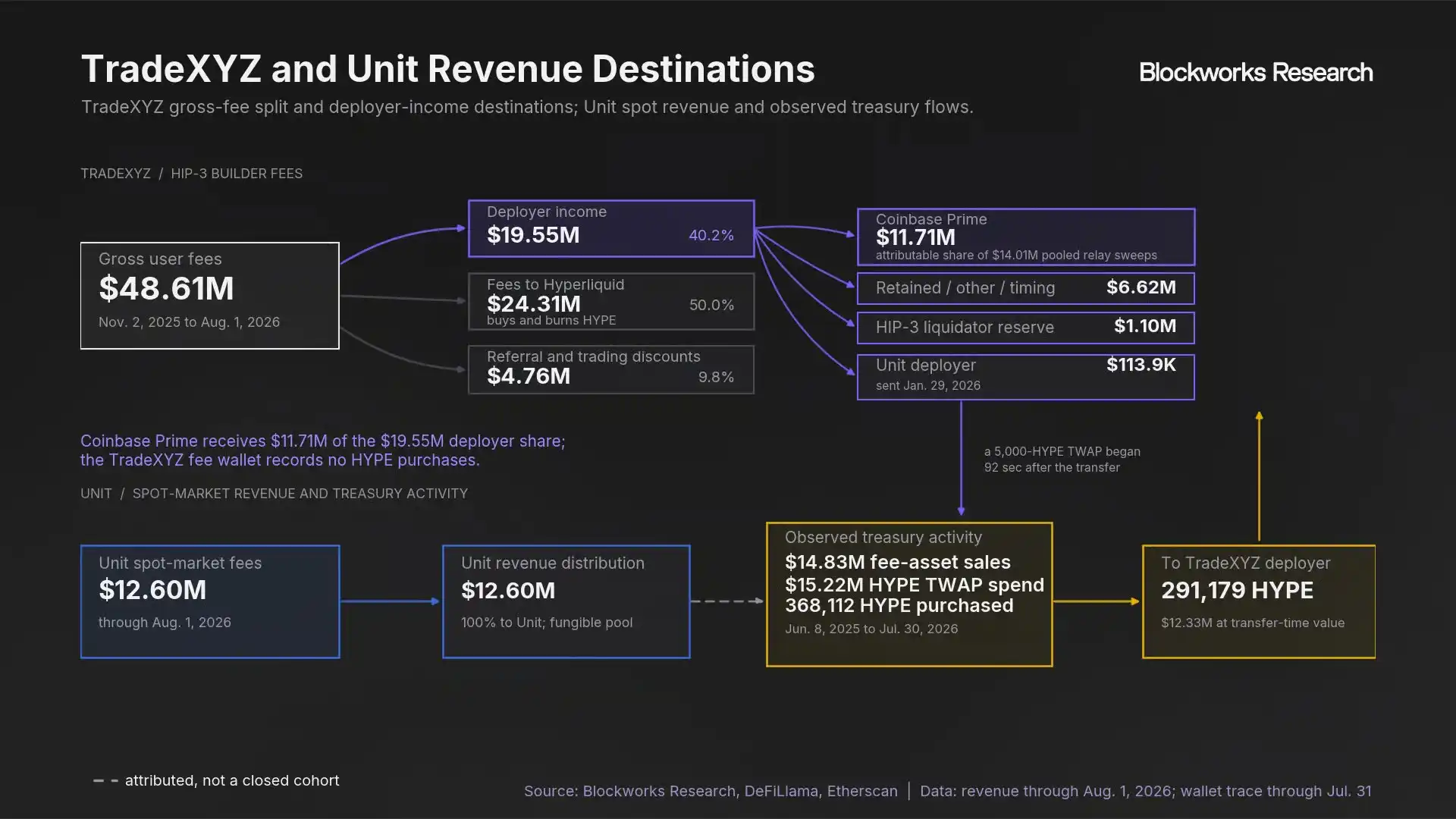
The first concern, and in our view the weakest, is that TradeXYZ might leave Hyperliquid because the 50% share is too high and it could capture more value on its own. As early as April, I argued the exact opposite: that Hyperliquid was outsourcing too much of the value from its largest market to its deployers. Look at what each side provides. Hyperliquid provides the infrastructure layer, collateral, and most importantly, the user base that underpins the vast majority of TradeXYZ's trading volume. To leave, TradeXYZ would need to rebuild the exchange layer (the hardest part of the entire tech stack), abandon almost its entire trader base, and commit reputational suicide in the process. For Hyperliquid, bringing RWA in-house would be equally suicidal for its reputation: weakening its dominant deployer that underpins so much of its success would send a signal to all future HIP-3 deployers and all builders on Hyperliquid—any team successful enough will be replaced. This is one of the most classic symbiotic relationships in crypto, and neither side has a reason to leave the other, from a reputational, economic, or architectural standpoint.

The second concern is about monetization, which holds more water but requires a closer look. First, it's dishonest to ignore TradeXYZ's execution; Hyperliquid's RWA markets could not have reached their current scale without it. Owning 100% of a much smaller pool is worth less than half of the current pool. Second, the 50% fee share is not Hyperliquid's only monetization avenue: it also profits from write priority fees and read fees paid by market makers.

It also benefits from second-order effects, such as increased USDC supply—the cost-adjusted revenue from on-chain balances, of which Hyperliquid retains 90%. Open interest is a proxy: since the launch of HIP-3, its open interest has grown by $3.68 billion, while USDC supply growth over the past year is $1.38 billion, and crypto open interest declined towards year-end. As more traders bring in USDC to go long on RWAs, the revenue from that supply also accrues to Hyperliquid. That revenue is estimated at around $30 million per month, already surpassing the entire HIP-3 perpetual fee pool that Hyperliquid splits evenly with TradeXYZ.

For us, the most interesting question is not the 50/50 split between TradeXYZ and Hyperliquid, but rather how both parties move out of growth mode and ultimately shift from low fees to a more stable, higher fee base.


Related Questions

QAccording to the article, what is the current financial relationship between TradeXYZ and Hyperliquid regarding HIP-3 revenue?

AThe article states that TradeXYZ is required to give 50% of its HIP-3 revenue to Hyperliquid. The remaining 50% is for TradeXYZ to keep and use at its discretion.

QWhat are the main reasons given in the article for why a split between TradeXYZ and Hyperliquid is considered highly unlikely?

AThe article presents three main reasons: 1) Reputation suicide for TradeXYZ, as leaving would mean abandoning its user base. 2) TradeXYZ would need to rebuild the complex trading platform infrastructure from scratch. 3) Reputation suicide for Hyperliquid, as absorbing RWA internally would signal to all builders that successful projects will be replaced, damaging trust in the ecosystem. The relationship is described as symbiotic.

QBesides the 50% fee split from TradeXYZ, what are other ways Hyperliquid monetizes from the success of the RWA market?

AHyperliquid also monetizes through: 1) Write priority fees. 2) Fees paid by market makers for reading data. 3) Second-order effects like increased USDC supply, where Hyperliquid retains 90% of the cost-adjusted revenue from on-chain balances. The article estimates this USDC-related revenue alone is about $30M per month.

QWhat key theme emerged from the recent earnings reports of AI giants like Amazon, Microsoft, and Meta, according to the article?

AThe market is no longer simply rewarding AI investment. It is rewarding companies that can demonstrate a return on that AI investment (growth) while not severely sacrificing cash flow in the process.

QWhich crypto sectors showed the strongest leadership in the week discussed, and what were the key drivers mentioned?

AThe Solana ecosystem performed best, rising 8.5%, largely driven by META token's 36% surge after listing on Upbit. The DEX sector was second, rising 5.2%, led by Uniswap (UNI) which gained 6.5% due to fee switch expansion to Robinhood Chain and initial v4 protocol fee deployments.

Related Reads

AMD acquires Taalas: hardware AI manages without scarce HBM memory

AMD has agreed to acquire Toronto-based startup Taalas, which tackles a key bottleneck in AI inference: the constant need to transfer model weights from memory to the processor for each generated token. Taalas's chips eliminate this operation by permanently embedding the model weights into the transistors themselves. This data transfer is what currently limits inference speed and has made high-bandwidth memory (HBM) a scarce commodity. Taalas's first test chip, fabricated on TSMC's 6nm process, reportedly generated tokens for Meta's Llama 3.1 8B model at speeds 48 times faster than comparable Nvidia GPUs. Its architecture features a mask ROM section for fixed weights and SRAM for adaptable components. However, this design comes with a significant trade-off: each chip is permanently dedicated to a single model. Switching models requires a partial redesign and fabrication, a process taking about two months. While the acquisition is seen as part of AMD's rivalry with Nvidia in inference, its broader implication lies in challenging the assumption of a permanent HBM memory shortage. The AI memory market is currently booming, with HBM supply sold out through 2026. Yet, Taalas's technology demonstrates that the memory bottleneck is an engineering challenge, not an absolute physical constraint. This aligns with industry-wide efforts from companies like Nvidia (through model compression) and memory makers like Samsung and SK hynix (developing new packaging and storage technologies) to reduce dependency on scarce HBM. AMD's move suggests that the current high prices for memory, driven by AI demand, may not be sustainable. It highlights a growing engineering push against the premise of perpetual memory scarcity, reminding investors that memory has historically been a cyclical business.

cryptonews.ru1h ago

AMD acquires Taalas: hardware AI manages without scarce HBM memory

cryptonews.ru1h ago

Vance says US-Iran conflict remains in 'midgame', US military 'seeks exit', Iran sets 'six conditions for reopening the strait'

U.S. Vice President Vance described the U.S.-Iran conflict as being in the "mid-game," stating the U.S. is utilizing diplomatic, economic, and military tools, with a focus on increasing oil and gas shipments through the Strait of Hormuz. Meanwhile, U.S. Chairman of the Joint Chiefs of Staff Gen. Dan Caine is reportedly seeking an "exit" privately, expressing concerns that airstrikes alone are insufficient to achieve objectives and that further escalation carries significant risks. He highlighted critical ammunition shortages for key missile defense systems. In response, Iran’s Supreme National Security Council Secretary, Zolgadr, presented six conditions for reopening the Strait of Hormuz: a U.S. pledge never to threaten Iran, an end to aggression against Iran and its allies, withdrawal of forces from the region, war reparations, lifting of all sanctions, and the unconditional unfreezing of Iranian assets. These demands, seen as a high bar set by hardliners, contrast with more pragmatic requests made in backchannel talks, which focus on lifting the blockade, restoring oil sanctions waivers, and accessing frozen funds. While Iran and Oman are close to a technical agreement on a temporary shipping lane, Iran clarified this does not equate to a full reopening of the strait, which remains contingent on U.S. meeting its conditions. Attacks on commercial vessels in the area continue, with recent incidents attributed to Iran. Despite pauses in military action and expressions of openness to talks from both sides, negotiations are currently stalled over Iran's economic demands and U.S. insistence on freedom of navigation.

marsbit1h ago

Vance says US-Iran conflict remains in 'midgame', US military 'seeks exit', Iran sets 'six conditions for reopening the strait'

marsbit1h ago

Trading

Spot
活动图片