Top Crypto Exchange Expands Into UK With New Local Platform

bitcoinistPublished on 2026-05-20Last updated on 2026-05-20

Abstract

European cryptocurrency exchange WhiteBIT has launched a dedicated platform, whitebit.uk, to enter the UK market. The platform offers retail users spot trading, market analytics, instant GBP conversion, and funding via cards and Faster Payments. For institutions, it provides services like liquidity provision, token listings, and API connectivity. The move is a strategic expansion into the UK's highly regulated financial hub, where crypto awareness remains high. WhiteBIT's founder stated the goal is to combine innovation with trust and compliance. This follows the exchange's recent expansions into Latin American markets, aligning with its mission to drive global blockchain adoption.

European crypto exchange WhiteBIT is entering the United Kingdom (UK) market with the launch of a dedicated platform, marking a strategic push into one of the world’s most established financial hubs.

WhiteBIT Launches UK Platform

On Wednesday, WhiteBIT, the largest European cryptocurrency exchange by traffic, announced the launch of whitebit.uk, a dedicated platform to serve users in the United Kingdom.

According to the official announcement, WhiteBIT UK is designed to serve both retail users and professional market participants. Retail clients will have access to core features, including spot trading, market analytics, and instant conversion, with GBP funding available via payment cards and the Faster Payments Service (FPS).

For institutional participants, the platform offers advanced capabilities such as liquidity provision and market-making support, token listing services, Crypto-as-a-Service solutions, and API connectivity for seamless integration and digital asset management.

Additionally, UK users can access crypto lending and auto-invest features, subject to product availability, onboarding requirements, and applicable UK regulations.

WhiteBIT announces dedicated UK platform. Source: WhiteBIT

The expansion marks a strategic step toward strengthening the exchange’s presence in “one of the world’s most mature and highly regulated financial markets,” and amid sustained growth in crypto adoption across the UK.

Data from the Financial Conduct Authority (FCA) revealed that overall awareness of digital assets remained high at 91% in 2025, while roughly 8% of UK adults reported holding crypto. The data also shows that 73% of users rely on centralized exchanges, underscoring the importance of established platforms in facilitating access to crypto markets. Notably, the UK continues to rank among the leading global markets for both crypto engagement and fintech innovation.

Volodymyr Nosov, Founder and President of W Group, the global fintech ecosystem that includes WhiteBIT, affirmed that “entering the UK market marks an important milestone in WhiteBIT’s expansion across regulated jurisdictions.”

“The UK has long been a global financial hub, and we see strong demand for platforms that combine innovation with a high level of trust, transparency, and compliance. Our goal is to provide users with access to digital assets while maintaining the standards that define our platform globally,” he continued.

The exchange also shared its plans to enhance its product offerings and local presence as the UK market evolves, catering to both individual users and institutional partners with compliant solutions.

WhiteBIT’s Crypto Expansion Continues

The latest launch aligns with WhiteBIT’s “broader mission to drive global adoption of blockchain technology by making crypto more accessible and practical for everyday use,” and it’s the latest in a series of strategic moves across the globe.

Last year, the crypto exchange unveiled its expansion across Latin America with its entry into the Argentine and Brazilian markets. The dual-market entry aimed to integrate local fiat providers and add support for local currencies to enhance accessibility and convenience for domestic users in the two largest South American countries.
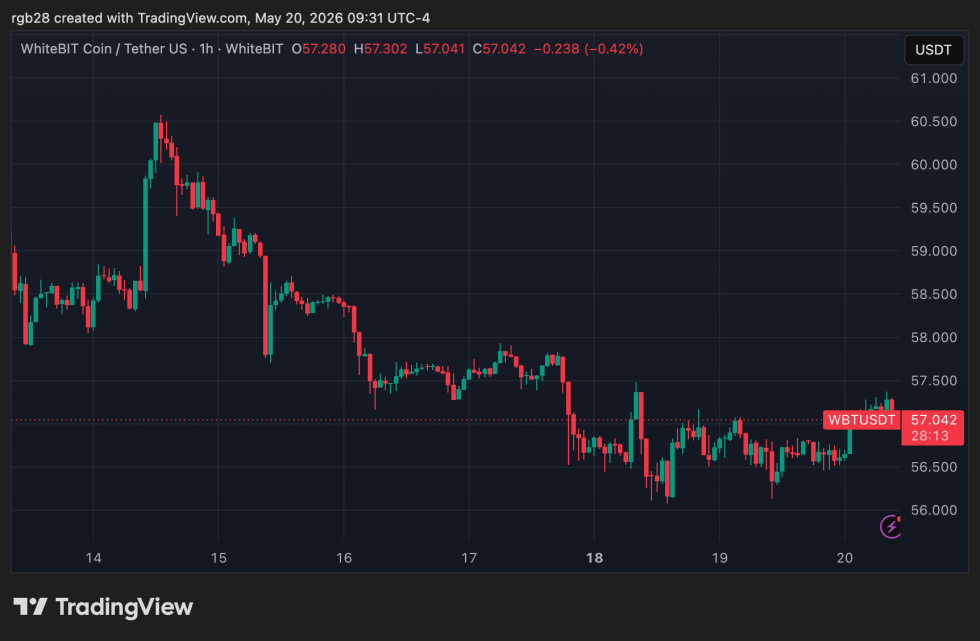
WBT's performance in the one-week chart. Source: WBTUSDT on TradingView


Related Questions

QWhat is the name of the new dedicated platform that WhiteBIT is launching for the UK market?

AThe new dedicated platform for the UK market is called whitebit.uk.

QWhat are two primary methods UK retail users can use to fund their accounts with GBP on WhiteBIT UK?

AUK retail users can fund their accounts with GBP using payment cards and the Faster Payments Service (FPS).

QAccording to the article, what percentage of UK adults reported holding cryptocurrency as of 2025, based on FCA data?

ARoughly 8% of UK adults reported holding cryptocurrency as of 2025.

QWhat reason did WhiteBIT's founder, Volodymyr Nosov, give for the importance of entering the UK market?

AVolodymyr Nosov stated that the UK is a global financial hub and there is strong demand for platforms that combine innovation with a high level of trust, transparency, and compliance.

QWhich two Latin American markets did WhiteBIT enter last year as part of its global expansion?

ALast year, WhiteBIT entered the Argentine and Brazilian markets in Latin America.

Related Reads

The Value Distribution of Stablecoins

**Summary: The Value Distribution of Stablecoins** The article argues that stablecoins are evolving from mere trading tools into broader channels for dollar access. It divides the stablecoin ecosystem into four layers to analyze how value is distributed: 1. **Issuance Layer:** Mints stablecoins, holds reserve assets, and captures the spread between reserve yield and user costs (e.g., Tether, Circle). This layer currently earns the largest profit margin. 2. **Infrastructure Layer:** Connects stablecoins to the traditional financial system, handling fiat on/off-ramps, banking integration, compliance (KYC/AML), and asset management (e.g., Bridge, BVNK). This is the "unglamorous" but critical work, building the essential bridges between crypto and real-world finance. 3. **Acquiring/Distribution Layer:** Integrates stablecoins into merchant systems, manages payment flows, and provides enterprise financial software (e.g., Stripe, Coinbase). They act as the access point for businesses. 4. **Application Layer:** The end-users and businesses that ultimately use stablecoins for payments, settlements, or as a store of value. They benefit from convenience but have little pricing power. The core thesis is that while the issuance layer currently dominates profits, the often-overlooked **infrastructure layer holds significant long-term potential**. The real challenge and barrier to mass adoption is not the on-chain transfer of stablecoins (which is simple), but the complex "last mile" integration into existing business workflows, banking systems, and regulatory frameworks across different countries. Companies in this layer are currently in a "land grab" phase, investing heavily to build networks, secure bank partnerships, and establish compliance pathways. While their position is currently pressured by the profitable issuers above and distribution platforms below, the article suggests that if stablecoins become a default financial rail for businesses, the infrastructure providers who have done the hard work of integration will ultimately gain strong pricing power and become entrenched, essential players.

marsbit5h ago

The Value Distribution of Stablecoins

marsbit5h ago

The Value Distribution of Stablecoins

The Value Distribution of Stablecoins The article argues that stablecoins are evolving from a mere trading tool into a broad "dollar channel." It analyzes the industry's value chain through four layers: 1. **Issuance Layer (e.g., Tether, Circle):** The top layer that mints stablecoins, holds reserve assets, and captures the thickest interest rate spread. 2. **Infrastructure Layer (e.g., Bridge, BVNK):** Connects stablecoins to the traditional financial system, handling critical but complex "dirty work" like fiat on/off-ramps, banking integration, compliance (KYC/AML), and cross-border settlement. 3. **Acquiring/Distribution Layer (e.g., Stripe, Coinbase):** Embeds stablecoins into merchant systems, manages payment flows, and integrates with enterprise software. 4. **Application Layer:** End-users and businesses that ultimately use stablecoins for payments, settlement, or storing value. The author posits that while the issuance layer currently captures the most profit, the most overlooked and potentially critical layer is infrastructure. The core challenge for stablecoin adoption isn't the on-chain transfer (which is simple), but bridging the gap between blockchain and the real-world financial system. This involves solving practical problems for businesses: fiat conversion, reconciliation, tax handling, and user onboarding. Infrastructure companies are currently in a difficult "land-grab" phase—building networks, securing banking relationships, and achieving compliance country-by-country. They face pressure from both the profitable issuance layer above and distribution platforms below. However, the author suggests this layer is building a crucial moat. Once stablecoins become a default business rail, the infrastructure players who have done the hard work of integration may gain significant, durable value and pricing power.

链捕手5h ago

The Value Distribution of Stablecoins

链捕手5h ago

Trading

Spot
Futures
活动图片