To All Crypto Holders Questioning Life: Navigating the Darkest Hour, Crypto Is Still at the Chaotic Beginning

marsbitPublished on 2026-02-10Last updated on 2026-02-10

Abstract

An 8-year crypto veteran reflects on the extreme optimism at the start of 2025 following Trump’s pro-crypto election win, which quickly soured after Trump family meme coin launches damaged credibility. Despite institutional adoption through Bitcoin ETFs and stablecoin integration by major firms, the market crash began with Trump's 100% China tariffs and an MSCI proposal to exclude crypto-heavy companies from indices. A massive Binance outage triggered historic liquidations, decoupling crypto from rising traditional markets. By 2026, crypto fell further as traditional markets sold off, demonstrating deep entanglement with Wall Street—a double-edged sword of institutional adoption. Critics declared crypto dead, but the author argues the market is still immature and intertwined with equities. Macro conditions like potential rate cuts and a weaker dollar could fuel a recovery. The larger narrative remains intact: stablecoins are modernizing finance, blockchain infrastructure is expanding, and regulatory clarity is advancing. The convergence with AI remains an unexplored frontier. Despite risks, the author believes we are still at the "chaotic beginning" of an internet-native financial system.

Author:Connor Dempsey

Compiled by: Deep Tide TechFlow

Deep Tide Introduction: This article reviews the extreme optimism following Trump's victory in early 2025, the subsequent epic crash triggered by the "First Family" issuing tokens, tariff policies, Binance's unexpected downtime, and the stock market stampede. From the perspective of an 8-year industry insider, the author provides a profound analysis of how the crypto market shifted from "independent trends" to a "double-edged sword" scenario deeply intertwined with Wall Street. Despite the current devastation, the author believes that, given the macroeconomic expectations of interest rate cuts and a weak dollar, along with the trend of financial infrastructure moving on-chain, we are still at the "chaotic beginning" of this internet financial revolution.

Full Text Below:

I've been navigating the crypto market for 8 years, and every so often, I encounter days that feel like these past few.

February 5th was one of those days. But this didn't happen overnight. Here's our journey.

Looking Back

Entering 2025, expectations for cryptocurrency were incredibly high. The moment Trump's victory was confirmed in late 2024, Bitcoin (BTC) began breaking new highs. We were transitioning from a Biden administration that actively tried to stifle the U.S. crypto industry to a Trump administration that vowed to make America the "crypto capital of the world." Clear regulations were imminent, Bitcoin had a new institutional narrative, and ETFs were ready, allowing big money easy access.

The Screeching Halt

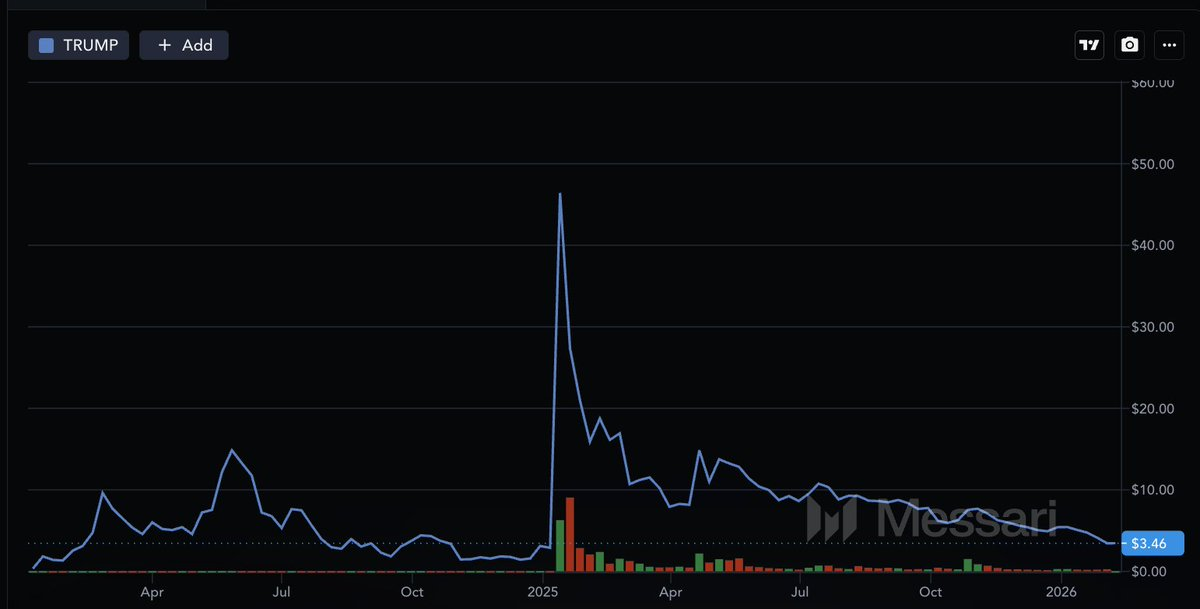
The world's largest economy was finally embracing the technology we had all been building for 16 years. The vibes were sky-high. Then, the dumbest thing I've seen in my 8 years in crypto happened. The President of the United States—Donald J. Trump—launched his own shitcoin. Then, his wife launched one too.

Public opinion overnight shifted from "cryptocurrency will modernize financial markets" to "the President is running a pump and dump." A massive wave of retail investors rushed into $TRUMP. Most got rekt. Just like that, those who had always hated the industry had another reason to call the whole thing a scam.
Source:@messaricrypto

Staying Positive

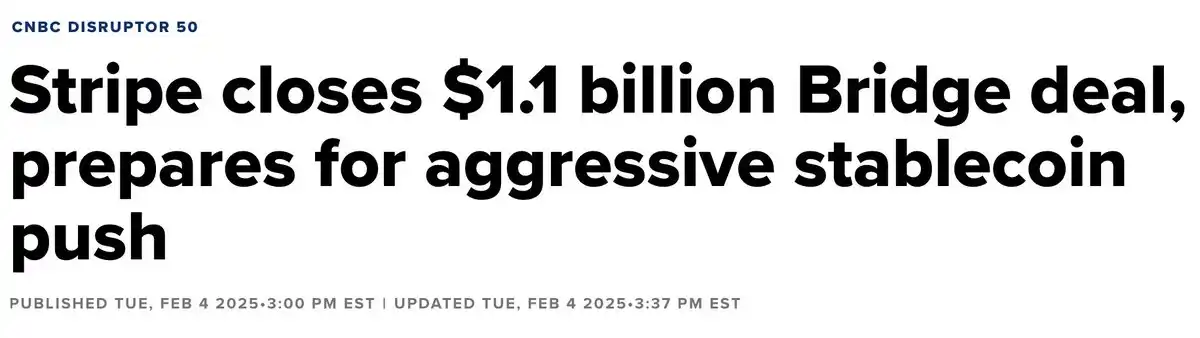
Crypto had shaken off awkward situations before, and there was still plenty to be optimistic about. Billions were flowing into Blackrock's Bitcoin ETF. Stripe, Visa, even century-old companies like MoneyGram were going all-in on stablecoins. The Trump administration enacted federal stablecoin regulations, with a market structure bill (Clarity) aimed at providing clear rules for the entire industry close behind. The game was still on.
October 10th (10/10)

Most market participants (including myself) expected the year to end at all-time highs (ATHs). The Fed was cutting rates, Bitcoin was rechallenging its $125k ATH, experts predicted Bitcoin would hit $250k, Ethereum (ETH) would hit $12k, while stocks and gold would also hit new highs.

Then on October 10th, Trump announced 100% tariffs on China, and MSCI proposed excluding companies with high crypto exposure from indices tracked by pension funds and ETFs. The latter threatened to cut off one of Bitcoin's biggest sources of demand.

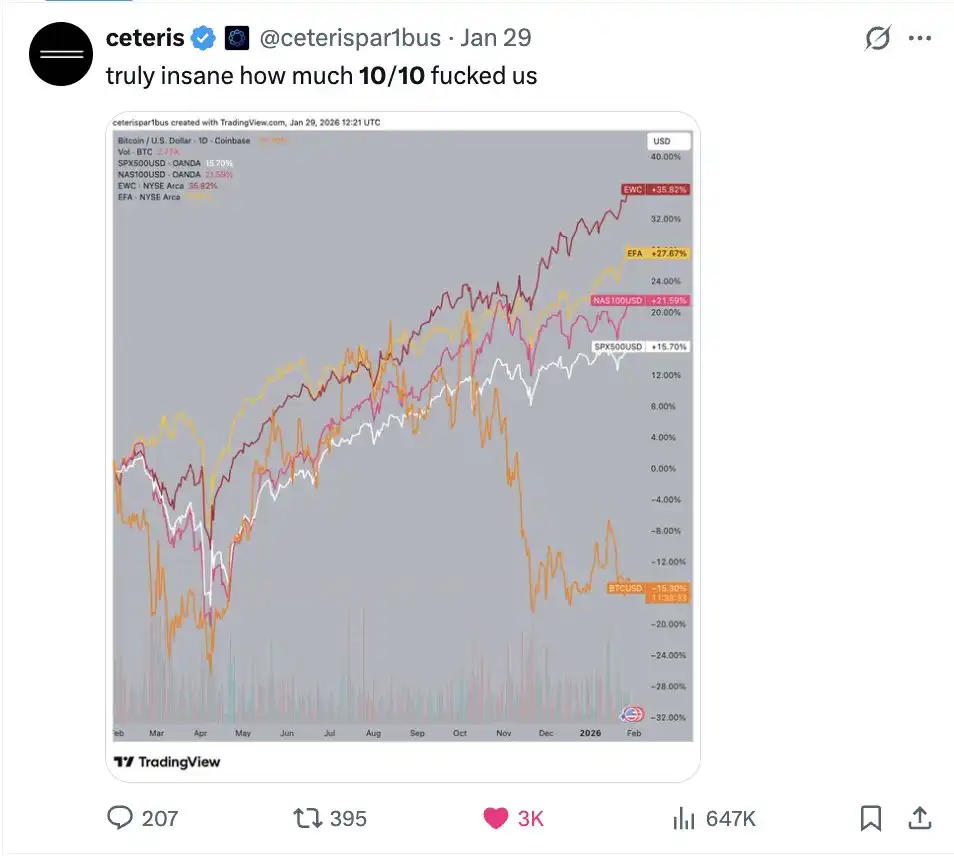
The market started selling off, and then the real crypto carnage began. Crypto investors were over-leveraged (as always), and then the world's largest exchange—Binance—experienced a technical glitch, triggering the single largest liquidation event in crypto history. $30-40 billion in forced selling occurred, some altcoins dropped 70% in a day.

The consensus was that this event broke the crypto market, at least temporarily, and we've been decoupled from the rallying stock and commodity markets ever since.
Caption: Thanks to @ceterispar1bus for the great chart

The Grind Lower

Then came the real pain. While other assets were ripping, crypto was grinding lower. The ATH setup predicted by Fundstrat to take us to "Valhalla" was all there: rate cuts, a weak dollar, global risk-on. The S&P 500 closed the year at new all-time highs. Gold and silver embarked on an epic run. Peter Schiff was dancing on our graves. And crypto just sat there bleeding out.

Re-Coupling

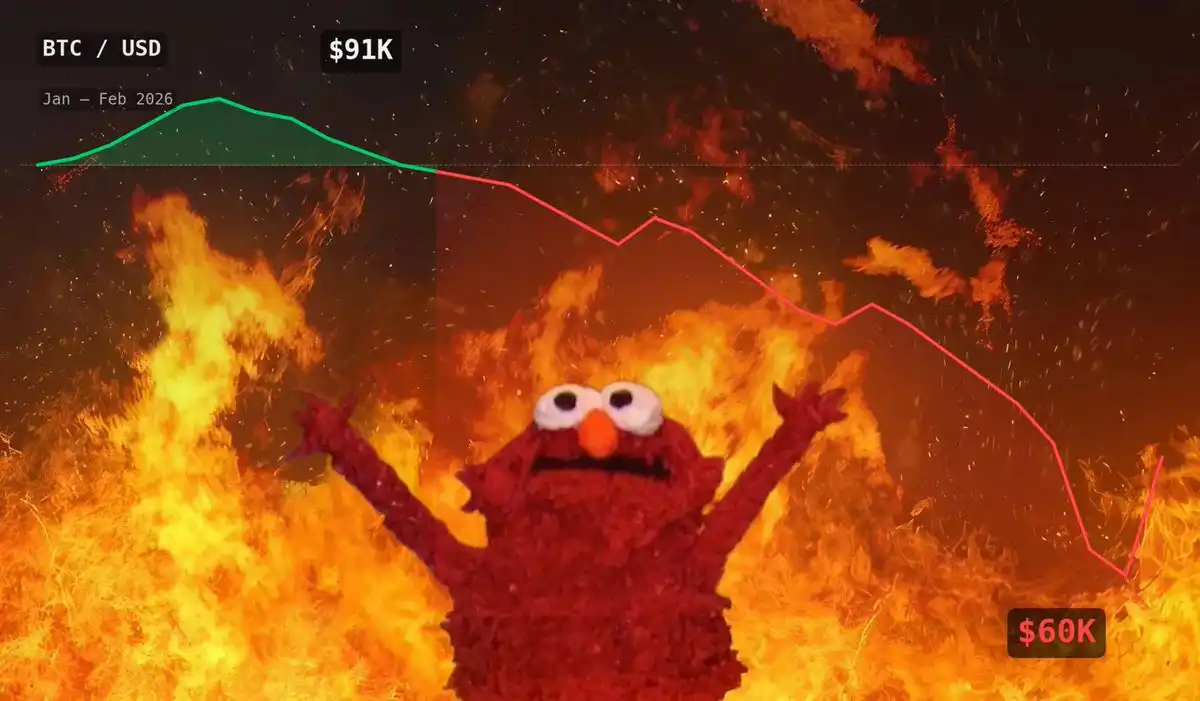
By 2026, the rest of the market started selling off too, and crypto went with it. The S&P began giving back trillions in gains, gold and silver experienced their worst selloff in 40+ years. On February 4th, hedge funds got crushed. Many blamed it on a tech selloff due to fears AI would make software companies obsolete. Regardless, risk managers had to step in and cut positions, including the ones they now held heavily in Bitcoin via ETFs, options, etc. The selling pushed Bitcoin lower, which triggered more mechanical selling, which then spread to crypto-native funds. Trend Research reportedly got liquidated on a $2B Ethereum position on Aave, adding fuel to the fire.

Trad-fi selling triggered crypto selling. Not the other way around. The institutional adoption everyone fought for ultimately became a double-edged sword. Which brings us to now.
Crypto Is Dead

As expected. Those who have been wrong about crypto for over a decade are crawling out of their holes again, dancing on our graves.
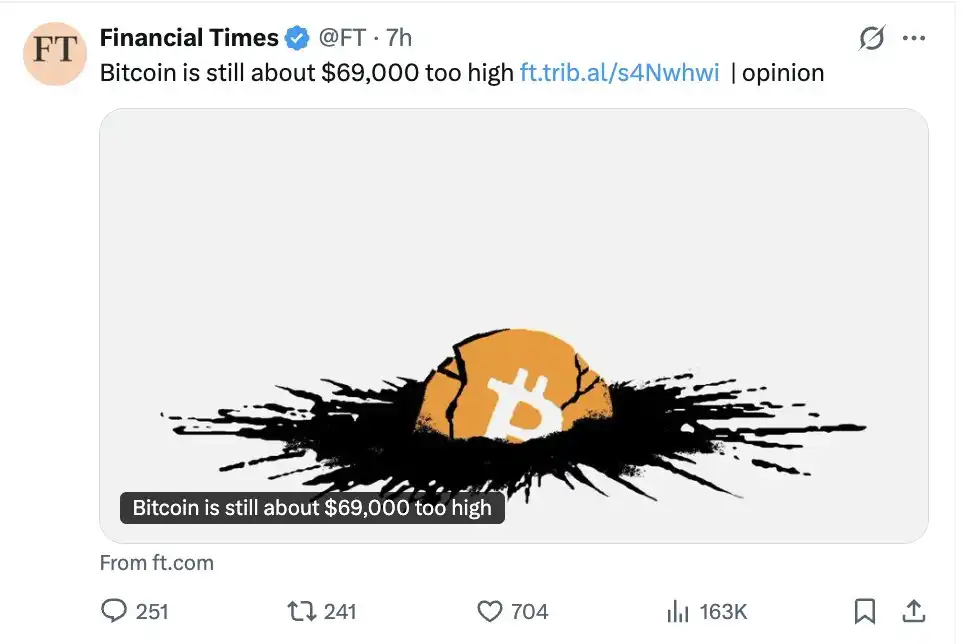
"The digital gold thesis is broken. Crypto is not a hedge against currency debasement. Worse, a miner death spiral is coming and it's going to zero. It was a scam all along." Elizabeth Warren's tweet about how Bitcoin causes cancer is probably coming any day now.

Long Live Crypto

The critics are right, Bitcoin and the rest of the market were a disappointment in 2025. The reality is this is still an immature market, just 17 years old. It largely still trades like a tech stock, and last week showed it's more intertwined with Wall Street than ever. The bright side? The same Wall Street that dragged crypto down last week can ultimately pull it back up.

And the setup is there. The Trump administration and incoming Fed Chair have signaled they plan to run the economy hot with low rates and a weak dollar to address the debt crisis. That's the macro cocktail for pushing risk assets higher, crypto included.

Furthermore, don't forget the bigger narrative. Even our longest critics no longer deny what we've built is real. Stablecoins are upgrading how global money moves. The market structure bill will pass, paving the way for all financial business to be blockchain-backed. The entire financial system is being upgraded, we're just working out the details right now.

Are we out of the woods forever? No. Macro risks could still drag us down. Quantum computing is a real threat to Bitcoin. Trump's antics give Democrats a reason to crack down on the industry again if they regain power.

But a hundred years from now, this will all be noise, and an internet-based financial system will look inevitable. This period will be seen as the chaotic beginning. And there's a real wildcard: the merging of crypto and AI is inevitable. We just don't know what it looks like yet. In short, we are still actually early.

AI-slop free guarantee This article is guaranteed to be free of AI-slop. That is to say, every word was typed by a human. That said, I did use Claude Opus 4.6 as an editing and research partner, which was fed content written by people much smarter than me.

Related Questions

QWhat were the main factors that led to the crypto market crash described in the article?

AThe main factors included the launch of Trump's and his family's meme coins, which damaged credibility; Trump's announcement of 100% tariffs on China; MSCI's proposal to exclude crypto-heavy companies from indices; a major technical failure at Binance causing massive liquidations; and the subsequent decoupling from rising traditional markets followed by a re-coupling during a broader market sell-off.

QHow did institutional adoption become a 'double-edged sword' for the crypto market according to the author?

AInstitutional adoption became a double-edged sword because while it brought massive capital and legitimacy, it also deeply intertwined crypto with traditional finance (TradFi). This meant that when Wall Street faced a sell-off (e.g., in tech stocks), risk managers liquidated positions across assets, including crypto ETFs and derivatives, triggering a cascading sell-off in the crypto market itself.

QWhat macroeconomic conditions does the author believe could help crypto recover?

AThe author points to expected low interest rates and a weak dollar under the Trump administration and the incoming Fed chair, which are seen as a recipe for overheating the economy and boosting risk assets, including cryptocurrencies.

QWhat long-term trend does the author identify that supports the future of crypto, despite short-term volatility?

AThe author identifies the broader narrative of financial infrastructure moving on-chain. This includes the adoption of stablecoins for global money movement, the eventual passing of market structure legislation, and the inevitable upgrade of the entire financial system to be blockchain-based.

QWhat external threat does the author mention that could pose a risk to Bitcoin in the future?

AThe author mentions quantum computing as a realistic future threat to Bitcoin's security.

Related Reads

Will the Next Crypto Bull Run Start with On-Chain Trading of SpaceX?

This article presents a scenario-based forecast for the crypto industry from 2026 to 2029, arguing that the next major cycle will be driven not by technological narratives but by legal access to real-world assets. The author predicts that by mid-2026, pre-IPO perpetual contracts for top private companies like SpaceX, OpenAI, and Anthropic on platforms like Hyperliquid will become the primary gateway for accessing quality assets, as most crypto-native tokens fail to capture real value. The much-hyped AI x Crypto intersection largely fails except for prediction markets, which thrive on betting on AI model supremacy. By 2027, public blockchain foundations are forced to choose between catering to retail speculation or building compliant infrastructure for institutions, with many opting for the latter. Growth in stablecoins and tokenized private credit/equity hits a "triple ceiling" due to regulatory and political uncertainty rather than market demand. The pivotal shift is forecast for 2028. A major liquidation event in pre-IPO perpetuals exposes the structural flaw of synthetic markets lacking a real underlying asset anchor. In response, regulatory changes finally allow the public solicitation of private securities resales to verified accredited investors. This creates a legitimate secondary market for real company equity, which then becomes the core asset class of the new bull market, relegating synthetic perps to a niche role. By 2029, the industry becomes "boring" but foundational. Tokens without claims on real cash flows or assets cease trading. Stablecoin growth is steady but politically capped. Crypto infrastructure fades from view as it gets absorbed into traditional finance backends. The article's central thesis is that the key bottleneck for crypto's next phase is legal and regulatory channels for real asset ownership, not technology.

marsbit1h ago

Will the Next Crypto Bull Run Start with On-Chain Trading of SpaceX?

marsbit1h ago

The Value Distribution of Stablecoins

**Summary: The Value Distribution of Stablecoins** The article argues that stablecoins are evolving from mere trading tools into broader channels for dollar access. It divides the stablecoin ecosystem into four layers to analyze how value is distributed: 1. **Issuance Layer:** Mints stablecoins, holds reserve assets, and captures the spread between reserve yield and user costs (e.g., Tether, Circle). This layer currently earns the largest profit margin. 2. **Infrastructure Layer:** Connects stablecoins to the traditional financial system, handling fiat on/off-ramps, banking integration, compliance (KYC/AML), and asset management (e.g., Bridge, BVNK). This is the "unglamorous" but critical work, building the essential bridges between crypto and real-world finance. 3. **Acquiring/Distribution Layer:** Integrates stablecoins into merchant systems, manages payment flows, and provides enterprise financial software (e.g., Stripe, Coinbase). They act as the access point for businesses. 4. **Application Layer:** The end-users and businesses that ultimately use stablecoins for payments, settlements, or as a store of value. They benefit from convenience but have little pricing power. The core thesis is that while the issuance layer currently dominates profits, the often-overlooked **infrastructure layer holds significant long-term potential**. The real challenge and barrier to mass adoption is not the on-chain transfer of stablecoins (which is simple), but the complex "last mile" integration into existing business workflows, banking systems, and regulatory frameworks across different countries. Companies in this layer are currently in a "land grab" phase, investing heavily to build networks, secure bank partnerships, and establish compliance pathways. While their position is currently pressured by the profitable issuers above and distribution platforms below, the article suggests that if stablecoins become a default financial rail for businesses, the infrastructure providers who have done the hard work of integration will ultimately gain strong pricing power and become entrenched, essential players.

marsbit7h ago

The Value Distribution of Stablecoins

marsbit7h ago

The Value Distribution of Stablecoins

The Value Distribution of Stablecoins The article argues that stablecoins are evolving from a mere trading tool into a broad "dollar channel." It analyzes the industry's value chain through four layers: 1. **Issuance Layer (e.g., Tether, Circle):** The top layer that mints stablecoins, holds reserve assets, and captures the thickest interest rate spread. 2. **Infrastructure Layer (e.g., Bridge, BVNK):** Connects stablecoins to the traditional financial system, handling critical but complex "dirty work" like fiat on/off-ramps, banking integration, compliance (KYC/AML), and cross-border settlement. 3. **Acquiring/Distribution Layer (e.g., Stripe, Coinbase):** Embeds stablecoins into merchant systems, manages payment flows, and integrates with enterprise software. 4. **Application Layer:** End-users and businesses that ultimately use stablecoins for payments, settlement, or storing value. The author posits that while the issuance layer currently captures the most profit, the most overlooked and potentially critical layer is infrastructure. The core challenge for stablecoin adoption isn't the on-chain transfer (which is simple), but bridging the gap between blockchain and the real-world financial system. This involves solving practical problems for businesses: fiat conversion, reconciliation, tax handling, and user onboarding. Infrastructure companies are currently in a difficult "land-grab" phase—building networks, securing banking relationships, and achieving compliance country-by-country. They face pressure from both the profitable issuance layer above and distribution platforms below. However, the author suggests this layer is building a crucial moat. Once stablecoins become a default business rail, the infrastructure players who have done the hard work of integration may gain significant, durable value and pricing power.

链捕手8h ago

The Value Distribution of Stablecoins

链捕手8h ago

Trading

Spot
Futures

Hot Articles

How to Buy T

Welcome to HTX.com! We've made purchasing Threshold Network Token (T) simple and convenient. Follow our step-by-step guide to embark on your crypto journey.Step 1: Create Your HTX AccountUse your email or phone number to sign up for a free account on HTX. Experience a hassle-free registration journey and unlock all features.Get My AccountStep 2: Go to Buy Crypto and Choose Your Payment MethodCredit/Debit Card: Use your Visa or Mastercard to buy Threshold Network Token (T) instantly.Balance: Use funds from your HTX account balance to trade seamlessly.Third Parties: We've added popular payment methods such as Google Pay and Apple Pay to enhance convenience.P2P: Trade directly with other users on HTX.Over-the-Counter (OTC): We offer tailor-made services and competitive exchange rates for traders.Step 3: Store Your Threshold Network Token (T)After purchasing your Threshold Network Token (T), store it in your HTX account. Alternatively, you can send it elsewhere via blockchain transfer or use it to trade other cryptocurrencies.Step 4: Trade Threshold Network Token (T)Easily trade Threshold Network Token (T) on HTX's spot market. Simply access your account, select your trading pair, execute your trades, and monitor in real-time. We offer a user-friendly experience for both beginners and seasoned traders.

12.0k Total ViewsPublished 2024.03.29Updated 2026.06.02

How to Buy T

Discussions

Welcome to the HTX Community. Here, you can stay informed about the latest platform developments and gain access to professional market insights. Users' opinions on the price of T (T) are presented below.

活动图片