The Wolf Is Really Coming? Quantum Computing Threat to Bitcoin Is 'No Longer Theoretical', Analyst: 20-50% of Bitcoin Has 'Security Risks'

华尔街日报Published on 2026-01-23Last updated on 2026-01-23

Abstract

The threat of quantum computing to Bitcoin is accelerating from theoretical to practical, with analysts warning that 20-50% of Bitcoin’s supply—amounting to 4 to 10 million BTC—is vulnerable to quantum attacks. Coinbase’s research head David Duong highlighted that 32.7% of Bitcoin (6.51 million BTC) is at risk due to weak cryptographic practices, such as address reuse. Institutional investors are reacting: Jefferies’ Christopher Wood removed Bitcoin entirely from his portfolio, reallocating to gold, citing quantum computing as an existential risk to Bitcoin’s value proposition. Quantum computers could break Bitcoin’s elliptic curve digital signature algorithm (ECDSA), potentially exposing private keys. While current quantum systems are far from the estimated 13 million qubits needed to crack Bitcoin’s encryption, experts disagree on the timeline—some say 5 years, others 20-40 years. The Bitcoin community faces a governance dilemma: whether to preemptively destroy vulnerable coins or risk large-scale theft. Developers are proposing quantum-resistant upgrades, but implementation could take 5-10 years. Despite the concerns, some institutions like Harvard and Morgan Stanley continue to increase Bitcoin exposure, reflecting divergent risk assessments. The market is already pricing in these fears, with Bitcoin underperforming gold significantly.

The threat of quantum computing to Bitcoin is moving from theory to reality. A Coinbase researcher has issued a warning that about 33% of the Bitcoin supply faces quantum risk, while Jefferies' Global Head of Equity Strategy has completely removed Bitcoin from his portfolio, shifting allocation to gold. This change is reshaping institutional investors' attitudes towards Bitcoin.

According to the latest media reports, David Duong, Head of Global Investment Research at Coinbase, warned that approximately 32.7% of the Bitcoin supply, involving about 6.51 million Bitcoins, faces potential quantum computing attack risks.

Jefferies strategist Christopher Wood also announced in an analysis column on January 16th that he was liquidating the entire 10% Bitcoin position in his portfolio model, reallocating to 5% physical gold and 5% gold mining stocks. He explained that the emergence of quantum computing could achieve breakthroughs in the coming years rather than decades, which would shake the foundation of Bitcoin as a 'reliable store of value'.

Quantum computers utilize advanced physics principles, and their computing speed far exceeds that of traditional computers, potentially ultimately cracking the encryption algorithms that protect Bitcoin wallets. According to data from cryptocurrency security research institution Project 11, nearly 70% of vulnerable Bitcoin comes from address reuse, which exposes security information that could be exploited by quantum computers.

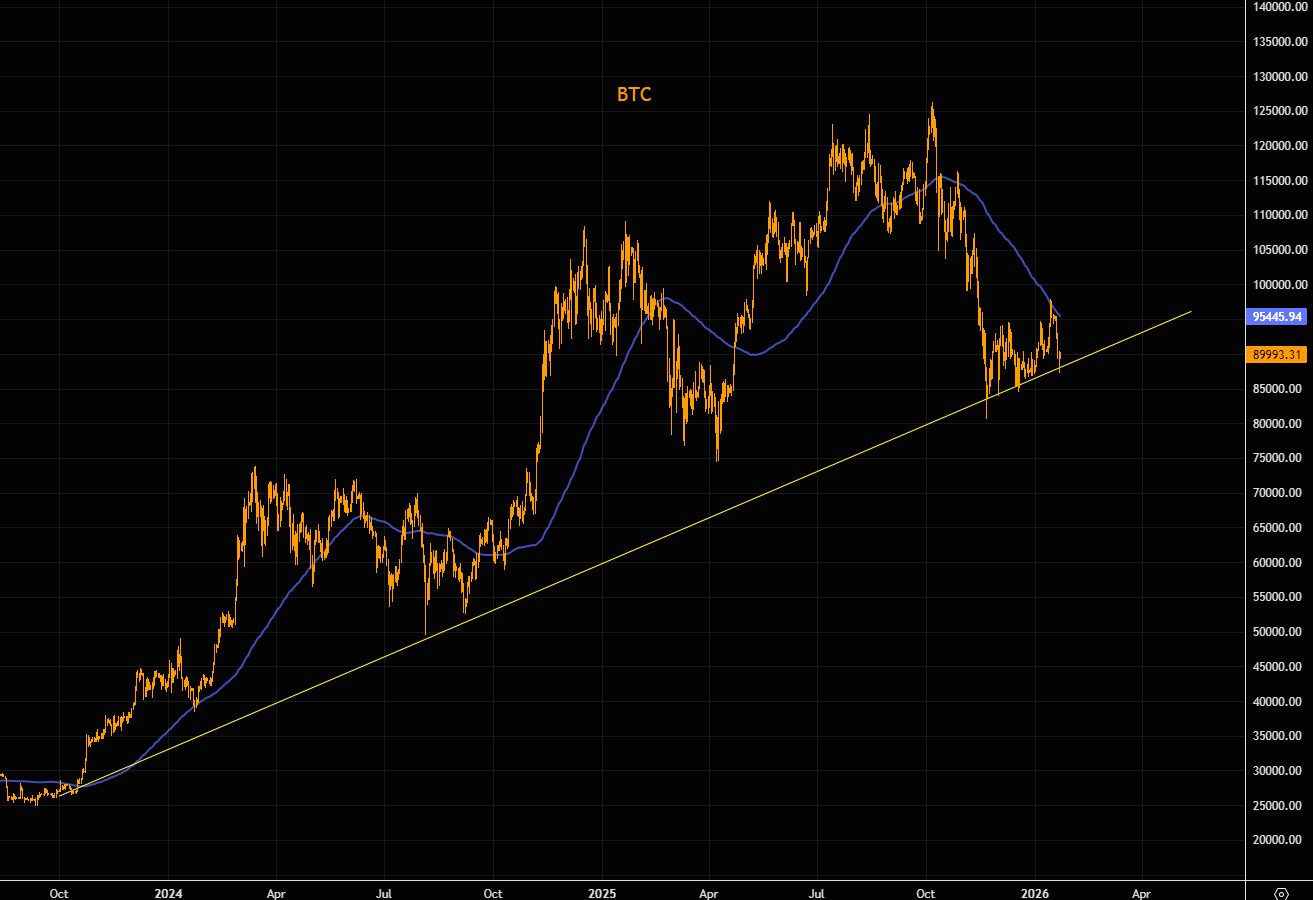
The market has begun to reflect this concern. Bitcoin has fallen 6.5% relative to gold this year, while gold has risen 55% over the same period. The Bitcoin-to-gold ratio fell to 19.26 in January 2026, showing that investors are reassessing Bitcoin's 'digital gold' status. Bitcoin recently encountered a strong pullback near the 100-day moving average, with $85,000 being a key level to watch closely.
The urgency of this threat is triggering a governance dilemma within the Bitcoin community: whether to destroy quantum-vulnerable coins to protect system integrity, or to take no action and risk them being stolen. This choice pits protocol security against property rights protection.

20-50% of Bitcoin Supply at Risk

According to Jefferies analysis, the quantum risk is no longer a theoretical issue. Growing concerns show that quantum computers with cryptography-related capabilities could arrive within years rather than decades, posing an existential threat to Bitcoin's security model and its 'digital gold' narrative.

Estimates show that 20-50% of Bitcoin may be in a vulnerable state. Due to address reuse, approximately 4 million to 10 million Bitcoins are at risk, with exchange and institutional wallets being the most vulnerable targets. Chaincode Labs' 2025 research estimated that about 6.26 million Bitcoins, worth between $650 billion and $750 billion, could be exposed to future quantum attacks.

David Duong pointed out in a LinkedIn analysis on January 5th that upgrading Bitcoin's security is a core challenge. He highlighted two main threats: quantum computers cracking Elliptic Curve Digital Signature Algorithm (ECDSA) keys, and targeting the SHA-256 algorithm that underpins Bitcoin's proof-of-work system. Vulnerable addresses include traditional Pay-to-Public-Key scripts, certain multi-signature wallets, and exposed Taproot setups.

Institutional Investors Lead the Exodus

Christopher Wood stated in his January 16th analysis column that advances in the field of quantum computing would weaken the logic of Bitcoin as a 'reliable store of value', especially for long-term investors like pension funds. He liquidated the entire 10% Bitcoin position in his portfolio model, reallocating to 5% physical gold and 5% gold mining stocks.

Wood was an early institutional supporter of Bitcoin, adding it to his portfolio in December 2020 during the pandemic when countries released massive stimulus measures, and increased his holding to 10% in 2021. He explained that the reason for selling was concern that the advent of quantum computing would shake Bitcoin's foundation, with the technology potentially achieving breakthroughs in the coming years rather than decades.

Quantum computers could theoretically crack Bitcoin's encryption algorithms, reverse-engineering the private keys used to authorize transfers. Wood stated this would destroy the concept of Bitcoin as a store of value, thereby undermining its status as a digital alternative to gold.

Current quantum computers operate with computing power of about 105 qubits. According to research in AVS Quantum Science, a 2022 study by Universal Quantum and the University of Sussex estimated that cracking a Bitcoin private key would require 13 million qubits.

However, industry insiders are divided on the urgency. Blockstream CEO Adam Back believes the threat might still be 20 to 40 years away. MicroStrategy Chairman Michael Saylor believes that quantum computing will enhance rather than threaten Bitcoin, arguing the network will upgrade and fortify its defenses.

University of Calgary quantum computing researcher Pierre-Luc Dallaire-Demers provided a more aggressive estimate, believing the threat could become a reality in about five years. Casa co-founder Jameson Lopp stated that preparing Bitcoin for quantum resistance could take five to ten years.

Bitcoin developers have proposed an upgrade proposal to add quantum-resistant security features. The proposal is still in the draft stage and is being tested. Other blockchain networks are also preparing for the quantum threat through privacy upgrades.

Bitcoin faces a governance dilemma. The community is debating whether to destroy quantum-vulnerable tokens to protect system integrity, or do nothing and bear the risk of theft. This choice creates a conflict between protocol security and property rights protection.

If vulnerable tokens were destroyed, Bitcoin's effective supply would decrease, theoretically potentially supporting the price, but only after going through a highly controversial and precedent-setting, fork-like decision process.

Unlike traditional banks, which can enforce quantum security upgrades through central authority, Bitcoin must coordinate changes within a distributed network. There is no risk committee, no mandatory regulations, and no single entity that can enforce immediate action.

Cardano founder Charles Hoskinson warned that premature adoption of post-quantum cryptography could severely reduce efficiency. The US Defense Advanced Research Projects Agency's (DARPA) quantum blockchain initiative believes a meaningful threat could emerge in the 2030s. However, rapid progress suggests the timeline could accelerate, especially if AI integration compresses the quantum development process.

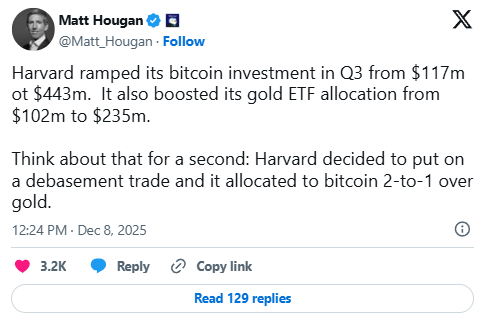
Despite Wood reducing exposure, institutional support has not completely disappeared. Harvard University reportedly increased its Bitcoin allocation by nearly 240%. Morgan Stanley has begun advising its wealth management clients to allocate up to 4% of their portfolio to digital assets. Similarly, Bank of America allows allocations of 1% to 4%. This indicates that support has not vanished but has become more fragmented based on different risk assessments.
Duong pointed out two main threats: quantum computers cracking ECDSA keys, and targeting the SHA-256 algorithm that underpins Bitcoin's proof-of-work system. Vulnerable addresses include traditional Pay-to-Public-Key scripts, certain multi-signature wallets, and exposed Taproot setups.

Address hygiene—avoiding address reuse and moving tokens to quantum-resistant addresses—is considered a key mitigation strategy. However, until Bitcoin's decentralized system can adequately coordinate a quantum-resistant upgrade, the threat remains real.

X platform user batsoupyum wrote: "Financial advisors reading this kind of research will keep client allocations low or zero because quantum computing is an existential threat. Until this issue is resolved, it will be an albatross around Bitcoin's neck."

The quantum computing issue has shifted from theory to having a real impact on portfolios. Bitcoin's underperformance reflects not only market cycles but also the gradual weighting of an existential risk, which is shaping how institutions allocate capital and forcing the network to confront an unprecedented technical challenge.


Related Questions

QWhat percentage of Bitcoin supply is estimated to be at risk from quantum computing attacks according to Coinbase's research head?

AApproximately 32.7% of the Bitcoin supply, or about 6.51 million Bitcoins, is estimated to be at risk.

QWhy did Jefferies' global equity strategist Christopher Wood remove Bitcoin from his portfolio model?

AHe removed the 10% Bitcoin allocation due to concerns that advancements in quantum computing could break Bitcoin's encryption, undermining its status as a 'reliable store of value', and reallocated to 5% physical gold and 5% gold mining stocks.

QWhat is the primary reason that makes many Bitcoin addresses vulnerable to a future quantum attack?

AAddress reuse is the primary reason, as it exposes public key information that a quantum computer could potentially exploit to derive the private key.

QAccording to a 2022 study, how many qubits would a quantum computer need to break a Bitcoin private key?

AAccording to a 2022 study by Universal Quantum and the University of Sussex, it would require a quantum computer with approximately 13 million qubits to break a Bitcoin private key.

QWhat is the proposed solution for Bitcoin to become quantum-resistant, and what is a major challenge in implementing it?

AThe proposed solution is a network upgrade to implement quantum-resistant cryptographic algorithms. A major challenge is the decentralized governance of Bitcoin, which requires coordination for such a change without a central authority to enforce it, making the process complex and potentially contentious.

Related Reads

Trading

Spot
Futures

Hot Articles

What is $BITCOIN

DIGITAL GOLD ($BITCOIN): A Comprehensive Analysis Introduction to DIGITAL GOLD ($BITCOIN) DIGITAL GOLD ($BITCOIN) is a blockchain-based project operating on the Solana network, which aims to combine the characteristics of traditional precious metals with the innovation of decentralized technologies. While it shares a name with Bitcoin, often referred to as “digital gold” due to its perception as a store of value, DIGITAL GOLD is a separate token designed to create a unique ecosystem within the Web3 landscape. Its goal is to position itself as a viable alternative digital asset, although specifics regarding its applications and functionalities are still developing. What is DIGITAL GOLD ($BITCOIN)? DIGITAL GOLD ($BITCOIN) is a cryptocurrency token explicitly designed for use on the Solana blockchain. In contrast to Bitcoin, which provides a widely recognized value storage role, this token appears to focus on broader applications and characteristics. Notable aspects include: Blockchain Infrastructure: The token is built on the Solana blockchain, known for its capacity to handle high-speed and low-cost transactions. Supply Dynamics: DIGITAL GOLD has a maximum supply capped at 100 quadrillion tokens (100P $BITCOIN), although details regarding its circulating supply are currently undisclosed. Utility: While precise functionalities are not explicitly outlined, there are indications that the token could be utilized for various applications, potentially involving decentralized applications (dApps) or asset tokenization strategies. Who is the Creator of DIGITAL GOLD ($BITCOIN)? At present, the identity of the creators and development team behind DIGITAL GOLD ($BITCOIN) remains unknown. This situation is typical among many innovative projects within the blockchain space, particularly those aligning with decentralized finance and meme coin phenomena. While such anonymity may foster a community-driven culture, it intensifies concerns about governance and accountability. Who are the Investors of DIGITAL GOLD ($BITCOIN)? The available information indicates that DIGITAL GOLD ($BITCOIN) does not have any known institutional backers or prominent venture capital investments. The project seems to operate on a peer-to-peer model focused on community support and adoption rather than traditional funding routes. Its activity and liquidity are primarily situated on decentralized exchanges (DEXs), such as PumpSwap, rather than established centralized trading platforms, further highlighting its grassroots approach. How DIGITAL GOLD ($BITCOIN) Works The operational mechanics of DIGITAL GOLD ($BITCOIN) can be elaborated on based on its blockchain design and network attributes: Consensus Mechanism: By leveraging Solana’s unique proof-of-history (PoH) combined with a proof-of-stake (PoS) model, the project ensures efficient transaction validation contributing to the network's high performance. Tokenomics: While specific deflationary mechanisms have not been extensively detailed, the vast maximum token supply implies that it may cater to microtransactions or niche use cases that are still to be defined. Interoperability: There exists the potential for integration with Solana’s broader ecosystem, including various decentralized finance (DeFi) platforms. However, the details regarding specific integrations remain unspecified. Timeline of Key Events Here is a timeline that highlights significant milestones concerning DIGITAL GOLD ($BITCOIN): 2023: The initial deployment of the token occurs on the Solana blockchain, marked by its contract address. 2024: DIGITAL GOLD gains visibility as it becomes available for trading on decentralized exchanges like PumpSwap, allowing users to trade it against SOL. 2025: The project witnesses sporadic trading activity and potential interest in community-led engagements, although no noteworthy partnerships or technical advancements have been documented as of yet. Critical Analysis Strengths Scalability: The underlying Solana infrastructure supports high transaction volumes, which could enhance the utility of $BITCOIN in various transaction scenarios. Accessibility: The potential low trading price per token could attract retail investors, facilitating wider participation due to fractional ownership opportunities. Risks Lack of Transparency: The absence of publicly known backers, developers, or an audit process may yield skepticism regarding the project's sustainability and trustworthiness. Market Volatility: The trading activity is heavily reliant on speculative behavior, which can result in significant price volatility and uncertainty for investors. Conclusion DIGITAL GOLD ($BITCOIN) emerges as an intriguing yet ambiguous project within the rapidly evolving Solana ecosystem. While it attempts to leverage the “digital gold” narrative, its departure from Bitcoin's established role as a store of value underscores the need for a clearer differentiation of its intended utility and governance structure. Future acceptance and adoption will likely depend on addressing the current opacity and defining its operational and economic strategies more explicitly. Note: This report encompasses synthesised information available as of October 2023, and developments may have transpired beyond the research period.

363 Total ViewsPublished 2025.05.13Updated 2025.05.13

What is $BITCOIN

Discussions

Welcome to the HTX Community. Here, you can stay informed about the latest platform developments and gain access to professional market insights. Users' opinions on the price of BTC (BTC) are presented below.

活动图片