The US Imposes New Sanctions Against Iran, Including Cryptocurrencies! China Reacts Sharply!

cryptonews.ruPublished on 2026-08-25Last updated on 2026-08-25

Abstract

The United States has announced new sanctions against Iran, intensifying economic pressure by targeting its global economic ties. As part of an "Economic Isolation" operation, the sanctions now explicitly include Iran's cryptocurrency, gold, technology, aviation, and maritime sectors. U.S. officials allege Iran uses digital assets to circumvent sanctions. The measures target approximately 60 individuals, organizations, and vessels worldwide, with warnings of secondary sanctions for third parties trading with Iran. China has sharply criticized the move. A Chinese Foreign Ministry spokesperson stated that China-Iran cooperation is lawful and should not be disrupted by external interference. China warned that U.S. economic coercion risks destabilizing the global economic order and asserted that Beijing will take necessary measures to protect its legitimate rights and interests.

The tension between the US and Iran, which has lasted for several months, still hasn't subsided. Although steps have been taken towards a compromise, the two countries have not yet reached a final agreement, and the US has taken a new step.

In this regard, the US has imposed new sanctions that will further increase economic pressure on Iran. As part of a new campaign announced by Treasury Secretary Scott Bessent, the US aims to sever Iran's global economic ties and also make it clear that third parties trading with Iran may face secondary sanctions.

The Cryptocurrency Sector Also Falls Under Sanctions!

The US Treasury Department announced an expansion of sanctions against Iran, including the cryptocurrency, gold, technology, aviation, and maritime sectors, as part of the 'Economic Isolation' operation.

Secretary of State Scott Bessent stated that the US has launched the 'Economic Isolation' operation to block all avenues of support for Iran, adding: 'Countries supporting any economic ties with the Iranian regime will face harsh US sanctions.'

One of the most notable aspects of the new sanctions strategy at this stage is the explicit inclusion of digital assets and the cryptocurrency ecosystem within the scope of sanctions pressure. The US administration claims that Iran uses digital assets and cryptocurrency platforms to circumvent sanctions and transfer funds outside the international financial system.

The statement says that detailed checks will be conducted through the Office of Foreign Assets Control (OFAC).

The Targets of the Attack Are Approximately 60 Individuals, Organizations, and Ships!

The US Treasury Secretary announced that over 60 individuals, organizations, and vessels worldwide have been added to the new sanctions list.

However, the most striking aspect of these statements was the US's direct warning that sanctions could also affect other countries trading with Iran. It was reported that the US warned of serious sanctions against major financial companies linked to Iran.

China Reacted!

Following the US statements regarding Iran, a noteworthy reaction came from China, one of the world's largest economic powers.

Chinese Foreign Ministry spokesperson Lin Jian stated at a press conference that China-Iran cooperation is carried out within the framework of international law and should not be disrupted by third-party interference.

Jian also warned that the US policy of economic repression could create new risks for the global economic and financial order instead of solving problems.

The Chinese spokesperson also stated that Beijing will take all necessary measures to protect its legitimate rights and interests.

*This is not investment advice.

end-content
Related Questions

QWhat is the main objective of the new US sanctions against Iran?

AThe main objective of the new US sanctions, under the 'Economic Isolation' campaign, is to sever Iran's economic links on a global scale and pressure third parties trading with Iran by threatening them with secondary sanctions.

QWhich new sectors are specifically included in the latest US sanctions on Iran?

AThe latest US sanctions specifically include Iran's cryptocurrency, gold, technology, aviation, and maritime sectors.

QHow many individuals, organizations, and vessels were added to the new US sanctions list?

AMore than 60 individuals, organizations, and vessels worldwide were added to the new US sanctions list.

QWhat was China's official response to the new US sanctions on Iran?

AChina's official response, delivered by Foreign Ministry spokesperson Lin Jian, stated that China-Iran cooperation is conducted within the framework of international law, should not be undermined by third-party interference, and warned that US economic repression could create new risks for the global economic and financial order.

QAccording to the US administration, why are digital assets and cryptocurrency platforms being targeted in the sanctions?

AThe US administration claims that Iran is using digital assets and cryptocurrency platforms to circumvent sanctions and transfer funds outside the international financial system.

Related Reads

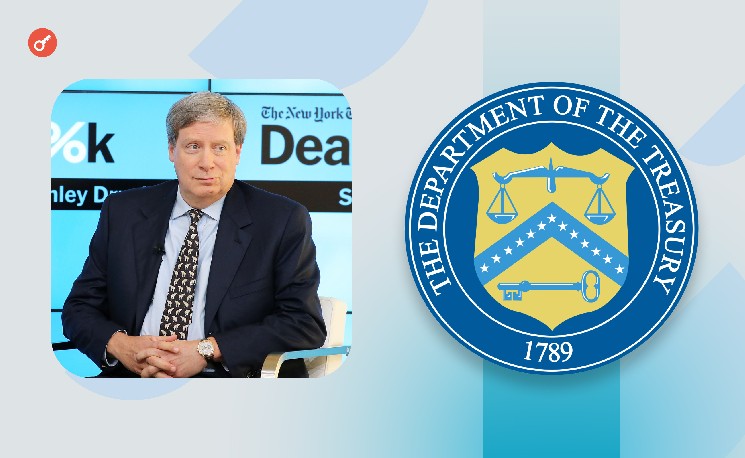
Billionaire Druckenmiller Considers U.S. Treasury's Bond Buyback Plan a Mistake

Billionaire investor Stanley Druckenmiller criticizes the U.S. Treasury's plan to increase purchases of long-term bonds as a mistake. The Treasury announced it would double its buyback amount for bonds with 10- to 30-year maturities from $2 billion to $4 billion. While this move, alongside other factors, boosted high-risk assets like Bitcoin, Druckenmiller argues the intervention failed to achieve its goals of lowering bond yields and slowing the growth of national debt. Druckenmiller contends the bond market was functioning properly without liquidity issues, and rising yields were justified by fundamentals like high inflation, low unemployment, and a massive budget deficit. He warns that artificially suppressing yields removes market pressure on Congress to address fiscal deficits and sets a dangerous precedent, inviting markets to constantly test any perceived "ceiling" protected by the Treasury. He likens the action to quantitative easing, which is inappropriate during high inflation. The investor believes the correct approach would be to let the market dictate yields, which could reasonably rise to 5.5%, and address them through deficit reduction. He concludes that governments lose when they defend prices against fundamental factors, and artificially suppressing interest rates only amplifies future risks. Following the announcement, the yield on 30-year bonds initially fell but later recovered.

cryptonews.ru12m ago

Billionaire Druckenmiller Considers U.S. Treasury's Bond Buyback Plan a Mistake

cryptonews.ru12m ago

Ilya Delivers, Huang Jen-Hsun Bets 50 Billion on SSI, First Model Suspected to Launch This Week

Ilya Sutskever's Safe Superintelligence (SSI) lab, backed by a rumored $5 billion investment from NVIDIA granting exclusive access to next-gen systems, may release its first groundbreaking model as early as this week. Industry insiders are hinting at a major breakthrough from a non-major player, with some claiming AI will be "utterly transformed." The model is speculated to fundamentally differ from current large language models like ChatGPT. Instead of relying on massive, static pre-training and ever-larger context windows, SSI's approach reportedly centers on **Test-Time Training (TTT)**. This would allow the model to **update its own internal weights in real-time** as it processes information, effectively "learning on the fly" and internalizing new knowledge like a human, rather than just referencing it from a large prompt. This aligns with Ilya Sutskever's long-stated vision of moving beyond the "pre-training" and "scaling" era. He envisions superintelligence not as a monolithic, pre-loaded database, but as an adaptive, "infinitely curious 15-year-old genius" capable of continual learning through interaction. SSI's strategy has been focused solely on this goal of "safe superintelligence" through efficient continual learning and alignment, explaining its prior silence. If successful, this model could disrupt the entire AI industry, challenging the current reliance on vast compute resources for training and the business models built around context windows. It suggests that core technological leaps, not just financial scale, remain decisive in the AI race.

marsbit1h ago

Ilya Delivers, Huang Jen-Hsun Bets 50 Billion on SSI, First Model Suspected to Launch This Week

marsbit1h ago

Demand Test: Bitcoin Whales Earn Record $1.2 Billion, Ethereum Holders Return to Profitability

In just three days after Bitcoin's price recovery, new Bitcoin whales have realized over $1.2 billion in profit, marking the largest profit-taking event for this cohort on record according to CryptoQuant. The peak occurred on August 20 with roughly $614 million, setting a daily record. Analysts note this selling pressure began after Bitcoin rose above the realized price of short-term whales, which was around $68,900. With Bitcoin trading near $77,700 on August 23, these whales were sitting on an average profit of about 12.8%. The market recovery allowed investors who were previously at breakeven or at a loss to lock in gains. CryptoQuant described the situation as a key test for Bitcoin demand; sustained prices above whale cost-basis with normalized profit-taking could signal strong new demand, while continued selling pressure could turn the rally into a mere break-even exit. Simultaneously, large Ethereum holders have also returned to an unrealized profit zone following its rally, as noted by CryptoQuant analyst Darkfost. Current profit levels, however, remain relatively low and are not seen as creating significant selling pressure. The Unrealized Profit/Loss Ratio for different whale cohorts stands at 0.075 (for 1k-10k ETH holders), 0.16 (10k-100k ETH), and 0.38 (over 100k ETH). This marks a significant improvement from June, when these whales were in substantial unrealized loss, with Ethereum having risen over 65% since then. The increased profitability is viewed as a positive sentiment signal for the Ethereum market.

cryptonews.ru1h ago

Demand Test: Bitcoin Whales Earn Record $1.2 Billion, Ethereum Holders Return to Profitability

cryptonews.ru1h ago

Trading

Spot
活动图片