The Quantum Computing Threat to Bitcoin

marsbitPublished on 2026-02-02Last updated on 2026-02-02

Abstract

Bitcoin faces an existential threat from quantum computing, which could break the elliptic curve digital signature algorithm (ECDSA) securing the network. Approximately 25% of all bitcoin—including the 1.1 million BTC in Satoshi’s wallet—are stored in vulnerable early "pay-to-public-key" addresses, where public keys are exposed on the ledger. Later address types only reveal public keys during transactions, creating a brief attack window. The timeline for quantum computing is uncertain, but if it emerges before Bitcoin transitions to post-quantum cryptography (PQC), attackers could steal and liquidate billions in bitcoin, causing a market collapse. A coordinated migration to quantum-resistant algorithms is urgently needed, though implementing PQC could take 6 months to 2 years. A controversial proposal suggests "burning" un-migrated coins to prevent mass theft, but this risks setting a precedent for confiscation and contradicts Bitcoin’s core principles of individual sovereignty. As the largest financial "honeypot" with direct and liquid value, Bitcoin is a prime target. The network must proactively upgrade before quantum computers become capable of breaking current encryption.

Author: Bitcoin Magazine Pro

Compiled by: Plain Language Blockchain

Bitcoin is facing its first real existential threat, not from government bans or market crashes, but from quantum computing. The 1.1 million bitcoins (worth approximately $100 billion) held in Satoshi Nakamoto's wallet, along with about 25% of the circulating supply, are currently exposed to outdated cryptographic keys that are highly vulnerable to quantum attacks. When quantum computers mature—whether in 5 or 25 years—these bitcoins will be cracked.

The Nature of the Threat

Bitcoin's security relies on the Elliptic Curve Digital Signature Algorithm (ECDSA). These algorithms make it extremely difficult to forge Bitcoin signatures mathematically without knowing the private key. For traditional computers, cracking such a signature would take millions of years. However, quantum computers operate entirely differently and have the potential to solve the discrete logarithm problem underlying ECDSA in minutes or hours.
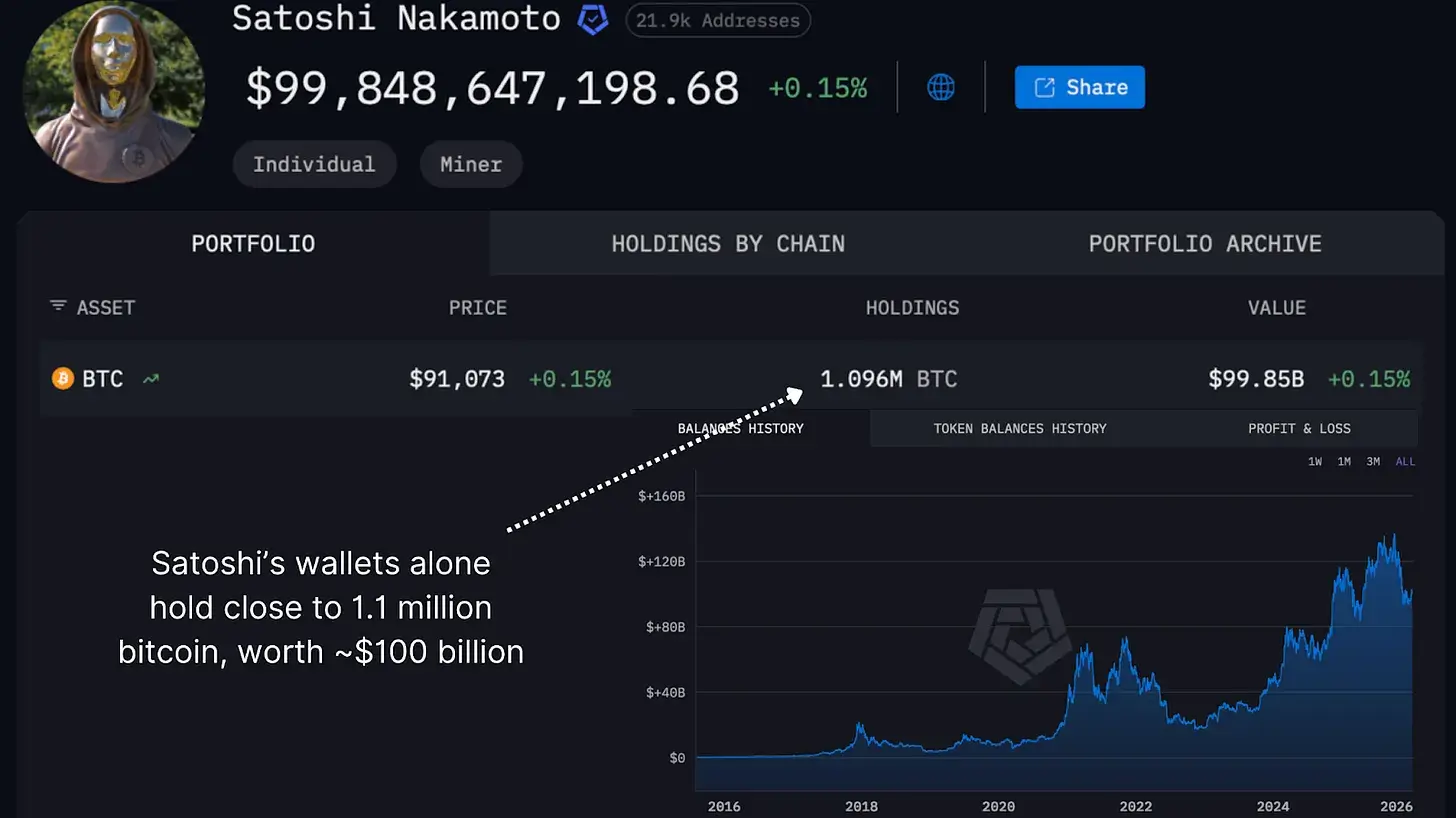
Figure 1: Satoshi Nakamoto's wallet holds nearly 1.1 million bitcoins.

Not all bitcoins face the same level of risk. Early Pay-to-Public-Key (P2PK) addresses, including Satoshi's, have their public keys directly visible on the ledger. For these bitcoins, a quantum computer is like a "master key" that can directly access the wallet. In contrast, later address types (like P2PKH) hide the public key behind a cryptographic hash, exposing it only when a transaction is initiated. This creates a brief window of vulnerability: between the moment you reveal the public key to send a transaction and when it is confirmed by miners, a sufficiently powerful quantum computer could theoretically intercept it.

Uncertain Timeline

The timeline for quantum computing is highly uncertain. It could arrive within a year, or it might never materialize. But uncertainty is the enemy because Bitcoin requires proactive migration, not reactive adaptation. If quantum computers emerge before Bitcoin has migrated to post-quantum cryptography (PQC), Bitcoin will be defeated. Trillions of dollars worth of public keys would be exposed, and attackers could begin stealing and dumping bitcoins onto the market, causing a catastrophic price collapse.
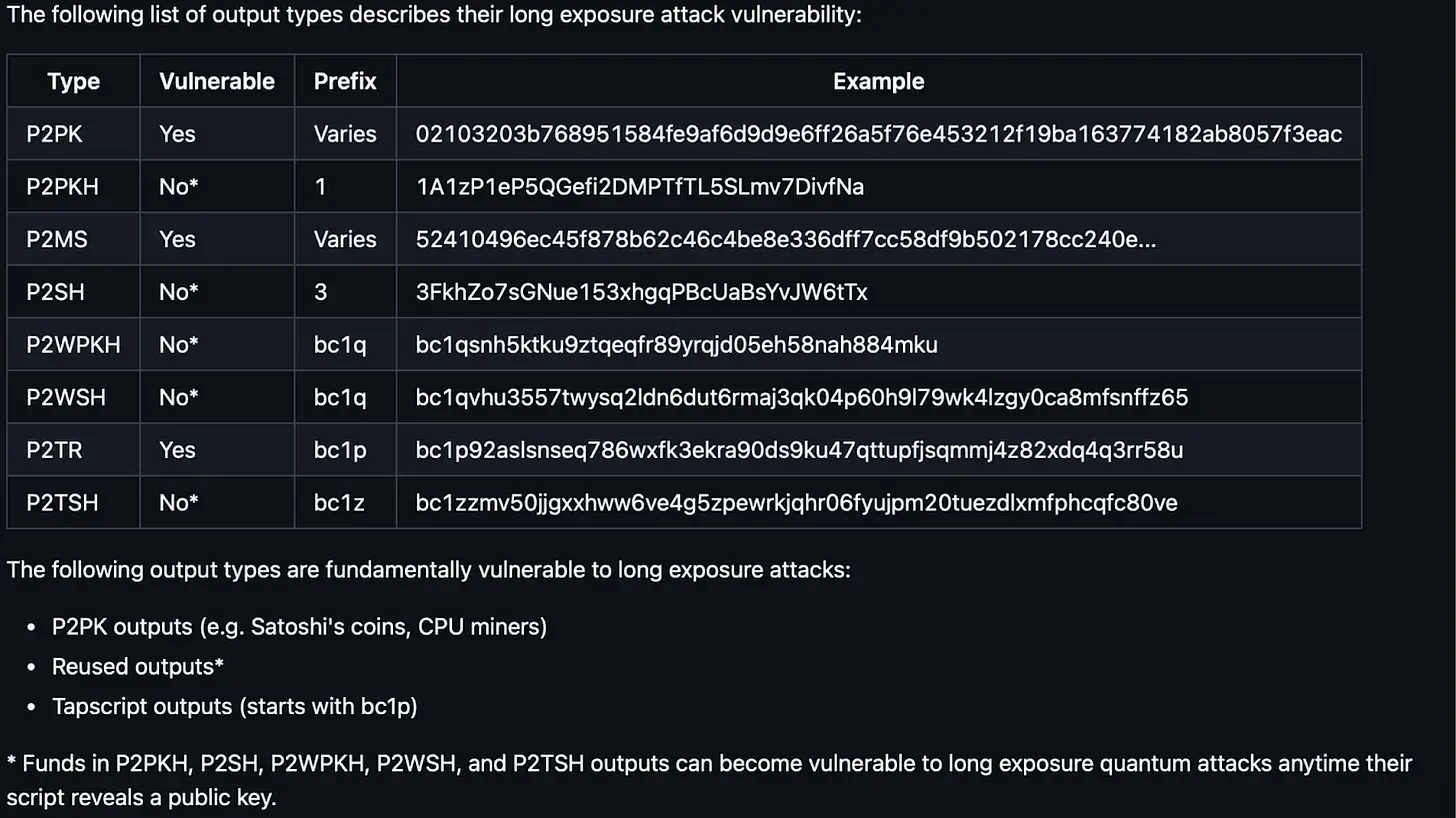
Figure 2: Comparison of long-term exposure attack vulnerabilities for different Bitcoin address types.

Under the most optimistic scenario, finalizing the code and reaching consensus for a PQC solution would take 6 to 12 months; depending on signature optimization, the migration process could require an additional 6 months to 2 years.

Coin Burning

The question is whether a deadline should be set to "burn" bitcoins that have not been migrated to quantum-resistant addresses by the cutoff date. If approximately 20-30% of the supply were simultaneously unlocked (compromised), Bitcoin would face a massive crisis of confidence, and its "hard money" thesis would collapse. A supply sell-off of this magnitude would create bear market conditions and could jeopardize Bitcoin's entire philosophy.
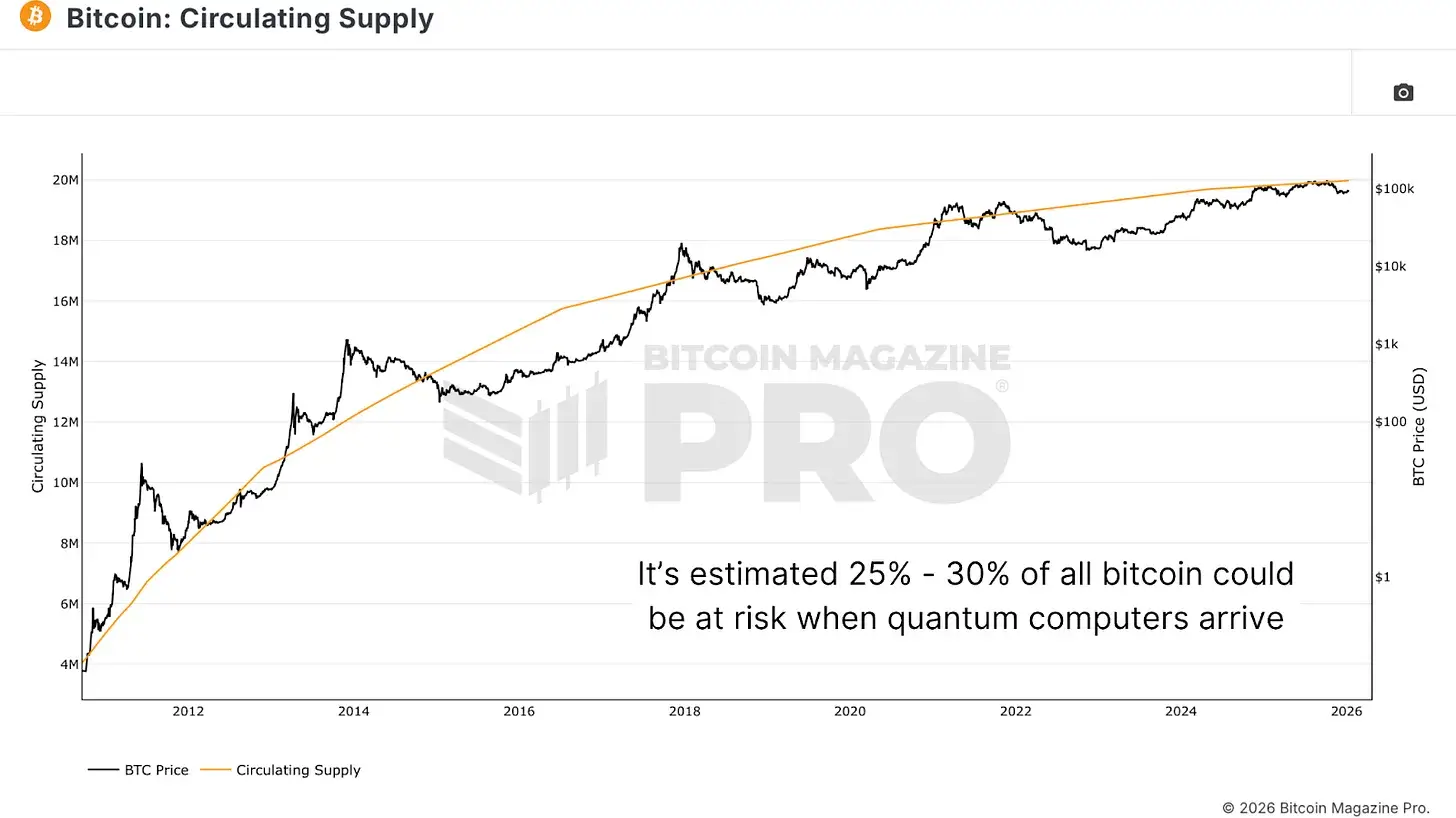
Figure 3: Bitcoin circulating supply.

However, coin burning faces significant philosophical obstacles. It would essentially mean that Bitcoin property could become subject to confiscation. If the network decides it can redeem itself by burning coins, what would stop a government or controller from deciding which addresses (e.g., those of terrorists or dissidents) can be burned and censored? This would set a precedent that destroys the sovereign individual's ownership of assets.

Primary Target

Bitcoin is the world's largest "honeypot." It is the only financial network where you can directly steal value and have 24/7 liquidity to cash out. The US dollar cannot do this—stealing large sums leads to blocked transfers, and even if hacked, institutions refund customers. Bitcoin has no such luxury; it is built purely on trust in code.
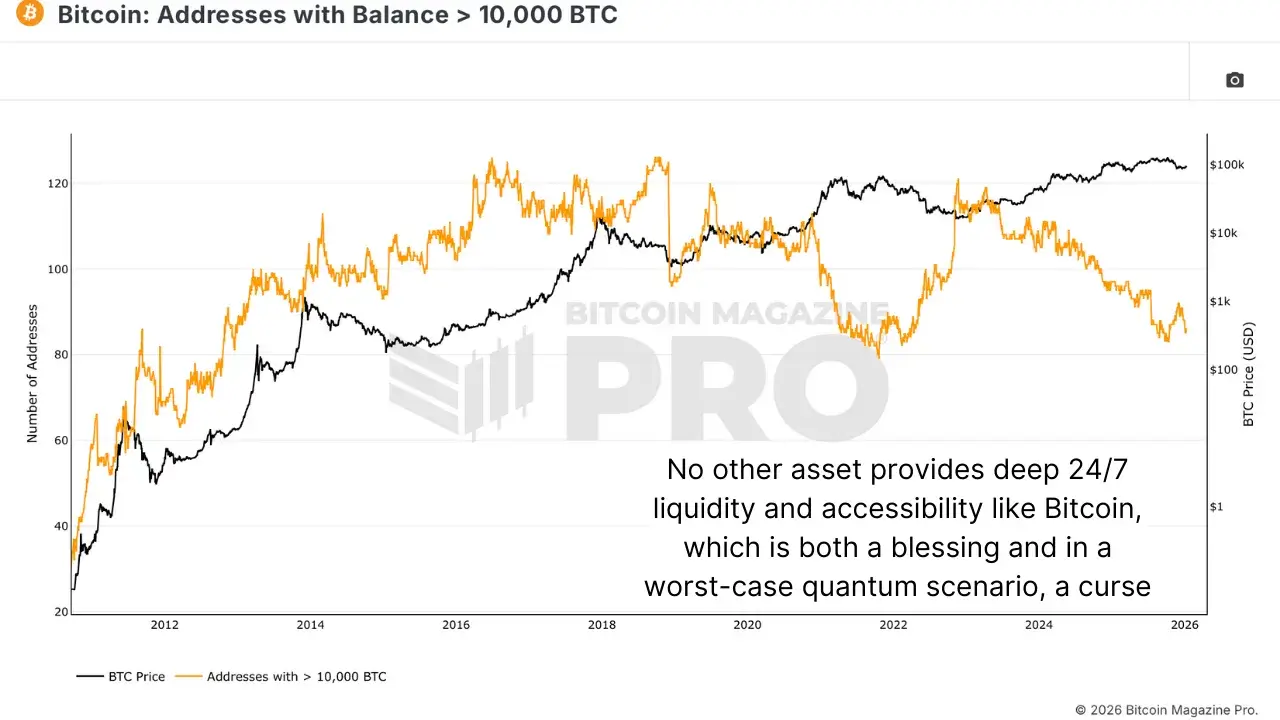
Figure 4: The number of addresses holding over 10,000 BTC is significant.

If someone achieves quantum computing capability to break encryption, Bitcoin wallets will be the primary target because they are easier to liquidate and offer a first-mover advantage. If the money is already taken by the first cracker, the second will get nothing.

Conclusion

Although this existential-level vulnerability has long been recognized in cryptographic literature, the window for preventive action is narrowing, requiring immediate strategic attention from miners, exchanges, wallet providers, and individual stakeholders. The real test is not whether the threat exists, but whether the network can coordinate and methodically migrate to quantum-resistant signature algorithms before a quantum computer with sufficient computational power emerges.


Related Questions

QWhat is the primary security threat to Bitcoin discussed in the article, and why is it considered existential?

AThe primary existential threat to Bitcoin discussed is quantum computing. It endangers Bitcoin because quantum computers could potentially break the Elliptic Curve Digital Signature Algorithm (ECDSA) used by Bitcoin, allowing attackers to steal funds from vulnerable addresses, particularly those with publicly exposed public keys like early P2PK addresses, including Satoshi Nakamoto's wallet.

QWhich types of Bitcoin addresses are most vulnerable to quantum attacks and why?

AEarly Pay-to-Public-Key (P2PK) addresses, such as Satoshi Nakamoto's, are most vulnerable because their public keys are directly visible on the ledger. Later address types like P2PKH hide public keys behind cryptographic hashes, only exposing them during a transaction, which creates a brief window of vulnerability rather than a permanent one.

QWhat is the proposed solution to mitigate the quantum computing threat, and what are the challenges in implementing it?

AThe proposed solution is migrating Bitcoin to post-quantum cryptography (PQC) algorithms. Challenges include the uncertain timeline of quantum computing advancement, the need for code finalization and consensus (which could take 6-12 months), and the migration process itself, which may require an extra 6 months to 2 years. Additionally, there are philosophical debates about setting a deadline to 'burn' non-migrated coins, which conflicts with Bitcoin's principle of sovereign individual ownership.

QWhy does the article suggest that Bitcoin is a prime target for quantum computing attacks compared to traditional financial systems like the US dollar?

ABitcoin is a prime target because it is a global 'honey pot' with direct, irreversible value transfer and 24/7 liquidity for cashing out. Unlike traditional systems where stolen funds can be blocked or refunded by institutions, Bitcoin operates on trust in code with no central authority to reverse transactions, making it easier for attackers to profit quickly and anonymously.

QWhat philosophical conflict arises from the idea of 'burning' Bitcoin that hasn't migrated to quantum-resistant addresses?

ABurning non-migrated Bitcoin introduces a philosophical conflict because it implies that the network can confiscate property, undermining Bitcoin's core principle of sovereign individual ownership. This could set a precedent for governments or controllers to decide which addresses (e.g., those of terrorists or dissidents) can be censored or destroyed, eroding trust in Bitcoin as a decentralized, censorship-resistant asset.

Related Reads

TechFlow Intelligence Bureau: KelpDAO Attack Causes Nearly $300 Million Loss, Triggers Aave Withdrawal Wave, RAVE Crashes 95% in a Single Day

China's AI firm DeepSeek is seeking external funding for the first time, with a valuation exceeding $10 billion, signaling intensifying competition and high R&D costs in the domestic large model sector. Meanwhile, OpenAI CEO Sam Altman faces scrutiny over potential conflicts of interest between his personal investments and OpenAI’s business ahead of a possible IPO. In Web3, KelpDAO suffered a $294 million attack due to forged cross-chain messages on LayerZero, leading to massive withdrawals from Aave and a resulting 18% drop in AAVE tokens. Separately, RAVE cryptocurrency collapsed by 95% in a single day amid suspected insider manipulation. Geopolitically, Iran is now demanding Bitcoin payments for transit through the Strait of Hormuz, reflecting both internal governmental discord and the growing adoption of crypto in tense regions. In semiconductors, Nvidia CEO Jensen Huang showed rare public frustration over questions regarding chip sales to China, while the industry faces renewed price hikes. Tesla continues expanding its Robotaxi service, and a Chinese humanoid robot outperformed humans in a half-marathon, marking a milestone in robotics. Despite Middle East tensions and market uncertainties, U.S. stocks continue to rise, prompting discussions about market optimism versus risk blindness. Overall, today’s developments highlight systemic vulnerabilities—in tech, finance, and geopolitics—while also showcasing innovation in crises.

marsbit6h ago

TechFlow Intelligence Bureau: KelpDAO Attack Causes Nearly $300 Million Loss, Triggers Aave Withdrawal Wave, RAVE Crashes 95% in a Single Day

marsbit6h ago

Trading

Spot
Futures

Hot Articles

What is $BITCOIN

DIGITAL GOLD ($BITCOIN): A Comprehensive Analysis Introduction to DIGITAL GOLD ($BITCOIN) DIGITAL GOLD ($BITCOIN) is a blockchain-based project operating on the Solana network, which aims to combine the characteristics of traditional precious metals with the innovation of decentralized technologies. While it shares a name with Bitcoin, often referred to as “digital gold” due to its perception as a store of value, DIGITAL GOLD is a separate token designed to create a unique ecosystem within the Web3 landscape. Its goal is to position itself as a viable alternative digital asset, although specifics regarding its applications and functionalities are still developing. What is DIGITAL GOLD ($BITCOIN)? DIGITAL GOLD ($BITCOIN) is a cryptocurrency token explicitly designed for use on the Solana blockchain. In contrast to Bitcoin, which provides a widely recognized value storage role, this token appears to focus on broader applications and characteristics. Notable aspects include: Blockchain Infrastructure: The token is built on the Solana blockchain, known for its capacity to handle high-speed and low-cost transactions. Supply Dynamics: DIGITAL GOLD has a maximum supply capped at 100 quadrillion tokens (100P $BITCOIN), although details regarding its circulating supply are currently undisclosed. Utility: While precise functionalities are not explicitly outlined, there are indications that the token could be utilized for various applications, potentially involving decentralized applications (dApps) or asset tokenization strategies. Who is the Creator of DIGITAL GOLD ($BITCOIN)? At present, the identity of the creators and development team behind DIGITAL GOLD ($BITCOIN) remains unknown. This situation is typical among many innovative projects within the blockchain space, particularly those aligning with decentralized finance and meme coin phenomena. While such anonymity may foster a community-driven culture, it intensifies concerns about governance and accountability. Who are the Investors of DIGITAL GOLD ($BITCOIN)? The available information indicates that DIGITAL GOLD ($BITCOIN) does not have any known institutional backers or prominent venture capital investments. The project seems to operate on a peer-to-peer model focused on community support and adoption rather than traditional funding routes. Its activity and liquidity are primarily situated on decentralized exchanges (DEXs), such as PumpSwap, rather than established centralized trading platforms, further highlighting its grassroots approach. How DIGITAL GOLD ($BITCOIN) Works The operational mechanics of DIGITAL GOLD ($BITCOIN) can be elaborated on based on its blockchain design and network attributes: Consensus Mechanism: By leveraging Solana’s unique proof-of-history (PoH) combined with a proof-of-stake (PoS) model, the project ensures efficient transaction validation contributing to the network's high performance. Tokenomics: While specific deflationary mechanisms have not been extensively detailed, the vast maximum token supply implies that it may cater to microtransactions or niche use cases that are still to be defined. Interoperability: There exists the potential for integration with Solana’s broader ecosystem, including various decentralized finance (DeFi) platforms. However, the details regarding specific integrations remain unspecified. Timeline of Key Events Here is a timeline that highlights significant milestones concerning DIGITAL GOLD ($BITCOIN): 2023: The initial deployment of the token occurs on the Solana blockchain, marked by its contract address. 2024: DIGITAL GOLD gains visibility as it becomes available for trading on decentralized exchanges like PumpSwap, allowing users to trade it against SOL. 2025: The project witnesses sporadic trading activity and potential interest in community-led engagements, although no noteworthy partnerships or technical advancements have been documented as of yet. Critical Analysis Strengths Scalability: The underlying Solana infrastructure supports high transaction volumes, which could enhance the utility of $BITCOIN in various transaction scenarios. Accessibility: The potential low trading price per token could attract retail investors, facilitating wider participation due to fractional ownership opportunities. Risks Lack of Transparency: The absence of publicly known backers, developers, or an audit process may yield skepticism regarding the project's sustainability and trustworthiness. Market Volatility: The trading activity is heavily reliant on speculative behavior, which can result in significant price volatility and uncertainty for investors. Conclusion DIGITAL GOLD ($BITCOIN) emerges as an intriguing yet ambiguous project within the rapidly evolving Solana ecosystem. While it attempts to leverage the “digital gold” narrative, its departure from Bitcoin's established role as a store of value underscores the need for a clearer differentiation of its intended utility and governance structure. Future acceptance and adoption will likely depend on addressing the current opacity and defining its operational and economic strategies more explicitly. Note: This report encompasses synthesised information available as of October 2023, and developments may have transpired beyond the research period.

363 Total ViewsPublished 2025.05.13Updated 2025.05.13

What is $BITCOIN

Discussions

Welcome to the HTX Community. Here, you can stay informed about the latest platform developments and gain access to professional market insights. Users' opinions on the price of BTC (BTC) are presented below.

活动图片