The Game of Giants, The Table for Newcomers: The 7 Hidden Cards of the Prediction Market in 2026

比推Published on 2026-02-12Last updated on 2026-02-12

Abstract

By 2026, new players are expected to enter the prediction market space, competing with established platforms by leveraging seven key differentiators: product quality, market selection, capital efficiency, oracle reliability, liquidity provision, regulatory compliance, and strategic focus (vertical vs. horizontal integration). While leading platforms currently hold advantages in liquidity and regulation, they often suffer from technical debt and inflexibility. New entrants can differentiate through superior user experience, API stability, exclusive markets, yield-generating collateral, innovative oracle systems, and tailored regulatory approaches. Strategies may include embedding with major platforms like Robinhood, offering specialized markets, or building vertically integrated products. The competition mirrors earlier battles in NFTs and perpetual exchanges, where differentiation drove rapid market capture.

Author: Jake Nyquist, Founder of Hook Protocol

Compiled by: Blockchain Knight

Original Title: The Battle of Prediction Markets in 2026: 7 Differentiation Strategies for New Players to Break Through


By 2026, major institutions are launching new prediction markets.

From the competitive battles of NFTs and perpetual contract exchanges over the past five years, we have learned that differentiated products can quickly capture market share.

While existing leading platforms enjoy liquidity and regulatory advantages, they are burdened with heavy technical debt, making it difficult to respond flexibly to new players' challenges.

So how should newcomers compete? In my view, the differentiation in prediction markets revolves around seven key dimensions:

1. Product Quality

Founding teams can differentiate in areas such as front-end user experience, API stability, development documentation, market structure, and fee mechanisms.

Currently, many established platforms have obvious shortcomings: unreasonable tick sizes, opaque fee rules, slow and unstable APIs, and limited order types.

High-quality product experience, especially services for API-based programmatic traders, is itself a lasting core advantage, allowing them to hold their ground even against competitors with stronger channel capabilities.

2. Asset Categories and Market Selection

Currently, the trading volume in prediction markets is mainly concentrated in sports betting and crypto-native markets.
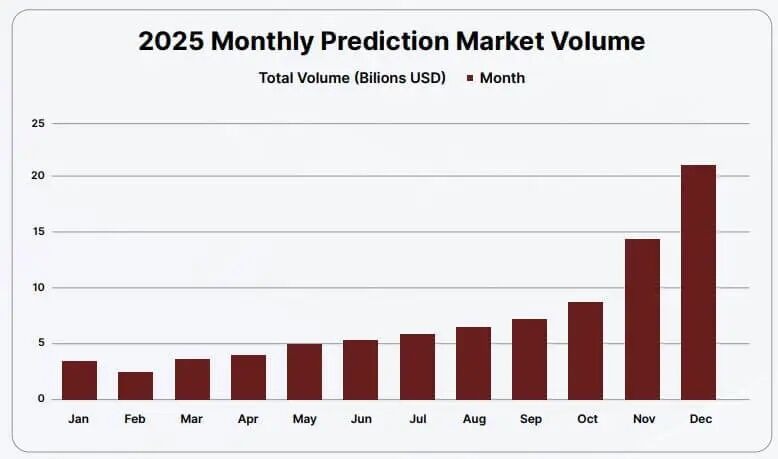
New exchanges can list exclusive markets that other platforms cannot offer. This advantage is further amplified when combined with a vertical strategy (point 7).

3. Capital Efficiency

Capital efficiency determines the effectiveness of traders' collateral usage. Currently, there are two core levers:

First, interest-bearing collateral: Instead of letting idle funds earn only treasury yields, offer higher returns, similar to Lighter supporting LP deposits as collateral or HyENA's USDC-margined perpetual contract model.

Second, margin mechanisms. Due to gap risk, the market generally underestimates the value of leverage in prediction markets, but platforms can offer limited leverage for continuous markets or implement portfolio margin for hedged positions.

Exchanges can also subsidize lending pools or act as market-making counterparties to internalize gap risk, rather than having them distributed among users.

4. Oracles and Market Settlement

Oracle reliability remains a systemic weakness in the industry. Settlement delays and incorrect results significantly amplify trading risks.

Beyond improving stability, platforms can implement innovative oracle mechanisms: human-machine hybrid systems, zero-knowledge proof-based solutions, AI-driven oracles like those from Context, etc., unlocking new markets that traditional oracles cannot support.

5. Liquidity Provision

Exchange survival depends on liquidity. Viable paths include: paying to onboard professional market makers, incentivizing ordinary users to provide liquidity with tokens, or adopting Hyperliquid's HLP aggregated liquidity model.
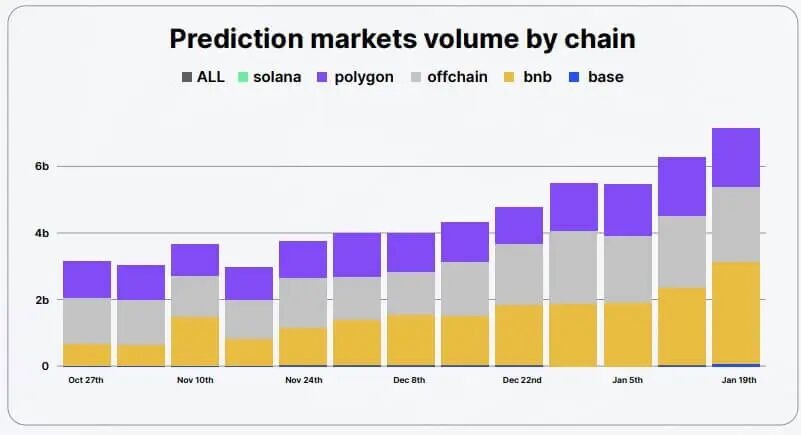
Some platforms can also completely internalize liquidity, emulating FTX's model of relying on Alameda as an internal trading team.

6. Regulatory Compliance

Kalshi, with its US regulatory license, has achieved embedded distribution through Robinhood and Coinbase, capturing retail traffic that Polymarket cannot reach.

There are still numerous jurisdictions and regulatory frameworks available for deployment. Compliant prediction markets can unlock similar channels, such as adapting to US state-level gambling regulations.

7. Vertical Strategy vs. Horizontal Strategy

Horizontal Strategy: Similar to Hyperliquid in the perpetual contracts space, focusing on building top-tier underlying trading infrastructure, inviting third parties to build front-ends and vertical scenarios, and encouraging ecosystem builders to add markets and develop revenue-generating front-ends (e.g., Phantom) through proposals.

Vertical Strategy: Exemplified by Lighter, controlling the front-end themselves, launching mobile apps, and creating a full-process user experience, focusing on integrated experience and direct user connection.

Polymarket's resistance to deep embedded partnerships versus Kalshi's open attitude is a clear reflection of the trade-offs between these two strategies.


Twitter:https://twitter.com/BitpushNewsCN

Bitpush TG Discussion Group:https://t.me/BitPushCommunity

Bitpush TG Subscription: https://t.me/bitpush

Original link:https://www.bitpush.news/articles/7611385

Related Questions

QWhat are the seven key dimensions for differentiation in the prediction market competition according to the article?

AThe seven key dimensions are: 1. Product Quality, 2. Asset Categories and Market Selection, 3. Capital Efficiency, 4. Oracles and Market Settlement, 5. Liquidity Provision, 6. Regulatory Compliance, and 7. Vertical Strategy vs. Horizontal Strategy.

QHow can new prediction market exchanges gain an advantage in 'Asset Categories and Market Selection'?

ANew exchanges can list exclusive markets that other platforms cannot offer, and this advantage can be amplified when combined with a vertical domain strategy.

QWhat are the two main approaches to improving capital efficiency in prediction markets mentioned in the article?

AThe two main approaches are: 1. Interest-bearing collateral, which allows idle funds to earn higher yields, and 2. Margin mechanisms, such as offering limited leverage for continuous markets or portfolio margin for hedging positions.

QWhat role do oracles play in prediction markets, and what innovative solutions are suggested?

AOracles are crucial for reliable market settlement, and their failure can significantly increase trading risk. The article suggests innovative mechanisms like human-machine hybrid systems, zero-knowledge proof-based solutions, and AI-driven oracles to support new types of markets.

QWhat is the difference between a vertical strategy and a horizontal strategy in the context of prediction market platforms?

AA horizontal strategy focuses on building top-tier underlying trading infrastructure and allowing third parties to develop front-ends and vertical scenarios. A vertical strategy involves controlling the entire user experience, including the front-end and mobile applications, to provide an integrated experience directly to users.

Related Reads

The Verdict in Choi Tae-won's Divorce Case: Revealing the Inheritance Undercurrent Behind SK Hynix's Trillion-Won Empire

SK Group Chairman Chey Tae-won's high-profile divorce case, involving a record 1.38 trillion won settlement, has drawn attention to the succession plans for Korea's second-largest conglomerate, especially its crown jewel, SK hynix. Unlike traditional chaebol scripts centered on the eldest son, Chey's three children from his marriage to former President Roh Tae-woo's daughter, Roh Soh-yeong, are carving distinct, non-traditional paths. Eldest daughter Chey Yun-jung (b. 1989) is seen as the most evident successor. With a scientific and consulting background, she holds executive roles at SK bioscience and SK Inc.'s growth support department, focusing on future strategy and biopharma. Her marriage is to an AI infrastructure entrepreneur, not a traditional business alliance. Second daughter Chey Min-jung (b. 1991) took a unique route, voluntarily serving as a South Korean naval officer, including an anti-piracy deployment. She later worked on policy and strategy for SK hynix in Washington D.C. before co-founding an AI-driven healthcare startup. She married a former U.S. Marine Corps officer, connecting her to U.S. defense and policy circles—networks crucial for a global semiconductor giant. The only son, Chey In-geun (b. 1995), who studied physics like his father, worked briefly at SK E&S before joining McKinsey. Despite fitting the traditional "heir" profile as the eldest son, he remains silent and holds no public position or shares in SK, suggesting the old succession playbook is obsolete. As SK hynix's valuation soars, becoming a geopolitical asset in the AI era, the heirs' legitimacy is no longer automatic. They must prove themselves in fields like AI biotech, global policy, and strategic consulting. Their marriages also reflect new elite networks in tech and defense, not old political alliances. Their inheritance is the complex challenge of navigating a globalized, tech-driven world, not just a corporate throne.

marsbitYesterday 09:06

The Verdict in Choi Tae-won's Divorce Case: Revealing the Inheritance Undercurrent Behind SK Hynix's Trillion-Won Empire

marsbitYesterday 09:06

From OpenSea to OpenRouter: Is Alex Atallah Repeating His 'Exit at the Peak' Playbook?

From OpenSea to OpenRouter: Is Alex Atallah Repeating His "Exit at the Peak" Playbook? According to the Wall Street Journal, payments giant Stripe is in talks to acquire the AI model aggregation platform OpenRouter in a potential deal valuing the company near $100 billion. This would mark founder Alex Atallah's second creation of a company reaching a $100 billion valuation, following his co-founding of NFT marketplace OpenSea. OpenRouter, founded just over three years ago, has grown rapidly by acting as a unified gateway for developers to access over 400 AI models. It currently has about 10 million users and processes over 200 trillion tokens monthly. While the platform's annualized revenue is around $50 million, its valuation has skyrocketed from $1.3 billion in March 2026. The potential acquisition by Stripe, a company OpenRouter's founder once likened it to, represents a major expansion into AI infrastructure for the payments leader. This move echoes Atallah's previous timing with OpenSea, where he departed before the NFT market's significant downturn. For OpenRouter, selling now may be strategic. Despite its scale, its business model—charging a 5-5.5% fee on AI inference calls—faces pressure from competition, open-source models, and potential price wars among model providers, limiting its profitability narrative for an IPO. A key asset for potential acquirers like Stripe is OpenRouter's vast repository of real-world AI usage data, which offers unique insights into model performance and developer preferences that are difficult to replicate. Whether this potential deal signifies a new valuation benchmark for AI infrastructure or another market peak signal remains to be seen.

链捕手Yesterday 08:42

From OpenSea to OpenRouter: Is Alex Atallah Repeating His 'Exit at the Peak' Playbook?

链捕手Yesterday 08:42

Trading

Spot
活动图片





