Taiwan To Introduce Strict Crypto Penalties To Crackdown On Unlicensed And Fraudulent Activity

bitcoinistPublished on 2026-04-04Last updated on 2026-04-04

Abstract

Taiwan's Executive Yuan has approved a draft of the Virtual Asset Service Act (VASA), introducing strict regulations and severe consequences for unlicensed or fraudulent crypto activities. The legislation imposes prison sentences of up to 10 years and fines as high as $6.25 million for offenses like market manipulation. Unlicensed stablecoin issuance could result in 7-year prison terms and fines up to $3.13 million. The new rules also prohibit stablecoin issuers from paying interest to holders and require robust internal controls. The regulatory framework, developed by the Financial Supervisory Commission, includes a phased implementation approach and aims to enhance transaction security while supporting financial innovation.

Taiwanese authorities have approved a new draft of their crucial crypto legislation, introducing severe penalties for unlicensed or fraudulent activities related to stablecoins and other digital assets.

Taiwan Approves $6M Fines To Combat Crypto Fraud

On Friday, local news outlets reported that the Executive Yuan passed the draft of the Virtual Asset Service Act (VASA) on April 2, marking a major step to regulate crypto assets in Taiwan.

The VASA, introduced by the Financial Supervisory Commission (FSC) last year, supports the efforts by Taiwanese authorities to establish a comprehensive crypto framework for Virtual Asset Service Providers (VASPs) and stablecoin issuers.

In 2024, the FSC overhauled its Anti-Money Laundering (AML) framework to include crypto businesses, adding stricter AML guidelines for VASPs and requiring all digital asset firms to complete the AML registration by September 2025.

Premier Cho Jung-tai explained that the new framework, which will be implemented in four gradual phases, includes industry self-regulation and an AML compliance registration system. The measures aim to enhance the security of virtual asset transactions, pilot custody services, and support the growth of domestic financial innovation, he added.

According to the reports, the draft requires VASPs to operate exclusively in this field and meet specific standards for their company name, organizational structure, and capital. Financial institutions can also operate VASP services in addition to their other businesses, if approved.

In addition, special regulations would be customized to suit the nature of each service provider. For instance, trading platforms would be required to establish clear guidelines for listing and delisting virtual assets.

The draft also includes heavy penalties for unlicensed and fraudulent activities, with offences involving crypto falsification, concealment, or price manipulation risking 3-10 years in prison and fines of up to NTD 200 million, worth $6.25 million.

Meanwhile, firms that issue stablecoins without a license could face up to seven years in prison and fines of up to NTD 100 million, or about $3.13 million, according to the draft.

New Stablecoin Regulations To Prohibit Interest Payments

Officials outlined the main differences between the recently passed VASA draft and the FSC’s original text regarding stablecoin guidelines, which include issuance and redemption regulations, restrictions on interest or returns, and internal control and cybersecurity management.

Under the new draft, the issuance and redemption of stablecoins must be conducted at face value, and issuers may not refuse redemption requests from holders. Issuers are also prohibited from paying interest or returns to holders on the stablecoins they issue, aligning with international trends.

Lastly, issuers must establish and maintain robust internal control and audit systems, along with information security management mechanisms, to ensure the proper issuance and redemption of stablecoins.

FSC Deputy Chairman Chen Yen-liang asserted that stablecoin issuance is not currently limited to banks, but noted that the financial institutions are “generally better positioned to meet the relevant requirements” due to their capital strength and risk management capabilities.

For other operators, different capital thresholds and operating guarantee requirements would be set based on the nature of their business, with further details to be announced after the legislation officially passes.

In December, FSC Chairman Peng Jin-long revealed that the island’s first regulated stablecoin could debut this year. As reported by Bitcoinist, stablecoin-centered regulations would be developed within six months after the VASA’s approval, setting the launch of locally issued tokens pegged to the NTD or the USD to the second half of 2026.

Deputy Chairman Chen added that the regulator would adopt a “gradual opening” model, and relevant regulations would be developed by authorities alongside the Central Bank.
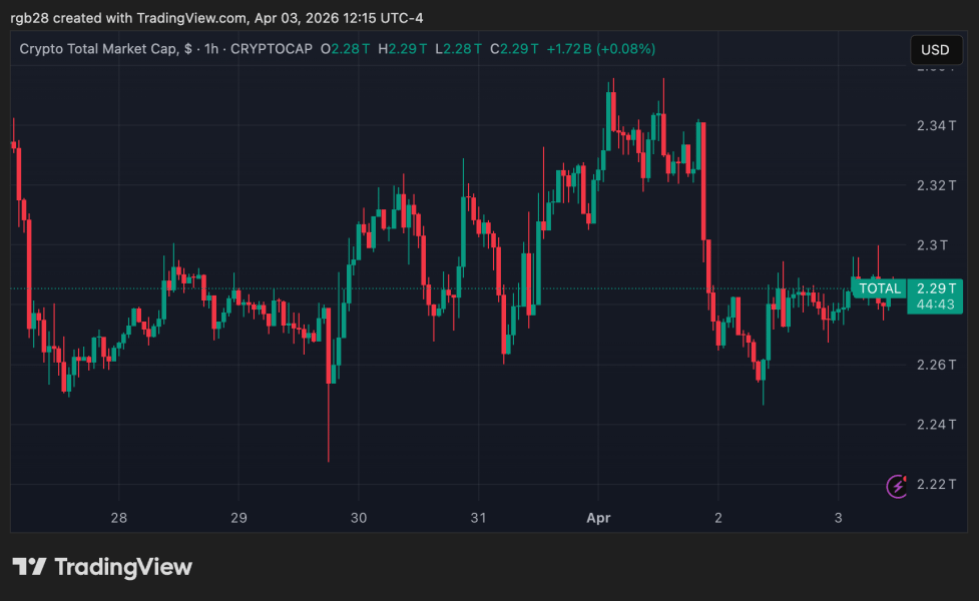
The total crypto market capitalization is at $2.29 trillion on the one-week chart. Source: TOTAL on TradingView


Related Questions

QWhat is the name of the new crypto legislation draft approved by Taiwanese authorities and what is its main purpose?

AThe new crypto legislation draft is called the Virtual Asset Service Act (VASA). Its main purpose is to regulate crypto assets by introducing severe penalties for unlicensed or fraudulent activities related to stablecoins and other digital assets, and to establish a comprehensive framework for Virtual Asset Service Providers (VASPs) and stablecoin issuers.

QWhat are the potential penalties for offences involving crypto falsification, concealment, or price manipulation under the new draft?

AOffences involving crypto falsification, concealment, or price manipulation risk 3-10 years in prison and fines of up to NTD 200 million, which is worth approximately $6.25 million.

QWhat specific restrictions does the new draft place on stablecoin issuers regarding interest payments and redemptions?

AThe new draft prohibits stablecoin issuers from paying interest or returns to holders on the stablecoins they issue. It also requires that the issuance and redemption of stablecoins must be conducted at face value, and issuers may not refuse redemption requests from holders.

QBy what date are all digital asset firms required to complete their Anti-Money Laundering (AML) registration in Taiwan?

AAll digital asset firms are required to complete their Anti-Money Laundering (AML) registration by September 2025.

QAccording to the FSC Deputy Chairman, why are financial institutions better positioned to meet the requirements for stablecoin issuance?

AFSC Deputy Chairman Chen Yen-liang stated that financial institutions are 'generally better positioned to meet the relevant requirements' due to their capital strength and risk management capabilities.

Related Reads

The AI Agent Era Accelerates Its Arrival: Questflow Defines a New Paradigm of Financial Intelligence with On-Chain AI Brokerage

The AI Agent era is accelerating, with the CB Insights AI 100 list highlighting global investment confidence. The focus has shifted from whether AI works to its speed of deployment and ability to manage complex workflows, with autonomous AI Agents driving this transformation. At the forefront is Questflow, a Singapore-based startup redefining financial intelligence through its on-chain AI brokerage. Unlike tools that merely provide data dashboards, Questflow deploys AI Agents that proactively scan markets, form judgments, and execute trades via a conversational interface—operating 24/7 without requiring manual confirmation for each decision. This embodies the new AI paradigm of agents capable of executing multi-step workflows autonomously. Questflow's mission is to democratize institutional-grade trading intelligence. Historically reserved for the ultra-wealthy, this capability is now accessible starting from just $1 through Questflow's "AI Clone + Copy Trade" model. The platform charges only a 1% execution fee, aligning its incentives directly with users and eliminating traditional management or performance fees. The timing is opportune, aligning with key trends identified by CB Insights: the scalable deployment of AI Agents, accelerated AI adoption in financial services, and the maturation of on-chain infrastructure. With robust liquidity on platforms like Hyperliquid and Polymarket, alongside advancements in AI reasoning and non-custodial wallet security, Questflow is positioned to merge the roles of broker, fund, and exchange into a single, accessible platform for millions.

链捕手37m ago

The AI Agent Era Accelerates Its Arrival: Questflow Defines a New Paradigm of Financial Intelligence with On-Chain AI Brokerage

链捕手37m ago

Why Pricing Social Interactions is Doomed to Fail?

Titled "Why Putting a Price on Social Interaction Is Doomed to Fail," this article critiques attempts to monetize social networks directly through SocialFi models, arguing their inevitable failure stems from a fundamental misunderstanding of media dynamics. Using Marshall McLuhan's theory of "hot" and "cold" media, the author posits that social networks are inherently "cold" media. Their value isn't contained in individual posts but is co-created through user participation, interpretation, and fragmented, ongoing interaction (e.g., replies, shares). This ambiguity and need for user involvement are core to their function. The article asserts that SocialFi projects like Friend.tech failed because introducing real-time, tradable financial pricing (a definitive "hot" signal) into this "cold" environment doesn't add a layer—it replaces the medium's essence. The unambiguous price signal overshadows and nullifies the nuanced, participatory social signal. Users become traders, not participants, and when speculative profits vanish, the underlying social ecosystem—never genuinely cultivated—collapses entirely. This principle extends beyond crypto. The author argues platforms like Twitter have gradually "heated up" through metrics (likes, retweets counts, algorithmically defined value), shifting users from participants to performers and eroding organic engagement. The solution isn't to abandon capital but to manage its entry point. Successful models like Substack, Patreon, or Bandcamp allow capital to "condense" at specific, isolated nodes (e.g., subscriptions, one-time payments) without permeating and "heating" every social interaction. They preserve the core "cold," participatory medium while enabling monetization at designated boundaries. The NFT boom and bust serves as a stark parallel: the ancient "cold" medium of collecting (valued for story, community, gradual accumulation) was rapidly destroyed by platforms that introduced real-time floor prices, rarity scores, and trading dashboards, transforming collectors into speculators and vaporizing cultural value when prices fell. The core lesson: "Liquidity equals heat." Injecting high liquidity and definitive pricing into a "cold" participatory medium doesn't optimize it; it fundamentally alters and destroys its value-creating mechanism. The future lies not in pricing every social gesture but in finding precise, non-invasive points for capital to condense without overheating the entire ecosystem.

marsbit45m ago

Why Pricing Social Interactions is Doomed to Fail?

marsbit45m ago

Trading

Spot
Futures
活动图片




