# Yuanbao Related Articles

HTX News Center provides the latest articles and in-depth analysis on "Yuanbao", covering market trends, project updates, tech developments, and regulatory policies in the crypto industry.

From Hunyuan to WeChat AI: Tencent's Slow Paced Journey Reaches the Delivery Juncture

On June 8, 2026, WeChat's developer platform announced the internal testing of "WeChat AI," an AI assistant integrated into the WeChat ecosystem. It allows users to invoke, access, and operate Mini Programs through natural language conversation. The platform offers two access modes: an "Automatic Mode" where developers authorize platform access to their source code for zero-configuration AI operation, and a "Developer Mode" for building custom skills. While the name "WeChat AI" is provisional, this marks WeChat's first step in opening its vast Mini Program ecosystem—comprising over 400,000 developers and hundreds of millions of daily active users—to AI-driven conversational interaction. This move represents the latest step in Tencent's deliberate AI strategy, moving from technical R&D and standalone product validation to integration within its super-app. The underlying foundation is Tencent's self-developed Hunyuan large language model. Ranked first domestically in application-oriented capabilities like Agent task execution in 2025, Hunyuan's focus on stability and precision over raw parameter count aligns with WeChat AI's need for reliable, low-latency operations involving sensitive tasks like payments and bookings. Prior C-side validation came from "Yuanbao," a standalone AI app whose Monthly Active Users (MAU) surpassed 114 million during the 2026 Chinese New Year红包 campaign, though daily activity later subsided. This "pulse growth" highlighted the challenge of user retention for standalone apps, informing the decision to integrate AI natively into WeChat's high-frequency scenarios. However, WeChat AI's "Automatic Mode," which requires source code access, raises developer concerns about code security, data visibility, and liability for AI errors. A deeper, ecosystem-level tension exists between the efficiency of centralized AI task调度 and the potential "short-circuiting" of merchant pages, which could erode their branding, advertising revenue, and user engagement. As Tencent Chairman Pony Ma noted, balancing centralized AI调度 with the protection of decentralized merchant traffic is a core challenge. In summary, Tencent's AI path—comprising the stable Hunyuan base model, the user-validated Yuanbao app, and the newly testing WeChat AI integration—is logically coherent. The success of WeChat AI now hinges on resolving developer trust, establishing fair ecosystem rules for merchants, and ensuring operational reliability to gain user confidence for deep, transactional use.

marsbit06/08 10:23

From Hunyuan to WeChat AI: Tencent's Slow Paced Journey Reaches the Delivery Juncture

marsbit06/08 10:23

Blocked Its Own Treasure, WeChat AI Steps Up

Tencent's stock surged over 10% on June 2nd amid reports that WeChat, with 1.43 billion monthly users, is finalizing tests for a native AI Agent. The reported feature, accessible by swiping right from the main interface, allows users to issue commands in natural language. The AI then decomposes tasks and automatically calls upon relevant Mini Programs within WeChat to complete actions like ordering food, booking tickets, or making payments, creating a closed-loop service execution system. This strategic shift follows the internal conflict and subsequent "blocking" of Tencent's standalone AI app, Yuanbao, by WeChat for violating sharing rules during a 2026 Spring Festival promotion. The incident highlighted a lack of internal consensus and exposed the weakness of competing in the standalone AI assistant arena against rivals like ByteDance's Doubao (345M MAU) and Alibaba's Qianwen. The new WeChat AI Agent aims to leverage WeChat's unique assets—its massive user base, standardized Mini Program APIs, WeChat Pay, and identity system—to move from simple content generation to actual task execution. Analysts note this changes the competitive landscape from model benchmarks to which AI can connect to more real-world services. However, success depends on key variables: the capability of Tencent's underlying Hunyuan model, managing massive inference costs, and redesigning incentives for Mini Program developers whose traffic might be bypassed. The move is seen as an attempt to keep user service intent within WeChat's ecosystem as AI begins to redefine how users access services.

marsbit06/04 05:11

Blocked Its Own Treasure, WeChat AI Steps Up

marsbit06/04 05:11

Yuanbao Stumbles, Qwen Booms: The Spring Festival AI Traffic War Among Tech Giants Begins

The article analyzes the divergent strategies of major Chinese tech companies in AI product marketing during the Spring Festival period. While global AI development accelerates, domestic giants like Alibaba, Tencent, ByteDance, and Baidu are heavily investing in holiday campaigns to capture user attention. Tencent’s Yuanbao faced a significant backlash when its红包 (red packet) campaign was restricted by WeChat for violating platform rules by encouraging excessive sharing. The piece argues that Yuanbao’s approach—relying on cash incentives for user growth—is misaligned with AI products, which are task-driven and require sustained engagement rather than one-time rewards. This led to high user acquisition but poor retention and weak product identity. In contrast, Alibaba’s Qianwen successfully integrated AI into practical scenarios like shopping, food delivery, and travel bookings during the festival. By linking AI utility to real consumer needs (e.g., flash sales, coupon redemption, and logistics), it created immediate value and fostered long-term user trust. The author suggests effective AI marketing should focus on solving actual user problems (e.g., travel planning, personalized greetings, family photo organization), encourage organic word-of-mouth rather than forced sharing, and transition from short-term campaigns to long-term user habits. The key is making AI genuinely useful rather than merely promotional.

marsbit02/06 12:23

Yuanbao Stumbles, Qwen Booms: The Spring Festival AI Traffic War Among Tech Giants Begins

marsbit02/06 12:23

From 100,000 Losses to Tens of Red Envelopes: Why Are Crypto Enthusiasts Turning to 'Yuanbao Wool'?

Amidst a significant downturn in global financial markets and cryptocurrency prices in early February, many crypto traders, facing substantial losses, have turned to a seemingly more reliable source of small gains: the "Yuanbao Cash Redemption" event. This campaign by Yuanbao, backed by Tencent, offers cash红包 (red envelopes) typically ranging from a few to tens of RMB for simple tasks like referrals and product interactions, providing a psychological escape from market volatility. In contrast, the traditional crypto airdrop landscape has become increasingly fraught with risk and disappointment. The article highlights cases like Infinex, where users invested significant time and money (e.g., over $11,900 and 406 days of engagement) only to face heavy losses during token generation events, with some unable to even recoup costs. This has led to frustration, silent resignation, or even public维权 (rights protection) efforts. The core issue is framed as a shift in the purpose of airdrops: from rewarding early users to merely serving as a growth hack for project teams seeking exits or funding, often with unreliable token promises. Web2 companies like Tencent can offer cash rewards with certainty due to strong cash flow and legal frameworks, whereas Web3 airdrops often come with high costs (time, effort, capital), risks like sybil attacks, unlock periods, and rule changes, resulting in lower effective returns. Both Web2 and Web3 use airdrops for user acquisition, but long-term retention depends on product-market fit and user experience. While Yuanbao leverages Tencent's experience in converting user growth into retention (e.g., WeChat Red Packets), Web3 projects struggle post-airdrop, with many failing to sustain engagement. The conclusion emphasizes that beyond token incentives, Web3 must focus on product functionality and user value to achieve genuine retention.

比推02/04 13:27

From 100,000 Losses to Tens of Red Envelopes: Why Are Crypto Enthusiasts Turning to 'Yuanbao Wool'?

比推02/04 13:27

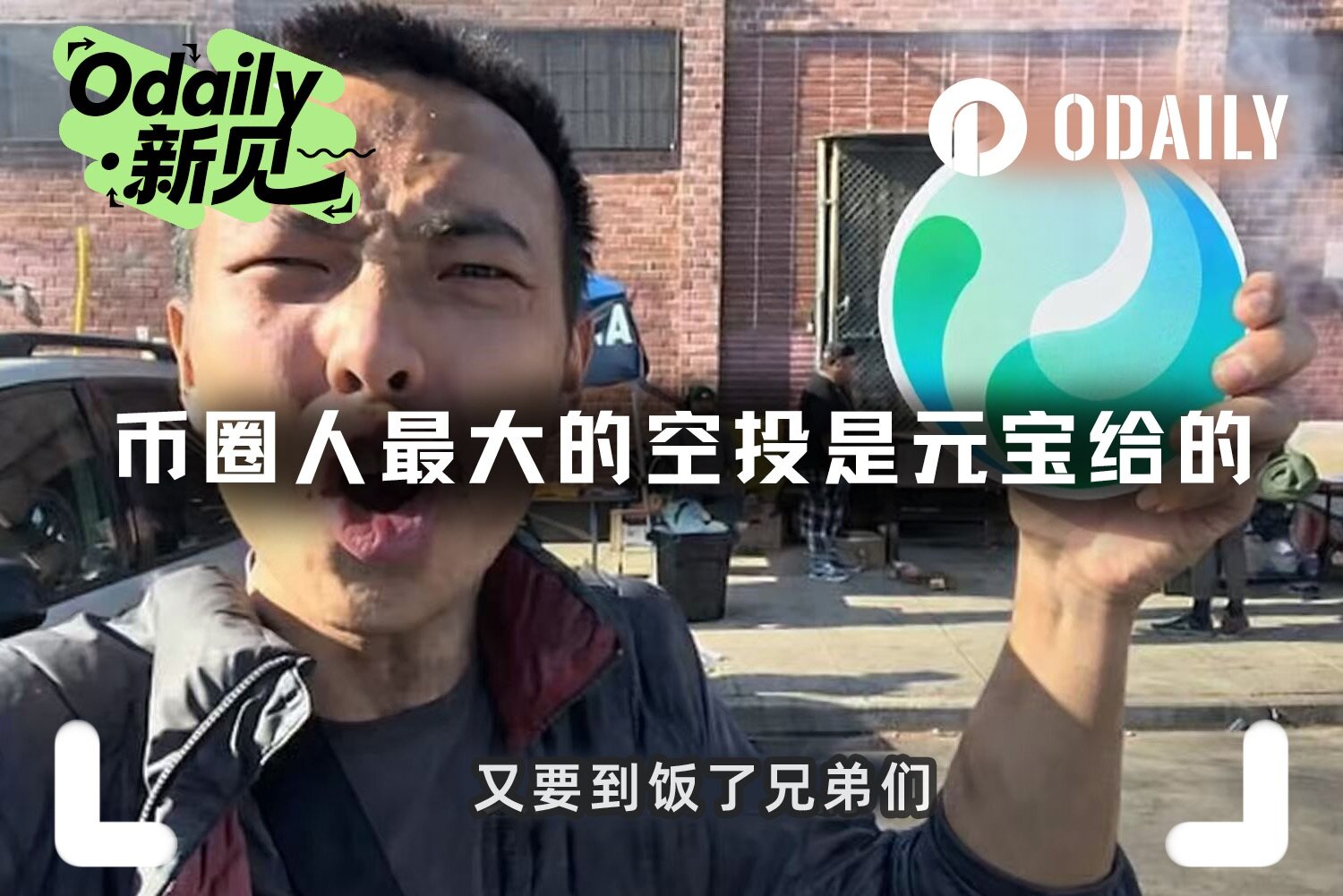
The Biggest Airdrop for Crypto Enthusiasts Comes from Yuanbao

The article "The Biggest Airdrop for Crypto Enthusiasts is Given by Yuanbao" discusses the recent trend of cryptocurrency traders turning to a Web2 cash reward campaign by Tencent's AI product Yuanbao, following significant market losses in both traditional finance and crypto markets. In early February, global markets experienced sharp declines, with Bitcoin dropping below $75,000 and Ethereum and Solana also seeing substantial losses. This led to widespread liquidations, leaving many crypto investors seeking alternative ways to cope with losses. Yuanbao's cash红包 (red envelope) campaign, offering small but guaranteed cash rewards for simple user interactions, became a popular distraction. The author contrasts this with typical crypto airdrops, which often involve high costs (time, research, opportunity costs, and potential financial losses) and uncertain returns. Examples include Infinex, a decentralized perpetual trading platform, where some users faced significant losses despite long-term participation, and other projects where promised rewards were not delivered. The piece highlights a structural shift in crypto airdrops: from sharing future value with early users to becoming a growth tool for project exits or funding, often resulting in reduced rewards and user frustration. Unlike Web2 campaigns like Yuanbao's, which are backed by reliable cash flow and legal frameworks, crypto airdrops lack certainty and often fail to retain users post-distribution. The conclusion emphasizes that while airdrops can drive user acquisition, long-term retention depends on product-market fit, user experience, and ecosystem integration. The article suggests that Web3 projects should focus on improving post-airdrop strategies to enhance user retention, rather than relying solely on token incentives.

Odaily星球日报02/04 03:56

The Biggest Airdrop for Crypto Enthusiasts Comes from Yuanbao

Odaily星球日报02/04 03:56

The Biggest Airdrop for Crypto Enthusiasts is Given by Yuanbao

The article "The Biggest Airdrop for Crypto Enthusiasts is Given by Yuanbao" discusses the recent trend of crypto investors turning to Yuanbao, a Web2 platform by Tencent, for cash red packet rewards amid a severe market downturn. Starting February 1st, Yuanbao’s cash reward campaign attracted widespread participation, with crypto community members shifting from trading to actively engaging in Yuanbao’s referral-based tasks to earn small but guaranteed cash payouts. This comes as global financial markets, including crypto, experienced significant losses, with Bitcoin dropping below $75,000 and Ethereum and Solana also declining sharply. On January 31st, the crypto market saw over $2.56 billion in liquidations. The author contrasts Yuanbao’s straightforward, no-cost cash rewards with the high-risk, often disappointing airdrops in the crypto space. While crypto airdrops typically offer tokens that require selling to realize gains—and often come with hidden costs like time, research, and potential losses—Yuanbao provides immediate, tangible cash benefits. A case study highlights an Infinex user who lost over $11,900 after a 406-day participation, receiving tokens worth far less than invested. The piece argues that crypto airdrops have evolved from rewarding early users to serving as exit strategies for projects, with declining returns and increased risks. Unlike Web2 companies like Tencent, which use reliable cash incentives backed by strong cash flow and legal frameworks, Web3 projects often fail to deliver on promises, leading to user frustration and attrition. Finally, the article touches on the challenge of converting airdrop-driven user growth into long-term retention. While airdrops can boost initial engagement, sustainable growth depends on product-market fit, user experience, and ecosystem integration. Tencent’s experience with WeChat Red Packet is cited as a successful model, whereas many Web3 projects struggle with post-airdrop user retention. The conclusion emphasizes that beyond token rewards, Web3 projects must focus on product functionality and user value to achieve lasting growth.

marsbit02/04 03:50

The Biggest Airdrop for Crypto Enthusiasts is Given by Yuanbao

marsbit02/04 03:50

活动图片