# Verification Related Articles

HTX News Center provides the latest articles and in-depth analysis on "Verification", covering market trends, project updates, tech developments, and regulatory policies in the crypto industry.

$20 for a Face: The Underground Business of Crypto KYC

Crypto KYC Bypass: A $20 Underground Industry Despite stringent KYC (Know Your Customer) requirements from major crypto exchanges, a thriving underground market exists to bypass these checks for as low as $20. Users often face geo-blocks or lengthy verifications, preventing access to services. This has fueled demand for illicit KYC services. Reports indicate over 500,000 participants in underground KYC markets, with more than 1 million listings selling verified profiles from platforms like Coinbase and Kraken. These accounts often include real personal data, sometimes without the original owners' knowledge. Fraud techniques have evolved, including deepfake attacks (up 2000% in three years), screen-based spoofing, and AI-generated fake documents. The virtual currency sector is the primary target, accounting for over 78% of KYC attacks. An investigation into a Telegram-based KYC vendor revealed a TRON address with over $59,000 in USDT from 600 transactions over two years, all eventually transferred to an OKX hot wallet. An interview with a KYC service provider, "Maoli," who operates in Chinese-speaking regions, detailed the process: clients pay for accounts verified by "foreigners" recruited globally, often from lower-income regions, who perform the KYC steps for a small fee. These accounts are sold with warnings against holding large funds due to fraud risks and potential reclaiming by the original identity owners. Maoli described the business as a "three-way win": users gain access, exchanges get user numbers, and he profits. However, this ignores the victims of identity theft whose data is used without consent. The KYC system, while intended for security, functions as a permeable barrier, with a vast shadow economy ensuring access for those willing to pay.

marsbitYesterday 07:36

$20 for a Face: The Underground Business of Crypto KYC

marsbitYesterday 07:36

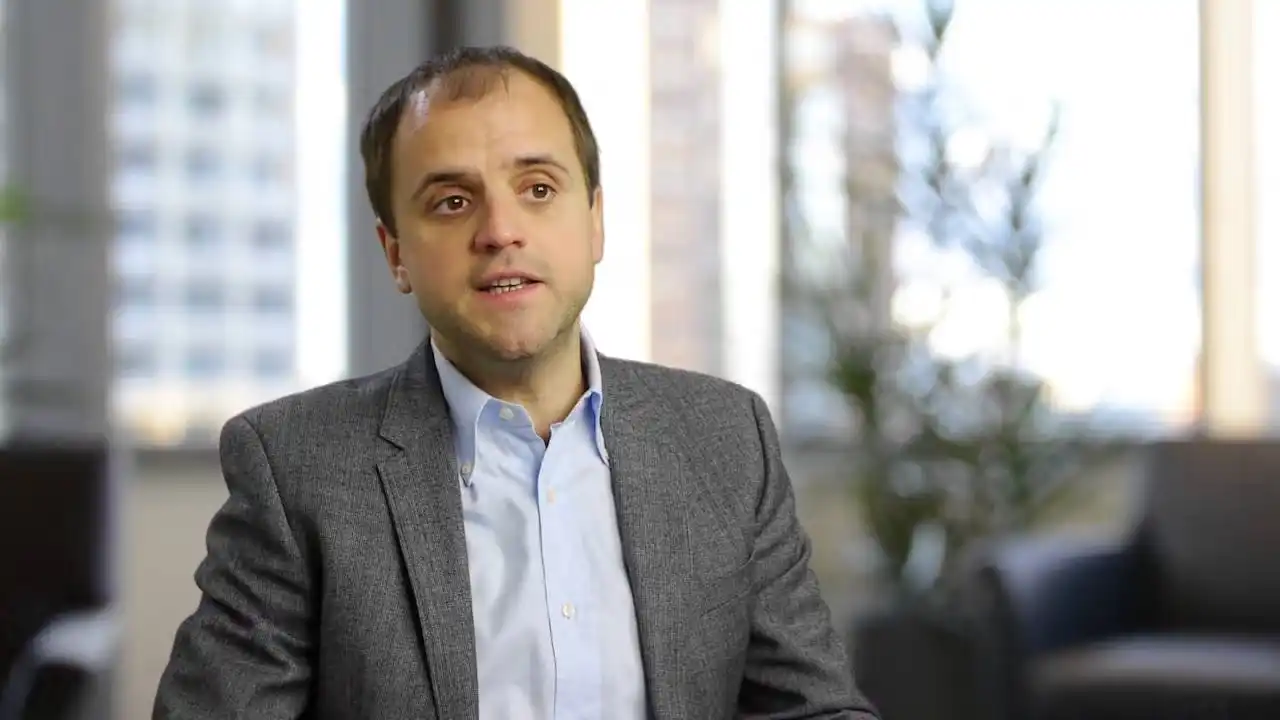
Dialogue with MIT Economist: Don't Panic About 'AI Doomsday Theory', Verification Capability is a Scarce Resource

In a discussion with MIT economist Christian Catalini, the core argument is that the true scarcity in the AI economy is not intelligence but verification—the human capacity to check, judge, and confirm the correctness of AI outputs. Catalini explains that while automation costs are falling exponentially, verification remains constrained by human biological limits, at least for now. Entry-level jobs are most vulnerable, as AI can easily replicate tasks that rely on measurable, existing knowledge. However, even top experts are inadvertently training their own replacements by generating data that AI learns from—a phenomenon termed the "coder’s curse." Three roles will remain critical in the AI-driven economy: - **Directors**: Those who set intentions and steer AI agents toward goals, dealing with "unknown unknowns." - **Meaning Makers**: Individuals who create cultural, social, or narrative value based on human consensus and status games. - **Liability Underwriters**: Top-tier experts (e.g., lawyers, doctors) who assume responsibility for edge cases and final validation. Catalini advises against panic and encourages experimentation with AI tools to automate current roles and discover new opportunities. He emphasizes that uniquely human traits—like judgment in unmeasurable contexts—will retain value, and crypto-based verification infrastructure may play a key role in ensuring authenticity. The transition will be disruptive, but leveraging AI can amplify human potential exponentially.

marsbit03/28 08:06

Dialogue with MIT Economist: Don't Panic About 'AI Doomsday Theory', Verification Capability is a Scarce Resource

marsbit03/28 08:06

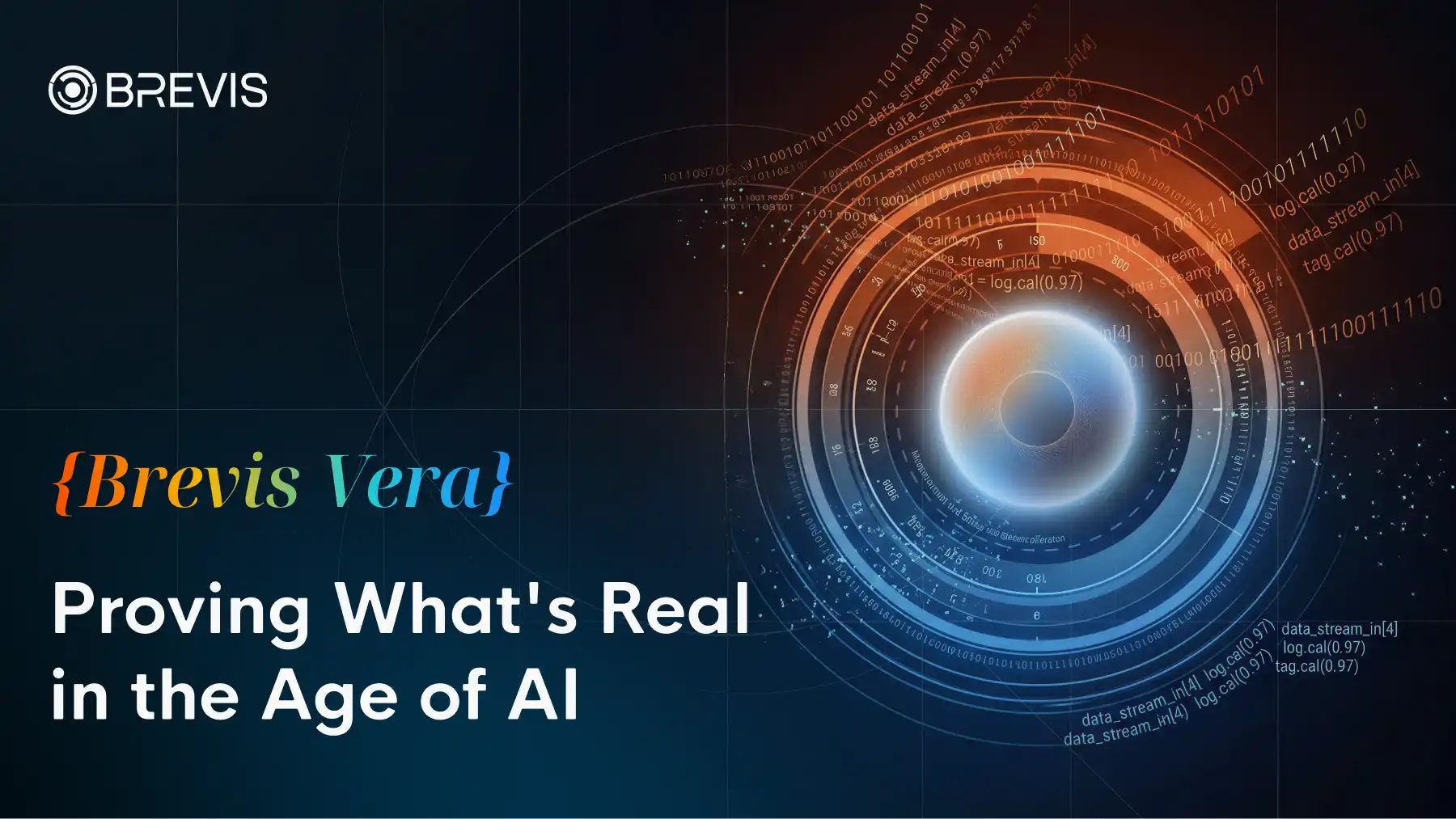
Brevis Vera is Now Live: Proving "Authenticity" in the Age of AI

Brevis Vera is an end-to-end media authenticity system that enables anyone to verify whether a published image or video originates from a real device and has been edited only in provable, compliant, and legitimate ways. It combines hardware-backed C2PA credentials—which cryptographically bind media to its source device at the time of capture—with zero-knowledge proofs (generated via Brevis Pico zkVM) that attest to the integrity of the entire editing process. Unlike AI-based deepfake detection methods, which are reactive and often lag behind generative advances, Vera takes a proactive approach by allowing media to cryptographically prove its origin and the transformations it has undergone. It addresses the "editing gap" where traditional signatures break after any modification, such as cropping or color adjustment. Vera integrates with open-source editing tools to generate proofs that verify three key claims: the output is derived from the signed original, only permitted edits were applied, and no hidden or malicious changes were introduced. The proofs are generated locally, verifiable by anyone, and preserve the privacy of both the source material and the editing workflow. The system is now live, with initial support for common image transformations. Brevis is working to integrate Vera into mainstream consumer editing applications and has open-sourced the reference implementation.

marsbit03/09 12:37

Brevis Vera is Now Live: Proving "Authenticity" in the Age of AI

marsbit03/09 12:37

a16z: After AI Grants Humans Superpowers, Where Do We Go From Here?

A new paper titled "The Minimal Economics of AGI" explores the economic implications of AI automation, particularly as AI agents evolve from tools into collaborative partners capable of long-horizon tasks. The authors, Christian Catalini and Eddy Lazzarin, argue that the core economic divide will be between automation (tasks that can be measured and automated) and verification (tasks requiring human oversight, judgment, and contextual understanding). Key themes include: - The "coder’s curse": top experts training AI systems may inadvertently automate their own roles over time. - Three future human roles: directors (setting intent), verifiers (domain experts ensuring quality), and meaning-makers (creating cultural and social value). - Cryptocurrency and blockchain are positioned as critical for identity, provenance, and trust in a world flooded with AI-generated content. - Two potential economic outcomes: a "hollow economy" with systemic risk from under-verification, or an "augmented economy" where AI amplifies human potential and reduces costs for education, healthcare, and innovation. - The importance of small, agile teams leveraging AI for outsized impact, with crypto infrastructure enabling coordination at scale. The authors emphasize that AI acts as a force multiplier, granting individuals "superpowers," and urge a focus on verification, adaptability, and ambitious experimentation.

marsbit03/09 11:31

a16z: After AI Grants Humans Superpowers, Where Do We Go From Here?

marsbit03/09 11:31

活动图片