# TSMC Related Articles

HTX News Center provides the latest articles and in-depth analysis on "TSMC", covering market trends, project updates, tech developments, and regulatory policies in the crypto industry.

Replicating the "DeepSeek Moment"? Wall Street Unanimously Says: Kimi K3 Instead Strengthens Computing Power Demand

Title: Wall Street Sees Kimi K3 as a Catalyst for Compute Demand, Not a "DeepSeek Moment 2.0" Summary: Following the release of Moonshot AI's powerful open-source model Kimi K3, initial market reaction mirrored the "DeepSeek moment" that sparked a sell-off in compute stocks earlier in 2025, fearing reduced demand for AI infrastructure. However, major Wall Street banks including UBS, Nomura, BofA, and Citi argue the opposite: K3 will accelerate, not weaken, demand for compute, memory, storage, and networking. Their analysis centers on K3's specifications—2.8 trillion parameters, 1M token context, and MoE architecture—which represent a "scale" story rather than a pure "efficiency" one like DeepSeek R1. These features increase pressure on inference, memory (especially KV cache), and storage. Analysts invoke Jevons Paradox: as high-quality models become more affordable (K3 is cheaper than top closed models but not the cheapest), usage and token volumes expand, ultimately increasing total compute consumption. The reports highlight that competition will force leading US AI labs (OpenAI, Anthropic, Google) to invest more in training and iteration to maintain their edge. Furthermore, the rise of capable open-source models like K3 is expanding the global AI developer ecosystem, with Chinese models now accounting for over 45% of developer traffic. Key beneficiaries identified across the AI infrastructure chain include memory/storage players (e.g., Micron, Samsung), compute leaders (Nvidia, TSMC), networking suppliers (due to "super-node" cluster needs for deploying K3), and cloud platforms (e.g., Alibaba) that host diverse model ecosystems. The consensus is that stronger open-source models are an entry point for the next wave of infrastructure demand diffusion, provided workload growth outpaces efficiency gains.

链捕手07/21 06:12
Replicating the "DeepSeek Moment"? Wall Street Unanimously Says: Kimi K3 Instead Strengthens Computing Power Demand

链捕手07/21 06:12

Where the AI Bubble Really Is: Which Layer of Players Are Naked

AI Bubble: Where It Really Is and Who's Swimming Naked This analysis dissects the AI industry not as a single entity but as a five-layer pyramid, arguing that bubbles are concentrated in specific tiers, not uniformly distributed. **Key Distinction from the 2000 Dot-com Bubble:** Unlike 2000, where companies had stock prices before revenue, today's leading AI players have massive, contract-backed revenue driving their valuations. Core infrastructure demand is real, with every GPU running at full capacity for paying customers. **The Five-Layer Pyramid & Bubble Assessment:** * **L0 (Fab/Manufacturing) & Top L4 (Leading AI Apps): NO BUBBLE.** Companies like TSMC, NVIDIA, major cloud providers (Microsoft, Google, Meta, Amazon), and top AI labs have real revenues and orders. Supply is tightly constrained by TSMC's disciplined capacity control and physical limits like power/land for data centers, preventing a supply glut. * **L1 (Memory): BATTLEGROUND.** Sky-high HBM margins could signal a new structural cycle or a classic "boom before bust." The oligopoly of three major players may enforce supply discipline, making this a high-stakes bet. * **L2 (Interconnect/Optical Modules): BUBBLE TERRITORY.** Companies like Lumentum and AAOI have seen stock surges (4-10x) far outpacing revenue growth. This hardware segment has lower physical barriers to expansion than fabs, allowing speculation. It mirrors the 2000 bubble's epicenter—optics. * **L3 (Infrastructure/"GPU Landlords"): VULNERABLE.** GPU leasing companies profit from the current compute shortage but own no long-term moat. Their business model relies on a temporary bottleneck that will ease as big tech expands and new tech (e.g., potential space-based data centers) emerges. * **L4 Long Tail (VC-backed Startups): STRONG BUBBLE SIGNALS.** VC funding concentration in AI is twice that of the 1999 peak. Many startups with little revenue use the valuation logic of successful giants to justify their own, creating high risk of a "valuation crunch" when funding dries up. **Critical Risks to Monitor:** 1. **GPU Depreciation & Accounting:** Companies extending the assumed useful life of GPUs artificially boost profits. The true economic life depends on future generational leaps from NVIDIA. 2. **"GPU Credit" & Off-Balance-Sheet Leverage:** Emerging structures where shell companies borrow to buy GPUs and lease them out (with chipmakers sometimes investing) move debt off major balance sheets. This echoes the "vendor financing" of 2000 and the securitization risks of 2008, though currently small-scale. 3. **TSMC Abandoning Caution:** If the primary supply bottleneck (TSMC's conservative capacity planning) breaks, runaway supply could trigger a bust. 4. **Algorithmic Efficiency Breakthrough:** A major leap in software efficiency could drastically reduce the need for raw compute hardware, undermining the investment thesis. **Conclusion:** The AI boom is expensive and has frothy areas, but its core is underpinned by real demand and physical supply constraints. The bubble risk is layered: most present in optical components, GPU leasing, and the long-tail startup ecosystem, while the foundational chip manufacturing and leading application layers remain relatively solid—for now.

marsbit06/04 10:20

Where the AI Bubble Really Is: Which Layer of Players Are Naked

marsbit06/04 10:20

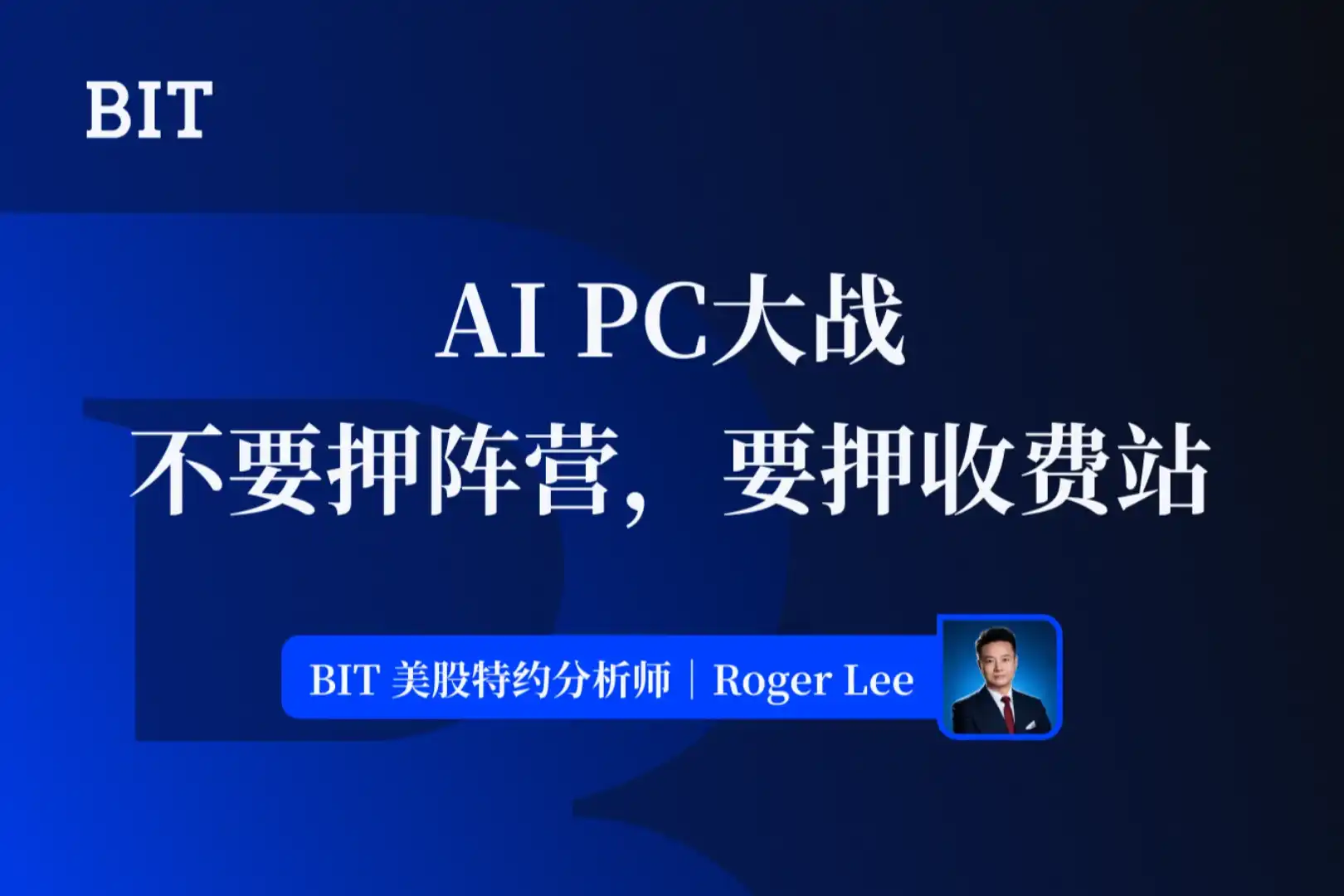
AI PC Battle: Bet on the Toll Booth, Not the Camp

**Title:** The AI PC Battle: Don't Bet on Sides, Bet on the Tollbooth **Summary:** The AI PC competition is moving beyond simple "x86 vs. Arm" narratives. The core investment thesis should focus on identifying which players can sustain margins, cash flow, and pricing power throughout the upgrade cycle, rather than backing a particular architecture. The opportunity is analyzed in three layers: 1. **The Advanced Foundry Tollbooth:** TSMC is positioned to collect "tolls" regardless of which chip designer wins, due to its dominant ~70% share in advanced semiconductor manufacturing, which is essential for high-end AI PC chips. 2. **Compute & Platform Spillover:** AMD represents an offensive in the x86 CPU+GPU space, while NVIDIA leverages its GPU and CUDA software stack dominance. Both benefit from the demand for increased local AI compute. 3. **Architecture Diffusion & Turnaround Plays:** ARM and Intel offer potential for significant upside (elasticity), but investments here require stricter discipline due to higher execution risks and competitive challenges. The industry is transitioning from concept to shipment validation. While short-term forecasts for AI PC adoption have been revised down slightly due to tariffs and procurement delays, the long-term trend towards AI becoming a standard PC feature remains intact. The key driver for upgrade cycles will be whether compelling enterprise applications (e.g., privacy-sensitive computing, low-latency inference) emerge beyond consumer-focused features like meeting summarization. Investment strategy should prioritize companies with platform-level advantages and recurring revenue streams. TSMC offers high certainty as the foundational tollbooth. AMD presents a strong offensive play within the established ecosystem. ARM and Intel are higher-risk, higher-potential-reward turnaround bets. The report cautions against chasing short-term hype and emphasizes a disciplined, long-term approach focused on buying ecosystem strength and cash-flow certainty after market enthusiasm subsides. **Key Risks:** Underwhelming AI PC applications slowing upgrade cycles; slow improvement in Windows on Arm compatibility; macro/tariff impacts on PC demand; potential advanced node supply-demand mismatches affecting TSMC; high overall AI sector valuations making stocks vulnerable to a risk-off shift in markets.

marsbit06/04 07:10

AI PC Battle: Bet on the Toll Booth, Not the Camp

marsbit06/04 07:10

The Semiconductor Century: Investment Roadmap Amidst the 2026 AI Surge

The Semiconductor Century: Investment Roadmap in the 2026 AI Surge This analysis outlines the pivotal role of semiconductors in the 2026 AI-driven landscape. With the global semiconductor market projected to reach ~$9.75 trillion in 2026, AI infrastructure spending by hyperscalers is a primary growth driver, fundamentally shifting demand from consumer electronics to strategic technology assets. The report breaks down the industry into four key segments: 1) Designers (e.g., Nvidia, AMD) who own high-margin IP; 2) Foundries, led by TSMC which manufactures ~90% of the world's most advanced chips; 3) Equipment makers like ASML, the sole producer of critical EUV lithography machines; and 4) Memory specialists such as SK Hynix, crucial for supplying high-bandwidth memory (HBM) for AI servers. It highlights significant companies: Nvidia (dominant in AI GPUs and CUDA software), TSMC (critical but geopolitically concentrated foundry), ASML (monopoly in advanced lithography), AMD (key alternative to Nvidia), Broadcom (leader in custom AI chips), and SK Hynix (leading HBM supplier). For diversified exposure, semiconductor ETFs like SMH, SOXX, and SOXQ are presented. Key investment risks are emphasized: over-reliance on AI demand, acute geopolitical and supply chain concentration in Taiwan, policy uncertainty around export controls, the cyclical nature of memory markets, and high valuations for leaders like Nvidia and Broadcom. Critical 2026 catalysts include the industry's push toward a $1 trillion annual sales milestone, the ramp-up of TSMC's Arizona factory, the deployment of Nvidia's next-generation Vera Rubin platform, AMD's market share progress, and HBM4 supply dynamics. The conclusion advises investors to balance the sector's extraordinary growth against its very real risks—geopolitical concentration, AI dependency, memory cyclicality, and valuation—to make informed decisions.

marsbit05/14 10:40

The Semiconductor Century: Investment Roadmap Amidst the 2026 AI Surge

marsbit05/14 10:40

活动图片