# Stocks Related Articles

HTX News Center provides the latest articles and in-depth analysis on "Stocks", covering market trends, project updates, tech developments, and regulatory policies in the crypto industry.


Senior Analyst Dialogue: What Powell's Departure and Warsh's Appointment Mean for Crypto?

The podcast episode "Powell Is Out, Warsh Is In: What It Means for Crypto" features an analysis by Noelle Acheson on the macro-economic landscape and its implications for crypto. Key discussion points include: * **Equity-Bond Divergence:** Acheson highlights a significant and growing disconnect between stock and bond markets. While bond yields rise globally, signaling tighter financial conditions, equities are driven by AI-related hype and speculation, reminiscent of the 1999 dot-com bubble. * **'Bliss Trade' and Systemic Fragility:** The discussion explores the concept of a structural, cross-party government expectation to provide fiscal support ("Bliss Trade"), which underpins risk asset valuations and carries its own systemic vulnerabilities. * **Inflation Outlook:** Acheson argues that inflation is not meaningfully declining, citing core CPI stagnation and attributing the trend to de-globalization, tariffs, and geopolitical tensions like the Strait of Hormuz crisis. * **Powell's Legacy:** Powell's tenure receives mixed marks. While his defense of Fed independence is noted, he is also criticized for overseeing the "de-banking" of crypto firms in 2023 and initially misjudging inflation. * **Outlook for Warsh:** Expectations for the incoming Fed Chair, Kevin Warsh, are measured. While he may aim to reduce Fed balance sheet size and forward guidance, market realities and the FOMC will likely constrain his ability to enact significant policy shifts, particularly rate cuts. * **Crypto as a Macro Asset:** Bitcoin's role is framed as a hedge against currency debasement, benefiting from expectations of monetary stimulus. However, its maturation as a macro asset means it now competes with other high-volatility investments like AI stocks, potentially limiting near-term price catalysts. * **Market Structure & Tokenization:** The potential Clarity Act is seen as more beneficial for assets like Ethereum than Bitcoin, which already has relative regulatory clarity. Concerns are raised about "innovation exemptions" for tokenization if they enable third-party derivatives that encourage pure speculation over capital formation. In conclusion, the analysis suggests crypto markets lack a near-term positive catalyst and are caught between competing macro narratives, with significant underlying fragilities in traditional markets.

marsbit1h ago

Senior Analyst Dialogue: What Powell's Departure and Warsh's Appointment Mean for Crypto?

marsbit1h ago

‘Withdraw Insurance to Buy Stocks’: South Koreans Over 60 Are Borrowing to Bet on Samsung

South Korea's stock market has seen a frenzy, with the KOSPI nearly doubling in six months. This boom is fueled by a surge in retail investors borrowing to buy stocks, with outstanding margin loans hitting a record high. A significant portion of this debt is held by people over 50, with the 60+ age group seeing the fastest growth. Many are reportedly cashing out savings-type life insurance policies—even at a loss—to fund their stock investments. They are heavily concentrated in major semiconductor stocks like Samsung Electronics and SK Hynix, which have driven most of the market's gains. This trend is particularly risky for older investors, who are leveraging their limited retirement savings. While a market correction in March caused significant losses for leveraged accounts, the swift recovery and continued rally have reinforced risky behavior. Stories of quick profits on platforms like Blind further fuel the speculative rush. The phenomenon is partly driven by economic anxiety. With South Korea having a high elderly poverty rate and a low public pension replacement rate, some seniors see the booming market as a last chance to improve their finances. This "FOMO" (fear of missing out) sentiment is palpable, even in public parks where retirees gather and now discuss stock tips alongside their usual activities. Despite regulatory warnings and the inherent risks of leverage—especially for those with little time to recover from losses—the borrowing binge continues. The market's heavy reliance on a few tech stocks and its cyclical nature pose a substantial threat to these elderly investors, for whom a downturn could be catastrophic.

marsbitYesterday 04:16

‘Withdraw Insurance to Buy Stocks’: South Koreans Over 60 Are Borrowing to Bet on Samsung

marsbitYesterday 04:16

Currency and Stock Market Barometer: Strategy Invested Over $2 Billion to Buy Over 24,800 BTC Last Week; Bitmine's ETH Holdings Increase to 4.37% of Total Supply (May 19)

Crypto & Stock Market Watch: Institutional BTC Buying Surges, ETH Holdings Grow Major listed companies aggressively accumulated Bitcoin last week, with net purchases skyrocketing over 44x to $2.03 billion. Strategy (formerly MicroStrategy) led the charge, spending approximately $2.01 billion to buy 24,869 BTC, bringing its total holdings to 843,738 BTC. Overall, listed firms (excluding miners) now hold 1,113,841 BTC, valued at ~$86.16 billion. On the Ethereum front, Bitmine purchased 71,672 ETH in the past week. It now holds 5,278,462 ETH, worth $11.56 billion and representing 4.37% of ETH's total supply. A significant portion (4,712,917 ETH) is staked, generating an annualized yield of $289 million. Industry leaders note a divergence from the MicroStrategy model, with ETH treasury firms increasingly focusing on staking yields and simpler balance sheets. In traditional markets, Morgan Stanley warns of a potential significant U.S. stock market correction if bond yields and volatility continue rising. Investment giants like Berkshire Hathaway and Bridgewater adjusted portfolios in Q1, with Bridgewater notably increasing its stakes in chipmakers like Nvidia, Broadcom, and Micron while shedding software stocks. Among other crypto-focused public companies, Solana treasury firm Upexi reported a widened net loss of $109 million for its fiscal Q3, driven by a decline in its crypto holdings' value. Meanwhile, Hyperion DeFi, a HYPE token treasury company, reported a Q1 net profit of $8.8 million and increased its HYPE holdings past 2 million tokens.

marsbit05/19 09:28

Currency and Stock Market Barometer: Strategy Invested Over $2 Billion to Buy Over 24,800 BTC Last Week; Bitmine's ETH Holdings Increase to 4.37% of Total Supply (May 19)

marsbit05/19 09:28

A Quick Look at the Latest Portfolio of the 24-Year-Old 'AI Stock God': 60% Allocation Hedges Against Semiconductor Downturn

Summary: The article analyzes the latest 13F filing from "AI stock prodigy" Leopold Aschenbrenner's fund, Situational Awareness LP, for Q1 2026. The fund's holdings surged to $13.7 billion, with a significant 32.5% net inflow. Key portfolio adjustments reveal a dual strategy: * **Hedging Semiconductor Downturn:** Over 60% of the fund's *notional value* is allocated to massive put options on major AI semiconductor and hardware stocks (e.g., NVDA, AVGO, AMD, SMH ETF). This acts as a high-leverage hedge against potential short-term volatility or correction in the chip sector. * **Long-term Bullishness on AI Infrastructure:** Alongside the hedges, the fund maintains and increases core long positions in companies providing critical AI infrastructure. This includes substantial equity stakes in CoreWeave (GPU cloud services), Bloom Energy (on-site power), and various power/electrical/data center firms (KEEL, IREN, etc.). Other notable moves include switching Intel exposure from high-leverage calls to minimal stock, exiting optical networking stocks (LITE, COHR), and taking profits in some positions like Bloom Energy and CoreWeave calls. The analysis concludes that Aschenbrenner is not simply turning bearish on AI. Instead, the strategy reflects a nuanced view: extreme caution toward near-term "chip maker" valuations deemed potentially frothy, coupled with strong conviction in the long-term scarcity and value of the underlying *infrastructure* (power, data centers, cloud capacity) required to sustain the AI boom. The fund is preparing for industry volatility while betting on the next potential bottlenecks in the AI supply chain.

Odaily星球日报05/18 13:30

A Quick Look at the Latest Portfolio of the 24-Year-Old 'AI Stock God': 60% Allocation Hedges Against Semiconductor Downturn

Odaily星球日报05/18 13:30

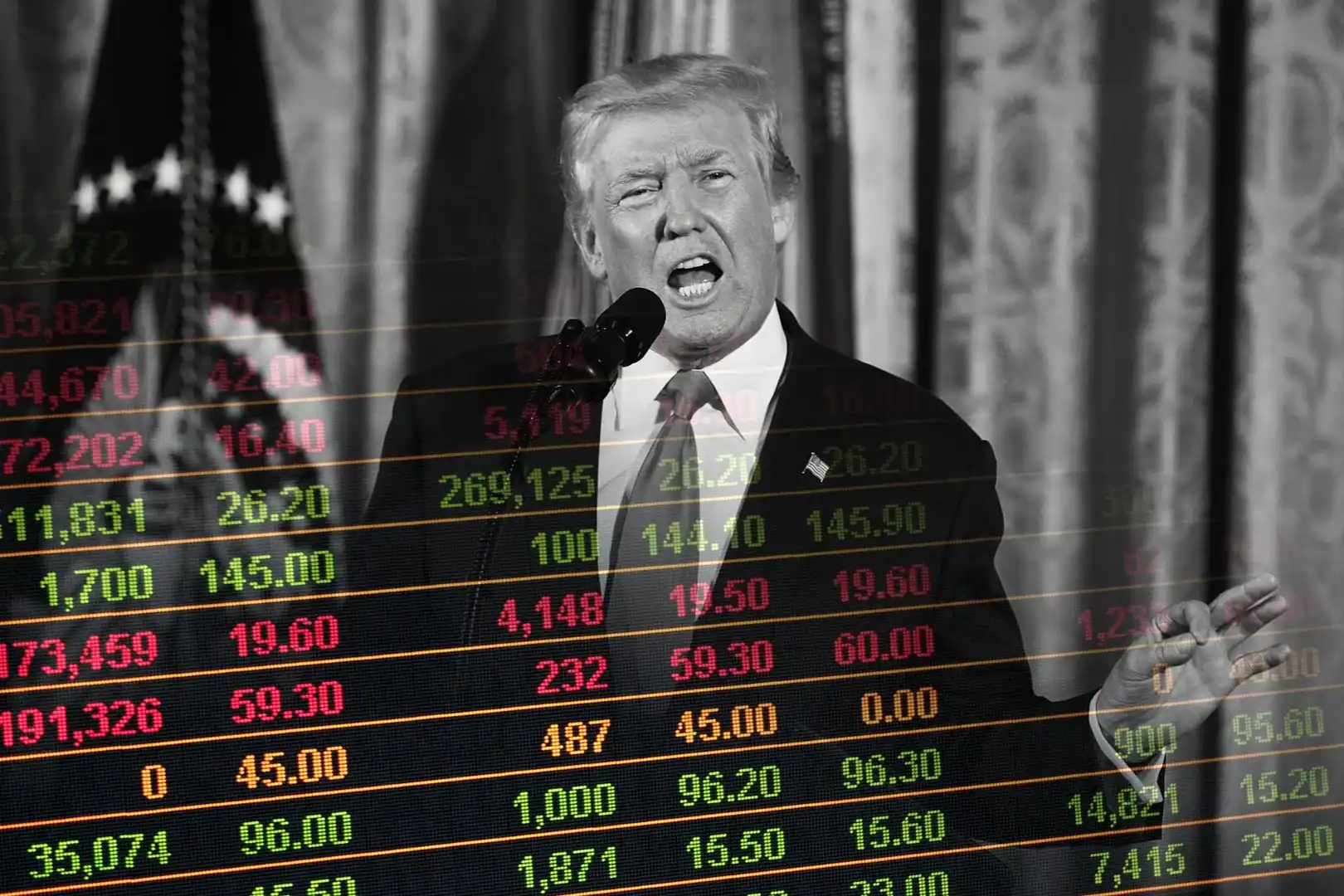
'Stock God' Trump's 3,642 Trades Disclosed: The 'Perfect Closed Loop' of Policy and Portfolio

Summary: Donald Trump's First Quarter stock trades, totaling 3,642 transactions, have been disclosed. While the White House maintains the trades were managed by an advisor and complied with disclosure laws, they reveal a portfolio heavily aligned with his policy agenda. The trades show a rotation away from major tech stocks like Microsoft, Amazon, and Meta, and into semiconductor and AI hardware companies such as NVIDIA, AMD, Broadcom, Dell, and Intel. Notably, Trump's account purchased Dell stock before he publicly praised the company, after which its stock rose. The Dell family also pledged funds to a Trump-affiliated policy project. A critical case is Intel. The Trump administration converted $8.9 billion in CHIPS Act subsidies into a 9.9% equity stake, making the U.S. government Intel's largest shareholder. Months later, Trump's personal account also bought Intel stock. This intertwines national industrial policy with potential personal financial interest. Unlike typical insider trading concerns, this situation creates a "closed loop": policy decisions (e.g., subsidies, tariffs, crypto regulation) can boost the value of his holdings, and those holdings may, in turn, influence future policy directions. This blending of presidential power and personal portfolio, while legally disclosed, raises profound questions about conflicts of interest that current rules do not address.

marsbit05/18 10:26

'Stock God' Trump's 3,642 Trades Disclosed: The 'Perfect Closed Loop' of Policy and Portfolio

marsbit05/18 10:26

TechFlow Intelligence Brief: South Korean Stock Market Plunges, Trump's Q1 Holdings Revealed

This TechFlow intelligence report covers key developments across AI, crypto, hardware, tech companies, and finance. In AI, Anthropic's valuation surpasses OpenAI, while AWS users face massive bills from runaway Claude API calls, highlighting AI's cost risks. A local AI model executing 'rm -rf' sparks safety debates. Meanwhile, arXiv enforces bans for AI-generated paper errors, and ChatGPT's impact on education grading is questioned. The crypto sector sees a US Senate committee passing a market structure bill, $2B in Bitcoin options expiring, and debates on Bitcoin's seizure resistance and DeFi's value without stablecoin yields. Hardware news includes NVIDIA planning RTX 5090 price hikes and the US approving H200 chip sales to Chinese firms. Tech company updates feature a macOS M5 chip exploit, Apple's iPhone price cuts, a South Korean stock market plunge, and Cisco's record revenue alongside layoffs. In stocks, NVIDIA's market cap hits $5.7T as Trump's Q1 portfolio shifts toward AI infrastructure stocks like NVIDIA and Broadcom. Cerebras' IPO soars, and a Reddit user reports massive gains on a leveraged ETF, fueling discussions on an AI bubble. Macro developments show precious metals falling due to Indian tariff hikes and strong US data. The Iran conflict disrupts Hormuz Strait shipping, affecting oil supplies. New tech includes 'haptic dreaming' to improve robot task success and Meta's Ray-Ban Display glasses with virtual handwriting. The underlying theme is AI's dual reality: creating both massive unexpected costs and immense market valuations. As technology advances rapidly, academia, markets, and regulators are all grappling to find a new equilibrium between innovation, risk, and control.

marsbit05/15 10:59

TechFlow Intelligence Brief: South Korean Stock Market Plunges, Trump's Q1 Holdings Revealed

marsbit05/15 10:59

When the Bubble Comes, How to Short "Smartly"?

Title: When the Bubble Comes, How to "Smartly" Short? Author: Campbell (Macro Analyst) Summary: Amid the heated debate over whether the current AI-driven market is in a bubble, analysts are divided. While some, like Dan Niles and Paul Tudor Jones, argue that the AI boom has further to run, Michael Burry warns of similarities to the dot-com bubble. The author explores practical strategies for navigating and potentially shorting a bubble without being crushed by its momentum. Key challenges in shorting a bubble include the exponential risk from parabolic price increases and the high cost of options due to extreme volatility. Instead of directly shorting the bubbly asset, the author proposes three approaches: 1. **Find the "Wedge"**: Identify external factors that could pop the bubble, such as rising interest rates. By betting on trends that could undermine the bubble (e.g., inflation or higher rates), investors can hedge without timing the bubble's collapse. 2. **Short the "Victims"**: Target assets adjacent to the bubble that are highly vulnerable to its burst, such as over-leveraged companies or sectors with "negative convexity." These assets may have cheaper options and suffer disproportionately when the bubble stalls. 3. **Wait for Confirmation**: Exercise discipline and wait for clear signals of a breakdown, including deteriorating fundamentals, exhausted buying sentiment, and decisive breaks in trendlines. Only then should investors take substantial short positions. The author shares their recent actions, including shorting SPX and high-yield bonds while buying short-term put spreads, and emphasizes avoiding direct shorts on vertically rising assets. The core takeaway: Hedge, identify wedges, wait for confirmation, and only then commit heavily.

marsbit05/14 08:57

When the Bubble Comes, How to Short "Smartly"?

marsbit05/14 08:57

活动图片