# Standardization Related Articles

HTX News Center provides the latest articles and in-depth analysis on "Standardization", covering market trends, project updates, tech developments, and regulatory policies in the crypto industry.

Tencent, Alibaba, ByteDance in a Battle for the Skill Store

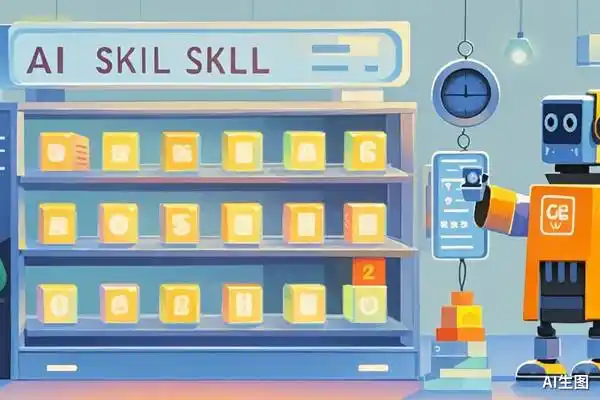
Skill is becoming a key concept in the AI field, essentially serving as a structured "instruction manual" for AI Agents that specifies tool calls, decision logic, and output standards. This allows Agents to execute predefined tasks. As the number of Skills grows, distribution platforms have emerged. Major tech companies are swiftly entering this space. In March, Tencent, Alibaba, and ByteDance launched Skill stores within their respective Agent platforms. Subsequently, players like Zhipu AI, Meituan, and Xiaohongshu joined the fray. This competition for the "Skill store" is fundamentally a battle for the AI-era user entry point; whoever controls distribution controls the users. While ByteDance's Coze has experimented with paid Skills, most platforms offer them for free. The real value lies not in the stores themselves but in using them to attract and retain users within an ecosystem, driving revenue from services like cloud computing, model calls, or advertising. The landscape features three main player types: 1) **Internet giants** (e.g., Alibaba, ByteDance, Tencent, Meituan), leveraging Skills to drive traffic and monetize through their broader ecosystems (cloud services, transactions, ads). 2) **Large model companies** (e.g., Zhipu AI, Moonshot AI), using Skill stores to increase user engagement and monetize model API calls. 3) **Content platforms** (e.g., Xiaohongshu), treating Skills as a new content format to generate traffic and ad revenue. However, transforming Skill stores into a sustainable business faces significant hurdles. Key challenges include: the **difficulty in pricing Skills** due to inconsistent outputs across different models and contexts; **lack of cost transparency** (varying token consumption); **security risks** like Skill poisoning; and the **absence of standardized protocols** for development and evaluation. Unlike standardized mobile apps, Skills are often personalized workflows resistant to uniformity, which hinders the establishment of a reliable review and monetization system akin to the App Store. While there is genuine user demand for paid Skills—particularly in enterprise (e.g., contract review) and certain personal productivity scenarios—current platforms offer developers limited and unpredictable distribution. The future of Skill stores depends on overcoming these standardization, evaluation, and safety challenges to make acquiring a Skill as straightforward as downloading an app. For now, the stores function more as display shelves than robust marketplaces.

marsbit06/03 12:30
Tencent, Alibaba, ByteDance in a Battle for the Skill Store

marsbit06/03 12:30

From Tokens to Machine Labor: AI is Shifting from Tool to "Worker"

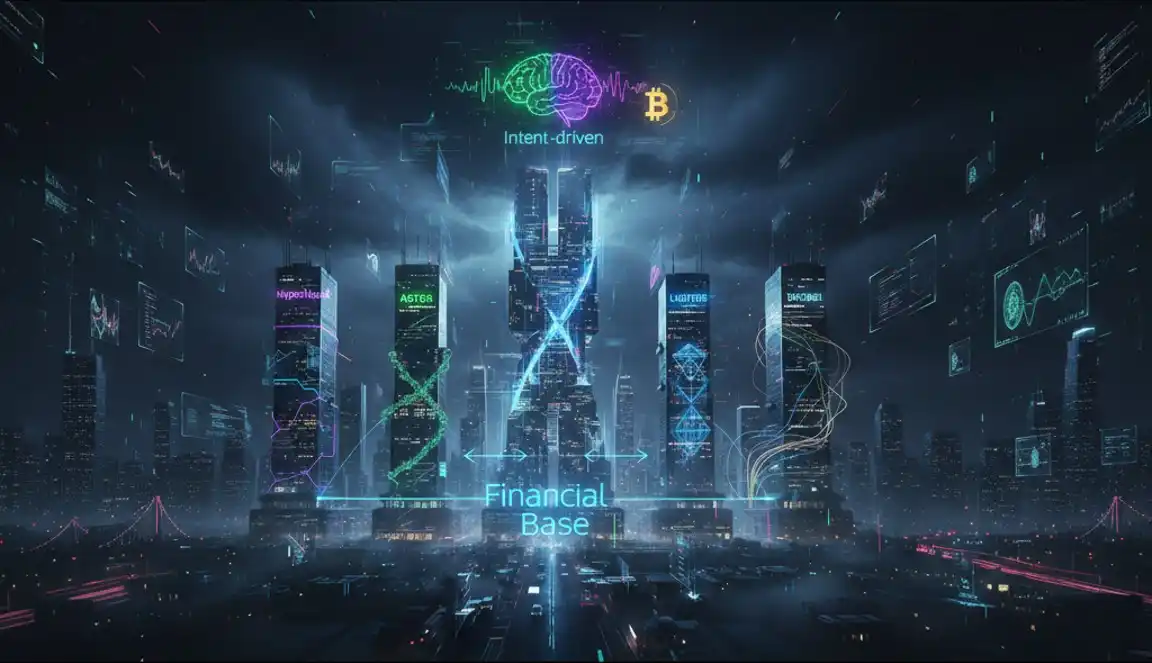
The article "From Token to Machine Labor: AI is Evolving from Tool to 'Worker'" argues that the business model for AI is shifting beyond simply selling computational resources (tokens, GPU hours) or model access. Instead, a new "machine labor market" is emerging, where the core economic transaction is the purchase of economically useful work directly performed by software. The central thesis is that AI pricing will evolve through four stages: 1) raw tokens, 2) standardized LLM capabilities (e.g., text generation), 3) industry-specific labor markets (e.g., legal review, radiology), and finally 4) a programmable results market where tasks like resolving a support ticket are bid on and priced based on outcome. In this future, buyers will care less about *which* model or GPU completes a task and more about whether the work meets specified standards for accuracy, latency, and cost. This transition reframes the impact of AI on human labor. Rather than simple replacement, it suggests a re-coordination where machines handle standardized, verifiable work, freeing humans for roles involving oversight, context management, responsibility, and final judgment. In some cases, this "last 1%" of human input becomes more valuable as it enables the other 99% to be automated. Furthermore, as AI reduces the cost of work, demand may expand, creating larger markets (e.g., 24/7 customer service) rather than just cheaper versions of existing ones. The article concludes that while infrastructure (GPUs, models, tokens) remains crucial upstream, the market is converging on a simpler, tradeable unit: machine labor that can be defined, measured, priced, and procured based on contractible specifications.

marsbit05/31 12:33

From Tokens to Machine Labor: AI is Shifting from Tool to "Worker"

marsbit05/31 12:33

Tiger Research: AI Agents Will Now Need Identity Verification

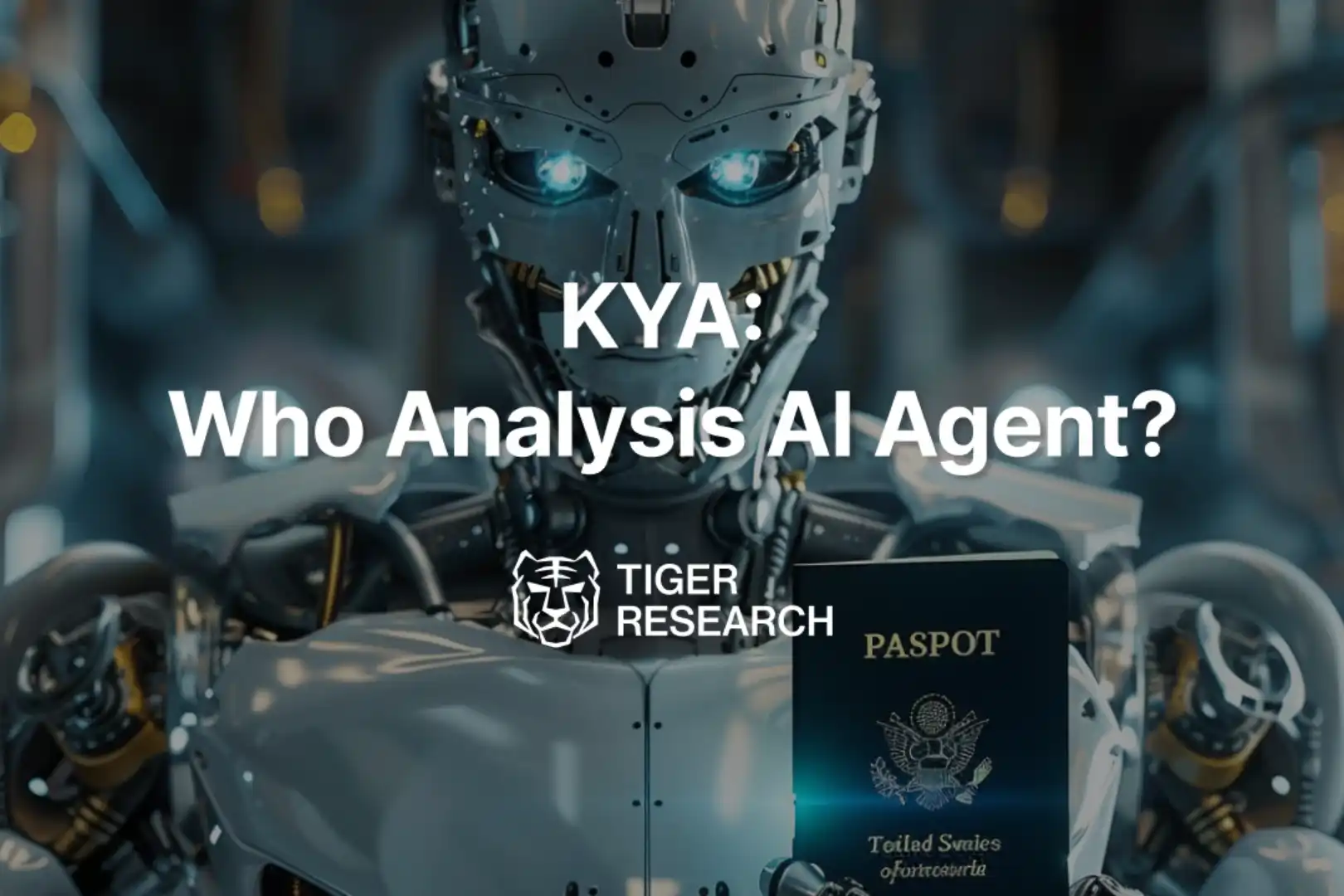
Tiger Research: AI Agents Now Need "ID Verification" AI agents are increasingly capable of autonomously executing contracts, making payments, and conducting trades. However, a critical issue remains unresolved: how to verify the identity of the agent on the other side of a transaction. This article examines the emerging competition to establish a KYA (Know Your Agent) standard and the current state of regulatory progress. **Core Points:** 1. As AI agents operate independently in A2A (agent-to-agent) scenarios, the focus shifts from KYC (Know Your Customer) to KYA for identity verification. 2. KYA is not universally required; it's essential primarily when independently deployed agents interact with open ecosystems like DEXs, engage in A2A payments, or pay merchants, not within centralized platforms. 3. A standards battle is underway, with four key players approaching KYA from different angles: * **ERC-8004:** A blockchain-native approach, creating agent IDs as NFTs with on-chain registries for identity, reputation, and validation. * **Visa TAP:** Leverages Visa's payment network to issue verified "Agent Intent" credentials, bundling agent identity into its payment rails. * **Trulioo:** Adapts the SSL certificate model to issue dynamic "Digital Agent Passports," verifying both developer (KYB) and user (KYC) credentials. * **Sumsub:** Focuses on real-time risk detection and re-verification of the human behind an agent during suspicious transactions, rather than pre-issuing certificates. 4. Regulatory momentum is building. The EU AI Act, the U.S. NIST, and Singapore's national AI governance framework are prioritizing agent identity management. The rollout of KYA standards is likely to follow a pattern similar to the FATF Travel Rule, becoming a watershed moment for the industry. The market is unlikely to have a single winner. Different approaches will dominate specific niches: ERC-8004 for on-chain autonomous transactions, Visa TAP for payment-bound commerce, Trulioo for regulated finance, and Sumsub for fraud-prone scenarios. The key differentiator will be which players successfully integrate their identity infrastructure earliest as adoption scales.

marsbit05/09 06:56

Tiger Research: AI Agents Will Now Need Identity Verification

marsbit05/09 06:56

From 'Word Unit' to 'Symbol Unit': The Debate Over the Chinese Translation of 'Token' and Its Underlying AI Cognitive Implications

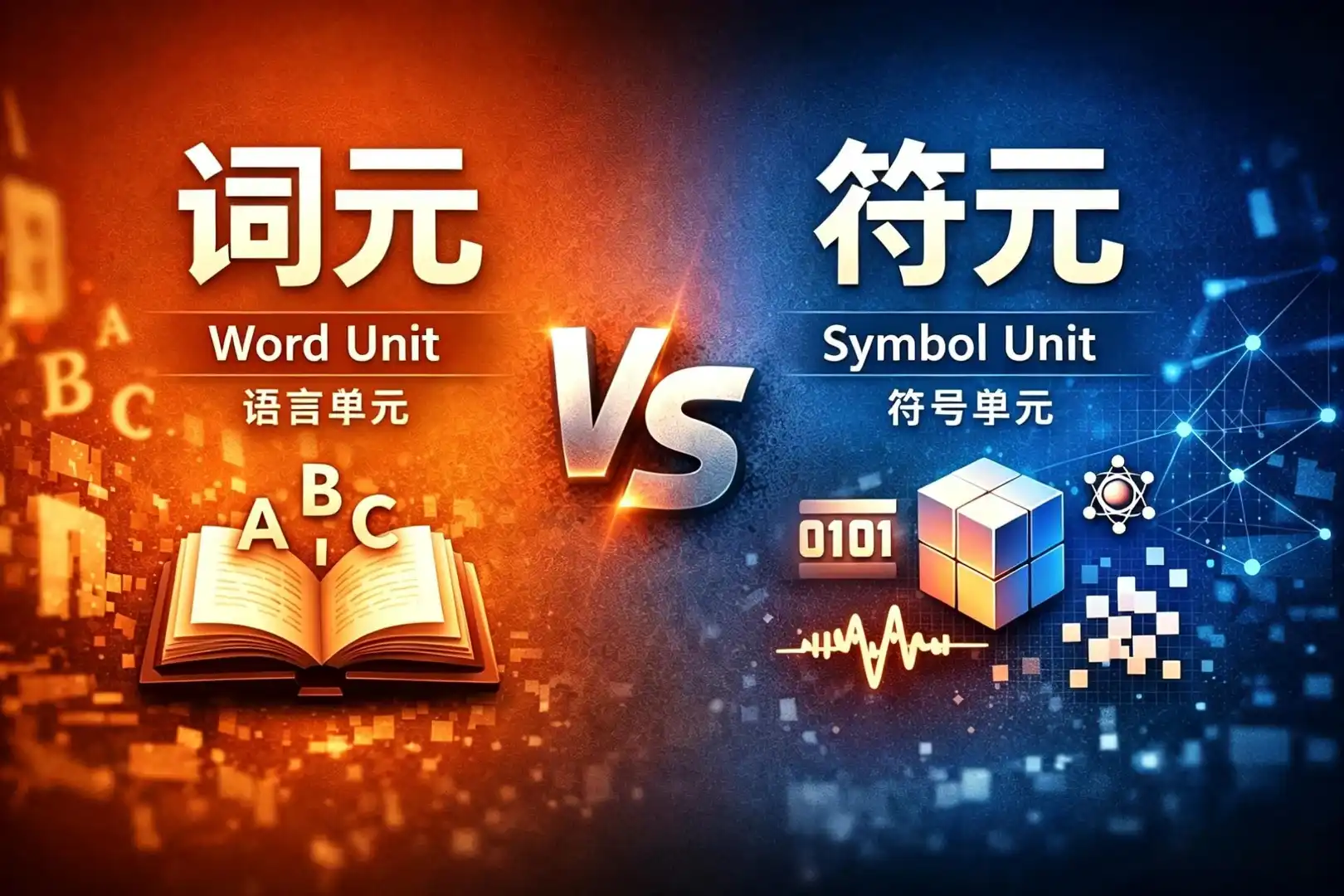
Recent discussions have emerged regarding the official Chinese translation of the AI term "Token," which has been recommended as “词元” (Cíyuán, meaning "word unit") by the National Committee for Terminology in Science and Technology. While this translation is argued to align with historical usage in natural language processing (NLP) and is considered concise and communicable, this article presents a critical counterview advocating for “符元” (Fúyuán, meaning "symbol unit") as a more structurally accurate and future-proof alternative. The author argues that defining Token based on its origin in NLP—as a linguistic semantic unit—overlooks its evolution into a general-purpose, discrete symbolic unit used across multimodal systems (text, image, audio, etc.). Using “词元” ties the concept too narrowly to language, causing cognitive misalignment and semantic drift when applied in non-linguistic contexts. By contrast, “符元” reflects Token’s fundamental role as a symbol in information theory and computation, independent of modality. The article further critiques the reliance on metaphorical extensions (e.g., comparing image patches to “words”) as insufficient for rigorous terminology. It highlights risks including confusion with existing linguistic terms like Lemma (also translated as “词元”), poor cross-lingual reversibility (e.g., difficult back-translation to English), and systemic misunderstanding among non-expert audiences. In conclusion, the author emphasizes that terminology should align with computational essence—not historical usage or explanatory convenience—to ensure conceptual clarity and scalability in AI’s multidisciplinary future. “符元” is proposed as a more neutral, stable, and structurally coherent translation for Token.

marsbit04/10 10:43

From 'Word Unit' to 'Symbol Unit': The Debate Over the Chinese Translation of 'Token' and Its Underlying AI Cognitive Implications

marsbit04/10 10:43

Pharos Establishes RealFi Alliance to Promote Institutional-Grade On-Chain Execution Standardization for RWA

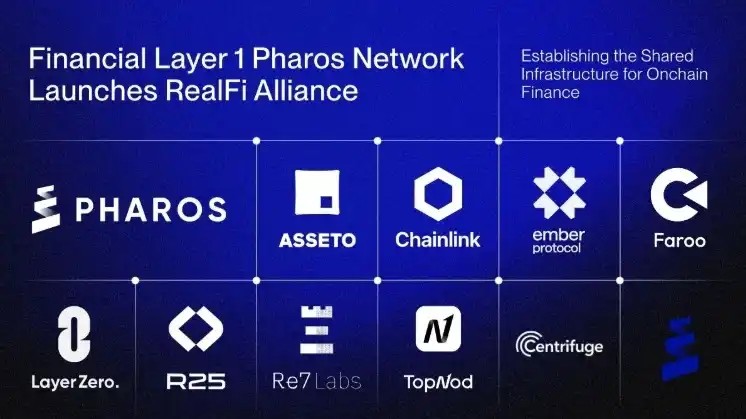
Pharos Network has launched the RealFi Alliance, a strategic ecosystem initiative aimed at unifying institutional asset issuers, financial infrastructure providers, and on-chain builders. The alliance seeks to standardize and scale the execution framework for real-world assets (RWA), moving beyond isolated pilots. Founding members include Chainlink, Asseto Finance, Ember, Faroo, LayerZero, R25, Re7 Labs, TopNod, and Centrifuge. The alliance addresses systemic issues like fragmented liquidity, inconsistent infrastructure standards, and regulatory disconnects by creating a unified operational layer where RWAs remain active, composable, and capable of supporting institutional workflows. It operates on four core pillars: Asset Enablement (bringing real-world value on-chain securely), Infrastructure & Compliance (leveraging Pharos’s parallel execution and built-in compliance modules), Liquidity & Utility (designing clear functional use cases like staking and yield mechanisms), and Market Transparency (establishing trust through clear risk and return benchmarks). Pharos CEO Wish Wu emphasized that the goal is to create a unified environment for assets to operate at scale with institutional reliability. The upcoming Pharos mainnet will launch as a ready-to-use financial environment with integrated liquidity and compliance standards. The alliance plans to expand in structured batches, selecting new members based on asset quality, technical maturity, and ecosystem synergy. Pharos is a financial-grade Layer 1 blockchain designed for RealFi, combining modular architecture, parallel execution, and built-in compliance modules. It is developed by a team with backgrounds from Ant Group and is backed by investors like Hack VC and Faction VC.

marsbit02/23 13:02

Pharos Establishes RealFi Alliance to Promote Institutional-Grade On-Chain Execution Standardization for RWA

marsbit02/23 13:02

When Migration Becomes the Norm: Why 'Your Own EVM Chain' Is Becoming Standard

In the past year, the industry's real "voting" has shifted from governance forums to deployment scripts, migration plans, and budgets. Projects are choosing ecosystems through action, not words—migrating mainnets, prioritizing tool stacks, and betting on networks with stronger market effects. A prime example is Noble, a leading stablecoin infrastructure in Cosmos, which moved to its own EVM L1, signaling that the main battleground for stablecoins and app distribution remains in EVM ecosystem due to its mature developer tools, wallet/dApp ecosystem, and concentrated liquidity. The trend toward "having your own EVM chain" is becoming standard. While EVM offers clear advantages in assets, integrations, and tools, generic chains come with constraints like fee volatility, congestion, and shared sequencing. Application chains/rollups allow teams to internalize these constraints—tailoring block times, execution models, and infrastructure to their business needs, and aligning transaction revenue with growth incentives. Rollup-as-a-Service (RaaS) platforms like Caldera are reducing the high costs and complexity of building and maintaining chains, turning "chain-as-a-product" into a replicable strategy. They focus not just on deployment but also on solving interoperability challenges—e.g., via Caldera's Metalayer, which standardizes cross-chain bridging and integration to reduce friction for users and developers. As migration to EVM continues, the focus shifts from "which chain to choose" to "how to control growth." Owned EVM chains/rollups offer more stable fees, better performance, and tighter integration of incentives and revenue. With RaaS lowering build costs and interoperability layers reducing cross-chain friction, having a dedicated execution environment is becoming a scalable, standard solution for projects aiming to master their own growth.

marsbit02/05 08:39

When Migration Becomes the Norm: Why 'Your Own EVM Chain' Is Becoming Standard

marsbit02/05 08:39

活动图片