# Real-time Related Articles

HTX News Center provides the latest articles and in-depth analysis on "Real-time", covering market trends, project updates, tech developments, and regulatory policies in the crypto industry.

Utexo Partners with x402 to Provide Near-Instant USDT Settlement for the Agent Economy

Utexo, a Bitcoin-native stablecoin payment execution and settlement layer, has partnered with x402 to integrate USDT compatibility into the x402 payment protocol. This collaboration enables near-instant settlement for agent-to-agent transactions, with speeds as fast as 50 milliseconds. x402 is an open protocol that uses the HTTP 402 "Payment Required" status code to embed payment functionality directly into HTTP requests. This allows applications, APIs, and autonomous systems to pay for services in real-time without requiring pre-funded accounts. The integration expands x402’s initial USDC support to include USDT, one of the most widely used stablecoins globally. Utexo’s infrastructure is designed for high-frequency, low-latency transactions, making it well-suited for machine-driven payments. According to Utexo CEO Viktor Ihnatiuk, supporting USDT within the x402 framework significantly broadens access and provides developers the performance needed for real-time agent-based systems. Kevin Leffew of x402 at Coinbase added that expanding stablecoin access improves performance and accelerates developer adoption. This partnership supports growing use cases where software systems autonomously conduct transactions—such as paying for API calls, accessing data on-demand, and coordinating services across platforms without human intervention. By combining x402’s protocol with Utexo’s settlement infrastructure, the collaboration enables a payment model where transactions are as fast and efficient as the requests that trigger them.

marsbit04/16 11:59

Utexo Partners with x402 to Provide Near-Instant USDT Settlement for the Agent Economy

marsbit04/16 11:59

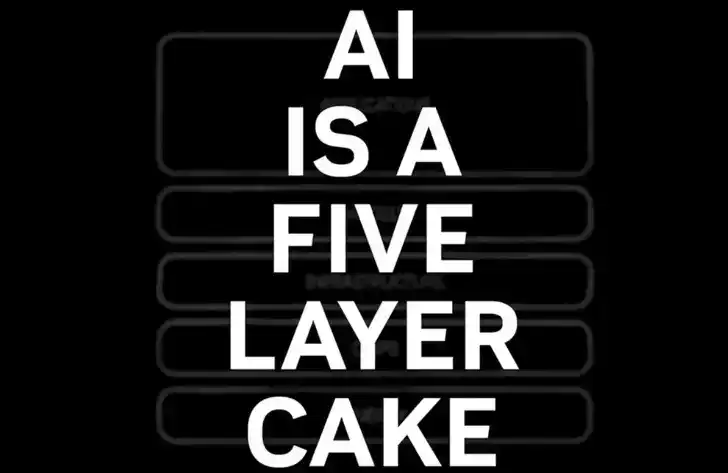
NVIDIA's Jensen Huang Latest Article: The 'Five-Layer Cake' of AI

NVIDIA's Jensen Huang articulates AI not merely as a software application but as a fundamental infrastructure, comparable to electricity or the internet, in a layered "five-layer cake" structure. This stack begins with **Energy** as the foundational constraint, powering real-time intelligence generation. Above it, **Chips** convert energy into computational power efficiently. The **Infrastructure** layer comprises data centers and systems that function as "AI factories." **Models** form the next layer, processing diverse data types like language, biology, and physics. At the top, **Applications**—such as drug discovery, autonomous vehicles, and robotics—create economic value. Huang emphasizes that AI is an industrial-scale transformation, driving massive global infrastructure expansion requiring trillions in investment and a skilled workforce—from electricians to network technicians—beyond just computer scientists. He notes that AI has recently crossed a threshold: models are now reliable enough for widespread use, reducing hallucinations and improving reasoning, which accelerates real-world applications. Open-source models, like DeepSeek-R1, further propel growth across the entire stack. This infrastructure revolution will reshape energy consumption, manufacturing, labor, and economic growth. Every company and country will participate, though the field remains early-stage, with vast opportunities and responsibilities ahead.

marsbit03/10 14:18

NVIDIA's Jensen Huang Latest Article: The 'Five-Layer Cake' of AI

marsbit03/10 14:18

When Nasdaq Starts 'Putting Stocks on the Chain', What Are We Really Welcoming?

Nasdaq is advancing a proposal to move U.S. stock settlement onto the blockchain, which could fundamentally reshape the infrastructure of American capital markets. This shift aims to replace the current slow, manual, and multi-layered clearing system with real-time, automated on-chain settlement. While many discussions focus on surface-level changes like 24/7 trading, the core transformation is structural: moving from outdated T+2 (or even T+1) settlement to instantaneous, programmable, and transparent ledger-based clearing. This isn’t about making stocks “more Web3” but modernizing a financial system that still relies on processes from the 1970s. The existing system—with its custodians, sub-custodians, and clearing intermediaries—creates operational friction, risk, and cost, as seen during events like the GameStop trading halts and the FTX collapse. On-chain settlement could reduce the need for traditional custodial roles, compress arbitrage opportunities built on settlement delays, and turn static securities into dynamic, composable financial instruments. The move faces significant resistance from entrenched intermediaries who profit from the current structure, but the direction of change appears inevitable. As demonstrated by Hong Kong’s recent issuance of a green bond settled in one second (versus five days), tokenization of traditional assets is becoming an operational reality—not a conceptual experiment. When stocks migrate on-chain, other assets like bonds and derivatives may follow, leading to a quiet but profound shift in how global markets function. This isn’t just a change in technology; it’s a change in the nature of finance itself.

cointelegraph_中文12/08 10:33

When Nasdaq Starts 'Putting Stocks on the Chain', What Are We Really Welcoming?

cointelegraph_中文12/08 10:33

活动图片