# Payments Related Articles

HTX News Center provides the latest articles and in-depth analysis on "Payments", covering market trends, project updates, tech developments, and regulatory policies in the crypto industry.

Avalanche Quietly Becomes an RWA Public Chain

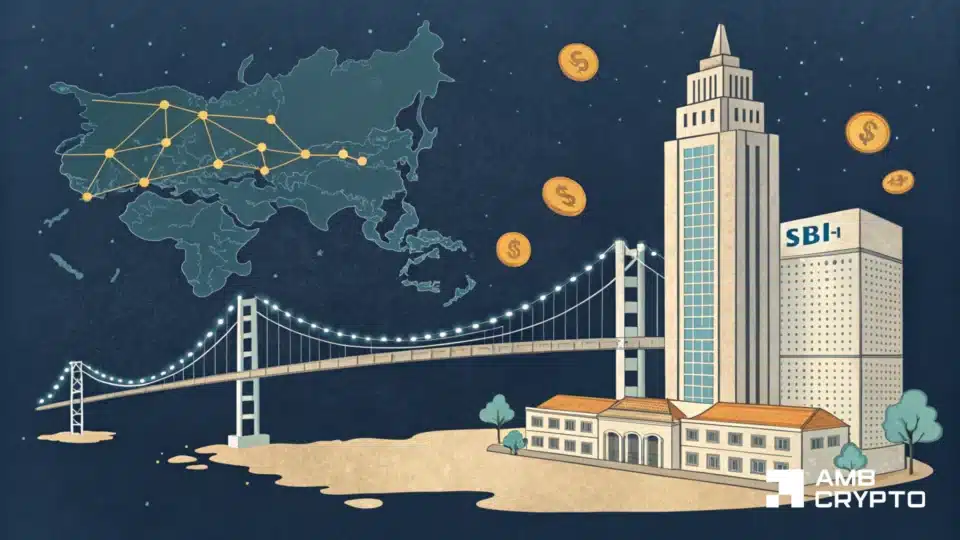
Avalanche has strategically shifted its focus towards becoming a leading blockchain for Real-World Asset (RWA) tokenization and payments, moving beyond its initial gaming-centric reputation. Data from RWA.xyz shows Avalanche ranks third among blockchains when considering networks used for settlement, thanks to its unique subnet architecture (now independent Avalanche L1s following the Avalanche9000 and Granite upgrades). These upgrades drastically reduced operational costs and increased autonomy for validators, making it an attractive, cost-effective EVM-compatible Layer 1 for institutional partners. Major institutions like Securitize (which hosts tokenized versions of funds like BlackRock's BUIDL), Galaxy (issuing a $75M CLO), and FinChain have launched significant RWA projects on Avalanche. Its combination of low transaction costs, fast finality, and high customizability through its L1 stack appeals to traditional finance. This is further evidenced by partnerships with entities like NHN KCP, NEC, Progmat, and the formation of the Avalanche Payments Collective with members including Franklin Templeton and VanEck. Recent proofs-of-concept, such as a cross-border settlement for Hyundai, demonstrate practical utility. While Avalanche's ecosystem and institutional adoption are rapidly expanding, its native token (AVAX) price has not reflected this growth, as the protocol prioritizes network flexibility and adoption over immediate tokenomics adjustments like buybacks.

Foresight News3h ago

Avalanche Quietly Becomes an RWA Public Chain

Foresight News3h ago

Base Abandons Social Direction, Founder Admits Strategic Failure

Base, the Ethereum Layer-2 network often called the "L2 King," has formally ended its three-year "exploration era," with co-founder Jesse Pollak admitting its strategic focus on social applications was a mistake. In a recent statement, Pollak acknowledged that bets on social platforms like Farcaster and Zora, creator coins, and mini-apps failed to drive mainstream crypto adoption, leaving Base behind competitors in areas like perpetual contracts and payment solutions. He confirmed that Base's flagship app will now be managed by Cobie, a community leader, under Coinbase's oversight. Pollak's review highlighted Base's past struggles: leadership overemphasized a "creator economy" with limited real earnings for creators, development often followed trends set by Solana or BNB Chain, and a significant portion of on-chain activity was reportedly inflated. The vision of using social media to onboard billions to crypto clashed with the dominance of established Web2 platforms. Moving forward, Base will pivot to three core areas, as outlined by both Pollak and Coinbase CEO Brian Armstrong: **trading** (including tokenized stocks and memecoins), **payments** (leveraging global stablecoins), and **AI Agent services** (preparing for a machine-driven economy using crypto as native currency). This shift is seen as a return to crypto's fundamental strengths—finance and transactions. The strategic change coincides with personnel shifts at Coinbase, including the departure of executives like the Chief Legal Officer. Notably, Pollak himself has returned to hands-on coding. Furthermore, Coinbase reports that over 95% of its code is now AI-generated or assisted, with AI agents already performing work equivalent to about 1,200 employees—a trend expected to grow significantly, signaling how AI is reshaping the company's own operations as Base prepares to serve a future AI Agent economy.

Odaily星球日报6h ago

Base Abandons Social Direction, Founder Admits Strategic Failure

Odaily星球日报6h ago

Trillion-Dollar Stablecoin Surge Challenges Traditional Payments, US Banking Sector Launches Largest Coordinated Counterattack in History

U.S. banks are launching their largest coordinated effort yet to counter the rise of stablecoins, which now facilitate trillions in annual payments. Major institutions including JPMorgan Chase, Bank of America, and Citigroup, coordinated by The Clearing House (TCH), plan to build an interoperable network for tokenized bank deposits. This move, inspired by the successful collaboration that created Zelle, aims to leverage blockchain for faster, cheaper transfers while keeping funds within the regulated banking system. The initiative responds to the rapid growth of stablecoins like USDT and USDC, whose transaction volume surged 72% to approximately $33 trillion last year. Banks see a direct threat as these digital dollars, usable 24/7 across borders, are increasingly adopted by payment firms and financial institutions. The TCH-led network seeks to connect various bank-led blockchain systems, offering scale, deposit insurance, and interoperability that individual bank platforms lack. The goal is to launch next year, initially targeting wholesale payments and tokenized securities settlement. However, the banking consortium faces significant challenges. The sector is fragmented with multiple competing digital currency projects (e.g., from SWIFT and other bank alliances), and historical collaborations like Zelle took years to materialize. While banks hold advantages in trust and regulatory compliance, their slow decision-making contrasts with the crypto industry's pace. Analysts note that although stablecoin issuers currently dominate, if banks successfully unite and execute, their vast resources and existing customer base could pose a formidable challenge in the digital payments race.

marsbitYesterday 02:02

Trillion-Dollar Stablecoin Surge Challenges Traditional Payments, US Banking Sector Launches Largest Coordinated Counterattack in History

marsbitYesterday 02:02

活动图片