# Multisig Related Articles

HTX News Center provides the latest articles and in-depth analysis on "Multisig", covering market trends, project updates, tech developments, and regulatory policies in the crypto industry.


In-Depth Reconstruction of the $285 Million Drift Hack: How Should DeFi Governance Move Beyond "Amateur Hour"?

On April 1, 2026, Drift Protocol, the largest perpetual futures DEX on Solana, suffered a catastrophic hack resulting in a loss of $285 million. The attack, attributed to a sophisticated social engineering campaign rather than a technical exploit, unfolded over several months. Hackers first infiltrated Drift’s internal circles by posing as a legitimate market maker, building trust over time. They then exploited Solana’s "Durable Nonce" feature to trick core team members into blindly signing transactions that granted administrative control. A critical vulnerability was introduced when Drift migrated to a 2/5 multisig structure without a timelock, allowing instant execution of privileged transactions with just two signatures. The attackers finally triggered the attack by adding a fake token (CVT) to the whitelist, manipulating its oracle price, and using it as collateral to drain the protocol’s treasury. The incident highlights fundamental flaws in DeFi governance, including overreliance on multisig mechanisms that lack intent verification and are vulnerable to social engineering. It underscores the misalignment between retail-grade security tools and institutional-scale treasury management. The hack signals the need for a security paradigm shift in DeFi, including adoption of Hardware Security Modules (HSMs) for key management, intent-based policy engines for transaction validation, and professional third-party custody solutions to ensure institutional-grade safety.

marsbit04/13 12:00

In-Depth Reconstruction of the $285 Million Drift Hack: How Should DeFi Governance Move Beyond "Amateur Hour"?

marsbit04/13 12:00

The Bitcoin Inheritance Challenge: How to Help Your Family Recover Your Assets?

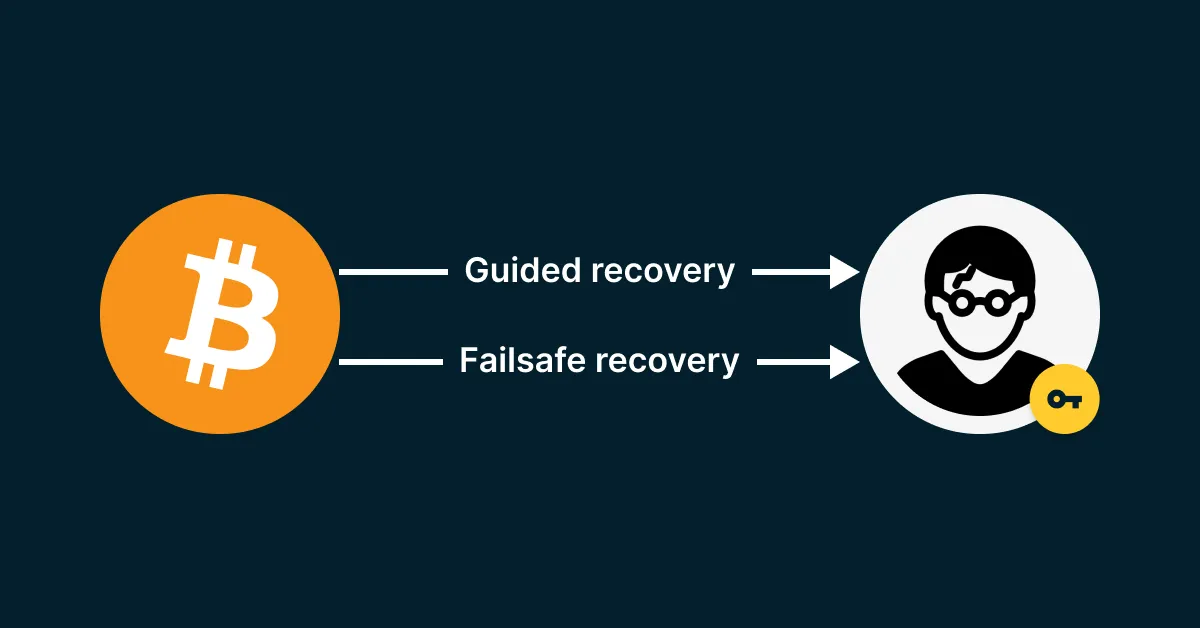
Self-custody of Bitcoin fundamentally changes estate planning. A robust inheritance plan must protect assets during the owner’s lifetime while ensuring designated individuals can recover them after death. Bitcoin’s key advantage—bypassing banks and custodians—also complicates inheritance, as the network only recognizes cryptographic keys, not legal documents. Key challenges include balancing security and accessibility, managing technical complexity for non-expert heirs, preserving privacy, and ensuring long-term viability. Common solutions include: 1. Custodial Inheritance: Relies on exchanges or institutions, sacrificing self-custody benefits for familiar legal processes. 2. DIY Inheritance: Ranges from simple seed-phrase handovers to complex multisig setups. High autonomy but requires technical competence from heirs. 3. Assisted Custody: Uses a service provider for multisig setup and recovery guidance, improving usability but depending on the provider’s longevity. 4. On-Chain Collaborative Inheritance: Combines assisted recovery with on-chain fallbacks (e.g., timelocks), ensuring access even if the provider fails. The strongest plans integrate a smooth, guided recovery path with a durable on-chain backup. Regular testing and updates are crucial. Inheritance isn’t just a technical issue—it must align with legal frameworks and family circumstances. Ultimately, a well-designed Bitcoin inheritance plan ensures assets remain secure, private, and recoverable for generations.

比推03/18 12:38

The Bitcoin Inheritance Challenge: How to Help Your Family Recover Your Assets?

比推03/18 12:38

活动图片