Bitcoin Traders Push Price Back to $64,400 After Fed Decision Calms Markets
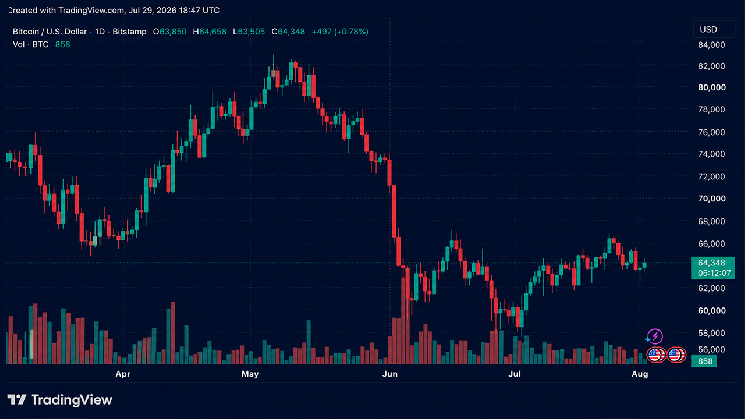
On July 29th, Bitcoin's price fluctuated amid market reactions to an Iranian strike on a U.S. base in Jordan and the Federal Reserve's decision to hold interest rates steady. After trading between $63,500 and $64,000, Bitcoin jumped to $64,500 by 4 a.m. EST. It later consolidated around $64,000 but plunged below $63,700, erasing earlier gains. Following the Fed's widely expected decision to maintain rates, Bitcoin surged back to $64,400 and stabilized near $64,200.
This late rally resulted in just a 1% daily decline, with Bitcoin's market cap reaching $1.29 trillion. Leveraged position liquidations were relatively low, totaling over $38 million for Bitcoin and nearly $322 million across the broader crypto market, with short positions bearing the brunt.
Initial pressure came from renewed Middle East tensions, which spiked oil prices. However, market focus quickly shifted to the Fed's policy meeting. While the immediate decision calmed markets, the committee left the door open for potential rate hikes later in the year. For Bitcoin, this suggests that future price increases will likely depend on internal catalysts like institutional adoption, ETF inflows, or protocol upgrades, rather than favorable broader macroeconomic trends.
cryptonews.ru2h ago