# Farcaster Related Articles

HTX News Center provides the latest articles and in-depth analysis on "Farcaster", covering market trends, project updates, tech developments, and regulatory policies in the crypto industry.

From Fragmented Components to the Super Layer

In recent developments within the decentralized social space, Farcaster and Lens have both undergone significant strategic transitions, highlighting a broader shift toward platformization and operational specialization. Farcaster’s co-founder announced that Neynar, a major infrastructure provider and client, will acquire the protocol. This move reflects a growing consensus that long-term sustainability depends less on protocol-level iteration and more on professionalized infrastructure and execution. Neynar has abstracted away the complexity of running hubs and provides APIs that allow developers to focus on product development rather than protocol mechanics. Similarly, Lens announced that Mask Network will take over as the protocol’s next “steward,” shifting focus from infrastructure to consumer-facing products. Both Lens and Aave emphasized that the transition involves no change in ownership or governance—only a reallocation of responsibility toward productization and user experience. These cases illustrate that as protocols mature into platforms, the key challenge is no longer adding features, but clearly defining roles and optimizing the full operational stack—infrastructure, tooling, and distribution. The trend points toward the emergence of “super layers,” where tightly integrated technical and operational capabilities become essential to compete at scale. The movement signals that Web3 is entering an era of mature ecosystem competition, where independent teams and clear operational division are critical.

marsbit01/27 02:14

From Fragmented Components to the Super Layer

marsbit01/27 02:14

Exclusive Interview with Suji: Taking Over the Hot Potato Lens, Whose Ideal Is Mask Paying For?

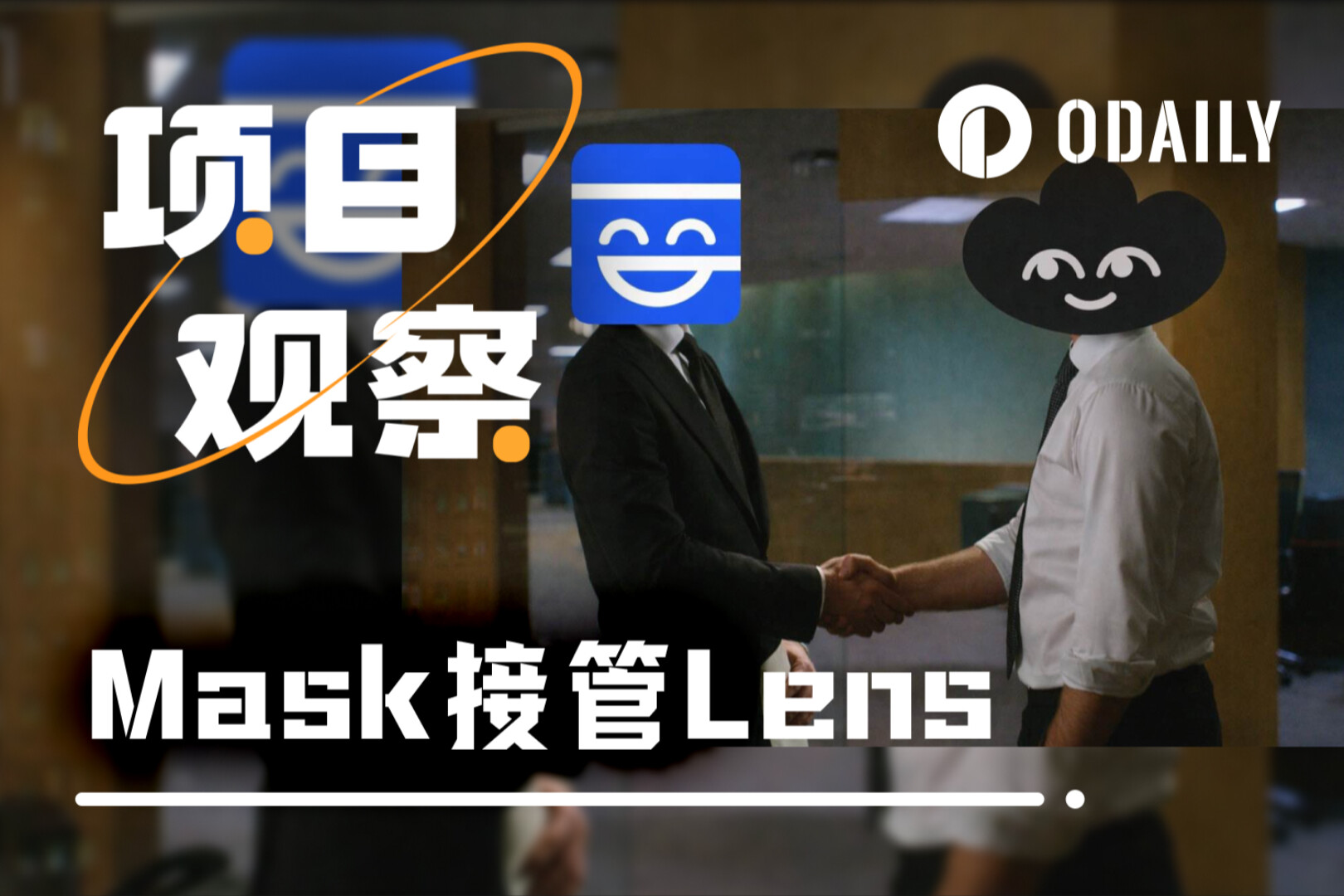
Interview with Suji Yan: Taking Over the "Hot Potato" Lens—Whose Ideal is Mask Network Betting On? On January 20, the decentralized social protocol Lens announced the transfer of its project management to Mask Network, with the original team stepping back as technical advisors. This move sparked significant discussion in the crypto community. While many were not surprised by Stani Kulechov’s decision to hand off Lens—given the declining interest in decentralized social platforms—it raised questions about why Mask would take on what some consider a “mess.” Lens was once a star in the SocialFi space, backed by Aave’s founder, solid technology, and a compelling narrative of user-controlled social networking. However, by 2025, its growth stalled, especially after the launch of Lens Chain without an accompanying token. Mask Network, founded in 2017, aims to bridge Web2 and Web3. Its browser extension allows users to access Web3 services on platforms like X and Facebook. According to Suji Yan, Mask’s founder, the decision to take over Lens was driven by shared vision and trust. Both he and Stani believe that decentralized social platforms should avoid over-monetization and token-centric models, which they see as a core reason for the failure of projects like Friend.tech. Suji criticizes Farcaster for lacking neutrality and being too aligned with Coinbase, while praising Lens for its independence. He emphasizes that “non-neutral social platforms are doomed to fail,” citing Truth Social as an example of a biased platform with limited reach. Under Mask’s management, Lens will integrate with Mask’s existing products like web3.bio, Orb, and Firefly—a social app that deeply integrates with X, allowing cross-posting to Lens, Farcaster, and Bluesky. This aligns with Mask’s goal of building Web3 social on top of Web2, rather than in opposition to it. Suji acknowledges the challenges: without token incentives, attracting users is difficult. However, he believes that focusing on product quality and user experience—not short-term gains—will ultimately succeed. He remains committed to the long-term vision of seamlessly connecting Web2 and Web3 users, despite the uncertainties ahead.

Odaily星球日报01/23 13:19
Exclusive Interview with Suji: Taking Over the Hot Potato Lens, Whose Ideal Is Mask Paying For?

Odaily星球日报01/23 13:19

Web3 Social: Still Dominated by the Chinese

In a span of two days, two major decentralized social protocols, Lens Protocol and Farcaster, changed ownership. Lens was taken over by Mask Network, led by Chinese founder Suji Yan, while Farcaster was acquired by Neynar, one of its clients. Combined, these protocols had raised over $200 million, with Farcaster valued at $1 billion last year. This follows the earlier acquisition of Steem by Tron’s Justin Sun in 2020, meaning two out of three prominent decentralized social protocols are now been taken over by Chinese-led teams. The author suggests that Western founders often approach decentralized social with idealism—emphasizing user-owned data and censorship resistance—while Chinese acquirers tend to view it as a business opportunity. Both Lens and Farcaster have seen declining engagement, making them attractive targets for pragmatic operators focused on usability rather than ideology. However, past acquisitions like Steem—which led to a community fork—highlight the risks of centralized control over “decentralized” protocols. Mask Network has framed its role as “stewardship” rather than outright ownership, but the very idea of a “decentralized” protocol being acquired raises questions about how much these platforms are truly user-governed. Ultimately, the piece questions whether these acquisitions will lead to a more practical and widely adopted social web or simply repeat past conflicts between idealism and commercial reality.

marsbit01/22 04:11

Web3 Social: Still Dominated by the Chinese

marsbit01/22 04:11

Rumor: Coinbase to Acquire Farcaster, Still an Acquihire

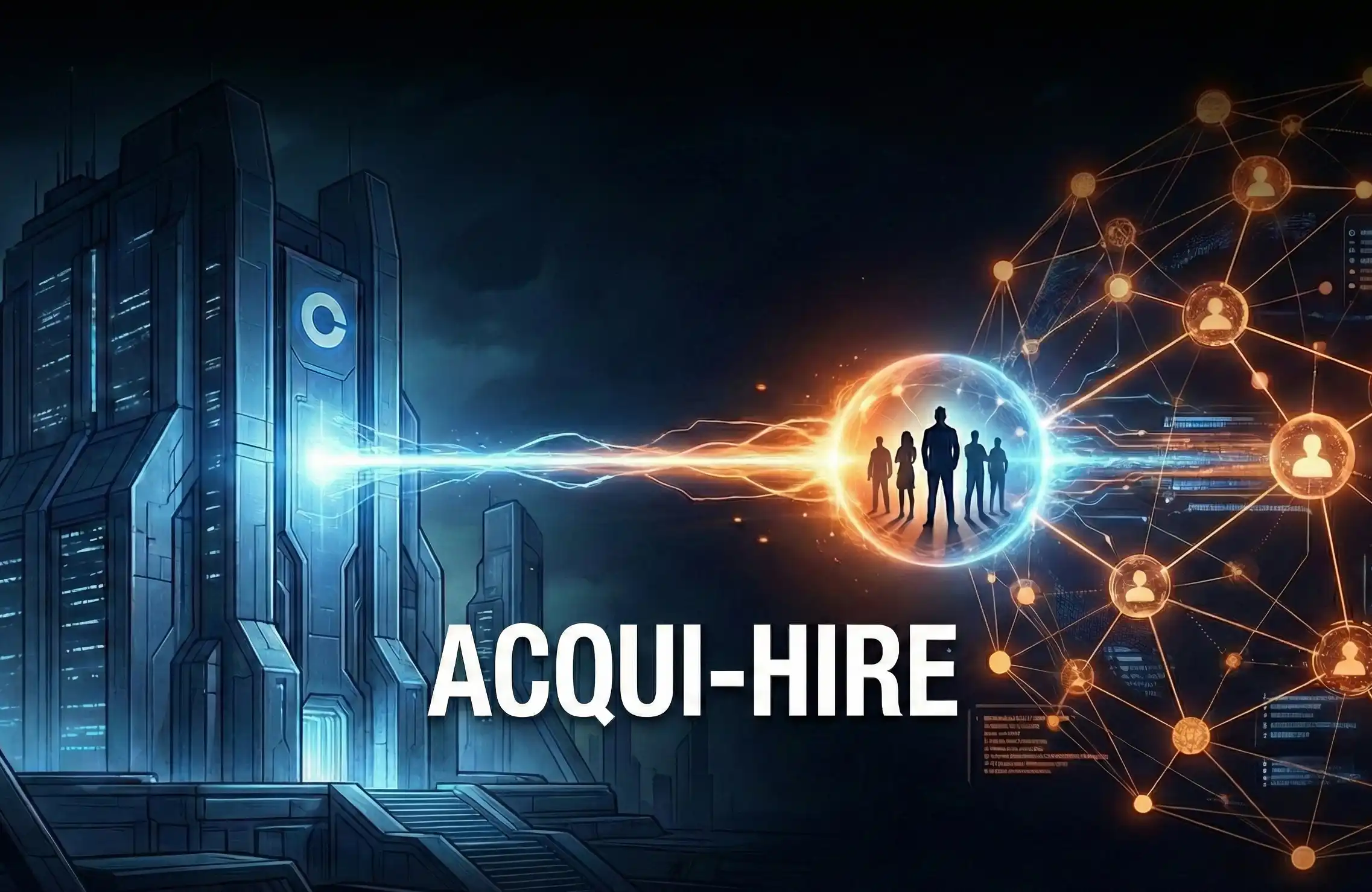
In Silicon Valley, a common unwritten rule suggests that when a tech giant shows sudden interest in a startup—especially one with a similar product—the goal is often not to eliminate competition or acquire technology, but to acquire talent. This practice is known as an "acqui-hire." Recent rumors about Coinbase's potential acquisition of Farcaster likely follow this logic. Similar to Meta's acquisition of Manus, the focus is on the elite engineering team rather than just the product. Coinbase’s Base app already integrates Farcaster content, and Coinbase has no shortage of wallet products, indicating that the real target is Farcaster’s founder, Dan Romero. Dan Romero, who spent five years at Coinbase as a key executive overseeing international operations and backend systems, understands Coinbase’s compliance framework intimately. Since leaving, he has built Farcaster, demonstrating deep expertise in decentralized, community-driven Web3 ecosystems. Farcaster’s team, under Merkle Manufactory, remains small despite significant funding. It includes former Coinbase engineering lead Varun Srinivasan and other full-stack experts who efficiently developed a decentralized social protocol even used frequently by Vitalik Buterin. The acquisition could also create token opportunities: - DEGEN, Farcaster’s community currency, might become a core asset within Coinbase’s ecosystem. - ZORA, key for NFT minting, could strengthen as Base’s primary asset issuance layer. - CLANKER, an AI-driven token issuance tool, may evolve into a standard financial interface. - BANKR, an emerging DeFi project, could play a central role in future "social wallet" integrations.

marsbit01/16 04:02

Rumor: Coinbase to Acquire Farcaster, Still an Acquihire

marsbit01/16 04:02

Farcaster Is Not a Pivot, It's Evolution: The True Ambition from Social to Wallet

Recently, Farcaster co-founder Dan Romero announced a shift in the project’s focus from "social-first" to "wallet-first," sparking widespread discussion. While some interpreted this as Farcaster abandoning social features or even signaling the failure of Web3 social networks, the move is better understood as a strategic evolution rather than a pivot. Farcaster’s integration of a built-in wallet is not a replacement for social functionality but an upgrade to improve user experience. It enables seamless on-chain interactions, especially as Frames evolve into more powerful Mini Apps. This enhancement allows users to mint NFTs, execute trades, and engage with decentralized applications without leaving the app—reducing friction and supporting richer crypto-native experiences. The shift reflects a broader trend: social apps are integrating wallets, and wallet apps are adding social features. This convergence is becoming the natural direction for consumer crypto applications. By combining social graphs with built-in wallets and Mini Apps, Farcaster enables closed-loop scenarios for asset creation, discovery, trading, and community interaction—all within a unified experience. Other platforms like Telegram, Zapper, Base App, and Binance are also exploring similar integrations, highlighting the growing importance of blending social context with financial activity. Farcaster’s open and composable social protocol allows developers to build diverse clients and applications, further expanding its ecosystem. In summary, Farcaster is not moving away from social—it is enhancing it. The integration of wallet functionality aims to drive growth, improve utility, and solidify its unique value proposition in the crypto space.

marsbit12/10 17:21

Farcaster Is Not a Pivot, It's Evolution: The True Ambition from Social to Wallet

marsbit12/10 17:21

SociFi Dream Shattered? Farcaster Pivots to Bet on Wallet Track

Farcaster, a decentralized social network protocol, has announced a major strategic shift after 4.5 years, abandoning its "social-first" approach to adopt a "wallet-first" growth model. Co-founder Dan Romero acknowledged that despite initial success—such as a surge to 100,000 daily active users (DAU) in early 2024 driven by features like Frames and the DEGEN airdrop—user engagement and revenue sharply declined later that year. By October 2025, monthly revenue had dropped 99% from its peak. The platform will now prioritize building a high-quality wallet within its official app, Warpcast, focusing on the intersection of wallets and social interaction. The new user journey emphasizes wallet funding and utility as key activation points. Farcaster is also enhancing its financial infrastructure through the acquisition of token launch platform Clanker and offering incentives like a 10% reward on USDC deposits. Frames, interactive mini-apps within the social feed, enable "content as transaction" capabilities, allowing users to mint, trade, and pay directly in their feeds. Despite raising $150 million in a 2024 Series A round at a $1 billion valuation, the move has drawn criticism. Some argue it signals the end of the SocialFi dream and a return to a transaction-focused model reminiscent of the 2017 ICO era. Others note challenges in a competitive wallet market and potential feature bloat. Farcaster remains an open protocol, and users can choose alternative clients, but the shift underscores a broader industry reality: pure Web3 social networks may struggle without integrating high-value financial tools to drive user engagement and retention.

marsbit12/09 08:52

SociFi Dream Shattered? Farcaster Pivots to Bet on Wallet Track

marsbit12/09 08:52

活动图片