# Executive Order Related Articles

HTX News Center provides the latest articles and in-depth analysis on "Executive Order", covering market trends, project updates, tech developments, and regulatory policies in the crypto industry.

Trump's AI Plan Could Replace 50 State AI Laws With One Set of Rules

The Trump administration is reportedly close to establishing a national framework for regulating artificial intelligence. According to The Information, this initiative aims to replace the patchwork of approximately 50 differing state-level AI laws with a single, federal standard. The core proposal, outlined in the White House's National AI Policy Framework, would centralize AI policymaking in Washington, D.C., offering developers more consistent and transparent rules on issues like child safety, AI-generated deepfakes, and the use of regulatory sandboxes. This move addresses growing concerns that the current fragmented regulatory landscape, with states like Colorado, Texas, and California enacting their own rules, creates a compliance burden for AI companies. A unified federal system is intended to streamline regulations, allowing businesses to spend less time adapting to state laws and more time on innovation. The administration's strategy also includes an executive order signed by President Trump in June 2026, which focuses on enhancing cybersecurity for advanced AI systems. A major unresolved question in the proposal, however, is how to regulate open-source AI models. The framework does not clearly define an approach, despite expert warnings that such models pose unique governance challenges due to their free modification and distribution. While the fate of the legislative proposal in Congress remains uncertain, its existence signals Washington's intent to become the primary authority governing AI technology, a move that would have significant global implications given the dominance of U.S. firms in the AI sector.

cryptonews.ruYesterday 10:01

Trump's AI Plan Could Replace 50 State AI Laws With One Set of Rules

cryptonews.ruYesterday 10:01

Tiger Research: U.S. Strategic Bitcoin Reserve - Should the Market Be Happy or Disappointed?

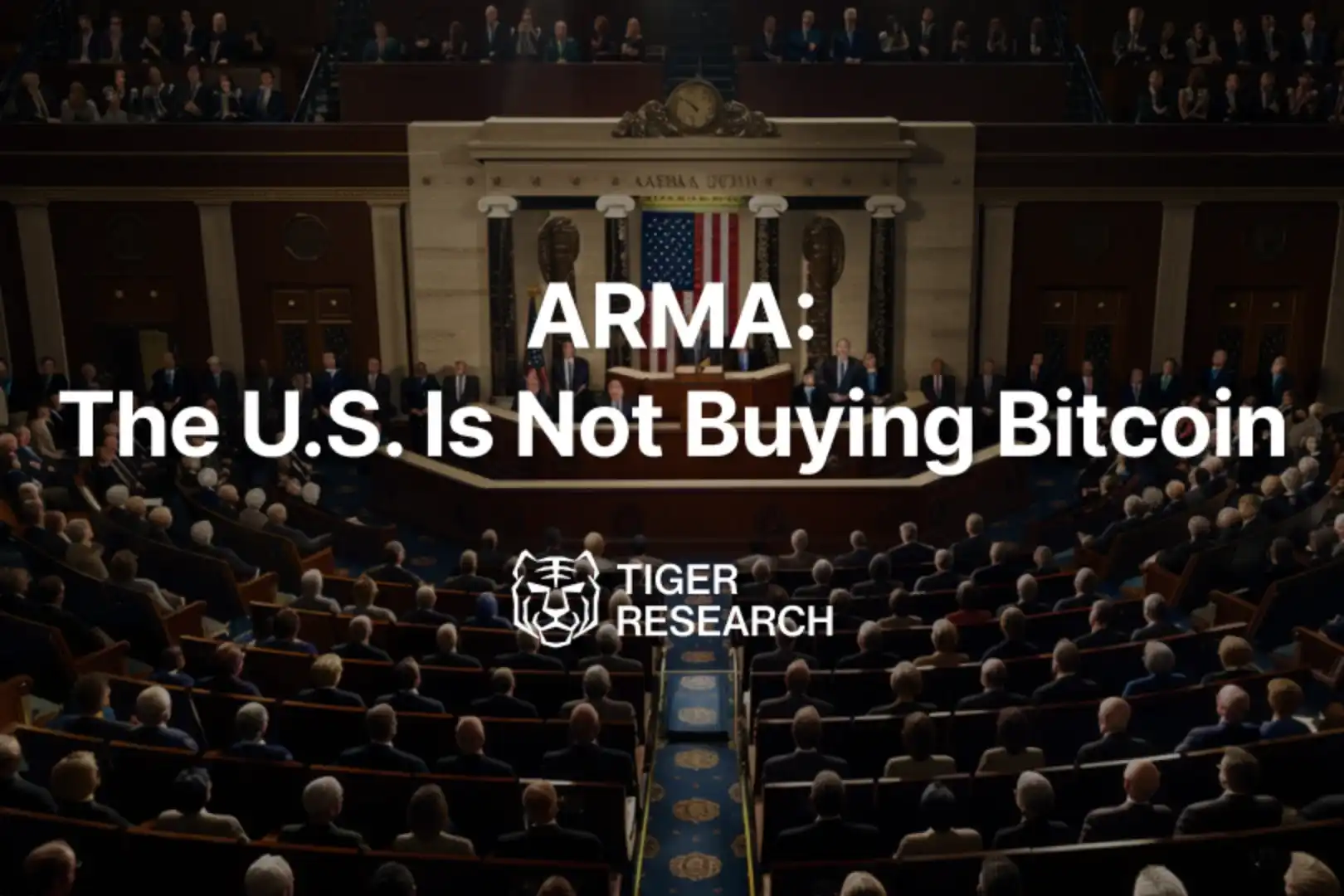
Tiger Research analyzes the evolution of U.S. legislative efforts regarding a strategic Bitcoin reserve, concluding the market impact is limited in the short term but potentially positive long-term. The core event was a March 2025 executive order by former President Trump, which designated confiscated Bitcoin as a strategic reserve and promised not to sell existing holdings (approx. 190k BTC). As it contained no mandate to purchase new Bitcoin, the market reacted negatively, with prices dropping 5.7%. Legislative history shows a significant retreat from initial ambitions. The 2024 "BITCOIN Act" proposed mandatory purchases of 1 million BTC over five years. Reintroduced in 2025, it stalled due to high fiscal costs, concerns over dollar hegemony, and opposition from the Treasury Secretary. The current frontrunner, the 2026 "American Retirement and Monetary Advancement (ARMA) Act," is a compromise. It lacks any purchase requirement, instead focusing on consolidating existing government-held Bitcoin and legally prohibiting its sale for at least 20 years. While ARMA has higher passage odds due to bipartisan support and no purchase mandate, its immediate market effect is neutral. It eliminates potential government selling pressure but creates no new demand. The long-term significance is that formally establishing Bitcoin as a national reserve asset in law could later reignite debates on mandatory purchases. Therefore, the path to a government buyer is longer than initially priced by the market, but the directional narrative remains intact.

marsbit06/16 02:08

Tiger Research: U.S. Strategic Bitcoin Reserve - Should the Market Be Happy or Disappointed?

marsbit06/16 02:08

Trump Halts AI Executive Order, Regulatory Efforts Succumb to Competitive Anxiety

In a last-minute reversal, former President Donald Trump halted the signing of a long-anticipated executive order on artificial intelligence. The order had sought to establish a voluntary, pre-release safety testing framework for advanced AI models developed by leading companies like OpenAI, Google, Anthropic, and xAI. Under the proposed plan, companies would have shared their most powerful models with the U.S. government 90 days before public release for national security and cybersecurity risk assessments. Trump refused to approve the order, stating he did not want anything to "slow down our leadership," emphasizing America's lead over China in AI and the technology's role in job creation. This decision highlights the core tension in U.S. AI policy: balancing the management of systemic risks posed by frontier models—such as exposing financial system vulnerabilities—against fears that any regulation could stifle innovation and undermine competitive advantage. The move came despite significant public support for AI safety testing and followed internal administration debates. Some officials, alarmed by the capabilities of models like Anthropic's Mythos in uncovering critical security flaws, had advocated for stronger oversight. However, the industry and many within Trump's circle opposed even this voluntary framework, arguing it would hamper American innovation. The incident underscores how AI policy is increasingly intersecting with national security, economic strategy, and political governance.

marsbit05/22 05:09

Trump Halts AI Executive Order, Regulatory Efforts Succumb to Competitive Anxiety

marsbit05/22 05:09

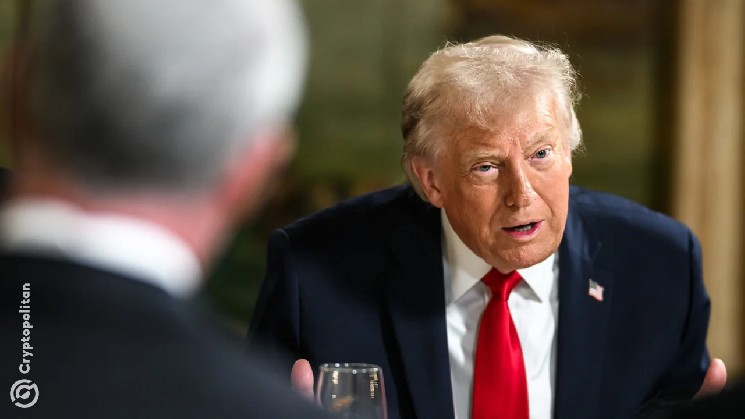
Trump Signs Executive Order, Kraken, Coinbase and Others May Gain Access to Fed Payment Channels

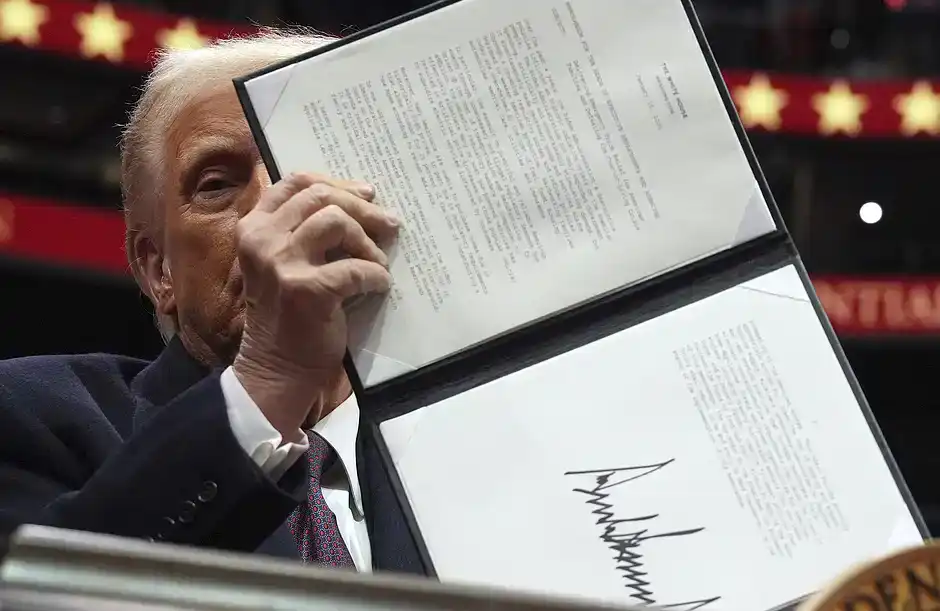
President Trump has signed an executive order, "Incorporating Financial Technology Innovation into the Regulatory Framework," pressuring the Federal Reserve to reassess its rules on granting non-bank financial companies—including crypto and fintech firms—access to its payment systems, specifically master accounts that connect to the Fedwire settlement system. Currently, such accounts are primarily reserved for depository institutions. The order mandates a review to determine if broader access is permissible and to establish an application process. This move, supported by figures like Senator Cynthia Lummis, aims to reduce barriers to innovation and lower public payment costs by fostering fairer competition. It does not grant immediate access but could pave the way for companies like Kraken, Coinbase, Ripple, and Circle to reduce reliance on intermediary banks, lowering costs and speeding up settlements. A key precedent is the Kansas City Fed granting Kraken's parent company a restricted master account in March, offering limited payment services without interest or credit privileges. This model is seen as a potential template for allowing controlled access while mitigating systemic risk. Other firms like Anchorage, Paxos, and BitGo, which hold specialized banking charters, are also well-positioned to apply. The banking industry, represented by the American Bankers Association, opposes easing access, arguing any institution handling bank-like payments must meet the same stringent regulatory, consumer protection, and risk-management standards as traditional banks. Their core concerns include potential systemic risks, compliance gaps in areas like anti-money laundering, and the diversion of liquidity from the traditional banking system. The outcome of the Fed's review will be crucial in determining whether and how crypto and fintech firms can integrate more directly into the core U.S. financial infrastructure, balancing innovation with financial stability.

marsbit05/21 05:57
Trump Signs Executive Order, Kraken, Coinbase and Others May Gain Access to Fed Payment Channels

marsbit05/21 05:57

Ripple’s Fed Master Account Bid Gains Momentum After Trump Order

President Donald Trump has signed an executive order directing financial regulators and the Federal Reserve to review expanding fintech and crypto firms' access to core payment infrastructure. This order significantly advances the industry's push for direct Fed connectivity, a central issue for Ripple. The company has been seeking a Federal Reserve master account as part of its strategy for its RLUSD stablecoin, which would allow it to hold reserves directly with the central bank and access its payment rails. The order, titled "Integrating Financial Technology Innovation into Regulatory Frameworks," mandates a Fed review within 120 days on allowing access for entities like uninsured depository institutions and non-bank financial companies, including those in digital assets. This creates a formal policy timeline for resolving whether crypto payment firms must rely on traditional bank intermediaries. Ripple's application for a national bank charter and a master account is part of this broader landscape. The issue gained precedent when Kraken Financial received a limited-purpose master account, while Custodia Bank's application was denied after a legal battle. The Fed has also proposed a more restricted "payment account" option. Trump's order does not guarantee approval for Ripple but forces a high-level examination of the regulatory barriers, bringing the company's long-running effort to the forefront of Washington's financial policy agenda.

bitcoinist05/21 05:01

Ripple’s Fed Master Account Bid Gains Momentum After Trump Order

bitcoinist05/21 05:01

活动图片