# E-commerce Related Articles

HTX News Center provides the latest articles and in-depth analysis on "E-commerce", covering market trends, project updates, tech developments, and regulatory policies in the crypto industry.

Video Edition Nano Banana Arrives: Built-in Gemini World Knowledge, Original Banana Generates Images in Just 4 Seconds

Google has unveiled two new multimodal AI models: Gemini Omni Flash and Nano Banana 2 Lite. Gemini Omni Flash is a video generation and editing model that leverages Gemini's world knowledge. It allows for conversational video editing using natural language prompts, maintains scene consistency, and integrates text/graphics with video actions. Priced at $0.10 per second of output, its current limitations include a 10-second video cap. Nano Banana 2 Lite (gemini-3.1-flash-lite-image) is an optimized image generation model focused on speed and cost. It produces a 1K resolution image in about 4 seconds at a cost of roughly $0.034, making it significantly faster and cheaper than its predecessor. It retains strong text rendering capabilities. A key highlight is the combined workflow: users can rapidly generate images with Nano Banana 2 Lite and then seamlessly feed them into Gemini Omni Flash to create videos. Google demonstrated this with three application demos: "Anywhere" for creating travel videos from photos, "Space Lift" for generating interior design walkthroughs, and "Omni Product Studio" for automating e-commerce ad creation from product photos. The release underscores Google's strategic focus on advancing multimodal AI for practical, commercial applications in areas like marketing, design, and content creation, despite competitive pressures in other AI domains.

marsbit07/01 01:54

Video Edition Nano Banana Arrives: Built-in Gemini World Knowledge, Original Banana Generates Images in Just 4 Seconds

marsbit07/01 01:54

Two Giants' Credit Expansion: Loan Balances of $9.9 Billion vs. $14.6 Billion, Brazil Emerges as the Main Battlefield

Title: Two Giants "Credit" Surge: Loan Balances of 99 Billion vs. 146 Billion USD, Brazil Emerges as Main Battlefield Summary: The article compares the rapid expansion of credit businesses by two major e-commerce and fintech players, Sea (via Monee) and Mercado Libre (via Mercado Pago), in overseas markets like Southeast Asia and Latin America, contrasting with a slowing domestic Chinese credit market. Using Q1 2026 financial data, it highlights their significant growth. Sea's Monee reached a loan balance of $99 billion, up 71% year-over-year (YoY), contributing 17.5% to Sea's total revenue. Mercado Pago's loan balance hit $146 billion, up 87% YoY, contributing 45% to its parent company's revenue. Both maintained stable risk metrics (e.g., Monee's 90+ day NPL at 1.1%) despite rapid scaling. Brazil is identified as a key and accelerating growth market for both. Sea's Brazilian operations saw loan volumes exceed $10 billion, growing 250% YoY, with SPayLater GMV penetration still low (~10%) indicating high potential. Sea also secured a key Brazilian financial credit license (SCFI). Mercado Libre's Brazil segment contributed over half (54%) of total group revenue, with its credit business there generating $11.24 billion in revenue, up 89% YoY and accounting for 12.7% of global revenue. Mercado Pago's credit portfolio, especially credit cards (46% of loans, +105% YoY), is a strategic focus, described as crucial as building logistics was a decade ago. Its net interest margin after loss (NIMAL) remains high at 17.8%. The article concludes that while Brazil presents immense opportunities, the success is largely driven by these integrated "e-commerce + fintech" giants with proprietary transaction data and ecosystems, making it challenging for standalone fintech players to compete effectively.

链捕手06/22 13:16
Two Giants' Credit Expansion: Loan Balances of $9.9 Billion vs. $14.6 Billion, Brazil Emerges as the Main Battlefield

链捕手06/22 13:16

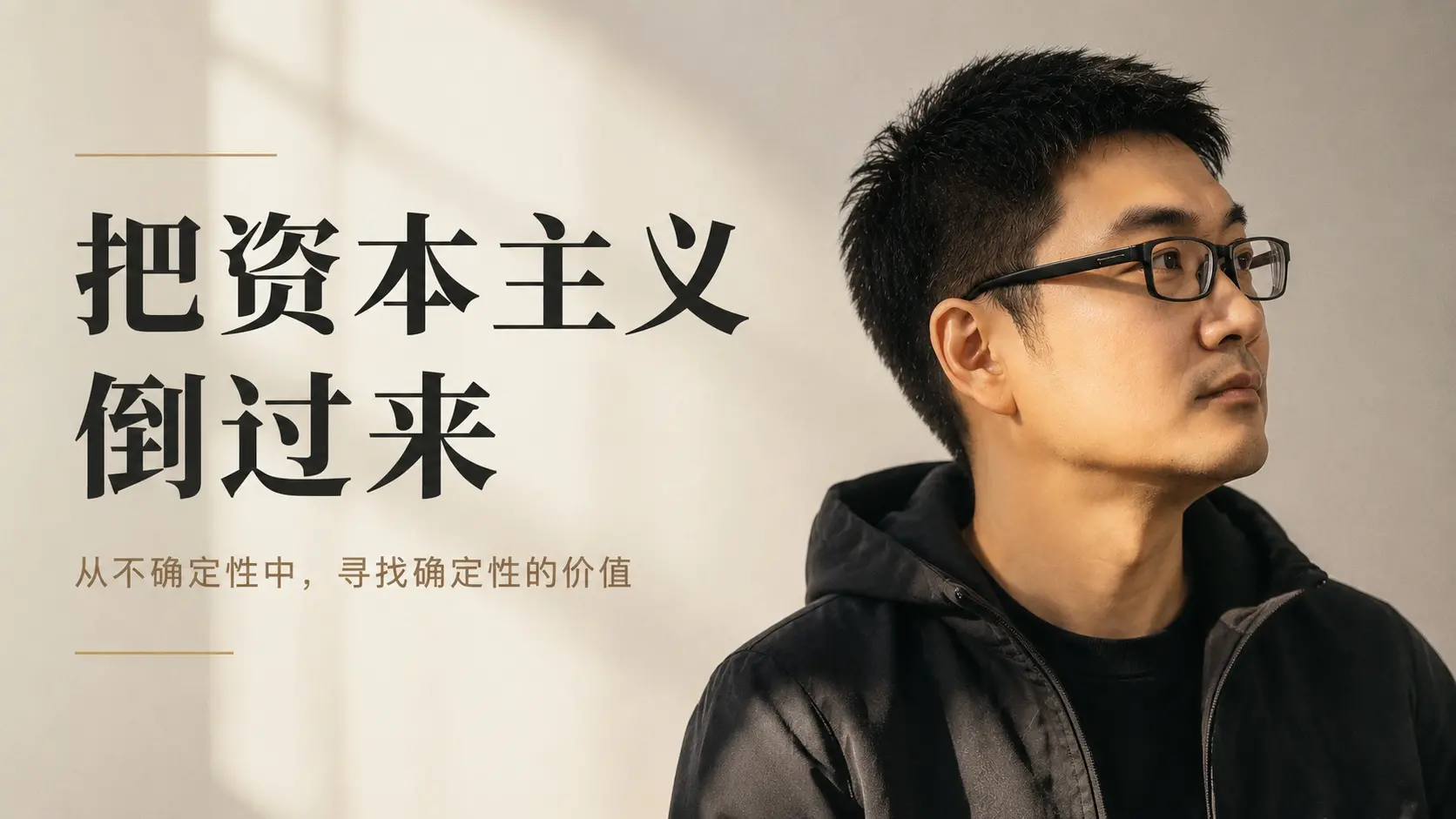
What's the Connection Between Pinduoduo's Huang Zheng and Blockchain?

This text explores the unexpected connection between Pinduoduo founder Colin Huang and blockchain, as suggested in his article *Turning Capitalism Upside Down*. Huang argues Pinduoduo's core business is about managing "uncertainty." He posits that wealth flows to the rich because they absorb life's uncertainties (e.g., illness, job loss) that devastate the poor, who pay a premium for certainty through insurance or stable prices. Pinduoduo's model attempts a "reverse insurance": by aggregating consumer demand via group-buying and flash sales, it creates a large, predictable order for manufacturers. This certainty allows factories to remove risk premiums, passing savings back as lower prices, thus partially reversing the wealth flow. The key obstacle, Huang notes, is that an individual's buying intent is an unreliable promise. He then asks if blockchain is the natural solution for this "reverse insurance." The text elaborates that blockchain, through smart contracts with binding deposits, could transform casual intent into a costly-to-break, enforceable commitment. This replaces interpersonal trust with coded rules, making promises credible, pricable, and resistant to fraud. Finally, the author draws a parallel to Bitcoin, framing two paths to creating certainty: the "Pinduoduo path" of aggregating decentralized will into scale, and the "Bitcoin path" of locking rules into immutable code. Both sacrifice something—personal freedom or system flexibility—to manufacture trust and predictability.

链捕手06/15 00:08

What's the Connection Between Pinduoduo's Huang Zheng and Blockchain?

链捕手06/15 00:08

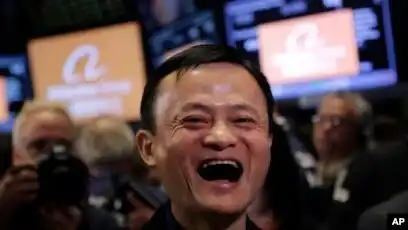
SpaceX's Blazingly Hot IPO Breaks Records; The Previous Record Holder Was a Chinese Company

SpaceX's upcoming IPO has ignited a feverish market response, poised to break records as the largest in US and global history with a targeted valuation of $1.77 trillion and fundraising of $75 billion. Elon Musk's assertive stance, rewriting IPO rules by allocating 30% of new shares to retail investors—far exceeding the typical 5-10%—and slashing underwriting fees below 0.75%, has fueled the frenzy. This event surpasses the previous US IPO fundraising record set by Chinese e-commerce giant Alibaba in 2014. Alibaba's landmark 2014 NYSE listing raised over $25 billion, crowning it the world's fourth-largest tech company. It symbolized China's rising consumer class and digital economy, ushering in a golden era for US-listed Chinese tech firms and even prompting Hong Kong's exchange to reform its listing rules. However, Alibaba's fortunes shifted post-2020 peak. It faced a record antitrust fine for "choosing one from two" practices, internal cultural crises, and strategic missteps. A focus on premium consumption eroded its core e-commerce market share to around 30%, while costly expansions into new retail and media incurred massive losses. In late 2023, its market value was overtaken by PDD (Pinduoduo). Now, Alibaba is pivoting to AI as a new growth engine. Its Tongyi Qianwen model boasts high user engagement, and Alibaba Cloud remains China's leading public cloud provider, with AI-related revenue growing significantly. The company is integrating AI across its ecosystem. Yet challenges persist, including strong competition from ByteDance's Doubao model, talent retention issues, and an unclear strategic focus between consumer and enterprise AI. Alibaba's journey—from its record-setting IPO peak, through periods of regulatory scrutiny and strategic overreach, to its current AI-driven recalibration—highlights the cyclical fate of tech giants and underscores the critical role of core technological innovation in navigating industry shifts.

marsbit06/09 00:44

SpaceX's Blazingly Hot IPO Breaks Records; The Previous Record Holder Was a Chinese Company

marsbit06/09 00:44

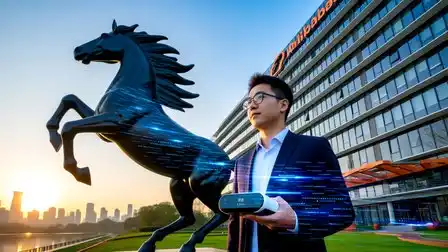
The Creator of Kling Returns to Alibaba and Builds Another Dark Horse

The article discusses the rise of HappyHorse-1.0, an AI video generation model developed by Alibaba, which topped the Artificial Analysis leaderboard in both text-to-video and image-to-video categories in April 2026. The model was created under the leadership of Zhang Di, who returned to Alibaba in November 2025 after working at Kuaishou, where he led the development of the Kling model. HappyHorse is open-source and commercially available, similar to Alibaba's Qwen model. Zhang Di's background includes extensive experience in large-scale data systems and machine learning at Alibaba and Kuaishou, which contributed to the rapid development of HappyHorse within just five months. The model uses a 15-billion-parameter transformer architecture with native multimodal training, supporting multiple languages and lip-sync capabilities. It also focuses on reducing inference time and cost, making it practical for commercial use. The primary application of HappyHorse is in e-commerce, where it can generate product videos to enhance user engagement and conversion rates by creating contextual and personalized content. This aligns with Alibaba's strengths in commerce, advertising, and data feedback loops. The model's success with open-source approach contrasts with challenges faced by closed-source models like OpenAI's Sora (shut down due to high costs) and ByteDance's Seedance 2.0 (paused over copyright issues). HappyHorse represents a strategic move for Alibaba to integrate AI video generation into its core business ecosystems.

marsbit04/13 05:10

The Creator of Kling Returns to Alibaba and Builds Another Dark Horse

marsbit04/13 05:10

Edge AI Daily Morning Report (April 12)

Edge AI Daily Brief (April 12) **Silicon Valley Front:** CoreWeave expanded partnerships with Meta and Anthropic, reflecting surging AI compute demand. Major cloud providers in China raised prices by 5%-30% due to soaring GPU costs and a 1000x increase in daily token usage since 2024. Anthropic, with annualized revenue exceeding $30B, is exploring in-house chip development to address shortages and signed a 3.5GW TPU deal with Google and Broadcom. The U.S. MATCH Act tightened semiconductor export controls, lowering technology thresholds and threatening global supply chains. ASML and Tokyo Electron saw stock declines. OpenAI addressed a third-party Axios library security issue, requiring macOS app updates. Microsoft restructured Windows Insider channels to simplify testing. Meta, Amazon, and Google invested in small modular nuclear reactors (SMRs) to power energy-intensive AI data centers. Mozilla criticized Microsoft for forcing Copilot integration in Windows 11, highlighting broader concerns about user choice and DMA compliance. Microsoft paused new carbon credit purchases due to quality concerns. **Domestic Progress:** MUJI’s Q2 revenue grew 14.8%, while Amazon launched a global smart hub in Shenzhen to streamline cross-border logistics for Chinese sellers, cutting delivery times by up to 7 days. **Open Source Trends:** Meta AI and KAIST proposed "Neural Computers" (NCs), merging computation and memory into learning runtime states. Agent AI is shifting from prediction to world-state modeling, driving edge infrastructure redesign. Quantum computing demonstrated exponential advantages in classical data processing, using under 60 logical qubits to outperform classical machines. France began migrating government systems to Linux to enhance digital sovereignty and reduce U.S. tech reliance. (Source: Edge AI Daily, Guangjiao Guancha)

marsbit04/12 00:52

Edge AI Daily Morning Report (April 12)

marsbit04/12 00:52

The Payment Empire PayPal Might Be Bought Out

The once-dominant global payment giant PayPal is reportedly facing a potential acquisition, as its market value plummeted from a pandemic peak of $363 billion to a recent low of $38 billion—a nearly 90% drop over five years. Despite its pioneering role in enabling cross-border e-commerce, particularly for Chinese exporters in the mid-2000s, PayPal has struggled to keep pace with newer, more agile competitors like Stripe, Apple Pay, and various neobanks. Recent financial performance has been weak, with active user growth slowing to just 1% and transaction volume declining. The abrupt departure of its CEO and appointment of a new leader from HP—known for cost-cutting rather than product innovation—has fueled market skepticism. Critics, including former executive David Marcus, argue that PayPal lost its "mojo" by shifting from a product-driven to a finance-oriented culture, sacrificing long-term vision for short-term financial optimization. While subsidiary Venmo shows strong revenue growth and has become a verb among U.S. millennials, it faces challenges: user growth is stagnant, it remains confined to the U.S., and it lacks deeper integration like Stripe or the hardware-level ease of Apple Pay. PayPal’s bets on stablecoins (PYUSD) and AI-driven agentic payments are still unproven in highly competitive fields. Despite valuable assets—including Braintree’s infrastructure, a leading BNPL service, and 400 million active accounts—PayPal’s future as an independent company is uncertain. Market confidence now seems higher in a potential acquisition than in its standalone prospects, marking a dramatic fall for a former fintech disruptor.

marsbit02/24 11:44

The Payment Empire PayPal Might Be Bought Out

marsbit02/24 11:44

活动图片