# DePIN Related Articles

HTX News Center provides the latest articles and in-depth analysis on "DePIN", covering market trends, project updates, tech developments, and regulatory policies in the crypto industry.

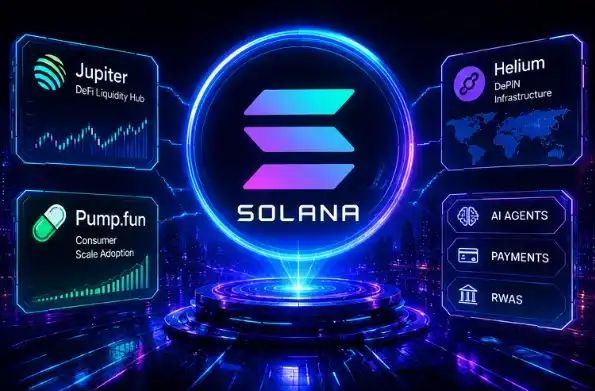
Eight Years of Turbulence in Web3 Phones: From 'Geek Toy' to Xiaomi's 'Factory Standard'

Web3 Smartphones: An 8-Year Evolution from 'Geek Toy' to Xiaomi's 'Standard Feature' On December 10th, high-performance blockchain Sei announced a partnership with Xiaomi, the world's third-largest smartphone manufacturer. The Sei Foundation will develop a next-gen crypto wallet and DApp discovery platform, which will be pre-installed on Xiaomi's new smartphones for global markets (excluding mainland China and the US). Utilizing MPC technology, the collaboration aims to allow users to log in directly via Google or Xiaomi accounts, eliminating intimidating seed phrases. A pilot stablecoin payment system is also slated for 2026, enabling purchases at Xiaomi's retail stores with tokens like USDC. The journey of Web3 phones began around 2018 with devices like Sirin Labs' Finney and HTC's Exodus 1, which focused on "hardware sovereignty" and extreme security, often featuring physical safeguards or trusted execution environments (TEE). These early attempts, including niche projects like Pundi X's communication-focused BOB phone and Electroneum's low-cost "cloud mining" M1, were commercially unsuccessful due to high costs and poor user experience, remaining confined to tech enthusiasts. Mainstream manufacturers like Samsung cautiously entered the space around 2019, integrating features like the Samsung Blockchain Keystore into flagship models. A notable early example was the "KlaytnPhone" edition of the Galaxy Note 10, which included free KLAY, prefiguring the later "airdrop" model. Luxury brand Vertu and HTC also made attempts, but Web3 functions often remained hidden or mere marketing gimmicks. The market was revitalized in 2023 by the Solana Saga. Initially struggling, it sold out instantly after its included BONK token airdrop exceeded the phone's price, earning it the nickname "dividend phone." This success ushered in a new era of "ecosystem binding" and token incentives. Subsequent models like Solana Chapter 2 (Seeker) refined this model with soul-bound tokens (SBT) to prevent scalping. Competition intensified with the TON ecosystem's $99 Universal Basic Smartphone (UBS), Binance Labs' Coral Phone, and the JamboPhone—a $99 device focused on "learn-to-earn" models in emerging markets. An alternative approach emerged from China Telecom and Conflux's BSIM card, which adds Web3 capabilities to any Android phone via a secure SIM card. The evolution highlights five key shifts: 1) Advanced security is moving from simple TEE to architectures like TEEPIN and MPC; 2) Phones are now gateways to specific ecosystems (e.g., Solana, Aptos, Movement Labs); 3) User growth is driven by airdrops and economic incentives, not just security; 4) The focus has shifted from technical concepts (running a full node) to practical applications like payments; 5) The scale is changing dramatically, as Xiaomi's massive annual shipments could onboard hundreds of millions of users, far surpassing niche manufacturers. The conclusion is clear: the greatest barrier to Web3 adoption is not security but complex user experience. The ultimate goal is for Web3 to become an invisible, seamless feature—like 5G—rather than a marketed label. Solana Mobile proved incentive-driven adoption works, but the partnership between Sei and Xiaomi may demonstrate that experience-driven integration is the sustainable path to bringing Web3 to a billion users.

marsbit21h ago

Eight Years of Turbulence in Web3 Phones: From 'Geek Toy' to Xiaomi's 'Factory Standard'

marsbit21h ago

x402 V2 Launch: When AI Agents Get "Credit Cards," Which Projects Will Be Revalued?

x402 V2 Launch: AI Agents Gain "Credit Cards" – Which Projects Will Be Revalued? Coinbase’s x402 protocol has released its V2 upgrade, shifting from a single-chain payment tool for AI agents to a multi-chain, credit-enabled infrastructure. While V1 allowed AI to make on-chain payments via API calls, it was inefficient and costly due to per-transaction gas fees. V2 introduces three major enhancements: 1. **Delayed Payments**: AI agents can now use services first and pay later, enabling session-based or subscription billing. This effectively gives AI "credit," reducing friction and enabling high-frequency transactions. 2. **Multi-Chain Support**: The protocol is no longer limited to Base chain, allowing AI to transact across Ethereum, Solana, and other networks. 3. **Hybrid Payment Rails**: Supports both crypto (e.g., USDC) and fiat payments, bridging Web3 and traditional finance. This upgrade positions x402 as a foundational layer for the "machine economy," potentially revaluing projects in: - **AI Credit & Identity**: Protocols like Spectral (credit scoring), Bond Credit (agent lending), and CARV (decentralized identity) may see demand as AI requires trust and verification for deferred payments. - **Compute & Verification**: DePIN projects (e.g., Akash Network for decentralized compute) and ZKML protocols (e.g., Giza for verifiable AI inference) could benefit from seamless, high-frequency payment channels. - **Agent Execution Platforms**: Projects like Virtuals Protocol (AI agent issuance) and Brahma (on-chain execution) may leverage x402 for cross-chain agent operations and automated DeFi strategies. The update signals a shift from investing in "smarter" AI models to financing AI economies—where credit, identity, and execution layers become critical. Early-stage infrastructure projects in these areas could capture value as AI agents evolve into independent economic entities.

深潮11m ago

x402 V2 Launch: When AI Agents Get "Credit Cards," Which Projects Will Be Revalued?

深潮11m ago

活动图片