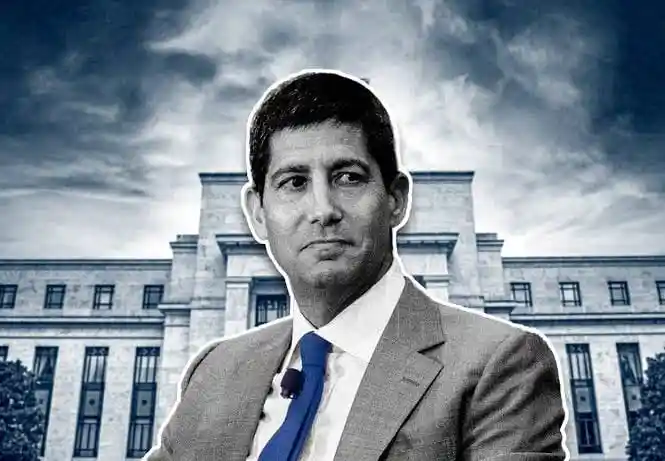
Losing the "Anchor": Walsh's Minimalist Communication is Forcing the Market to Price Itself
Losing the "Anchor": Walsh's Minimalist Communication Forces Markets to Self-Price
The probability of a rate hike priced into the market ahead of the Thursday meeting is unusually high at 40%. This stems from the new framework under Chairman Walsh, characterized by "data dependence and low communication." Since taking office, Walsh has implemented reforms: drastically shortening statements, removing traditional forward guidance, and emphasizing that statements only provide facts. He has also established working groups to review practices and strongly reiterated a commitment to price stability amid prolonged high inflation.
Walsh does not submit a personal dot-plot forecast, urging markets to price based on their own data interpretation rather than reflecting Fed signals. This has removed the traditional "anchor," forcing markets to independently price in the possibility of sudden action in a truly data-driven environment. Consequently, short-term rate volatility and tail risk premiums have increased, as markets pay for protection against a potential sudden hike to reinforce anti-inflation credibility.
Specific catalysts supporting this uncertainty include: 1) Iran-related tensions and volatile energy prices raising inflation tail risks, and 2) The new chairman's potential need to establish his anti-inflation credibility with an early, decisive move.
In essence, the 40% hike probability reflects the market pricing protection for tail risks under Walsh's new low-guidance framework, compounded by geopolitical and data uncertainties, rather than treating a hike as the base case. The outcome will signal how this new communication paradigm shapes market adaptation. If rates are held steady, focus will shift to September. An unexpected hike would reinforce the "data and credibility first" narrative, prompting a repricing for higher-for-longer rates and tighter financial conditions.
marsbit14h ago