# Commodity Related Articles

HTX News Center provides the latest articles and in-depth analysis on "Commodity", covering market trends, project updates, tech developments, and regulatory policies in the crypto industry.

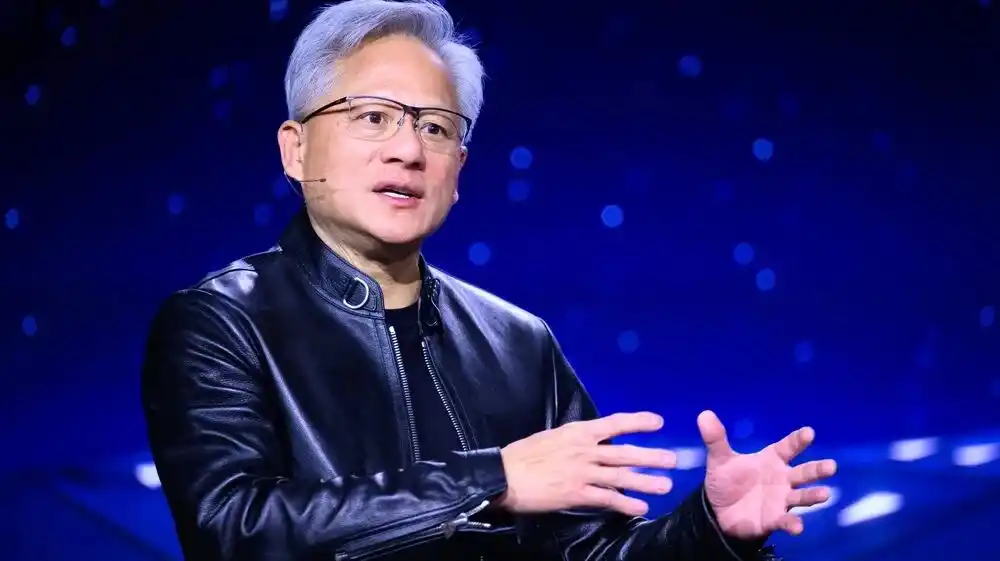
Jensen Huang is Satoshi Nakamoto

Summary: The article draws a compelling parallel between Jensen Huang, CEO of NVIDIA, and Satoshi Nakamoto, the pseudonymous creator of Bitcoin. It argues that both figures, though operating in different eras, fundamentally architected new "token economies" based on a core conversion rule: inputting computational power (electricity) to output a valuable token. Nakamoto's 2008 whitepaper defined a system where Proof-of-Work mining produces scarce cryptographic tokens, creating a decentralized "faith economy" based on speculative value. In 2026, Huang is portrayed as performing a structurally identical act at GTC. Instead of merely selling GPUs, he presented a complete "token economics" framework, segmenting the market into tiers (Free, Medium, High, Premium, Ultra) based on inference speed, model type, and price per million tokens. He defined valuable computation for the AI age. The key distinction lies in the tokens' purpose and resulting scarcity. Crypto tokens derive value from artificial, code-enforced scarcity (e.g., Bitcoin's 21 million cap) and are meant to be held. AI tokens derive value from their immediate consumption for productive tasks (coding, decision-making) and face a natural, physical scarcity governed by the laws of thermodynamics, land, and power grids, which Huang's hardware is designed to maximize. Ultimately, while Nakamoto created a speculative asset, Huang is building an indispensable utility. The AI token economy, powered by NVIDIA ecosystem, is argued to be more resilient and fundamental, as the author concludes, "You don't need to believe the token has value—your credit card bill has already proven it." Huang is presented as the visible, commercial architect of a tangible token future, the successor to Satoshi's anonymous, ideological blueprint.

marsbit03/19 01:31

Jensen Huang is Satoshi Nakamoto

marsbit03/19 01:31

Why I Am Not Bullish on Ethereum at Its Current State?

Why I'm Not Bullish on Ethereum at Current Prices The author expresses skepticism about Ethereum's current valuation, not its long-term business growth potential (user base and transaction volume are expected to increase). The author believes the price is too high relative to its fundamentals, based on the following analysis: - Active users and transaction counts have reached new highs but are growing slower than some leading e-commerce platforms. - Monthly transaction fees are only 0.6% of the previous cycle's peak, and average fees per transaction are 0.5% of previous highs. This slow growth comes at the cost of drastically reduced service prices, which is unfavorable in any industry. - If Ethereum is viewed as a company selling block space, its price-to-fee (PF) ratio exceeds 2,000x and its price-to-sales (PS) ratio exceeds 10,000x. It has negative net profit, so no P/E ratio exists. In comparison, traditional cloud service companies have P/E ratios of 20-30 and single-digit PS ratios. - If considered a commodity (like digital oil), Ethereum faces competition from other chains and rollups offering similar services. Its value proposition may not justify such a high premium, especially as its narrative as a store of value (like Bitcoin) has faded. - There is a lack of new, product-market-fit crypto native applications this cycle, leading to oversupply of block space and stagnant growth in the public chain sector. - Grand visions of Ethereum becoming a decentralized "Wall Street on-chain" lack supporting data and factual evidence. The author advocates for investment based on rationality, not belief or hype, and suggests waiting for concrete data before buying into this narrative.

marsbit01/19 09:08

Why I Am Not Bullish on Ethereum at Its Current State?

marsbit01/19 09:08

活动图片