# Commercialization Related Articles

HTX News Center provides the latest articles and in-depth analysis on "Commercialization", covering market trends, project updates, tech developments, and regulatory policies in the crypto industry.

AI is Turning Nuclear Power from a 'National Project' into a Replicable Commercial Product

Artificial intelligence is transforming nuclear energy from a "national-level project" into a replicable commercial product. Traditionally, nuclear power has been characterized by massive investments, long timelines, and complex regulations, making it inaccessible to most private enterprises. However, the emergence of AI data centers is shifting this dynamic. Major tech companies like Microsoft, Google, and Amazon, urgently needing large-scale, stable, and low-carbon power, are becoming powerful commercial buyers for nuclear energy. This new demand is driving several key developments. While large-scale nuclear plants remain national infrastructure, small modular reactors (SMRs) are advancing toward commercial validation, offering a more suitable scale for data centers, industrial parks, and energy-intensive industries. Furthermore, innovations in passive safety systems, modular manufacturing, and improved regulatory efficiency are helping to standardize nuclear technology into a more replicable industrial product. The value of nuclear energy is also expanding beyond electricity generation to include applications like industrial heat, hydrogen production, seawater desalination, and power for heavy manufacturing, supported by an entire supply chain. Challenges such as construction delays, cost overruns, waste management, fuel supply, regulation, and project financing remain significant risks. Fusion energy also still requires considerable time for commercialization. AI has not instantly matured nuclear technology, but it is providing unprecedented commercial demand, capital support, and concrete orders. Over the next decade, nuclear energy may become one of the most underestimated yet critical infrastructures supporting the AI industry.

链捕手2 days ago 06:56

AI is Turning Nuclear Power from a 'National Project' into a Replicable Commercial Product

链捕手2 days ago 06:56

4 Hours, 118 Responses: Liang Wenfeng’s Internal Q&A Addresses Everything

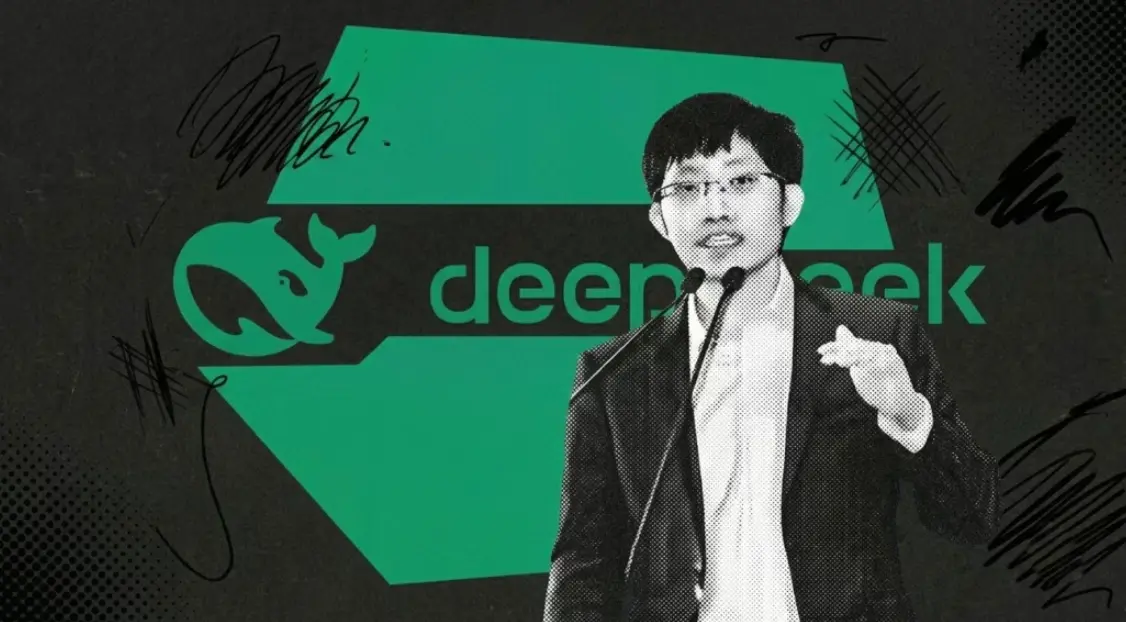
**DeepSeek Founder Liang Wenfeng's Candid Reflections on the Company's Path to AGI** DeepSeek has recently completed its first external funding round, raising over 500 billion RMB (approx. $74B) at a pre-money valuation of 3.675 trillion RMB ($543B). Founder Liang Wenfeng personally invested 200 billion RMB. This marks a strategic shift from its initial "no financing, no IPO, no commercialization" principle. In a recent investor Q&A, Liang articulated DeepSeek's core philosophy and roadmap. The company is driven by a powerful, unwritten vision for beneficial AGI rather than pure commercial maximization. He emphasizes "strategic restraint"—avoiding unnecessary conflicts, prioritizing long-term AGI success over short-term gains, and maintaining an open, cooperative stance even with competitors. Liang outlined the AGI technical roadmap: current focus on Agent capabilities, followed by solving "continual learning," which he sees as the key to unlocking models that can learn and adapt like humans. This could lead to a gradual "singularity" where AI accelerates its own research, and eventually to embodied intelligence. DeepSeek will strictly focus on this "AGI mainline," avoiding distractions like video generation which, while commercially viable, don't directly advance core intelligence. He identifies team stability as the single most critical factor for success, now bolstered by the recent funding. While talent is not a bottleneck, the primary constraint compared to the US is compute resources. Liang is optimistic about domestic AI chips, stating that Nvidia's CUDA moat is eroding and that within a year, the viability of the Chinese chip ecosystem will be proven, with Huawei's offerings being key. The main issue is production capacity. On competition, Liang believes the final differentiators will be cost, time-to-market, and user experience. He foresees Chinese companies playing a major role by offering systematically lower-cost AI services globally. DeepSeek's commercialization strategy involves offering API services at a "reasonable profit" and focusing on coding Agents. He remains committed to open-sourcing even their strongest models, seeing no downside as the barriers to effective deployment remain high. The company operates with a unique dual management structure combining top-down direction with significant bottom-up, unstructured research time for employees. Data quality and post-training are identified as major current challenges, with half of core researchers involved in data labeling efforts. Liang concludes that DeepSeek aims to be one of several trillion-dollar companies in the AI era, achieved through extreme focus on its chosen path.

链捕手2 days ago 06:24

4 Hours, 118 Responses: Liang Wenfeng’s Internal Q&A Addresses Everything

链捕手2 days ago 06:24

From Somersaults to Working 24/7: We Saw the ‘Working-Class’ Aura in Robots at WAIC

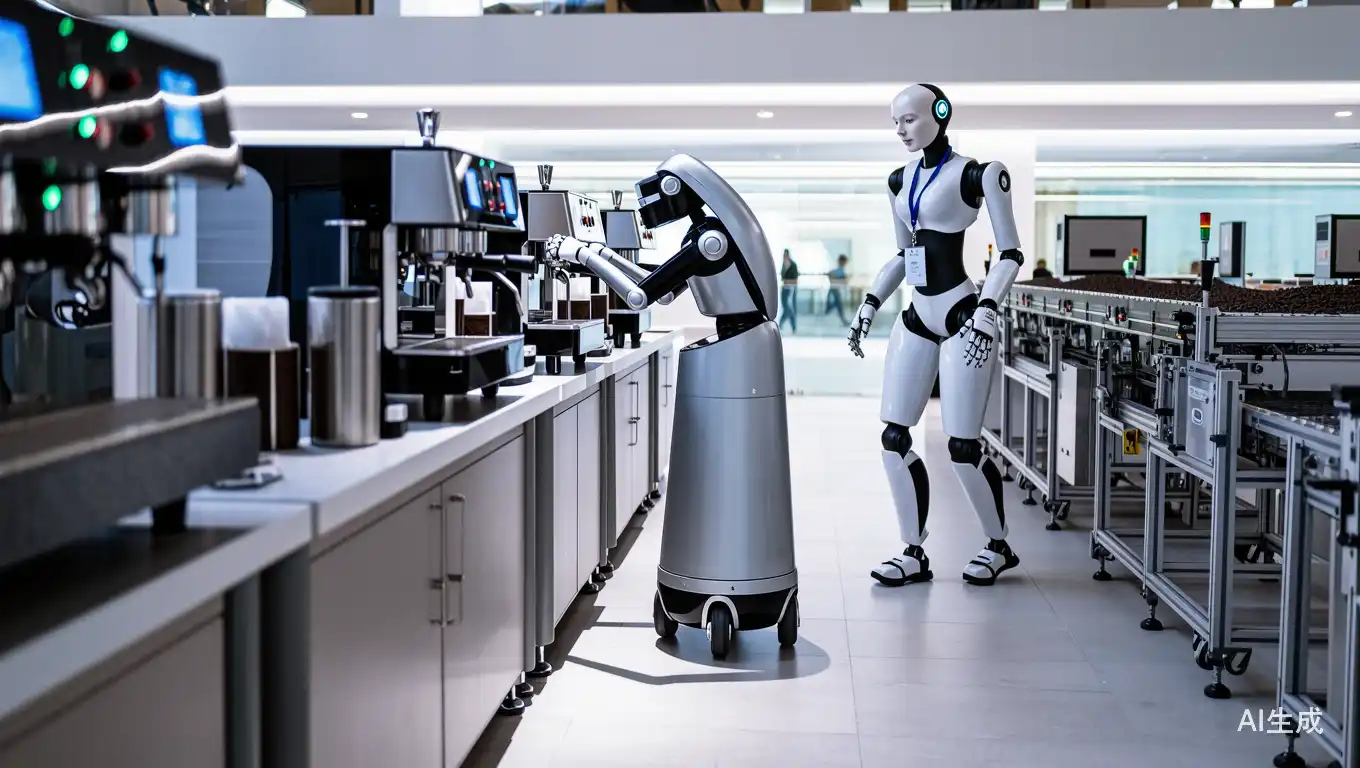
From performing acrobatics to working 24/7: Robots at WAIC are getting down to business. This year's World Artificial Intelligence Conference (WAIC) in Shanghai showcased a significant shift in the robotics industry. While "show-off" robots that dance, play music, or compete in sports are still present, the dominant trend is now practical, task-oriented machines. Hundreds of wheeled and humanoid robots were deployed as guides, baristas, factory workers, and even traffic controllers, moving beyond mere demonstrations to highlight real-world "work capabilities." The focus has pivoted from showcasing technical parameters to pursuing mass production and industrial落地 (landing/implementation). This transition presents major challenges. First, deploying powerful AI models onto robots requires overcoming hardware limitations in computing power and latency. Second, robots demand complex, integrated systems for real-time perception and control. Third, achieving reliable mass production necessitates unprecedented industry-wide collaboration on standards and supply chains. A key bottleneck identified by industry leaders is the robot's "brain"—its AI and cognitive capabilities. While hardware and basic movement ("little brain") have advanced rapidly, the higher-level intelligence for understanding complex instructions and adapting to unstructured environments is progressing more slowly. Companies are investing heavily in developing more advanced "brain" systems, but fully autonomous operation in dynamic settings remains a work in progress. Cost is another critical hurdle. While some consumer-oriented humanoid robots are now priced under $15,000, capable industrial models often cost $50,000 or more. The industry consensus is that bringing robots into unstructured home environments for tasks like comprehensive cleaning is still at least five years away due to technical, safety, and cost barriers. Therefore, 2026 is being called the "first year of mass production," but primarily for industrial and specific commercial applications. WAIC 2026 served less as a stage for spectacular tricks and more as a serious examination of robots' commercial viability, marking their transition from laboratory prototypes to real-world products that must prove their value through stable, repetitive work.

marsbit07/17 14:11

From Somersaults to Working 24/7: We Saw the ‘Working-Class’ Aura in Robots at WAIC

marsbit07/17 14:11

Stable Vaults Are the Final Piece in Aave's Mass Commercialization Puzzle

Aave's introduction of "Stable Vaults" aims to bridge the gap between complex DeFi protocols and mainstream users by offering a simplified, predictable savings product. The core innovation is a fixed-yield layer built atop Aave's volatile underlying lending pools. Partnering platforms (like digital banks or wallets) can offer users a guaranteed interest rate (e.g., 4%), shielding them from market fluctuations. The partner absorbs the risk and profit/loss from the difference between this fixed rate and Aave's variable rate. From the user's perspective, Stable Vaults provide ease of use, predictable returns, and familiar services like customer support and account recovery, addressing key barriers like wallet management and volatility. However, users pay a price: they cap their potential earnings (forgoing higher market yields), add counterparty risk from the partner platform, and may lack transparency into the true spread being captured. For partners, Stable Vaults turn idle user funds into a revenue stream via the yield spread. For Aave, this strategy attracts sticky, "sticky" capital from mass-market applications, providing a stable fee revenue stream crucial for its tokenomics (e.g., buyback mechanisms), especially in bear markets. The article contrasts this approach with direct DeFi interaction, where users keep all yield but face complexity and volatility. It argues that Stable Vaults align with proven consumer behavior: most users prioritize convenience, safety, and predictability over maximizing returns, willingly paying a "peace of mind" premium. Examples like Coinbase and Robinhood offering similar "savings" products validate this demand. Thus, Stable Vaults represent Aave's strategic move to commercialize by catering to fundamental human preferences for simplicity and stability in finance.

marsbit07/17 10:31

Stable Vaults Are the Final Piece in Aave's Mass Commercialization Puzzle

marsbit07/17 10:31

Is the iPhone Moment for Embodied AI Coming Soon?

Is the "iPhone moment" for embodied AI approaching? This article, based on a roundtable discussion, presents expert insights on the current state and future of embodied AI. The consensus is that the pivotal "iPhone moment" is still distant. The field is likened to the "brick phone" era, with technology paths—such as VLA and world models—not yet converging. While robotic "motor skills" (e.g., walking) have matured, the "brain" (decision-making, generalization) remains far from commercial readiness. A major bottleneck is data: an estimated tens of millions of data points are needed for a breakthrough, but only around 500,000 currently exist globally. Currently, cost remains prohibitive for widespread labor replacement, making the economic case challenging. However, experts see a three-tiered market potential: a billion-level market for emotional companionship (e.g., entertainment, basic care), a trillion-level market for commercial services (e.g., guides, receptionists), and a massive, long-term opportunity for physical labor in factories and homes. The discussion suggests that while humanoid robots face hurdles, non-humanoid embodied AI applications (like existing service robots) can be deployed sooner. The ultimate vision is for AI to operate seamlessly in the physical world, not just behind screens. Regarding AI tools, participants noted their widespread use for boosting efficiency in coding, research, and teaching. However, they warned against over-reliance due to risks of AI "deception" and the erosion of critical thinking, emphasizing that core judgment must remain with humans. In summary, embodied AI holds immense promise but requires significant progress in brain models, data collection, and cost reduction before achieving its transformative potential. Its development is expected to be gradual, advancing through specific use cases rather than a single explosive moment.

marsbit07/14 05:07

Is the iPhone Moment for Embodied AI Coming Soon?

marsbit07/14 05:07

Zhipu, Afraid of Becoming the Next MiniMax

Title: Zhipu, Fearing to Become the Next MiniMax In July 2026, amid the success of its coding-focused AI, Zhipu's founder, Tang Jie, issued an internal letter titled "The Giant Wave Has Come." It notably avoided celebrating recent triumphs, such as Zhipu's trillion-HKD market cap and booming MaaS revenue driven by its GLM-5.2 model in coding applications. Instead, the letter pivoted the narrative to future-oriented concepts like Long Horizon Task, Autonomous Agents, Self-Evolving systems, and AGI. This strategic shift in messaging followed the sharp devaluation of its competitor, MiniMax. After its lock-up period expired, MiniMax's stock plummeted as the market began evaluating it with traditional SaaS metrics like ARR and user growth, rather than as a frontier AI pioneer. Seeing this, Tang Jie aimed to preempt a similar revaluation of Zhipu. He fears that if the market starts viewing Zhipu primarily as a profitable "AI coding company," its valuation would become anchored to conventional financial metrics, losing the premium associated with AGI potential. Therefore, the letter reframed Zhipu's mission. While acknowledging that coding was the current commercial driver, Tang positioned Zhipu on the "infrastructure path," akin to OpenAI and Anthropic. The new focus is on developing agents capable of complex, long-term planning and autonomous operation—moving from assisting individuals (OPC: One Person Company) to automating entire organizations (NPC: No People Company). This "Touch High" plan explicitly prioritizes long-term AGI research over short-term monetization. The article frames this as a critical divergence in China's AI landscape: the "commercialization path" (exemplified by MiniMax) versus the "infrastructure path" (chosen by Zhipu). The former risks being judged harshly by internet-era metrics once growth slows, while the latter risks failing if technological breakthroughs stall. Tang Jie's letter is thus a calculated move to secure Zhipu's identity as an AGI contender, buying time before the inevitable market demand for commercial proof. The core question remains: can Zhipu's "mo gao" (reach high) plan achieve genuine technological leaps fast enough to outpace the market's diminishing patience for stories over substance?

marsbit07/12 01:02

Zhipu, Afraid of Becoming the Next MiniMax

marsbit07/12 01:02

Unitree's IPO Frenzy: The Real Mystery is How It Will Spend the 42 Billion Raised

Unitree, a Chinese robotics company, is set for a public listing after its IPO registration was approved by regulators. The company, which started with quadruped robots and has expanded into humanoids, plans to raise approximately 4.2 billion yuan through its offering. The article traces Unitree's rapid growth from its founding in 2016 to its current status. It highlights key milestones like the 2021 CCTV Spring Festival Gala performance, the 2023 launch of its affordable Go2 robot dog and the H1 humanoid robot, and a series of subsequent product launches. By 2025, the company reported revenue of 1.71 billion yuan, profitability, and sales exceeding 5,500 humanoid robots. As the first publicly-listed humanoid robot company on China's STAR Market, Unitree's main challenges are sustaining growth and deploying its newly raised capital effectively. The humanoid robot sector in China is crowded, with over 140 companies. Competitors include UBTech (focusing on industrial and consumer markets), Fourier, and international players like Tesla Optimus and 1X NEO. The article outlines three critical challenges for Unitree: establishing a strong second product line beyond its quadruped robots, maintaining its price advantage while ensuring quality, and successfully advancing its embodied AI capabilities through partnerships like the one with NVIDIA for the H2 Plus platform. Unitree's likely strategy involves a "developer tools + industry benchmarks" approach: using low-cost models like the R1 and G1 to build developer adoption and volume, leveraging high-end platforms for AI training, and securing pilot projects in sectors like logistics and manufacturing to build case studies. The company's future success hinges on converting its current momentum in shipments and pilot programs into sustainable, large-scale commercial contracts as the broader market evolves.

marsbit07/07 09:32

Unitree's IPO Frenzy: The Real Mystery is How It Will Spend the 42 Billion Raised

marsbit07/07 09:32

Dialogue with Yihui Capital, SoundAI Technology, Ling Universe, and Zhongbo Jili: Opportunities and Challenges in the AI Smart Hardware Track

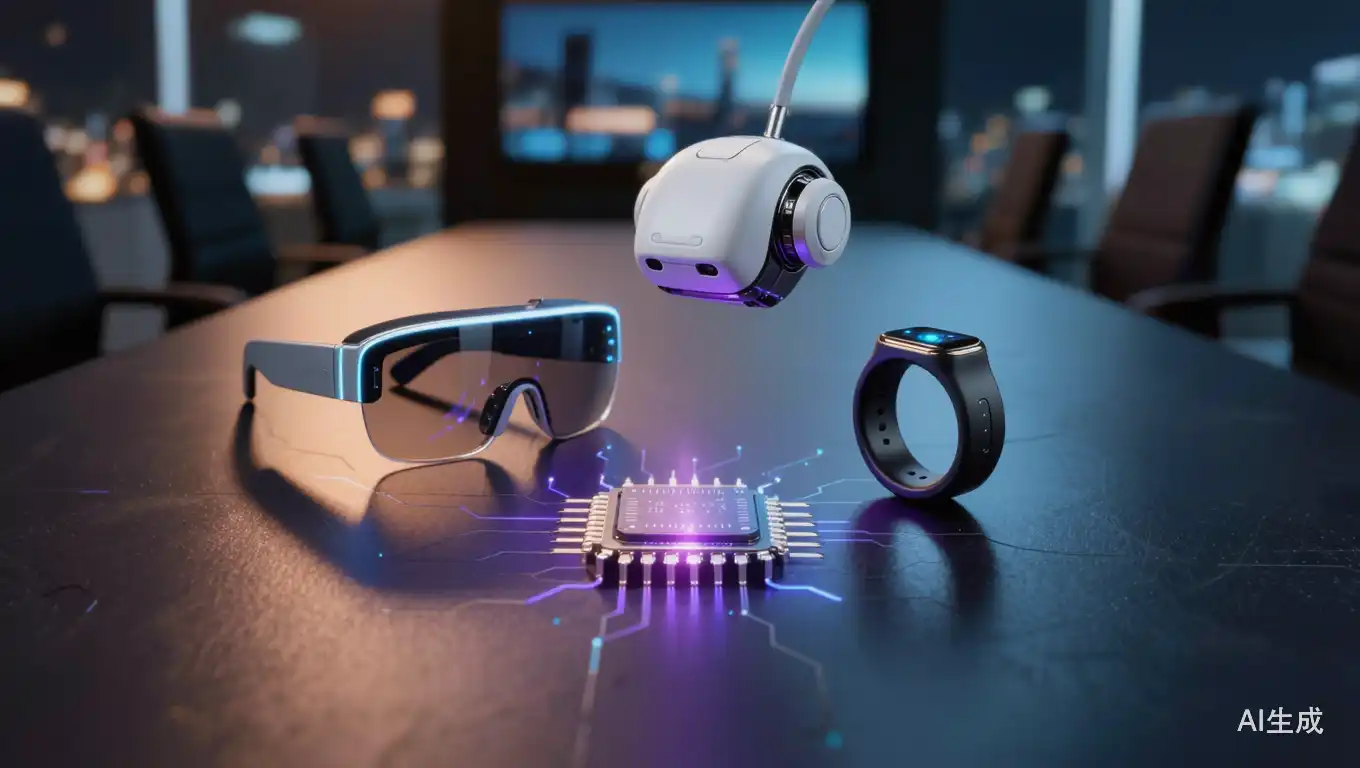
On June 28, 2026, an event titled "New Opportunities in AI Hardware: The Battle for Interactive Entry Points Begins" was held in Beijing. It featured a report from ITJuzi and discussions with experts from SoundAI, Ling Universe, One Reed Capital, and Zhongbo Juli on the opportunities and challenges in China's AI hardware sector. Key report findings highlight the sector's intense activity: 327 out of 431 startups founded post-2023 have secured funding, with 179 investments in H1 2026 alone. The landscape is dominated by embodied intelligent robots, while wearable tech like smart rings and AI glasses shows rapid growth. Geographically, Shenzhen leads, leveraging its superior hardware supply chain, followed by Beijing and Shanghai. The overarching trend is for companies to focus on micro-innovations within specific scenarios rather than reinventing foundational technology. Industry leaders shared several critical insights: 1. **Balancing Innovation & Market Readiness**: Entrepreneurs face the "hammer looking for a nail" dilemma. Success requires balancing technical capability with user acceptance, cost control, and incremental design improvements rather than chasing disruptive innovation. 2. **Competitive Landscape**: The future interactive entry point may not be a single super-device but a mix of universal terminals and specialized, scenario-specific hardware. While large companies have ecosystem advantages, startups can win by deeply targeting vertical markets and specific user groups. 3. **Core Challenges & Business Models**: Key hurdles include deep understanding of AI models and navigating non-transparent hardware supply chains. Viable business models may involve selling hardware at cost and generating revenue through software subscriptions, but this requires tight control over both hardware BOM and model inference costs. 4. **The Road to Commercialization**: The ultimate test is market validation—achieving sales growth and sustainable cash flow. Companies must find the right application scenario, use edge computing effectively, and close the loop from technology to commercial success. 5. **The Future of Interaction**: Proactive, context-aware interaction is the next frontier, though it's currently limited by issues like model hallucinations and environmental perception. The near-term focus should be on identifying target users and creating a coherent experience in specific domains, such as health wearables. In summary, to succeed in the competitive AI hardware arena, companies must strategically choose their niche, build a team with the right geographical advantages (e.g., leveraging Shenzhen's supply chain), and most importantly, execute a flawless commercialization strategy that translates technology into market-accepted products and sustainable business growth.

marsbit07/07 05:11

Dialogue with Yihui Capital, SoundAI Technology, Ling Universe, and Zhongbo Jili: Opportunities and Challenges in the AI Smart Hardware Track

marsbit07/07 05:11

Finding the Next Wang Tao

Hong Kong's deep-tech startups are crossing the Shenzhen River to scale up. On July 2nd, six university spin-off teams presented at the "X-Day" Xili Lake Roadshow in Nanshan, Shenzhen. Their projects spanned next-gen battery materials, quantum dot displays, robotics AI, digital sports, smart airports, and AI-powered fall prevention for the elderly. This reflects a growing trend: Hong Kong's academic research is increasingly seeking industrial application and commercialization within the Greater Bay Area, with Shenzhen being a primary destination. These startups exemplify the "fusion+" model—leveraging Hong Kong's strengths in fundamental, globally-connected research ("0 to 1") and Shenzhen's robust manufacturing ecosystem and market access for scaling ("1 to 100"). Examples include SuFang New Energy (high-energy-density battery materials), PuLang Quantum (quantum dot films in high-end displays and vehicles), and BuGu Health (AI-based fall risk screening). Platforms like the HKU Youth Innovation Academy and HKUST BlueBay are establishing physical bridges for this cross-border innovation. The discussion highlights a clear division of labor: Hong Kong provides the seeding ground for cutting-edge technology, while Shenzhen offers the pathway to产业化. As these connections strengthen through initiatives like the Xili Lake Roadshow, the region aims to foster the next generation of global tech leaders like DJI's Wang Tao.

marsbit07/07 00:54

Finding the Next Wang Tao

marsbit07/07 00:54

Domestic First Explosion-Proof Certification, World's First Fueling Brain Solution: How Did They Secure Two 'Firsts'?

China's embodied AI sector is booming, with over ¥37 billion in funding this year. The focus has shifted decisively to real-world application, particularly in hazardous, repetitive tasks humans should avoid. A key, often prohibitive, barrier to entry for robots in environments like gas stations and oil fields is obtaining explosion-proof certification, requiring meticulous hardware and circuit design from the ground up. The article explores three main application areas. At gas stations, the challenge lies in executing a long, precise sequence of actions (opening caps, handling the fuel nozzle) with millimeter accuracy across diverse car models. For facility inspections, robots need sustained autonomous patrols combined with real-time anomaly detection and response. Port scenarios introduce the complexity of multi-robot coordination. Addressing the core challenge of long-horizon tasks, the piece highlights a technical breakthrough: a "world model"-driven approach. This enables predictive planning, allowing the AI to visualize the desired end-state (e.g., nozzle returned, cap closed) and work backward to synthesize intermediate visual frames. This "imagination" of the task trajectory, as implemented in the H-GAR architecture, guides action generation, significantly reducing cumulative error in multi-step operations. The three-step H-GAR process involves generating a coarse action draft, synthesizing target-conditioned observation frames, and then refining actions based on visual context and a memory of past successful motions. The conclusion emphasizes that success in specialized, safety-critical fields requires long-term commitment and deep integration of the "embodied brain" (AI) with a purpose-built, certified physical "body." Mastering this brain-body-data闭环 (closed-loop) is positioned as a crucial competitive advantage for commercialization.

marsbit06/26 03:49

Domestic First Explosion-Proof Certification, World's First Fueling Brain Solution: How Did They Secure Two 'Firsts'?

marsbit06/26 03:49

活动图片