# Bitcoin Related Articles

HTX News Center provides the latest articles and in-depth analysis on "Bitcoin", covering market trends, project updates, tech developments, and regulatory policies in the crypto industry.
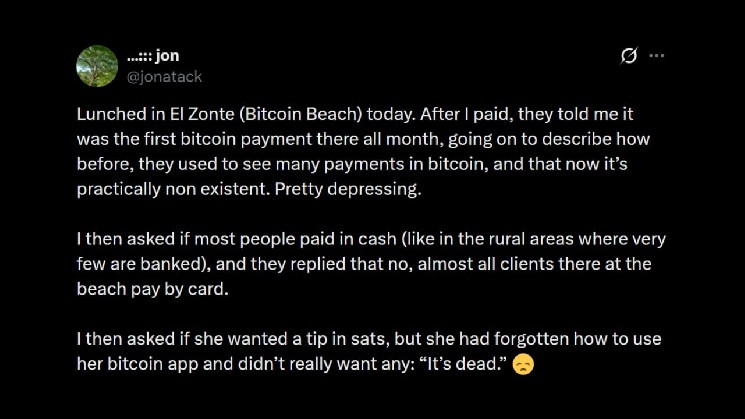
Bitcoin Core Developer Warns That Bitcoin Payments Are Disappearing at 'Bitcoin Beach'

A Bitcoin Core developer, John Atack, who has lived in El Salvador since 2022, shared a concerning anecdote about Bitcoin adoption in the country. While dining at El Zonte, a region known as "Bitcoin Beach," he paid with Bitcoin and was told it was the first such payment the establishment had received in a month. Staff explained Bitcoin payments, once common, have now virtually disappeared, with nearly all customers using cards. An employee even declined a Bitcoin tip, stating she had forgotten how to use her wallet and declaring "It's already dead." Atack emphasized this was a single observation but noted the employee had witnessed the payment evolution over three years. His comments sparked mixed reactions. Some disputed his experience, with one user confirming successful Bitcoin payments in the same area. However, Bitcoin reporter Juan Galt acknowledged an underlying "economic problem," arguing that expecting price appreciation makes using Bitcoin for everyday transactions counterintuitive to economic incentives needed for a circular crypto economy. Despite the concerning report, Atack also reflected that El Salvador remains a global leader in cryptocurrency adoption and progressive legislation, sometimes causing locals to take these advancements for granted. The story highlights the ongoing challenges of mainstream Bitcoin adoption for daily commerce, even in pioneering nations.

cryptonews.ru1h ago

Bitcoin Core Developer Warns That Bitcoin Payments Are Disappearing at 'Bitcoin Beach'

cryptonews.ru1h ago

A Huge 'Sleeping' Wave of New Bitcoin Buyers Has Not Even Bought Bitcoin Yet

A recent study by the Federal Reserve Bank of Cleveland, titled "Do You Even Crypto, Bro? Cryptocurrencies in Household Finance," reveals that Bitcoin and other crypto assets are less understood than other financial assets in US households. The primary reasons for not owning crypto are a lack of knowledge and the perception that it is a poor investment. Even among owners, the main motivations are profit-seeking and portfolio diversification rather than an understanding of the underlying technology's benefits, such as independence from banks. The research found that showing respondents Bitcoin's past 12-month performance increased their desired portfolio allocation by about 47%, indicating investment decisions are driven more by recent returns than fundamental comprehension. Crypto gains are often treated like lottery winnings, leading to one-off luxury purchases rather than sustained increases in spending. While non-owners largely view crypto as high-risk, owners are somewhat less likely to do so, though they exhibit greater uncertainty about future returns compared to traditional assets like stocks or gold. This ambiguity about Bitcoin's nature and valuation contributes directly to its price volatility. The study concludes that this volatility will persist, but education efforts combined with price appreciation could convert today's uninformed non-owners into future Bitcoin holders.

cryptonews.ru1h ago

A Huge 'Sleeping' Wave of New Bitcoin Buyers Has Not Even Bought Bitcoin Yet

cryptonews.ru1h ago

Asia-Pacific Stocks Under Pressure, South Korean Shares Lead Declines with SK Hynix Down 6% at One Point, Bitcoin Breaches $80,000, U.S. Treasuries Volatile at High Levels

Asia-Pacific stock markets faced pressure, with South Korean equities leading the decline. Shares of Samsung Electronics and SK Hynix fell sharply, dragging down the KOSPI index by over 4% at one point. The drop in tech stocks mirrored a sell-off in U.S. semiconductors, with investors adopting a cautious stance ahead of Nvidia's earnings report, seen as a key signal for the AI trade outlook. Samsung's recent shareholder return plan, while large, fell short of some market expectations. Meanwhile, SK Hynix faces internal pressure as its union rejected a provisional wage agreement. Japanese stocks initially fell but later recovered, with the Nikkei 225 turning positive. Former Bank of Japan board member Seiji Adachi suggested a rate hike is likely next month, warning that inaction could trigger renewed yen weakness. In other markets, U.S. Treasury yields remained elevated near 4.71%. Bitcoin broke above $80,000 for the first time since mid-May, while gold eased slightly after recent gains. Analysts note the simultaneous strength in gold and crypto points to market concerns about long-term dollar weakness. The focus this week is dual: Nvidia's earnings are critical for stabilizing the AI-driven tech sector, while Fed Chair Kevin Warsh's speech at the Jackson Hole symposium is expected to provide clarity on the interest rate path.

华尔街日报2h ago

Asia-Pacific Stocks Under Pressure, South Korean Shares Lead Declines with SK Hynix Down 6% at One Point, Bitcoin Breaches $80,000, U.S. Treasuries Volatile at High Levels

华尔街日报2h ago

Top Trader Explains the Logic Behind Bitcoin's Surge: What Is the Market Actually Trading?

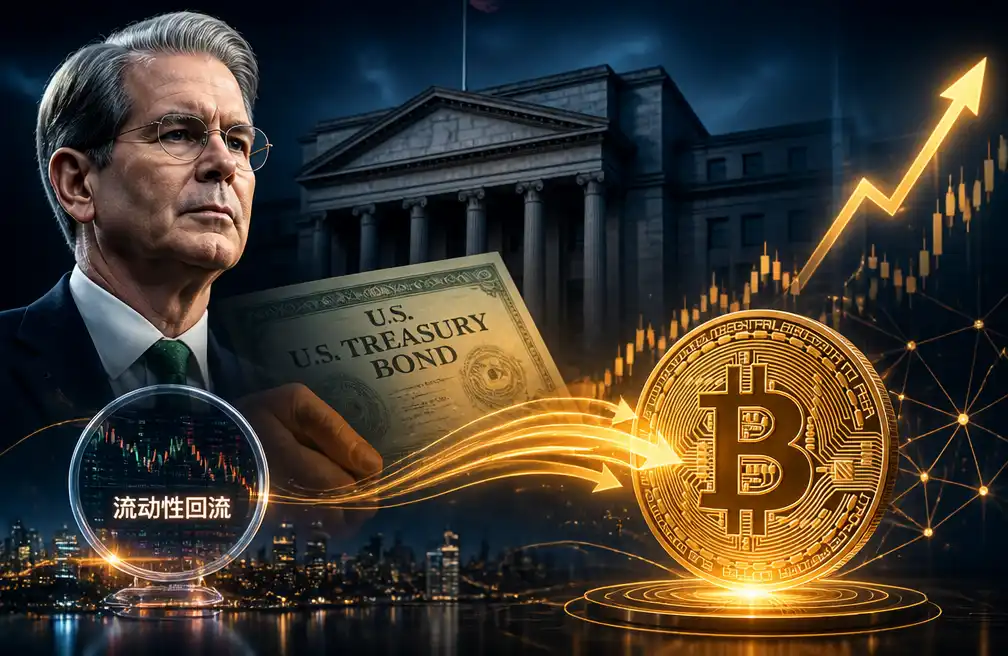
Summary: On August 19th, the U.S. Treasury announced an increase in its long-term bond repurchase program from $2 billion to at least $4 billion. While the direct scale is small relative to the overall market, the move triggered a decline in long-term Treasury yields and a weaker dollar, with Bitcoin subsequently breaking above $70,000. In an interview, Arthur Hayes argues this Bitcoin rally is not primarily driven by internal crypto regulatory news (like the CLARITY Act), but by a shift in macro expectations regarding U.S. liquidity policy. Hayes interprets the Treasury's timing—acting as long-term yields hit multi-decade highs—as a signal that policymakers are sensitive to rising financing costs. He posits that Bitcoin acts as a "pressure release valve" for global liquidity shifts. The market is not trading the $4 billion repurchase itself, but the *expectation* of further, more aggressive interventions (like yield curve control or Fed balance sheet expansion) should long-term interest rates continue to rise threateningly. His logic follows a chain: unsustainable U.S. debt requires stable Treasury market function; if yields rise too high, policymakers will intervene to provide liquidity; increased dollar liquidity ultimately benefits scarce assets like Bitcoin. Hayes speculates on more extreme scenarios, such as foreign central banks selling Treasuries back to the Fed via facilities like FIMA Repo, further expanding liquidity. The key takeaway is that Bitcoin's price action is being driven by anticipation of future monetary policy responses to debt and yield pressures, rather than immediate liquidity injections or crypto-specific regulation. The critical indicator to watch is long-term Treasury yields (e.g., 10-year near 5%). If they rise again, prompting further Treasury/Fed action and dollar weakness, Hayes's thesis strengthens. If yields stabilize without major policy escalation, the current bullish narrative may be an overreaction. Bitcoin is effectively trading on the probability of renewed, significant liquidity expansion by U.S. authorities.

marsbit2h ago

Top Trader Explains the Logic Behind Bitcoin's Surge: What Is the Market Actually Trading?

marsbit2h ago

Bessent Repurchases U.S. Treasury Bonds, So Why Is Bitcoin Rising?

On August 19, U.S. Treasury Secretary Scott Bessent significantly increased the limits for buying back long-term Treasury bonds (10, 20, and 30-year maturities), calling it a "Treasury Twist Operation." The goal was to lower soaring long-term yields, which had recently hit multi-decade highs, by boosting demand for these bonds. However, the effect on yields was brief and limited. The article explains that the Treasury's bond buybacks, funded by issuing more short-term debt or using its cash reserves, do not create new money but merely restructure government debt. Major factors pushing yields higher—such as large budget deficits, corporate borrowing for AI investments, inflation driven by rising oil prices, and Federal Reserve policy uncertainty—remained unaddressed, limiting the operation's impact. Instead of taming bond yields, the intervention was interpreted by markets as a sign of official concern over debt sustainability and potential future currency depreciation. This triggered a rally in assets perceived as hedges against such risks: Bitcoin surged toward $80,000, gold rose, and the U.S. dollar weakened. Further context includes Bessent's unusual suggestion for corporations to issue more medium-term ("belly") debt and the potential long-term role of dollar-pegged stablecoins (backed heavily by Treasuries) in influencing government borrowing costs. The move broke with the Treasury's traditional "regular and predictable" debt management approach. Analysts warn that such unexpected interventions could ultimately increase long-term borrowing costs if they erode investor confidence, creating a potential "Bessent put" similar to the "Greenspan put" for equities. Ultimately, the operation twisted markets for currencies and alternative assets more than the Treasury yield curve itself.

marsbit4h ago

Bessent Repurchases U.S. Treasury Bonds, So Why Is Bitcoin Rising?

marsbit4h ago

US Stock Market Trend (Aug 25): Besant's Trillion-Dollar Bond Buy Pushes Down Long-Term Rates, Nasdaq Falls, Dow Rises Amid Extreme Divergence

August 26, US Stock Market: Nasdaq Drops as S&P 500 Sees Mixed Close Amid Treasury Moves, Geopolitical Concerns. The US stock market was sharply divided on Monday. The Dow Jones rose 0.26% to 53,417.16, extending gains, while the S&P 500 slipped 0.28% to 7,652.82, and the Nasdaq Composite fell 0.76% to 25,869.14. The Philadelphia Semiconductor Index tumbled nearly 4%. Treasury Secretary Bessenter took center stage, announcing dual actions: deploying nearly a trillion dollars from the Treasury General Account (TGA) to repurchase long-term bonds to pressure yields, while simultaneously imposing new sanctions on Iran. Long-term Treasury yields edged lower, with the 10-year yield falling about 3 basis points to 4.70%. However, markets focused on the geopolitical risks from the sanctions, prompting a risk-off shift into gold and Bitcoin, weighing heavily on tech and AI-hardware stocks. Nvidia informed major cloud clients of plans to raise AI server prices by over 15% starting next year. The company also reportedly plans to invest in AI search firm Perplexity. Despite this pricing power signal, its stock and the broader chip sector were dragged down by macro and geopolitical worries. All eyes are on Nvidia's earnings report scheduled for release after Wednesday's market close, with focus on Blackwell shipment details and data center revenue guidance. Samsung Electronics disappointed markets with a shareholder return plan seen as insufficient, raising concerns about capital expenditure prospects in the memory chip sector and contributing to the semiconductor selloff. In trade policy, former President Trump announced plans to raise US tariffs on Canadian autos, auto parts, and steel to 50% starting next year, significantly escalating trade tensions. Amid the risk-off sentiment, spot gold rose 1.05% to $4,651.24 per ounce, hitting a near three-month high. Bitcoin climbed 1.59% to $78,966, approaching the $80,000 level for the first time since mid-May. Market attention turns to the US Conference Board's August Consumer Confidence Index, for clues on the resilience of consumer spending, and to continued positioning ahead of Nvidia's pivotal earnings report.

marsbit4h ago

US Stock Market Trend (Aug 25): Besant's Trillion-Dollar Bond Buy Pushes Down Long-Term Rates, Nasdaq Falls, Dow Rises Amid Extreme Divergence

marsbit4h ago

活动图片