# AAVE Related Articles

HTX News Center provides the latest articles and in-depth analysis on "AAVE", covering market trends, project updates, tech developments, and regulatory policies in the crypto industry.

Bitcoin and Ethereum Soar Together! Eight Altcoins Worth Watching in the Later Market

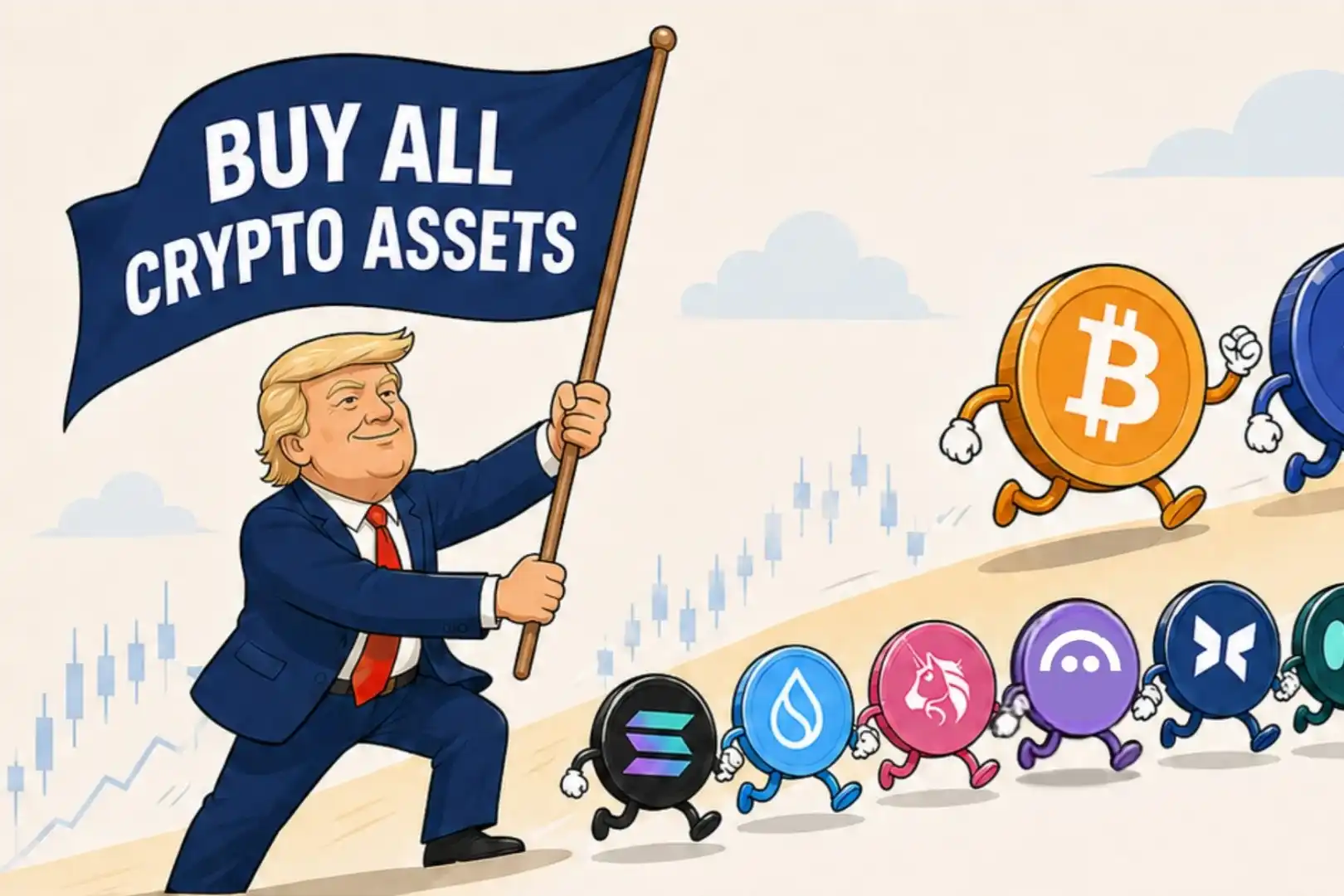
Bitcoin and Ethereum Surge, Fueling Altcoin Speculation. Bitcoin Eyes $77,000, Ethereum Gains 20% in a Single Day. Market anticipates capital rotation from major cryptos to high-beta altcoins, but a selective rise is expected, favoring projects with genuine users, protocol revenue, and healthy tokenomics. Analysts highlight eight altcoins across key sectors: **High-Performance Blockchains:** * **SOL (Solana):** Market cap ~$51.88B. A dominant player with a strong ecosystem. Considered a relatively safe bet for potential catch-up growth. * **SUI (Sui):** Market cap ~$3.03B. High volatility potential but faces risks from its low circulating supply and future token unlocks. **DeFi Lending:** * **UNI (Uniswap):** Market cap ~$2.38B. Transitioning to a revenue-capturing asset post-fee switch implementation. * **AAVE (Aave):** Market cap ~$1.53B. Features balanced tokenomics and revenue but has seen significant recent gains. * **MORPHO:** Market cap ~$1.50B. Rapid protocol growth but weaker token value capture and opaque supply data. **Perpetual DEX:** * **HYPE (Hyperliquid):** Market cap ~$16.41B. The clear sector leader with strong revenue but high valuation and a large portion of tokens still locked, warranting caution. **RWA & On-Chain Finance Infrastructure:** * **LINK (Chainlink):** Market cap ~$8.09B. A key oracle provider positioned to benefit from multiple trends like RWA and institutional adoption, offering strong fundamentals. * **ONDO (Ondo Finance):** Market cap ~$1.77B. Shows strong business growth but carries high risks due to concentrated token holdings and a massive unlock scheduled for 2027. **Conclusion:** The altcoin rally is expected to be selective. Recommendations include a medium position in SOL, small allocations to SUI and UNI/AAVE for DeFi exposure, and caution with HYPE and ONDO due to their specific risks. LINK is suggested as a core holding for the RWA thematic.

marsbit08/22 03:06

Bitcoin and Ethereum Soar Together! Eight Altcoins Worth Watching in the Later Market

marsbit08/22 03:06

Ether.fi Launches Next-Gen Neobanking Services

Ether.fi, a leading crypto neobank, has announced its summer release, introducing a new generation of its fintech product. This update aims to replace traditional banking by offering tools for savings, earning, trading, lending, and seamless spending. The platform leverages decentralized systems to go beyond traditional finance, incorporating the latest trends like trading tokenized stocks, metals, and active crypto assets. The user app will integrate the Aave platform for lending and borrowing, and will add over 30 new fiat currencies and payment methods including Cash App and Apple Pay. According to CEO Mike Silagadze, the goal is to bridge DeFi with everyday financial needs, providing tools once reserved for institutions. The simplified app requires no special crypto knowledge and aims for a broader audience, moving beyond high-risk trading to offer balanced, secure asset management. As of August 2026, Ether.fi holds $3.5 billion in assets. The update introduces features like integration with xStocks for tokenized equity trading, self-custody benefits, lower fees, and a rewards program. It will also offer crypto-backed loans at rates around 4% and a cash-back card. Part of the revenue from new products will fund buybacks of the $ETHFI token, which traded around $0.38 in mid-August. The new features are available immediately to all users, though some services like tokenized asset trading may be restricted in regions like the US.

cryptonews.ru08/13 15:53

Ether.fi Launches Next-Gen Neobanking Services

cryptonews.ru08/13 15:53

After the Lending Markets Disappear, What's Left for These Public Chains?

"The Lending Market Vanishes: What Remains for These Blockchains?" Last week, Aave announced the closure of its lending markets on six blockchains where each generated less than $5,000 in quarterly revenue. This move highlights a critical trend: while the DeFi lending sector is growing overall, it is becoming highly concentrated on a few leading chains like Ethereum, Base, and Arbitrum. The article analyzes the cascading effects when a major lending protocol like Aave exits a chain. Past examples, such as Harmony Protocol and Fantom (later rebranded as Sonic), demonstrate that losing core lending infrastructure leads to a complete collapse of the credit ecosystem. This is because a functional lending market relies on a costly, interconnected stack of services—including reliable price oracles (often maintained by the largest protocol), deep DEX liquidity for liquidations, and stablecoin issuers willing to support native minting and redemption. Once the primary lending demand disappears, maintaining this infrastructure becomes commercially unviable, triggering an exodus of other service providers. The six chains Aave is leaving (including Soneium, Aptos, zkSync, and Scroll) are in an even weaker position than Harmony or Fantom were. They never developed substantial native lending demand despite significant initial funding. Aave's departure will likely accelerate the withdrawal of oracle providers, market makers, and stablecoin issuers, as their business cases depend on a functioning credit market. This creates a self-reinforcing cycle of centralization, where resources and activity consolidate on the most viable chains. The dilemma mirrors challenges in traditional finance, such as global banks withdrawing correspondent banking services from small countries due to high fixed compliance costs. However, unlike the traditional system where institutions like the World Bank can provide subsidies, there is no such safety net in the decentralized crypto space. The key takeaway is that while launching a new blockchain is cheap, operating a full-featured, sustainable credit infrastructure on it is extremely expensive. Aave has now set a minimum annual revenue threshold of $2 million for new chain deployments, roughly covering these fixed costs. The future for many smaller chains may be a fragmented ecosystem with flawed, unofficial forks of major protocols, or they may be left with nothing at all as DeFi lending continues its aggressive consolidation.

marsbit08/06 03:21

After the Lending Markets Disappear, What's Left for These Public Chains?

marsbit08/06 03:21

Aave's Stable Vault

This article explores Aave's recently launched "Stable Vaults," a product designed to bridge the gap between traditional finance users and DeFi yield. It argues that while DeFi offers transparency and potentially higher returns, its complexity and volatility are major barriers for mainstream adoption. The core problem is that users pay for convenience and simplicity, often accepting lower returns to avoid decision-making and technical hurdles. Stable Vaults allow fintech apps, neobanks, or payment platforms (operators) to integrate with Aave's lending markets once and offer their users a "savings account" with a fixed, predictable yield (e.g., 4%). The operator absorbs the underlying market volatility; if Aave's pool pays 6%, the operator pockets the 2% difference, but if it pays only 2%, the operator covers the shortfall to maintain the promised 4% for users. The piece analyzes this model from three perspectives: 1. **The User:** Gains simplicity, a fixed rate, and familiar app features (customer support, account recovery). However, they lose potential upside, accept a lower fixed yield, and take on new counterparty risks from the operator and its proprietary backend systems. 2. **The Operator (e.g., a neobank):** Can monetize idle user balances easily, generating significant fee income (the spread between the fixed rate and the actual yield) with minimal integration effort, turning a cost center into revenue. 3. **Aave:** Gains "sticky," loyalty-based deposits that are less likely to flee during minor yield fluctuations, securing a stable revenue stream crucial for its tokenomics (like buybacks). It becomes a back-end infrastructure provider for the broader consumer finance ecosystem. The author acknowledges that while sophisticated users can access higher yields directly on Aave, most people prefer convenience and security over optimization. They reference behavioral studies showing that too many choices lead to inaction. Therefore, Stable Vaults represent an acceptance of human nature—prioritizing safety, predictability, and ease—and a strategic move for Aave to capture stable, large-scale deposits from mainstream finance applications. Examples like Rise (payroll) and Kraken are already using similar embedded yield models.

marsbit07/28 05:41

Aave's Stable Vault

marsbit07/28 05:41

Podcast Notes | Conversation with GSR Asset Management Head: To Determine if This Crypto Rally is Real, Just Watch the Lending Rates on Aave

Podcast Summary: Dialogue with GSR's Head of Asset Management: To Determine if This Crypto Rally is Real, Just Check Lending Rates on Aave Andy Baehr, Managing Director of Asset Management at GSR, discusses the current crypto market, characterizing it as stuck in a state of "ambivalence" with short-lived, unsustainable rallies. He outlines a simple framework: the market moves between "ambivalence" and "conviction" (sustained upward momentum). Currently, every rally resembles a single-stage rocket booster that quickly fizzles out. Baehr identifies three key signals to watch: 1) DeFi lending rates, 2) the potential passage of the CLARITY Act, and 3) the market forming a consensus on the "Fed hawkish peak." He emphasizes that the most immediate indicator for the sustainability of the recent CPI-triggered rally is the USDC borrowing rate on Aave, currently around 3.75%—close to U.S. Treasury yields. The absence of a credit spread indicates low leverage demand and a lack of market energy. He explains that a healthy, sustained rally requires layered buying pressure. Last year's rally progressed from an ETH short squeeze to crypto-native trader influx and finally to ETF inflows. Currently, this structure is missing. Other potential structural buyers like Digital Asset Treasury (DAT) companies are absent, and ETF flows have proven transient. Baehr notes that while small-cap crypto tokens outperformed large caps in Q2—a potential sign of capitation in major assets—capital is also flowing to more exciting opportunities like AI stocks and tech IPOs, leaving crypto sidelined. Regarding DeFi, he highlights that platforms like Aave provide a clear, real-time signal of leverage demand through their supply/demand-driven interest rates. A significant, sustained rate increase would signal genuine market conviction. He also observes the quiet emergence of fixed-income-like products and vaults in DeFi. On regulation, the probability of the CLARITY Act passing before the August 7th deadline has dropped linearly from 75% to below 40% on Polymarket. Baehr suggests its passage would be treated as a bullish surprise, a potent driver for price movement. However, political hurdles, including ethical clause debates and disclosures about the First Family's crypto profits, remain significant obstacles. Ultimately, the market awaits clarity on the Fed's terminal rate under Chair Warsh. Until the "Fed Solstice"—the point where the market collectively understands the peak of hawkish policy—sustained conviction will be difficult to achieve.

marsbit07/22 05:17

Podcast Notes | Conversation with GSR Asset Management Head: To Determine if This Crypto Rally is Real, Just Watch the Lending Rates on Aave

marsbit07/22 05:17

活动图片