Supreme Court 'Hits the Brakes', Trump 'Hits the Gas': Tariff Battle Reignites!

比推Published on 2026-02-21Last updated on 2026-02-21

Abstract

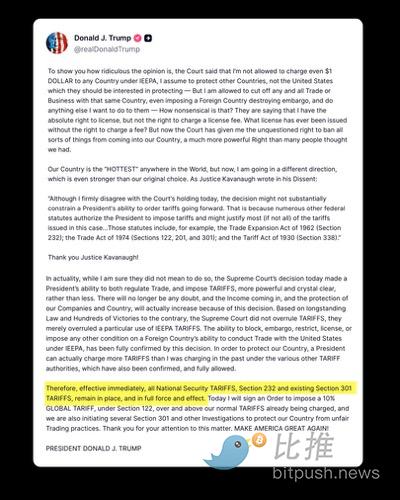
The US Supreme Court ruled 6-3 on February 20 that the Trump administration lacked legal authority under the International Emergency Economic Powers Act (IEEPA) to impose broad tariffs. In response, former President Trump announced a new 10% global tariff using alternative legal authority, aiming to maintain similar tariff levels. The court’s decision challenges the legal foundation of Trump’s tariff framework and may lead to large-scale refunds and further legal battles. Market reactions were initially positive but tempered as policy uncertainty persisted. The ruling highlights ongoing tensions between presidential power and trade policy, with economic and political implications for U.S. trade strategy and revenue policy.

Lunar New Year’s fifth day, traditionally a day for Chinese to "welcome the God of Wealth," saw markets hoping for prosperity and smooth sailing. But in Washington, what arrived was a judicial "headwind." On February 20 local time, the U.S. Supreme Court ruled 6:3 that the Trump administration’s broad tariffs implemented under the International Emergency Economic Powers Act (IEEPA) lacked legal authorization. Within hours, the White House shifted course, with Trump announcing a 10% global tariff on top of existing duties. All current national security tariffs are fully effective immediately.

A tug-of-war over trade and presidential power has entered a new round.

Sources told The New York Times that when the Supreme Court decision was announced, Trump was meeting with governors at the White House. An assistant handed him a note, and he immediately called it "disappointing." Later, at a press conference, Trump angrily criticized the Supreme Court justices, calling them "fools and lackeys."
More Than Just Tariffs Halted

The Supreme Court’s majority opinion held that IEEPA does not grant the president unilateral authority to impose widespread tariffs on global goods. In other words, the president can declare an emergency but cannot use it to establish a常态化 tariff system.

The practical impact of this ruling is evident at least on two levels.

First, at the policy implementation level. The core tariff framework Trump relied on over the past year has been overturned. Although some tariffs based on national security provisions (Section 232) or 301 investigations may remain, the most efficient and broad-reaching tool has been judicially否决.

Second, at the fiscal level. Multiple institutions estimate that if the relevant tariffs are ultimately deemed invalid, the U.S. government could face massive refund pressures, potentially amounting to hundreds of billions of dollars. Bloomberg cited trade lawyers stating that the refund issue "will become the focus of the next round of litigation."

More importantly, policy certainty is declining. Businesses cannot predict the structure of trade costs for the next six months—precisely the variable global supply chains most fear.

Trump’s "Backup Button"
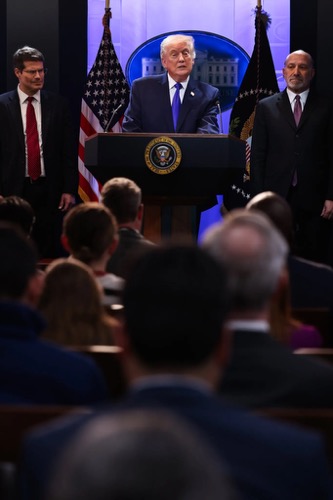
Facing the ruling, Trump’s response was very强硬. He stated at the White House, "There are many methods, many powers."

The White House plans to implement a 10% global temporary tariff within days under Section 122, lasting 150 days. If Congress does not extend it, the measure automatically expires. This clause has rarely been used historically and was originally designed as a short-term tool to balance trade deficits.

Simultaneously, Trump has not ruled out pushing Congress to legislate, granting the president clearer tariff authority. Some Republican lawmakers have publicly expressed support. However, given the narrow seat margins in both chambers of Congress, whether it can顺利推进 remains uncertain.

A Republican strategist told media that tariffs are the "cornerstone" of Trump’s economic agenda, and "he won’t give up easily."

Yale University’s Budget Lab has been simulating the impact of tariff policies during Trump’s potential term and released a new report based on the president’s latest remarks.

According to the Budget Lab’s estimates, before today’s Supreme Court ruling, the overall effective tariff rate (the average tax paid on all imported goods) was 16.9%. If the tariffs rejected by the Supreme Court become无效 and are not replaced, this number would drop to 9.1%.

But if Trump follows through on his plan to levy a 10% tariff on all goods using different legal grounds, and if he can maintain this policy, the Budget Lab estimates the effective tariff rate would eventually reach 15.4%—almost returning to the level before the day began.

Market Reaction Muted

Market volatility was limited that day. The three major U.S. stock indices rose, as investors believed corporate cost pressures might阶段性下降. In the S&P 500, manufacturing and retail sectors reliant on imported components saw relatively明显的 gains. The crypto market experienced a short-term boost. Bitcoin briefly approached $68,000, with some altcoins rising over 5%. Analysts pointed out that reduced expectations of trade friction boosted risk appetite.

However, as Trump announced the new tariff plan, the rally became more克制. The market quickly realized this wasn’t the end of policies but a路径重组.

Dual Economic and Political Pressures

The complexity of the tariff issue lies in its dual nature as both an economic tool and a political topic.
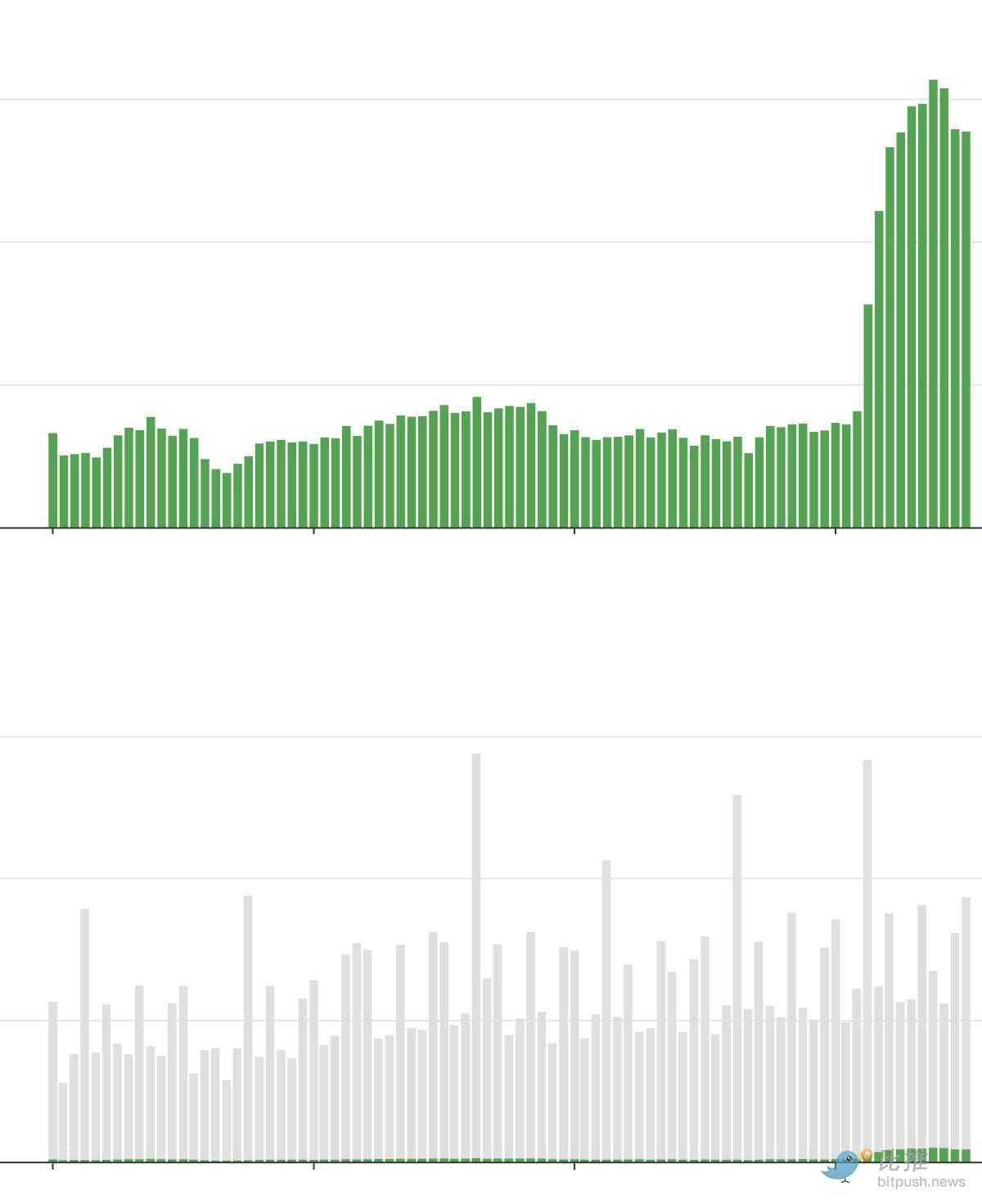
On the economic front, tariffs are generally seen as policies that raise import costs and potentially push up prices. Some Republicans私下 believe the drag on economic growth from tariffs cannot be ignored, especially with midterm elections approaching.

John Iselin, Deputy Director of Economic Analysis at Yale's Budget Lab, stated that Trump’s tariff policies have so far not achieved their goals of revitalizing U.S. manufacturing or reducing the trade deficit, but even economists who generally oppose import taxes acknowledge that tariffs have successfully increased fiscal revenue.

John said: "Frankly, compared to other viable revenue-raising options, tariffs are a more regressive way to raise revenue; there is a vast body of economic literature demonstrating the negative economic impacts of tariffs. But at the same time, we truly need significant fiscal revenue in the coming decades."

On the political front, Democrats have made "rising living costs" a primary attack point. A Democratic strategist in Pennsylvania told NBC that the price pressures from tariffs "have already had a real impact."

Meanwhile, the Trump camp emphasizes trade balance and manufacturing回流, viewing tariffs as a necessary means.

The core of this debate is not just trade itself, but the boundaries of U.S. presidential power during economic emergencies.

What Happens Next?

In the coming weeks, three issues warrant attention:

First, whether the newly announced 10% temporary tariff is implemented as scheduled and whether its scope expands;

Second, whether the refund issue enters judicial proceedings and the scale of its fiscal impact;

Third, whether Congress attempts to legislate to grant clearer tariff authority.

In the short term, markets may oscillate between "risk alleviation" and "policy volatility."

In the medium term, business decision-makers may delay some investment and expansion plans, awaiting policy clarity.

In the long term, this ruling could reshape the legal framework of U.S. trade policy.

A former federal trade official told Bloomberg: "What truly matters is not this particular tariff, but what the president can do in the future."

Author: Seed.eth


Twitter:https://twitter.com/BitpushNewsCN

Bitpush TG Discussion Group:https://t.me/BitPushCommunity

Bitpush TG Subscription: https://t.me/bitpush

Original link:https://www.bitpush.news/articles/7613431

Related Questions

QWhat was the U.S. Supreme Court's ruling regarding the tariffs imposed by the Trump administration?

AThe U.S. Supreme Court ruled 6:3 that the Trump administration's broad tariffs implemented under the International Emergency Economic Powers Act (IEEPA) lacked legal authorization.

QHow did President Trump respond to the Supreme Court's decision on tariffs?

APresident Trump responded by announcing a new 10% global tariff on all imports, to be implemented using a different legal authority, and he criticized the Supreme Court justices, calling them 'fools and lackeys'.

QWhat are the potential economic impacts of the Supreme Court's ruling on tariffs?

AThe ruling could lead to large-scale refunds potentially totaling hundreds of billions of dollars, and it creates policy uncertainty for businesses regarding future trade costs, which could disrupt global supply chains.

QWhat alternative legal mechanism is Trump planning to use to implement new tariffs?

ATrump plans to use Section 122 to implement a 10% global temporary tariff for 150 days, a provision rarely used historically that was designed as a short-term tool to balance trade deficits.

QHow did financial markets initially react to the Supreme Court's tariff decision?

AFinancial markets showed limited volatility initially, with U.S. stock indices rising as investors anticipated reduced corporate cost pressures. Cryptocurrencies like Bitcoin also saw short-term gains approaching $68,000, though the rally became more restrained after Trump announced new tariff plans.

Related Reads

Borrowing Money from a Hundred Years Later, Building Incomprehensible AI

Tech giants like Alphabet, Amazon, Meta, and Microsoft are undergoing a radical financial transformation due to AI. Their traditional "light-asset, high-free-cash-flow" model is being dismantled by staggering capital expenditures on AI infrastructure—data centers, GPUs, and power. Combined 2026 guidance exceeds $700 billion, a 4.5x increase from 2022, causing free cash flow to plummet (e.g., Amazon's fell 95%). To fund this, they are borrowing unprecedented sums through long-dated, multi-currency bonds (e.g., Alphabet's 100-year bond). The world's most conservative capital—pensions, insurers—is now funding Silicon Valley's most speculative bet. This shift makes these companies resemble heavy-asset industrials (railroads, utilities) rather than software firms, threatening their premium valuations. Historically, such infrastructure booms (railroads, fiber optics) followed a pattern: genuine technology, overbuilding fueled by competitive frenzy, aggressive debt financing, and a crash triggered by financial conditions—not technology failure. The infrastructure remained, but many original builders and financiers did not survive. The core gamble is a "time arbitrage": using cheap debt today to build scale and lock in customers before AI capabilities commoditize. They are betting that AI revenue will materialize before debt comes due. Their positions vary: Amazon is under immediate cash pressure; Meta's path to monetization is unclear; Alphabet has a robust core business buffer; Microsoft has the shortest path from infrastructure to revenue. The contract is set: the most risk-averse global capital has lent its time to Silicon Valley, awaiting a future that is promised but uncertain.

marsbit30m ago

Borrowing Money from a Hundred Years Later, Building Incomprehensible AI

marsbit30m ago

The 'VVV' Concept Soars 9x in Half a Year, The New AI Narrative on Base Chain

"The article explores the 'VVV' concept as the new AI-focused narrative within the Base ecosystem, centered around the token $VVV of the privacy-focused, uncensored generative AI platform Venice, led by crypto veteran Erik Voorhees. Venice has seen significant growth in 2026, with its API users surging, partly attributed to exposure from OpenClaw. The platform now boasts over 2 million total users and 55,000 paid subscribers. Correspondingly, the $VVV token price has risen over 9x this year. Key to its performance are tokenomics designed for value accrual: reduced annual emissions, subscription revenue used for buyback-and-burn, and a unique staking mechanism. Staking $VVV yields $sVVV, which can be used to mint $DIEM tokens. Each staked $DIEM provides a daily $1 credit for using Venice's API services, creating tangible utility. The article also highlights other tokens associated with the 'VVV' narrative. $POD, the token of distributed AI network Dolphin (which co-developed Venice's default AI model), saw a massive price surge. $cyb3rwr3n, a project for a Venice credit auction market, gained attention due to perceived connections to Venice's team despite official denials. Finally, $SR of robotics platform STRIKEROBOT.AI rose after announcing a partnership with Venice for robot vision-language model development. Overall, the 'VVV' ecosystem combines AI platform growth, deflationary tokenomics, and innovative utility mechanisms, driving significant investor interest and price action in related tokens."

marsbit39m ago

The 'VVV' Concept Soars 9x in Half a Year, The New AI Narrative on Base Chain

marsbit39m ago

Anthropic and OpenAI Have Single-Handedly Severed the Logic of Pre-IPO Stock Tokenization

The pre-IPO stock token market is experiencing significant turmoil following strong statements from AI giants Anthropic and OpenAI. Both companies have updated their official policies, declaring that any transfer of their company shares—including sales, transfers, or assignments of share interests—without prior board approval is "invalid" and will not be recognized in their corporate records. This means buyers in such unauthorized transactions would not be recognized as shareholders and would have no shareholder rights. A major point of contention is the use of Special Purpose Vehicles (SPVs), which are legal entities commonly used by pre-IPO token platforms to pool investor funds and indirectly acquire shares from employees or early investors. The companies explicitly state they do not permit SPVs to acquire their shares, and any such transfer violates their restrictions. They warn that third parties selling shares through SPVs, direct sales, forward contracts, or stock tokens are likely engaged in fraud or are offering worthless investments due to these transfer limits. This stance directly threatens the core model of many pre-IPO token platforms, which rely on SPV structures. The announcement revealed additional risks within this model, such as complex "SPV-within-SPV" layering that obscures legal transparency, increases management fees, and creates a chain reaction risk of invalidation. Following the news, tokens like ANTHROPIC and OPENAI on platforms like PreStocks fell sharply (over 20%). The market reaction highlights a divergence: while asset-backed pre-IPO tokens plummeted, purely speculative pre-IPO futures contracts, which are bilateral bets on future IPO prices with no claim to actual shares, remained relatively stable as they are unaffected by the transfer restrictions. The industry is split on the implications. Some believe the fundamental logic of pre-IPO token trading is broken if leading companies reject SPV-held shares, potentially causing a domino effect. Others, like Rivet founder Nick Abouzeid, argue that buyers of such unofficial tokens always knowingly accepted the risk of non-recognition by the company. The statements serve as a stark risk warning and a corrective measure for a market where valuations for some AI-related pre-IPO tokens had soared to irrational levels, far exceeding recent funding round valuations.

marsbit1h ago

Anthropic and OpenAI Have Single-Handedly Severed the Logic of Pre-IPO Stock Tokenization

marsbit1h ago

Anthropic and OpenAI Personally Sever the Logic of Pre-IPO Crypto-Stocks

The pre-IPO token market has been rocked by strong statements from Anthropic and OpenAI. Both AI giants have updated official warnings, declaring that any sale or transfer of their company shares without explicit board approval is "invalid" and will not be recognized on their corporate records. This directly targets Special Purpose Vehicles (SPVs), the common legal structure used by pre-IPO token platforms. These platforms typically use an SPV to acquire shares from employees or early investors, then issue blockchain-based tokens representing a claim on the SPV's economic benefits. Anthropic and OpenAI's position means that if an SPV's share purchase lacked authorization, the underlying asset could be deemed worthless, nullifying the token's value. Anthropic explicitly warned that any third party selling its shares—via direct sales, forwards, or tokens—is likely fraudulent or offering a valueless investment. The crackdown highlights risks in the popular SPV model, including complex multi-layered "Russian doll" SPV structures that obscure legal ownership, add fees, and concentrate risk. If one layer is invalidated, the entire chain could collapse. Following the announcements, tokens like ANTHROPIC and OPENAI on platforms like PreStocks fell sharply (over 20%). In contrast, purely speculative pre-IPO prediction contracts remained stable, as they involve no actual share ownership. The move is seen as a corrective measure amid a market frenzy where some pre-IPO token valuations (e.g., Anthropic's token hitting a $1.4 trillion implied valuation) far exceeded recent official funding rounds. Opinions are split: some believe this undermines the core logic of pre-IPO token trading if top companies reject SPVs, while others argue buyers always assumed this legal risk when accessing unofficial channels. The statements serve as a stark warning and a potential catalyst for market de-leveraging and clearer boundaries.

Odaily星球日报1h ago

Anthropic and OpenAI Personally Sever the Logic of Pre-IPO Crypto-Stocks

Odaily星球日报1h ago

Trading

Spot
Futures

Hot Articles

How to Buy GAS

Welcome to HTX.com! We've made purchasing GAS (GAS) simple and convenient. Follow our step-by-step guide to embark on your crypto journey.Step 1: Create Your HTX AccountUse your email or phone number to sign up for a free account on HTX. Experience a hassle-free registration journey and unlock all features.Get My AccountStep 2: Go to Buy Crypto and Choose Your Payment MethodCredit/Debit Card: Use your Visa or Mastercard to buy GAS (GAS) instantly.Balance: Use funds from your HTX account balance to trade seamlessly.Third Parties: We've added popular payment methods such as Google Pay and Apple Pay to enhance convenience.P2P: Trade directly with other users on HTX.Over-the-Counter (OTC): We offer tailor-made services and competitive exchange rates for traders.Step 3: Store Your GAS (GAS)After purchasing your GAS (GAS), store it in your HTX account. Alternatively, you can send it elsewhere via blockchain transfer or use it to trade other cryptocurrencies.Step 4: Trade GAS (GAS)Easily trade GAS (GAS) on HTX's spot market. Simply access your account, select your trading pair, execute your trades, and monitor in real-time. We offer a user-friendly experience for both beginners and seasoned traders.

2.6k Total ViewsPublished 2024.03.29Updated 2025.07.02

How to Buy GAS

Discussions

Welcome to the HTX Community. Here, you can stay informed about the latest platform developments and gain access to professional market insights. Users' opinions on the price of GAS (GAS) are presented below.

活动图片













