Sumit Gupta Highlights Competition After 49 Crypto Exchanges Report FIU Registration

TheNewsCryptoPublished on 2026-01-06Last updated on 2026-01-06

Abstract

CoinDCX CEO Sumit Gupta emphasized the competitive nature of India's crypto market, noting that over 100 exchanges are still pending registration with the Financial Intelligence Unit (FIU). This follows reports that 49 exchanges—45 domestic and 4 offshore—registered with the FIU in FY 2024-2025. India is strictly monitoring the sector, imposing penalties of approximately ₹28 crore on non-compliant platforms. The FIU, designated as the sole regulatory authority for virtual digital assets, requires exchanges to share financial accounts, appoint compliance officers, and conduct internal audits to mitigate money laundering and terror financing risks.

Sumit Gupta, the Chief Executive Officer of CoinDCX, has underlined the level of competition that exists in the Indian crypto market. His statement comes after reports surfaced, highlighting the number of crypto exchanges that have registered with the Financial Intelligence Unit (FIU). India continues to monitor developments in its crypto market.

Sumit Gupta on Indian Crypto Market

CoinDCX CEO has stated that the Indian crypto market is more competitive than most people think it is. He based this on the fact that at least a hundred exchange platforms are yet to complete their registrations with the FIU, a federal agency that is responsible for reviewing the misuse of the country’s financial system.

A statement by Sumit Gupta came after reports stated that 49 crypto exchanges had registered with the FIU in FY 2024-2025. This includes 45 India-based platforms and 4 offshore platforms. Sumit’s statement emphasizes that there are 100s more exchange platforms, in addition to these 45, waiting to complete their registration.

India Monitoring its Crypto Market

India is closely and strictly monitoring the crypto market. This is evident from the imposition of penalties worth approximately ₹28 crore on non-compliant platforms during the same year. A compliant crypto exchange platform is essentially required to identify and report the ownership of wallets while monitoring crowdfunding activities by blockchain projects.

The crypto market is gaining traction in India with the potential to transform the financial sector and generate wealth creation opportunities. Per the FIU report accessed by PTI, the traction has been rather significant, and the ecosystem is rapidly evolving. A major risk identified in the same report is only in the form of money laundering and terror financing risks.

Addressing Risks

Nevertheless, India is addressing risks related to the crypto market early. It has designated FIU as the sole authority to register and monitor cryptocurrencies, referred to as virtual digital assets. Operational under the Finance Ministry, FIU is also tasked with monitoring VDA service providers, or exchange platforms.

Crypto exchange platforms are required to share bank and financial institution accounts after completing their registration. Additionally, they must appoint a director along with a principal officer with the complete contact details. Internal audits are another requirement listed by FIU on top of adopting risk-based customer due diligence.

Highlighted Crypto News Today:

U.S. Faces Scrutiny Over Bitcoin Sale Despite Strategic Reserve Order

TagsCrypto ExchangesIndia

Related Questions

QWhat did Sumit Gupta, CEO of CoinDCX, highlight about the Indian crypto market?

ASumit Gupta highlighted that the Indian crypto market is more competitive than most people think, based on the fact that at least a hundred exchange platforms are yet to complete their registrations with the Financial Intelligence Unit (FIU).

QHow many crypto exchanges have registered with India's FIU in FY 2024-2025, and what is the breakdown?

A49 crypto exchanges have registered with the FIU in FY 2024-2025. This includes 45 India-based platforms and 4 offshore platforms.

QWhat is one of the major risks identified in the Indian crypto market according to the FIU report?

AA major risk identified in the FIU report is money laundering and terror financing.

QWhat are some of the requirements for crypto exchange platforms to be compliant with Indian regulations?

ACompliant crypto exchange platforms are required to identify and report wallet ownership, monitor crowdfunding activities, share bank and financial institution accounts, appoint a director and a principal officer with complete contact details, conduct internal audits, and adopt risk-based customer due diligence.

QWhat action has India taken against non-compliant crypto platforms, as mentioned in the article?

AIndia has imposed penalties worth approximately ₹28 crore on non-compliant crypto platforms during the same year.

Related Reads

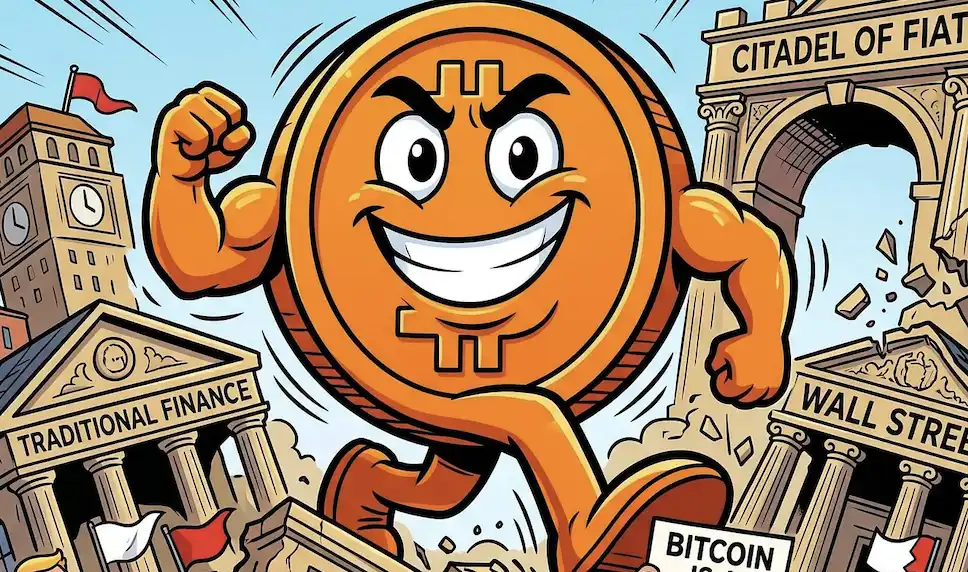
Goldman Sachs Bows Down, Bitcoin Finally Breaks Through the Gates of Wall Street

Wall Street giants, including Goldman Sachs, Morgan Stanley, Charles Schwab, and the New York Stock Exchange, have reversed their long-standing opposition to Bitcoin and are now actively embracing it. After years of dismissing Bitcoin as a scam, a bubble, or a tool for illicit activities, these institutions are launching Bitcoin ETFs, enabling spot trading, and building dedicated crypto infrastructure. Goldman Sachs, which once called Bitcoin a "fraud tool," is now offering Bitcoin ETFs. Morgan Stanley, which internally banned the term "cryptocurrency," has launched its largest-ever ETF backed by Bitcoin. Charles Schwab has opened spot crypto trading for its retail clients, integrating Bitcoin alongside traditional assets. The NYSE is building robust infrastructure to support digital assets, signaling a long-term commitment. This dramatic shift is driven not by a change in ideology but by economic necessity. As Bitcoin repeatedly survived market crashes and grew into a multi-trillion-dollar asset class, ignoring it became too costly. Wall Street’s business model relies on capturing fees, and Bitcoin’s rise represented a massive wealth transfer occurring outside their ecosystem. The fear of missing out (FOMO) and client demand forced these institutions to capitulate. The article frames this as a historic surrender to Bitcoin’s mathematical inevitability. Unlike the trust-based traditional financial system, Bitcoin operates on decentralized, transparent, and unchangeable rules. Its scarcity and resilience make it a hedge against fiat currency devaluation and systemic risk. The narrative has flipped: not holding Bitcoin is now seen as the greater risk. The author concludes that Bitcoin has not been co-opted by Wall Street; instead, it has co-opted Wall Street, marking a fundamental shift in the global financial architecture.

marsbit59m ago

Goldman Sachs Bows Down, Bitcoin Finally Breaks Through the Gates of Wall Street

marsbit59m ago

Trading

Spot
Futures
活动图片