Author: Thejaswini M A
Source: Token Dispatch
Compiled and Organized: BitpushNews
Foreword
Jesse Leimgruber is a co-founder of the AI hardware company OpenHome, and he also holds equity in Anthropic. A few months ago, he revealed on platform X that he might be interested in selling these shares.
To keep track of the constant stream of inquiries, he even developed a dedicated CRM customer management system, as hundreds of buyers approached him, each ready to wire cash immediately.
A "very well-known growth fund" offered a company valuation as high as $1.05 trillion. He mentioned that a large VC firm even proposed to directly give him a General Partner (GP) title if he was willing to pledge his Anthropic shares. However, he later admitted that without those shares, the partner title wouldn't exist.
The market demand reached extreme levels. One banker even offered to gift his $4.8 million mansion in Marin County to early Anthropic employees willing to sell a small portion of their stock. Another investor listed a 14-acre estate on LinkedIn, implying a company valuation exceeding $800 billion.
A secondary market matching agency stated that shareholders were buying stock at a $1.15 trillion valuation. The head of the brokerage firm Rainmaker Securities bluntly said there were essentially no sellers in this market, only extreme supply-demand imbalance.
Leimgruber revealed that he used Ventuals to assess the value of his shares (Ventuals was once an order book on Hyperliquid where traders could place leveraged bets on Anthropic's valuation.)
We don't know how Leimgruber ultimately handled his shares. He might have sold some, all, or none, as private equity transactions are typically not public. From public records, he remained only a "potential seller."
But Ventuals later shut down, its founding team joined Phantom, and trade.xyz essentially captured almost all liquidity on the HIP-3 protocol.
Anthropic is clearly poised to be the next highly sought-after public stock. But for retail investors, unless you are an Accredited Investor, there is simply no way to access private equity. And to become an accredited investor, you first need to be extremely wealthy.
The alternative is Hyperliquid's HIP-3 protocol, which is where Ventuals once existed. Now, Entropy has replaced Ventuals on HIP-3. But does Entropy's story justify being better than Ventuals'? Can we be sure it's better? Let's explore this sector to find out.
The "Autopilot" of Crypto Investment
You're probably already exhausted from tracking a handful of your favorite tokens. The crypto market is no joke and can easily wipe out your capital.
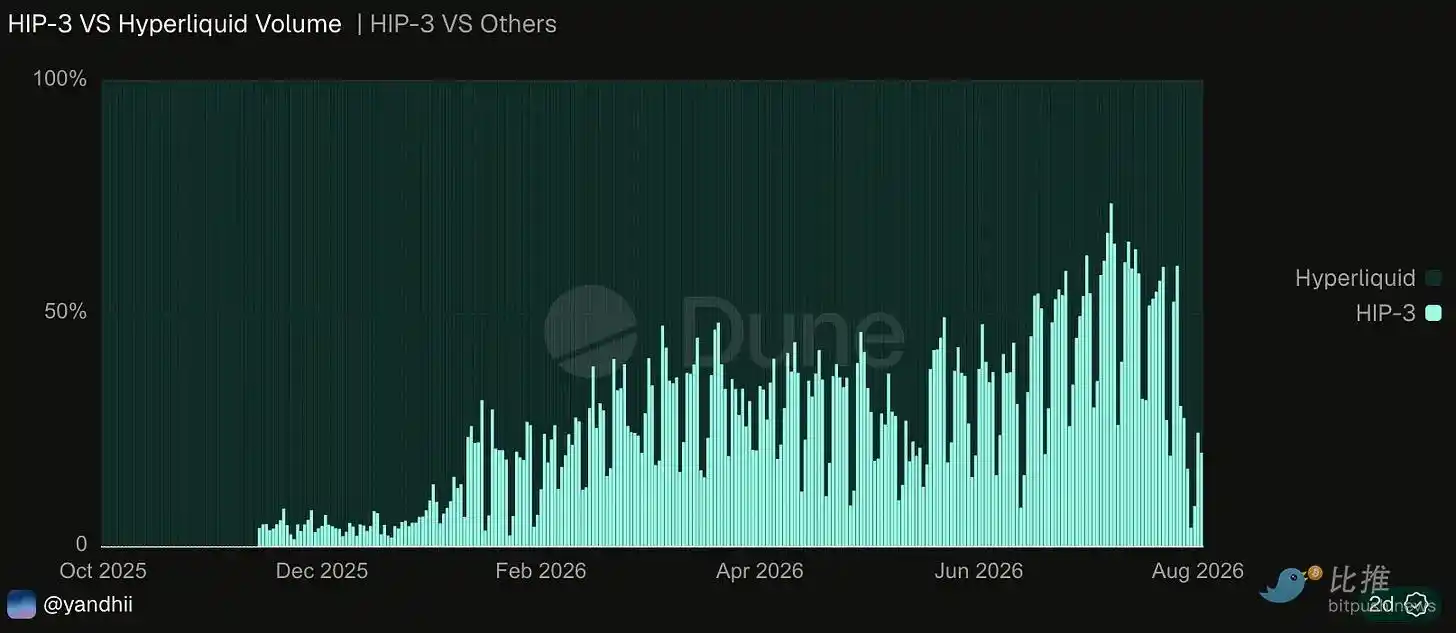
On October 13, 2025, Hyperliquid launched the HIP-3 protocol, allowing anyone to launch a Perpetual Contract DEX on Hyperliquid. But the prerequisite is that you must have $40 million. The transaction fees here are double Hyperliquid's native rate: the deployer retains 50% of the fees, while Hyperliquid uses the remaining 50% to fund token buybacks. Currently, about 30% of Hyperliquid's perpetual contract volume flows through HIP-3 markets.
On August 24, 2026, Entropy met the deployment requirements of Hyperliquid's HIP-3 by locking 500,000 HYPE as collateral (worth $40 million, backed by a $14 million funding round led by Ribbit Capital).
Entropy's ANTH token uses market cap pricing (1 = $1 billion) to circumvent the unknown total number of shares. Therefore, if the price is $2,000, it implies a $2 trillion valuation. Like all assets on HIP-3, you don't actually own Anthropic stock, and Anthropic is completely indifferent to your existence. What you hold is merely a smart contract entry on Hyperliquid's ledger. This entry mathematically tracks the implicit market cap price of Anthropic as listed on the Entropy exchange. Regardless of whether the company goes public in the future, you have no way to convert this synthetic position into real company shares.
If Anthropic does not go public by August 18, 2028, ANTH will be cash-settled based on the 30-day average of its own mark price. Funding rates will continue to run during this period. The contract can settle without relying on the accuracy of any off-chain data.
This year, Hyperliquid deployers tested two other pricing engines to manage pre-IPO synthetic assets.
The first was Ventuals, mentioned earlier. It combined private market blended valuations with its own order book price but did not cap the funding rate.
Another deployer, trade.xyz, completely ignored external valuations, pricing its contracts purely based on its own internal 30-minute average transaction price. It still contributes the vast majority of HIP-3 trading volume today.
trade.xyz was built by Hyperunit's first HIP-3 trading pair launched in October 2025, achieving $1.3 billion in volume within three weeks. As the dominant third-party builder on the platform, Trade.xyz accounts for over half of Hyperliquid's total monthly trading volume.
Data Source: tokenterminal
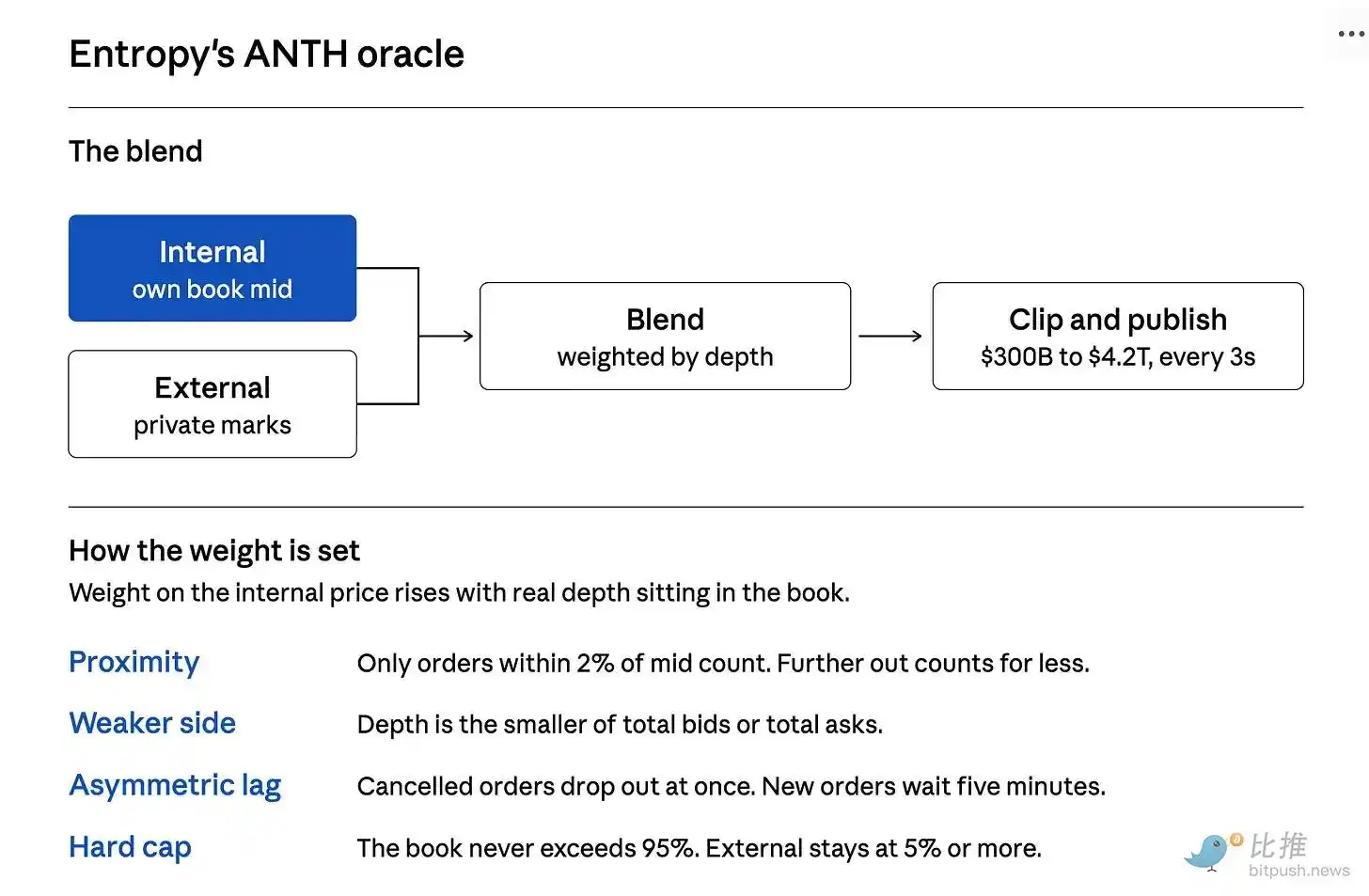
Trade.xyz's oracle strictly relies on its own internal 30-minute average transaction price. It strictly caps funding rates and converts the contract into a standard derivative upon the company's IPO. In contrast, Entropy uses a hybrid oracle that combines real-time order book data with private market valuations, assigning up to 95% weight to the order book only when depth is sufficient; otherwise, it defaults to stale secondary market marks. Additionally, as mentioned earlier, Entropy lists total market cap, not per-share price.
To understand how far Entropy can go, Ventuals is a necessary precedent to understand. It was the first platform to launch a pre-IPO perpetual synthetic market for Anthropic. But the process wasn't exactly pleasant.
Alvin Hsia, Emily Hsia, and Aris Samad founded Ventuals in late 2025, backed by Paradigm. They were the first to run pre-IPO perpetual contracts on HIP-3.
Collateral was their first major challenge. The three founders didn't have 500,000 HYPE readily available. So they created a vault called vHYPE: you deposit HYPE, receive a voucher token in return, the vault uses this HYPE to post collateral, and you earn staking yields throughout the lock-up period. Traders essentially funded the exchange they were about to trade on.
Ventuals opened order books for OpenAI, Anthropic, and SpaceX. The first $100 million in volume took 73 days, while the next $100 million took only 17 days. By February 2026, the platform's volume had exceeded $200 million, with over 11,000 people trading. Hsia later wrote that employees of SpaceX, OpenAI, and Anthropic told him they were using this order book to anchor the value of their company's equity; late-stage funds expressed the same view, as did Leimgruber. That was its peak.
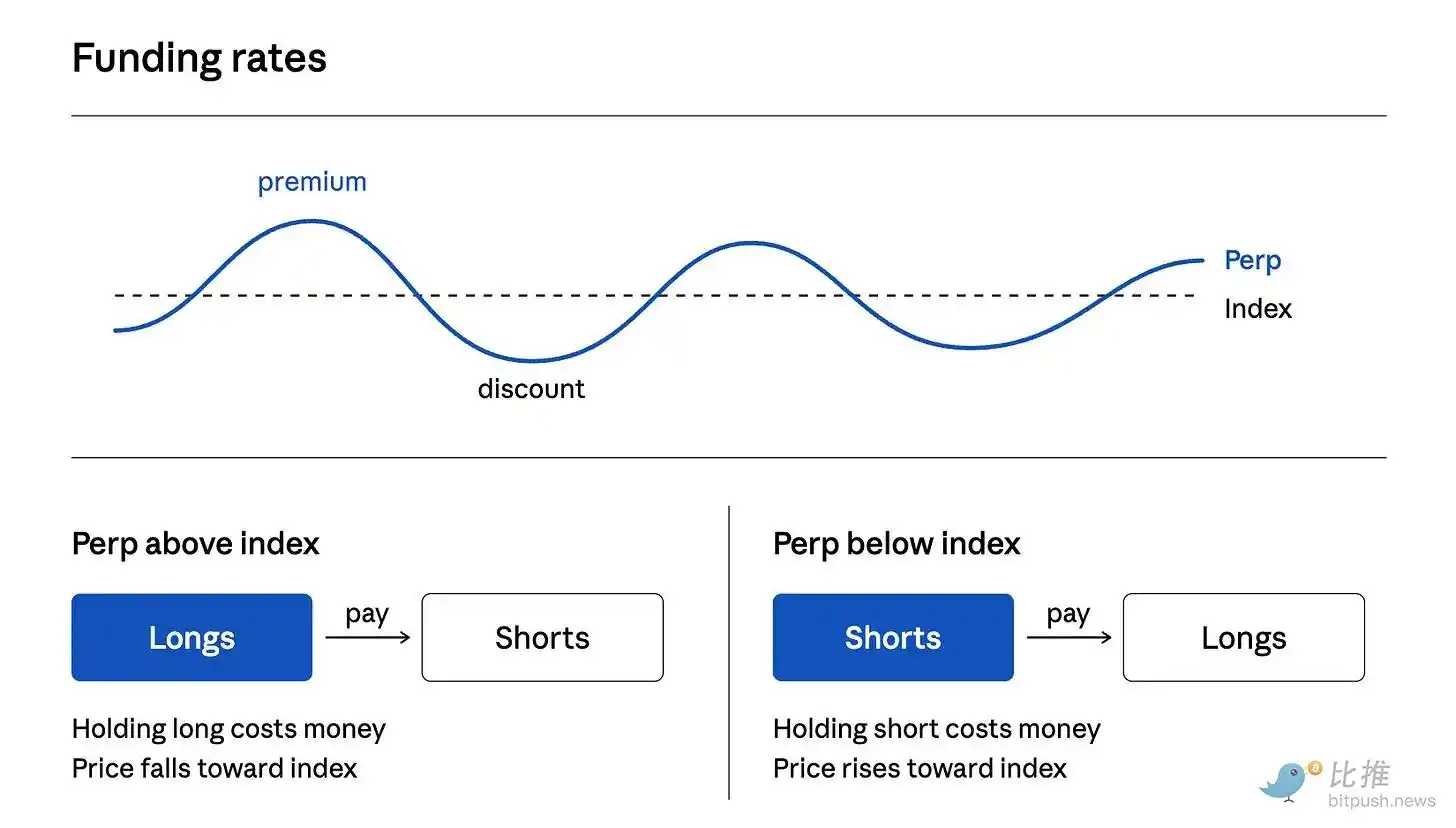
However, Ventuals' SpaceX contract once plummeted 45% in a single trading day, even though nothing happened at SpaceX that day. The order book was instantly drained, with just a few orders crashing the price. The team later compensated traders, a decent move. But Ventuals' mechanism was: as long as its price stayed within a 5% deviation from the real-world valuation, it charged a standard 15% annualized fee; once the spread widened beyond 5%, penalty-style fees would increase exponentially. Later, the annualized funding rate for the Anthropic order book reportedly reached 8,700%.
Typically, traders would correct mispriced assets by buying the undervalued and selling the overvalued. But in this case, they couldn't. Ventuals' contracts were purely synthetic assets and could not be settled with real Anthropic shares—especially after Anthropic restricted secondary market share transfers.
As depositors wanted to end the one-year lock-up early, vHYPE traded at a 20%–30% discount compared to standard HYPE. Subsequently, they shut down the project.
Entropy sounds very similar to Ventuals, so it first addresses those specific failure points. First, it caps the annualized funding rate around 10%, preventing the runaway 8,700% fees that doomed Ventuals. Second, it uses a hybrid pricing oracle, relying on internal order book data only when liquidity is sufficient, otherwise defaulting to private market valuations. Like Ventuals, Entropy also prices Anthropic based on total market cap, not per-share price.
But Entropy lacks the simple listing conversion mechanism of trade.xyz. If Anthropic does not go public by August 18, 2028, ANTH will be cash-settled based on the 30-day average of its own price. If an IPO occurs, Entropy states the oracle will switch to the 1-hour average of the mark price from the three days pre-IPO, then track the public market. Hyperliquid cannot convert a market cap contract into a per-share contract, so ANTH will still be listed in units of billions of dollars post-IPO. Trade.xyz uses per-share pricing from the start, thus avoiding this issue.
The common argument in the market hinges on Entropy's prestigious backing.
Ribbit Capital once allocated a fund to Bitcoin and Coinbase's Series A in 2013, later invested in Robinhood starting in 2014 (including the 2021 rescue financing), and also invested in Ripple, Xapo, and Blockstream. In its public filings, it still holds HOOD and COIN. Its recent crypto investments include Polymarket, Lighter, Tempo, Morpho, Bridge, and leading the $14 million funding round for EntropyIO on August 24, 2026.
Ribbit's core expertise is picking capital-distributing businesses, such as brokerages (Robinhood), exchanges (Coinbase), prediction markets (Polymarket), and on-chain perpetual contracts (Lighter, and now Entropy). But raising $14 million from Ribbit merely means it holds equity in Entropy; its staked collateral still faces the risk of being slashed.
The team's prior experience at institutions like Citadel, Optiver, Polymarket, and Millennium similarly provides no absolute guarantee.
Besides Anthropic, Entropy also listed SanDisk (SNDK). SanDisk is already listed on NASDAQ, so all platforms can simply replicate the same spot price. Within days, SNDK was simultaneously listed on trade.xyz, Lighter, Ondo, Variational, and Aster. Trade.xyz has about $174 million in Open Interest and $276 million in 24-hour trading volume; whereas Entropy has only about $5.6 million in Open Interest and $55 million in volume.
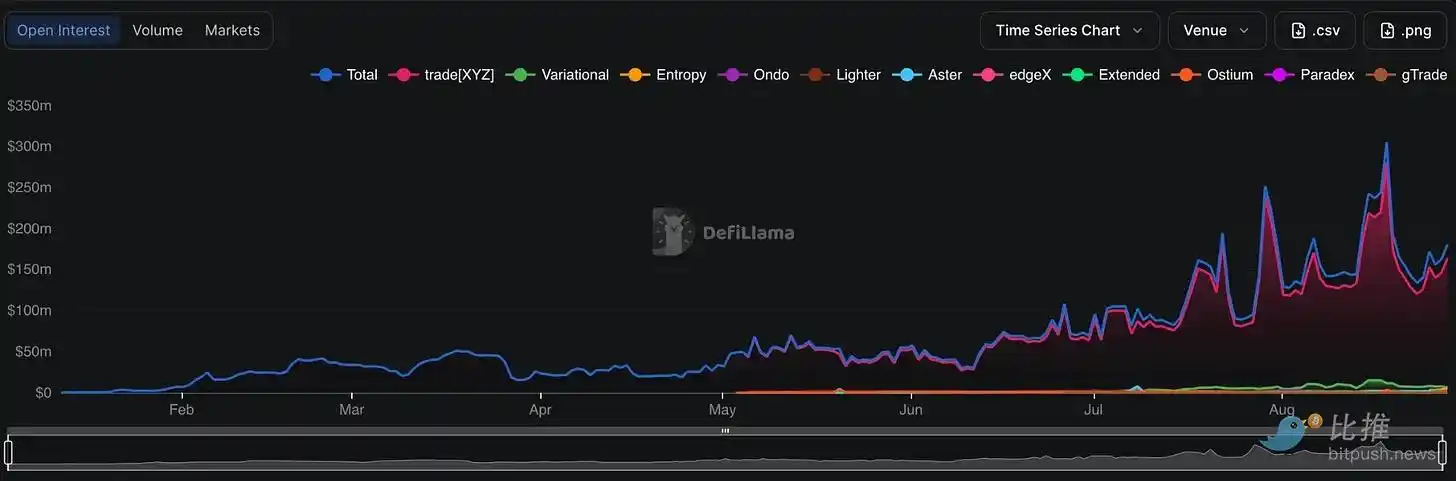
Data Source: defillama
If trading volume is high but Open Interest remains low, it suggests traders are rapidly entering and exiting, aligning with arbitrage, market-making, or automated bot activity across platforms to narrow spreads. Sustained genuine demand is typically reflected in steadily rising Open Interest, as it represents traders building and holding positions long-term.
In other words, the SNDK contract can maintain accurate pricing because automated bots constantly align crypto exchange prices with the NASDAQ stock market in real-time. But ANTH cannot do this because there is simply no real-time stock price to replicate.
Therefore, whenever trading activity is low, the ANTH contract has to rely on stale private valuations, historical funding rounds, or hearsay. Essentially, Entropy hasn't changed the reality that "decentralized exchanges are good at pricing public stocks but struggle to accurately price private, unlisted companies."
On August 19, a deployer named "Kraken HIP-3 test DEX" enabled star-gating on the Hyperliquid testnet. Blockworks analyst Shaunda Devens discovered it whitelisted 10 wallets and used 3 out of 5 new management tools—canceling user orders, forced liquidation, and transferring collateral out of accounts. Meanwhile, a validator registered under the name "Kraken Exchange Validator" appeared in the testnet validator registry.
Neither Kraken nor Hyperliquid confirmed ownership of this testnet DEX. Devens believes it might be real, as Kraken's parent company Payward has already deployed xStocks on HyperCore, and these three tools are precisely what a regulated, compliant institution typically needs. Until formally confirmed, it should not be considered an official product.
Entropy explicitly prohibits users from strictly regulated regions (US, UK, EU, Canada, Australia, Singapore). If these users are allowed to trade in the future, it will likely be through a permissioned, centralized architecture, legally permitted to confiscate assets and perform risk management, like Kraken's model.
Traditional stock exchanges (like NASDAQ or NYSE) rely on human "listing committees" to review and approve which assets can be listed. Hyperliquid's HIP-3 protocol states: no committee permission is needed; anyone who locks $40 million in token collateral is automatically granted the authority to launch a market.
Potential Kraken testnet developments indicate that regulated financial institutions want to use this technology, but they cannot operate legally in a permissionless environment. To comply with government regulations, these institutions are adopting HIP-3's blockchain infrastructure but simultaneously re-hardcoding their strict rules, approved user whitelists, and manual risk management teams (risk desktops) back into the system.
If Entropy succeeds, it will bridge a whole new asset class of private equity onto Hyperliquid's rails. If it fails... well, that just provides another lesson for the next builder. Watching this network evolve and learn from its own ruins is truly fascinating.
The market will eventually turn, so the best strategy for now is to keep building while the night is still young.