Standard Chartered To Launch Crypto Prime Brokerage Through VC Unit – Report

bitcoinistPublished on 2026-01-13Last updated on 2026-01-13

Abstract

Standard Chartered is reportedly planning to launch a cryptocurrency prime brokerage through its venture capital unit SC Ventures, according to a Bloomberg report. The initiative, still in early stages, would expand the bank’s digital asset offerings and operate under the previously announced Project37C joint venture, which focuses on custody, tokenization, and market access. This move aligns with the bank’s growing involvement in crypto, including backing custodians, offering Bitcoin and Ethereum trading, and partnering with platforms like OKX and Coinbase. Launching the brokerage through its VC arm may help Standard Chartered navigate strict global banking capital requirements for crypto, which impose high risk charges on direct holdings. Global regulators are currently reviewing these rules, with the US leading calls for amendments ahead of their planned 2026 implementation.

Banking giant Standard Chartered is reportedly planning to launch a prime brokerage for cryptocurrency trading amid a global push by banks to establish digital asset ventures and compete in the sector.

Standard Chartered Plans Crypto Expansion

On Monday, Bloomberg reported that London-based Standard Chartered is allegedly preparing to expand its crypto efforts with the launch of a prime brokerage for digital assets trading.

According to sources familiar with the matter, discussions are in the early stages, and an official timeline for the launch has not been defined. However, they revealed that the major global bank plans to launch the new crypto business within its venture capital (VC) unit SV Ventures.

Notably, Standard Chartered’s VC unit recently announced that it is developing Project37C, a joint venture related to digital assets, but did not specifically call the platform a crypto prime brokerage. The joint venture is set to offer custody, tokenization, and market access, and “complement the broader Standard Chartered digital asset ecosystem.”

At the time, Harald Eltvedt, Operating Member and Head of Venture Building at SV Ventures, affirmed that “as we see institutional engagement with digital assets accelerating, there is similarly a growing need for platforms that combine innovation with a high standard.”

As the report noted, the banking giant has been one of the most active global financial institutions in the digital assets sector. Notably, it has backed multiple crypto ventures, including custodians and institutional trading platforms.

In July, the institution became the first global systemically important bank to offer spot Bitcoin and Ethereum trading for institutional clients. In Q4 2025, Standard Chartered announced its partnership with crypto exchange OKX in the European Economic Area (EEA) and its collaboration with DCS Card Center as the banking partner for a credit card that enables users to make stablecoin transactions.

Last month, Standard Chartered expanded its partnership with Coinbase to develop a suite of crypto prime services for institutional clients, including trading, staking, custody, and lending.

Global Banking Rules’ Challenge

Bloomberg highlighted that Standard Chartered could benefit from launching the new business through SC Ventures, as it may help circumvent some strict capital requirements for digital assets in corporate and investment banks.

It’s worth noting that the Basel Committee on Banking Supervision (BCBS) released its standard for the “prudential treatment of banks’ exposures to cryptoassets” in 2022, including tokenized traditional assets, stablecoins, and unbacked digital assets.

Under Basel III rules, banks that hold cryptocurrencies face a risk charge far higher than with any other risk assets. The institutions are required to comply with a 1,250% risk charge for exposure to permissionless crypto assets such as Bitcoin and Ether. Meanwhile, some VC investments under the latest Basel capital package only face a 400% charge.

As reported by Bitcoinist, global regulators are in talks to review and potentially overhaul rules for banks’ crypto holdings, set to come into force in 2026. Senior executives stated that banks have largely interpreted the standards as a signal to avoid crypto “since they imposed a heavy capital burden on such holdings.”

However, the recent global shift toward the crypto industry has sparked debates at the BCBS regarding the suitability of these rules under the current environment, with major jurisdictions, including the US and UK, not committing to implementing them on time.

The US has been reportedly leading calls to amend these standards, arguing that the rules are “incompatible with the industry’s evolution,” particularly in the stablecoin sector. Moreover, some countries seem to agree with the US’s reasoning and favor reviewing the standards before they are widely implemented.
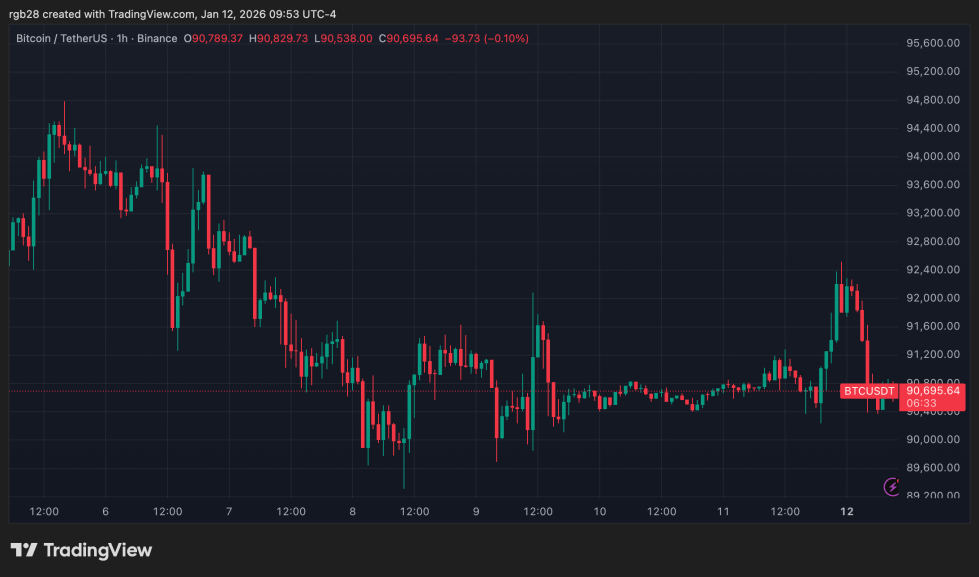
Bitcoin (BTC) trades at $90,695 in the one-week chart. Source: BTCUSDT on TradingView


Related Questions

QWhat is Standard Chartered reportedly planning to launch in the crypto space?

AStandard Chartered is reportedly planning to launch a prime brokerage for cryptocurrency trading through its venture capital unit, SC Ventures.

QThrough which specific unit does Standard Chartered plan to launch its new crypto business?

AThe bank plans to launch the new crypto business within its venture capital (VC) unit, SC Ventures.

QWhat is the name of the joint venture Standard Chartered's VC unit is developing, and what services will it offer?

AThe joint venture is called Project37C, and it is set to offer custody, tokenization, and market access for digital assets.

QWhat is a key regulatory challenge for banks holding cryptocurrencies under the Basel III rules?

AUnder Basel III rules, banks face a punitive 1,250% risk charge for exposure to unbacked crypto assets like Bitcoin and Ether, which is a major capital burden.

QWhy might launching the crypto business through its VC unit be beneficial for Standard Chartered from a regulatory perspective?

ALaunching through the VC unit may help the bank circumvent the strict capital requirements for digital assets that apply to corporate and investment banks, as some VC investments face a lower 400% charge.

Related Reads

Stuck Polymarket: The Real Test After Riding the Traffic Boom Has Arrived

Polymarket, a leading prediction market platform, is facing significant technical challenges as its growth outpaces its current infrastructure on Polygon. Users are experiencing laggy transactions, unresponsive orders, and delayed confirmations, severely impacting the trading experience. In response, DeFi Engineering VP Josh Stevens outlined a comprehensive engineering overhaul. The plan includes reducing on-chain data delays, fixing order cancellation issues, rebuilding the central limit order book (CLOB), improving website performance, and developing a unified SDK and API. A major revelation was the ongoing "chain migration," indicating a potential move away from Polygon. The core issue is that Polymarket has evolved from a simple prediction market into a high-frequency trading platform, making Polygon's limitations—such as block space, gas fees, and block time—a ceiling for further growth. The migration is not just a simple chain switch but a fundamental rebuild of its trading system to support more complex products like perpetual contracts (Perps). This announcement has sparked competition among chains like Solana, Sui, and Algorand, all vying to host Polymarket. For Polygon, losing this key application, which contributes significantly to its gas fee revenue, would be a major setback. The real test for Polymarket is no longer attracting users but proving it can provide a stable, reliable trading environment that retains them.

Odaily星球日报23m ago

Stuck Polymarket: The Real Test After Riding the Traffic Boom Has Arrived

Odaily星球日报23m ago

Lowering Expectations for BTC's Next Bull Market

The author, Alex Xu, explains his decision to significantly reduce his Bitcoin holdings (from full to ~30% of his portfolio) during the current bull cycle, citing a lowered long-term outlook for BTC's price appreciation in the next cycle. He outlines six key reasons for this reduced expectation: 1. **Diminished Growth Drivers:** The narrative of exponential user adoption has largely played out with institutional ETF adoption. The next major growth phase—adoption by sovereign national reserves or central banks—seems unlikely in the near future. 2. **Personal Opportunity Cost:** More attractive investment opportunities have emerged in other assets, such as undervalued companies. 3. **Industry-Wide Contraction:** The broader crypto industry is struggling, with most Web3 business models (SocialFi, GameFi, DePIN) failing. This overall萧条 (depression) reduces the fundamental demand and consensus for Bitcoin. 4. **Strain on Major Buyer:** MicroStrategy, a major corporate buyer of BTC, faces rising financing expenses for its debt, which could slow its purchasing rate and create significant marginal pressure on the market. 5. **Increased Competition from Gold:** The emergence of "tokenized gold" has closed the functional gap (portability, divisibility) between physical gold and Bitcoin, offering a strong competitor in the non-sovereign store-of-value space. 6. **Security Budget Concerns:** The block reward halving continues to exacerbate the long-standing issue of funding Bitcoin's network security, with new fee source explorations like Ordinals and L2s largely failing. The author's decision to hold a significant (though reduced) position reflects a cautious, not bearish, outlook. He remains open to increasing his exposure if the fundamental reasons for his skepticism change or if new positive catalysts emerge.

marsbit1h ago

Lowering Expectations for BTC's Next Bull Market

marsbit1h ago

Can Iran 'Control' the Strait of Hormuz?

Iran has announced a comprehensive plan to assert control over the strategic Strait of Hormuz, a critical global oil shipping chokepoint. The proposed measures include requiring all vessels to obtain Iranian permission for passage, imposing fees for security, environmental protection, and navigation management—preferably paid in Iranian rials—and absolutely banning Israeli ships. Vessels from countries deemed hostile by Iran’s top security bodies may also be barred. Analysts suggest Iran’s motives are multifaceted: increasing pressure on the U.S. and Israel by leveraging control over oil transit to influence global prices and inflation; creating a new revenue stream, potentially exceeding $7.7 billion annually, to counter Western sanctions and support postwar reconstruction; and using transit permissions as bargaining chips in future negotiations, notably with the U.S. However, the plan faces significant practical and diplomatic challenges. Enforcing comprehensive interception and fee collection in the busy waterway, patrolled by international military forces, would be difficult. The U.S. has already countering with a blockade of Iranian ports and threats to intercept any ship paying fees, potentially strangling Iran’s oil exports and fee revenue. Broad international opposition, led by European and Gulf states, and legal controversies further complicate implementation. The proposal may ultimately serve more as a negotiating tactic than a feasible policy, with its execution remaining highly uncertain.

marsbit2h ago

Can Iran 'Control' the Strait of Hormuz?

marsbit2h ago

Trading

Spot
Futures
活动图片