Stablecoin Rules Face 144 Questions In New FDIC Proposal

bitcoinistPublished on 2026-04-09Last updated on 2026-04-09

Abstract

The FDIC has proposed a new regulatory framework for stablecoin issuers, giving the public 60 days to respond to its 144 specific questions. The rules would set standards for reserves, redemptions, capital, and risk management for over 2,700 FDIC-supervised institutions, implementing the GENIUS Act signed in July 2025. A key point is that while the reserves backing stablecoins would be insured, the stablecoin holders themselves would not be covered by federal deposit insurance, as explicitly barred by the law. The FDIC argues the rules will still benefit users by ensuring issuers meet stricter standards. This proposal is part of a broader regulatory effort, with the OCC running a parallel process for other institutions.

The public has 60 days to weigh in. That’s how much time the Federal Deposit Insurance Corporation is giving Americans to respond to its newly proposed framework for regulating stablecoin issuers — a plan built around 144 specific questions the agency wants answered before it finalizes anything.

A Framework Built On Reserve And Risk Standards

The FDIC’s board voted this week to put forward rules that would set standards for reserves, redemptions, capital requirements, risk management, and custody practices for coin issuers operating under its watch.

The proposal applies to FDIC-supervised banks and savings institutions — more than 2,700 of them — and is tied to the Guiding and Establishing National Innovation for US Stablecoins Act, better known as the GENIUS Act, which was signed into law last July.
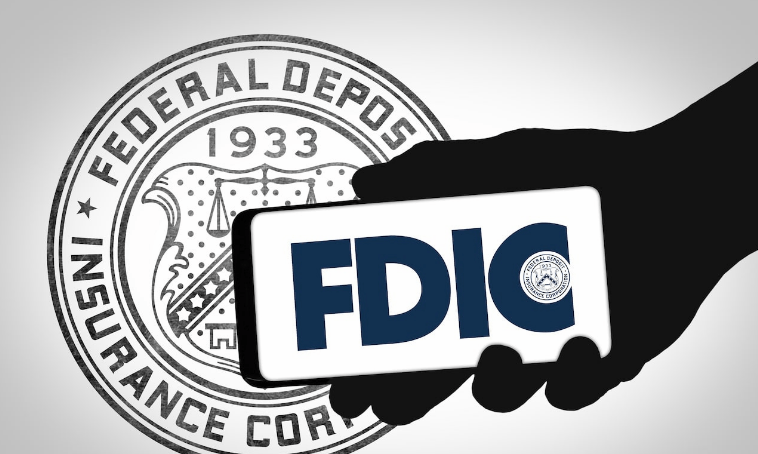
Image: Mullooly Asset Management

The law handed the FDIC formal authority over transaction activity inside the institutions it already supervises. Full implementation is scheduled for January 18, 2027, unless the rules take effect earlier.

This is the agency’s second move to put the GENIUS Act into practice. Back in December, the FDIC put forward a separate plan to set up an application process for insured depository institutions wanting to issue payment stablecoins through subsidiaries. Tuesday’s announcement builds on that earlier step.

The Coverage Gap Stablecoin Users Should Know About

Here’s the part that may surprise some holders. While the reserves that back a stablecoin would be insured under the proposed rules, the people actually holding those stablecoins would not be.

Bitcoin is now trading at $71,941. Chart: TradingView

The FDIC said extending deposit insurance directly to stablecoin holders would conflict with the text of the GENIUS Act itself, which explicitly bars payment stablecoins from being covered by federal deposit insurance.

The agency acknowledged the limitation but argued the rules would still benefit everyday users. A more tightly regulated environment, officials said, means stablecoin holders get stronger assurances that the issuers behind their tokens are being held to serious regulatory standards — even if a federal safety net doesn’t cover them directly.
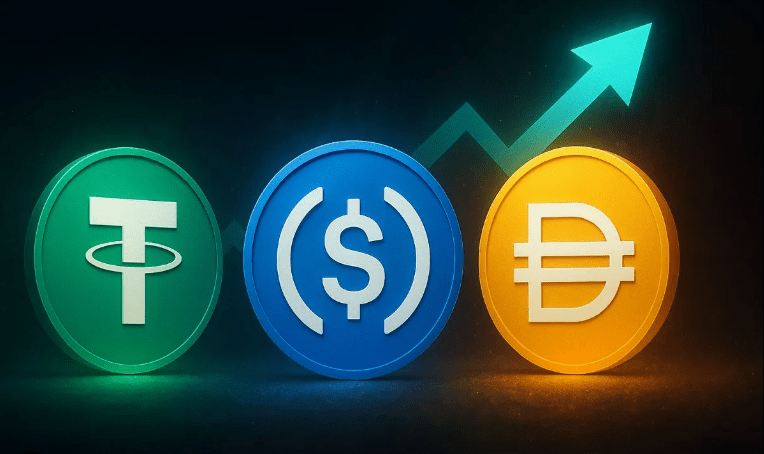
Image: TransFi

A Bigger Regulatory Picture Taking Shape

The FDIC is not working alone. The Office of the Comptroller of the Currency is running its own parallel effort to bring the GENIUS Act to life. Its reach goes further — covering national bank subsidiaries and certain nonbank stablecoin issuers that fall outside the FDIC’s jurisdiction.

Featured image from Unsplash, chart from TradingView

Related Questions

QWhat is the main purpose of the FDIC's newly proposed framework for stablecoin issuers?

AThe main purpose is to set regulatory standards for stablecoin issuers, including requirements for reserves, redemptions, capital, risk management, and custody practices for FDIC-supervised institutions.

QHow many specific questions does the FDIC want answered before finalizing its stablecoin rules, and how long does the public have to respond?

AThe FDIC has put forward 144 specific questions and is giving the public 60 days to respond to the proposed framework.

QUnder the proposed rules, are the reserves backing a stablecoin insured, and are the stablecoin holders themselves insured?

AThe reserves backing a stablecoin would be insured under the proposed rules, but the stablecoin holders themselves would not be covered by federal deposit insurance.

QWhich act is the FDIC's proposed stablecoin framework tied to, and when is its full implementation scheduled?

AThe framework is tied to the Guiding and Establishing National Innovation for US Stablecoins Act (GENIUS Act), and its full implementation is scheduled for January 18, 2027, unless it takes effect earlier.

QWhich other federal agency is working on a parallel effort to implement the GENIUS Act, and who does its rules cover?

AThe Office of the Comptroller of the Currency (OCC) is running a parallel effort, and its rules cover national bank subsidiaries and certain nonbank stablecoin issuers outside the FDIC's jurisdiction.

Related Reads

Analyzing the Impact of AI on Economic Growth and Productivity

**Title: Analyzing AI's Impact on Economic Growth and Productivity** This article examines three contrasting views on AI's influence on economic growth and productivity. **The Optimistic View** posits that AI, especially through automating R&D ("recursive self-improvement"), could dramatically accelerate growth, even triggering a technological "singularity" with explosive, potentially infinite, economic expansion. **The Moderate/Mainstream View** acknowledges AI's productivity benefits but emphasizes significant real-world constraints that could limit its impact. These include: limited cost savings per task, structural ceilings on which jobs and industries are "exposed" to AI, adoption bottlenecks (e.g., compute, energy, regulatory hurdles), and the "weak link" effect where non-automatable tasks cap overall gains. Consequently, the realized AI dividend may be far lower than optimistic projections, with estimates typically ranging from 0.1% to 1.3% annual productivity growth. **The Pessimistic View** stems from two strands. The first aligns with the moderate view but applies extremely conservative assumptions about task exposure and efficiency gains, yielding minimal projected impact. The second introduces a demand-side critique: if AI primarily replaces rather than augments labor, it could depress labor's share of income, weaken consumer demand, and create a "demand trap" that ultimately stifles growth, unless offset by redistribution policies. **The authors' assessment** is nuanced: * **Short-term (1-2 years):** AI will support growth primarily through investment spending, not significant productivity gains. * **Medium-term (3-5 years):** Three potential paths emerge based on AI demand and bottleneck severity: 1. **"Optimistic Path":** High demand, few bottlenecks. Rapid productivity gains but risk of major job displacement and social conflict without redistribution. 2. **"Moderate Path" (most likely):** High demand but significant, surmountable bottlenecks. Leads to moderate productivity gains, financial market volatility (K-shaped returns), and sectoral job losses. 3. **"Pessimistic Path":** Low demand or severe bottlenecks. Minimal productivity and growth impact, triggering financial market corrections but allowing a smoother societal transition with less labor disruption. * **Long-term:** AI holds potential for a major productivity revolution and prosperity. The conclusion stresses that no path is smooth. Technologically "optimistic" outcomes could be socially detrimental, while "pessimistic" technological diffusion might be more socially stable. Policymakers must monitor developments and prepare balanced responses to manage economic, financial, and social sustainability.

marsbit6m ago

Analyzing the Impact of AI on Economic Growth and Productivity

marsbit6m ago

The New Cold War is a Tech Stock War

The New Cold War is a Tech Stock War The article argues that the contemporary geopolitical and economic rivalry between the US and China represents a "New Cold War," but one fundamentally fought through technology and financial markets, not physical barriers or conventional trade. Historically, US dominance was secured through financial systems. The Soviet Union, reliant on the rigid "Transferable Ruble," was ultimately undermined by its dependency on the US dollar for oil trade. Later, Japan's semiconductor challenge was countered not just by tariffs (e.g., Plaza Accord, 301 investigations) but by binding it to US Treasury bonds. China presents a more complex, "embedded" challenger. While it holds vast dollar reserves and US debt like Japan, its industrial base is stronger and more diversified than the Soviet Union's. Surviving the initial 2018 trade war phase, the conflict has evolved into a "tech-financial war." The core battlefield is now the stock market. US tech stocks (AI, semiconductors) are treated as sovereign assets, buoyed by bipartisan national will. China is pushing to strengthen its own financial markets to convert industrial strength into financial power and fund its tech ambitions. Companies like ChangXin (semiconductors), Moonshot AI, and DJI compete not just for market share but as financial proxies for their respective systems. The new paradigm is moving from globally efficient monopolies (Apple, Google) towards companies that achieve monopolistic profits within their respective geopolitical spheres. This competition over "pricing power" and financial valuation in segmented markets defines the current era, making the stock market the primary arena for this tech-centric struggle.

marsbit16m ago

The New Cold War is a Tech Stock War

marsbit16m ago

RWA Weekly: Ten European Financial Institutions Establish Tokenized Asset Cooperative; Ondo Launches New Execution Network Ondo Network

RWA Weekly: European Banks Form Tokenized Asset Cooperative; Ondo Launches New Execution Network Ondo Network Covering July 24-31, 2026, the RWA sector saw a steady on-chain total value locked (TVL) of $36.8 billion, with holder count hitting a record high. However, stablecoin transfer volumes fell sharply (~30%), indicating low on-chain settlement demand. Key regulatory moves include South Korea advancing stablecoin legislation and a push to scrap crypto taxes, Kenya lowering capital requirements for stablecoin issuers, and Zimbabwe approving seven projects for its crypto sandbox. In project developments, BIS-led Project Agorá successfully tested cross-border payments with tokenized funds across six currencies. Ten major European financial institutions formed the RL1 blockchain cooperative to build tokenized asset infrastructure. Other notable updates: Aviva launched a tokenized dollar liquidity fund on XRPL, POSCO International tokenized commercial invoices on Injective, and a Brazilian farmer used tokenized cattle as collateral for a loan. Additional progress includes BNY Mellon migrating its core transfer agent operations to blockchain, Securitize gaining SEC investment advisor registration, and Tether’s compliant stablecoin USA₮ launching on Celo. Ondo Finance introduced Ondo Network, a new execution layer focused on speed and privacy, moving away from its initial chain plans. An analysis highlights that despite the growing scale of on-chain RWAs (~$32B), approximately 90% remain underutilized in DeFi, pointing to a critical challenge in unlocking liquidity and fostering real-world application beyond mere issuance.

marsbit16m ago

RWA Weekly: Ten European Financial Institutions Establish Tokenized Asset Cooperative; Ondo Launches New Execution Network Ondo Network

marsbit16m ago

South Korean Stock Market Sees Sharp Rebound After Forceful De-leveraging, SK Hynix Rises 30%

On July 31, South Korean stocks staged a historic rebound. The benchmark KOSPI index surged 18.27%, with chipmaker SK Hynix hitting a 30% gain limit. This followed a brutal, near-40% decline in the KOSPI over the previous month, driven largely by a deleveraging spiral involving leveraged ETFs. Analysts attributed the sharp sell-off to structural liquidity issues rather than deteriorating corporate fundamentals. The rally was triggered by a confluence of positive catalysts. Firstly, strong earnings from U.S. cloud giants Microsoft and Amazon alleviated fears of an "AI bubble burst," boosting global tech sentiment. Secondly, SK Group Chairman Chey Tae-won made a rare personal purchase of SK Hynix shares, seen as a strong vote of confidence. Thirdly, the South Korean government announced a 20 trillion won ($139 billion) AI investment fund. In response to the market turmoil, South Korean regulators are tightening controls on leveraged ETFs, admitting oversight shortcomings. Measures include raising minimum cash保证金 requirements for散户 investors and suspending new product launches. While the rebound signals eased liquidity pressure, analysts note deep structural issues remain. The market's future stability is seen as dependent on global tech capital expenditure trends and memory chip price cycles, with some viewing the surge as a technical correction rather than a definitive trend reversal.

marsbit37m ago

South Korean Stock Market Sees Sharp Rebound After Forceful De-leveraging, SK Hynix Rises 30%

marsbit37m ago

Trading

Spot
活动图片