Author: Chloe, ChainCatcher
SpaceX formally submitted its S-1 registration statement to the U.S. Securities and Exchange Commission (SEC) yesterday, planning to list on the Nasdaq and Nasdaq Texas under the stock ticker "SPCX". This approximately 200,000-word document marks the first full disclosure of the comprehensive financial picture of this rocket manufacturer, founded in 2002, and the businesses Elon Musk has gradually merged into it in recent years, including satellites, social media, and AI.
This IPO has garnered intense global market attention because it simultaneously hits three critical core points: valuation scale, the AI concept frenzy, and a rebound after years of suppressed IPO market activity.
How Big is the IPO Scale? The Target Nearly Triples Saudi Aramco's Historic Record
To understand the scale of SpaceX's IPO, one must first review the current record holder.
In December 2019, Saudi Aramco listed on the Saudi Tadawul Exchange in Riyadh, with an initial fundraising of $25.6 billion. After exercising an overallotment option the following month, the total fundraising reached $29.4 billion, making it the largest IPO in human history at the time.
According to a Fortune report citing The Wall Street Journal, SpaceX is seeking to raise approximately $80 billion through this IPO, corresponding to a company valuation of about $1.7 trillion. If achieved, this fundraising scale would far surpass the record set by Saudi Aramco in 2019.
Notably, the prospectus itself, as is customary, has not yet disclosed the number of shares offered or the offering price at this stage. SpaceX has only left blank fields for the price range per share and fundraising amount in the document; these figures will be determined during the subsequent roadshow and pricing phases.
If it lists at a $1.7 trillion valuation, SpaceX will rank among the world's top ten largest publicly traded companies by market capitalization.
Why is it 'The Elon Show'? Musk Holds Absolute Control
The spotlight in the prospectus falls almost entirely on Musk, who is simultaneously the founder, CEO, CTO, and Chairman of SpaceX. The document clearly reveals that he holds complete control over the company.
According to Fortune's summary of the prospectus, Musk holds approximately 85% of the company's voting rights through special Class B shares. The document explicitly states that Musk will have "the right to control the outcome of matters requiring shareholder approval, including the election of all directors." The corporate bylaws also grant Musk the right to freely engage in businesses that directly compete with SpaceX.
The Financial Times further disclosed the unusual measures taken by the board to consolidate Musk's control. The board recently granted Musk two massive tranches of super-voting Class B shares, totaling 1.3 billion shares, each with 10 votes. These shares will vest in batches as SpaceX achieves market capitalization milestones and meets conditions such as building a powerful orbital AI data center or establishing a permanent colony with at least 1 million residents on Mars.
Since these shares are granted to Musk in the form of restricted stock rather than options or RSUs, The Financial Times points out that Musk can immediately exercise the full voting rights of these shares while employed by SpaceX. More critically, Musk can only be removed from his positions as Chairman or Chief Executive Officer by a majority vote of Class B shareholders, and he personally controls 93.6% of the Class B shares, effectively ensuring his positions cannot be removed.
Because Musk will hold a majority of voting rights, SpaceX will be a "controlled company" under Nasdaq rules after listing and intends to claim exemptions from certain corporate governance requirements, such as not needing a board majority composed of independent directors.
The Core of Valuation: AI's Money-Burning Black Hole and Starlink's Cash Engine
Furthermore, the prospectus also discloses for the first time the complete financial status of the merged entity, presenting a picture of "steady revenue growth, but simultaneously widening losses."
According to the official S-1 filing, SpaceX's consolidated revenue for 2025 reached $18.674 billion, an increase of about 33% compared to $14.1 billion in 2024. However, losses also widened simultaneously: as of March 31, 2026, SpaceX's "accumulated deficit" had reached $41.3 billion; the net loss for Q1 2026 was $4.27 billion, far higher than the $528 million loss in the same period last year.
Looking at operating profit, the full-year operating loss for 2025 was $2.589 billion, but the adjusted EBITDA remained positive at $6.584 billion.
Starlink: The Stable Cash Engine
The Connectivity business, particularly Starlink, is the core support for SpaceX's valuation and the primary financial engine of the entire group.
According to the official document, as of March 31, 2026, Starlink has deployed approximately 9,600 broadband and mobile satellites in low Earth orbit (LEO), serving approximately 10.3 million Starlink subscribers across 164 countries, regions, and markets.
Financially, the Connectivity business generated $11.387 billion in revenue and $4.423 billion in operating profit in 2025, with year-over-year growth rates of 49.8% and 120.4%, respectively. According to Fortune, this business contributes over two-thirds of SpaceX's revenue and earned $1.2 billion in profit in the most recent quarter.
AI: The Money-Burning Machine Merged In
Post-merger, xAI's losses are also directly consolidated into SpaceX's financials. According to the official S-1, the AI business segment generated only $3.201 billion in revenue in 2025 but recorded an operating loss as high as $6.355 billion, reflecting its still early-stage development and continued heavy investment. In Q1 2026 alone, the capital expenditure of the AI division was as high as $7.723 billion.
The Financial Times notes that this voluminous prospectus highlights how Musk's group, "spanning from rockets to AI," has to a large extent become a massive bet on AI. Musk views AI as the largest market SpaceX can penetrate, with a potential scale of up to $26.5 trillion, far exceeding the combined market for Starlink and space business at around $2 trillion.
However, SpaceX still lags behind market leaders like OpenAI, Anthropic, and Google in the AI field. According to The Financial Times, SpaceX invested nearly $13 billion in AI hardware last year, and this business segment recorded a $6.4 billion operating loss, dragging the entire group into a net loss, despite Starlink creating a $4.4 billion operating profit.
An Unexpected Cash Flow Highlight: Leasing Compute Power to Competitor Anthropic
The prospectus disclosed a transaction that surprised the market: Musk has started monetizing his surplus computing resources.
According to the official S-1, SpaceX entered into Cloud Services Agreements with AI research non-profit Anthropic in May 2026, granting Anthropic access to computing capacity at the two flagship data centers COLOSSUS and COLOSSUS II. Under the agreement, Anthropic will pay $1.25 billion per month until May 2029, with a discounted rate during the capacity ramp-up period in May and June 2026. The agreement can be terminated by either party with 90 days' prior notice.
The Financial Times estimates that, converted, this deal means Anthropic will pay SpaceX about $15 billion annually, potentially totaling $45 billion by May 2029, which would far offset its hardware investment.
However, The Financial Times also points out the paradox of this deal: leasing computing capacity to a direct competitor precisely highlights the limited market adoption of Musk's own Grok chatbot. Fortune also cites this deal as an example, noting it highlights SpaceX's successful exploration of other revenue sources while also underscoring the highly interconnected and potentially risky relationships within the AI industry.
Finally, the prospectus paints a grand vision: SpaceX wants to move the computational burden to space.
SpaceX hopes to leverage its "terrestrial experience" in computing infrastructure to launch a vast constellation of orbital data centers powered by the sun and cooled by the vacuum of space. Moving the AI computation burden to orbit is just the first step, pointing towards broader opportunities including "on the moon and on Mars."
Official documents show SpaceX expects to begin deploying orbital AI computing satellites as early as 2028. These near-term ambitions all rely on the success of SpaceX's latest-generation Starship rocket, described by foreign media as a reusable spacecraft taller than a 35-story building. With its low-cost satellite launch capability, SpaceX has monopolized the launch market; according to the official document, since 2023, SpaceX has accounted for over 80% of the total weight of satellites and cargo launched into orbit worldwide annually.
A Billionaire's Feast? Musk and Loyal Partners' Wealth Surge
If the company achieves a $1.75 trillion valuation, this listing will unlock vast new wealth for SpaceX executives and investors:
-
President Gwynne Shotwell and CFO Bret Johnsen: The value of their respective holdings will each exceed $1 billion.
-
Long-time Musk supporter and board member Antonio Gracias (head of Valor Equity Partners): Holds 503 million shares through several of his funds, potentially worth over $70 billion.
-
PayPal and Founders Fund co-founder Luke Nosek (joined SpaceX board in 2008): Holdings valued at approximately $5 billion.
But no one's holdings match Musk's. According to The Financial Times, Musk holds 5.1 billion vested shares, representing about 41% of the total shares, potentially worth around $700 billion. A successful listing could make him the world's first "trillionaire."
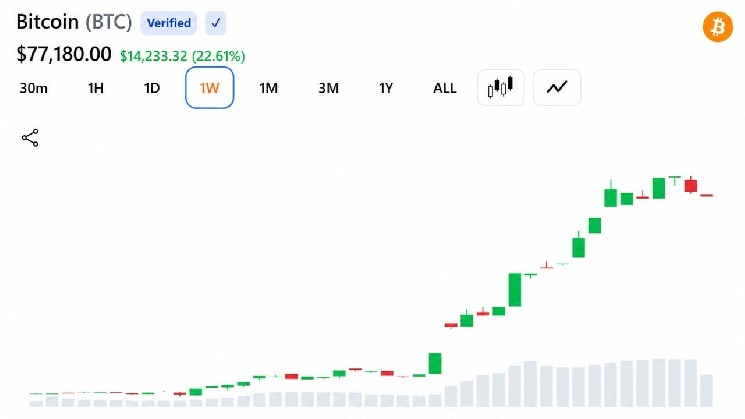
Additionally, the prospectus also reveals SpaceX's Bitcoin holdings for the first time, holding 18,712 BTC as of the end of March 2026. According to TradingKey citing CoinGecko data, this scale ranks 11th among global BTC-holding entities, surpassing publicly traded companies like Tesla and Coinbase, but still far below MicroStrategy (MSTR), which holds over 840,000 BTC.
It is worth noting that IPOs typically have a 180-day lock-up period to prevent insiders from selling post-listing. According to The Financial Times, Musk has agreed to a lock-up period of up to 366 days, double the standard 180-day IPO period. Some other major shareholders have lock-up arrangements similar to Musk's, but some shareholders can freely sell their holdings after the standard 180-day period.
Regarding the underwriting syndicate, according to The Financial Times, Goldman Sachs won the lead role for the deal, beating out competitors like Morgan Stanley, JPMorgan Chase, Citigroup, Bank of America, and UBS. The entire underwriting syndicate comprises 23 Wall Street financial institutions. Retail investors will receive allocations of the newly listed shares through channels such as Charles Schwab, Fidelity's brokerage division, and Robinhood.
Risk Factors and Controversies in the Prospectus
Beyond the scale itself, the prospectus also discloses several risks and controversies worthy of investor attention.
"The CEO Who Cannot Be Fired" and Governance Controversies
As mentioned, through dual-class share structure and super-voting rights, Musk is nearly impossible to remove. The prospectus devotes 37 pages to disclosing risk factors, including the high concentration of power in Musk's hands and potential conflicts of interest he faces as Chief Executive Officer.
A concrete example of such a conflict is: the prospectus discloses that SpaceX purchased $131 million worth of Cybertrucks from Tesla last year at retail price (no discount). The Financial Times estimates this is equivalent to about 1,500 of these slow-selling vehicles, highlighting how, in the absence of independent checks, SpaceX funds could flow to Musk's other ventures.
Furthermore, since SpaceX has absorbed Musk's social platform X and AI lab xAI, its risk disclosures span three distinct fields. The risks listed in the S-1 range from heavy regulation to space-related risks, including radiation from solar and cosmic sources, orbital debris, and personnel injury or death.
Conclusion: How Should Investors Approach the Largest IPO Event in History?
The public filing of SpaceX's prospectus marks the first truly historic event in the IPO market after years of consecutive doldrums. According to Fortune, SpaceX's market debut could take place as early as June and is expected to be the first in a series of massive AI company IPOs, likely followed by OpenAI and Anthropic waiting for their moment.
For investors, several key variables remain to be verified during the subsequent roadshow and pricing phases: the final number of shares offered and pricing, whether Starlink's cash flow can continue to support the valuation story, the speed of loss convergence for the AI business, and whether the highly concentrated governance structure will raise market concerns during the roadshow.
With the prospectus now public, the real story is just beginning.