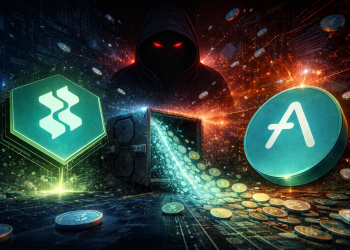
Solana tests quantum-resistant transactions in new Project Eleven pilot

cointelegraphPublished on 2025-12-17Last updated on 2025-12-17

Abstract

The Solana Foundation has partnered with post-quantum security firm Project Eleven to prepare the Solana blockchain for the potential threat of quantum computing. A pilot testnet successfully demonstrated that end-to-end quantum-resistant transactions are both practical and scalable on Solana, a notable claim given that such cryptography is typically more computationally expensive. The specific encryption standard used was not disclosed, though NIST recently endorsed three new post-quantum standards. This initiative reflects a broader industry concern, with experts like Ethereum's Vitalik Buterin estimating a 20% chance of quantum computers breaking current cryptography by 2030. The move highlights the proactive steps some blockchains are taking to safeguard digital assets against future quantum risks.

The Solana Foundation has announced a partnership with Project Eleven, a post-quantum crypto security company, to prepare Solana for the rise of quantum computing.

According to a Tuesday announcement, Project Eleven led a full quantum computing threat assessment on Solana and prototyped a functioning Solana testnet using post-quantum digital signatures. The announcement claims that its testnet implementation showed “end-to-end quantum-resistant transactions are practical and scalable.”

This is a notable claim, given post-quantum cryptography is often expected to be significantly more computationally expensive than traditional alternatives.

Solana had not responded to Cointelegraph’s request for comment by publication, including to questions about which post-quantum encryption standard the testnet in question uses.

The US National Institute of Standards and Technology (NIST) endorsed three post-quantum encryption standards in August 2024. Those standards are the Federal Information Processing Standard (FIPS) 203, 204, and 205.

In 2024, internet infrastructure giant Cloudflare compared FIPS 204 with Ed25519 (used by Solana) and RSA-2048. Tests found that FIPS 204 was nearly five times more expensive to sign but twice as fast to verify as Ed25519, while RSA-2048 is slower to sign than both and slightly faster to verify than FIPS 204.

Source: Solana Foundation

Related: What happens to Satoshi’s 1M Bitcoin if quantum computers go live?

Preparing for a future threat

Solana Foundation’s vice president of technology Matt Sorg said the company’s “mission is to protect the world’s digital assets from quantum risk.” The same kind of preoccupation unites most, if not all, major crypto ecosystems.

The comment follows Ethereum co-founder Vitalik Buterin’s recent statement that there is a 20% chance that quantum computers could break current cryptography before 2030. However, that timeline is not a belief shared by all experts, with Adam Back, the cryptographer and cypherpunk cited in the Bitcoin (BTC) white paper, saying in November that Bitcoin is unlikely to face a quantum threat for another 20 to 40 years.

Related: ‘We should migrate now’ to post-quantum encryption, researcher says

Still, Ethereum has a relatively dynamic and quick developer response, which helps with reacting to such a challenge. In late November, James Check, founder and lead analyst at Bitcoin onchain analysis service Checkonchain, suggested that this is not the case for Bitcoin.

He explained at the time that the technological problem of quantum resistance is largely solved, but Bitcoin’s governance will find solving the arising issues a challenging task. More specifically, Check claimed that “there is no chance we come to consensus to freeze” Bitcoin that is not moved to quantum-resistant addresses. Such a failure would result in a large amount of lost Bitcoin flooding the market, as old addresses that did not migrate are compromised.

Related Reads

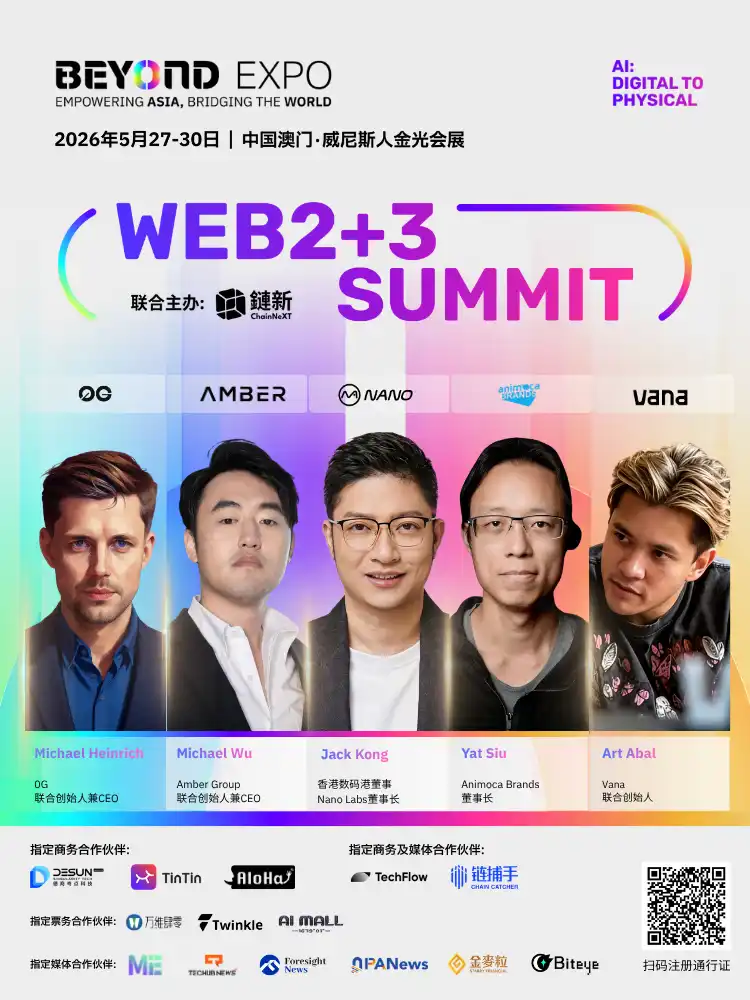
First Batch of Keynote Speakers and Partners Announced! Web2+3 Summit: Defining the Next Generation of Digital Economy

Web2+3 Summit: Defining the Next Generation of Digital Economy The 6th BEYOND International Technology Innovation Expo (BEYOND Expo 2026), Asia's largest tech and ecosystem exhibition, is launching a dedicated Web2+3 stage for the first time. Co-hosted by BEYOND Expo and ChainNeXT Group, the Web3 Summit will take place from May 28–30, 2026. Against the backdrop of accelerating global tech integration, the boundaries between Web2 and Web3 are rapidly blurring. With clearer global regulations for blockchain-driven internet (Web3) and the special issuance of a Hong Kong dollar stable币 license by the Hong Kong SAR government on April 10, 2026, Web3's decentralized principles are quickly merging with traditional industries (Web2) such as e-commerce, finance, and artificial intelligence. Focused on blockchain-driven digital economy elements, the summit will center on three core principles—implementability, commercial viability, and compliance. It will bring together top Web3 experts to discuss key integration areas like stablecoin payment finance (PayFi), real-world asset tokenization (RWA), and decentralized AI (DeAI), unveiling new opportunities for industrial innovation. The first wave of confirmed speakers includes Jack Kong (Director of Hong Kong Cyberport, Chairman of Nano Labs), Yat Siu (Chairman of Animoca Brands), Michael Wu (Co-founder & CEO of Amber Group), Michael Heinrich (Co-founder & CEO of 0G), and Art Abal (Co-founder of Vana). More Web3 ecosystem pioneers, AI, and fintech experts will be announced soon. Core forum topics include: - Web2+DeAI: New AI Paradigms Driven by Decentralized Infrastructure - Web2+RWA: Real-World Asset Tokenization and Global Liquidity - Web2+PayFi: Cross-Border Payments and Financial Innovation Powered by Crypto Infrastructure - Web2+3 AI: Autonomous Agents and the Crypto Economy - Web2+3 Wealth: On-Chain and Off-Chain Integrated Investment Ecosystems - Web2+3 Commerce: A New Landscape for Global Trade Driven by Stablecoins Additional agenda details will be released in the near future.

marsbit31m ago

First Batch of Keynote Speakers and Partners Announced! Web2+3 Summit: Defining the Next Generation of Digital Economy

marsbit31m ago

Trading

Spot
Futures

Hot Articles

Discussions

Welcome to the HTX Community. Here, you can stay informed about the latest platform developments and gain access to professional market insights. Users' opinions on the price of SOL (SOL) are presented below.

活动图片