Snap, Unprofitable for Nine Years, and a Decade-Long AR Obsession Without Return

marsbitPublished on 2026-06-22Last updated on 2026-06-22

Abstract

Snap's AR Obsession: A Decade of Betting Against the Odds On June 16, Snap CEO Evan Spiegel unveiled the new AR glasses, Specs, priced at $2,195, causing the company's stock (SNAP) to plummet nearly 10%. The launch was met with intense criticism online, with investors questioning why a consistently unprofitable company would stake its future on an expensive product its core young user base can't afford. Snapchat, known for pioneering features like ephemeral Stories and popular AR lenses (like the iconic dog filter), has a history of innovation often copied by rivals like Instagram and Meta. Despite this, it has struggled to translate first-mover advantage into commercial success. Since its 2017 IPO, Snap has reported annual net losses, with a Q1 2026 loss of $89 million. Its stock is down 94% from its 2021 peak, hampered by iOS privacy changes, competition, and a young demographic less attractive to major advertisers. In this challenging context, Spiegel is doubling down on AR. He calls 2026 a "crucible moment," having recently laid off 16% of staff while reportedly investing over $3.5 billion cumulatively in its AR glasses line over nearly a decade. The new Specs represent a significant leap from the 2016 camera-focused Spectacles, offering true AR overlays, gesture control, and standalone operation. However, at $2,195, it faces tough comparisons. While more advanced than Meta's $799 Ray-Ban smart glasses, critics point to its heavier weight, short battery life, and featu...

Author: June, Deep Tide TechFlow

On June 16th, Snap CEO Evan Spiegel officially launched the AR glasses 'Specs' at the Augmented Reality World Expo, priced at $2,195.

On the day of the announcement, SNAP's stock price plummeted nearly 10%, closing at $5.16.

Soon, a popular post appeared on the famous Reddit retail investor community r/wallstreetbets:
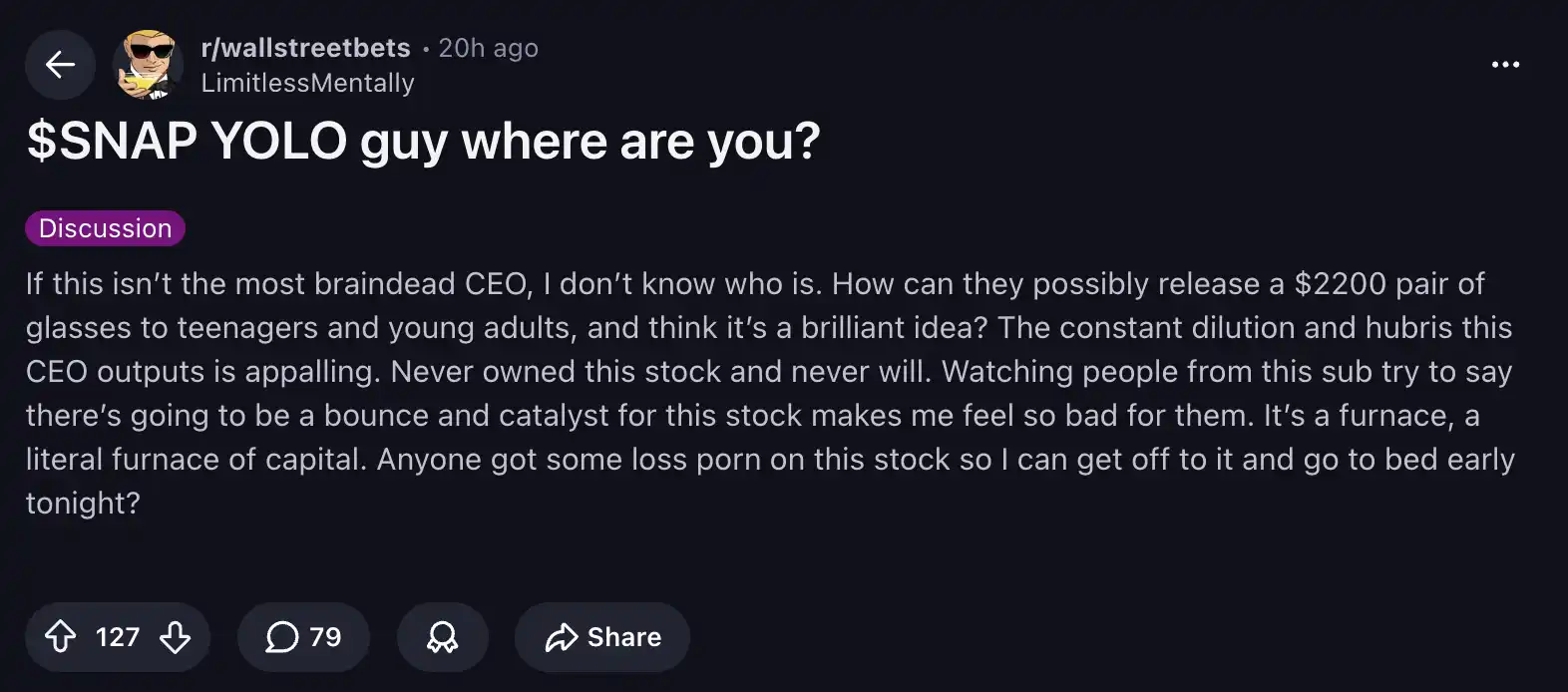
The poster called the CEO "brain-dead," compared the company to a "capital furnace," and even asked for someone to post some "pictures of miserable losses" to help him sleep soundly.

He voiced the most direct question for the entire market: How can a company with years of losses stake its turnaround on a pair of glasses that young people can't even afford?

A Product You Might Not Have Used, But Have Certainly Seen

Talking about Snapchat, friends in China might not be very familiar, but you've probably seen this once wildly popular "dog filter":

That virtual puppy sticking out its tongue, with ears moving with the head, was one of the most viral among the Lenses (AR filters) launched by Snapchat in 2015.

The real-time facial tracking technology behind it came from Looksery, a Ukrainian startup acquired by Snap for approximately $150 million that same year. This was the largest acquisition deal in Ukraine's tech history at the time, but the one that truly turned this technology into a global phenomenon, making it a plaything imitated by celebrities and ordinary users alike, was Snapchat.

A Pioneer Repeatedly Copied

To some extent, looking back at Snapchat's history, it reads more like a "history of being copied."

Its pioneering ephemeral Stories feature was almost copied verbatim by Instagram, and now almost every social app has it; its camera-first interface and left-right swipe navigation were adopted by the entire industry for nearly a decade; even its early bet on AR glasses was beaten to the market as a hit product by Meta's Ray-Ban smart glasses.

Time and again, Snapchat stood at the technological forefront but consistently failed to turn "first-mover advantage" into "commercial victory."

This is also evident from its stock performance.

From its all-time high of $83.34 in September 2021, SNAP has plunged by 94% over the past five years, starkly contrasting with the record-breaking U.S. stock market during the same period.

2021 happened to be the peak of the pandemic's benefits but also a turning point. That same year, Apple tightened iOS privacy tracking permissions, directly crippling Snap's core advertising targeting capabilities. In the following years, TikTok and Instagram rose strongly, while Snap, with its persistently weak profitability, never saw its stock price return to its former levels.

Back to the popular post mentioned at the beginning.

Why did Snap's stock price drop immediately after announcing a new product, and why were these AR glasses almost universally ridiculed on X and Reddit?

First, we have to mention its core user base. Snapchat's main users are Gen Z, aged 18 to 24. Selling a $2,195 pair of glasses to a group of young people who largely can't afford them is clearly unrealistic.

Placing it within the context of its peers makes this dilemma clearer.
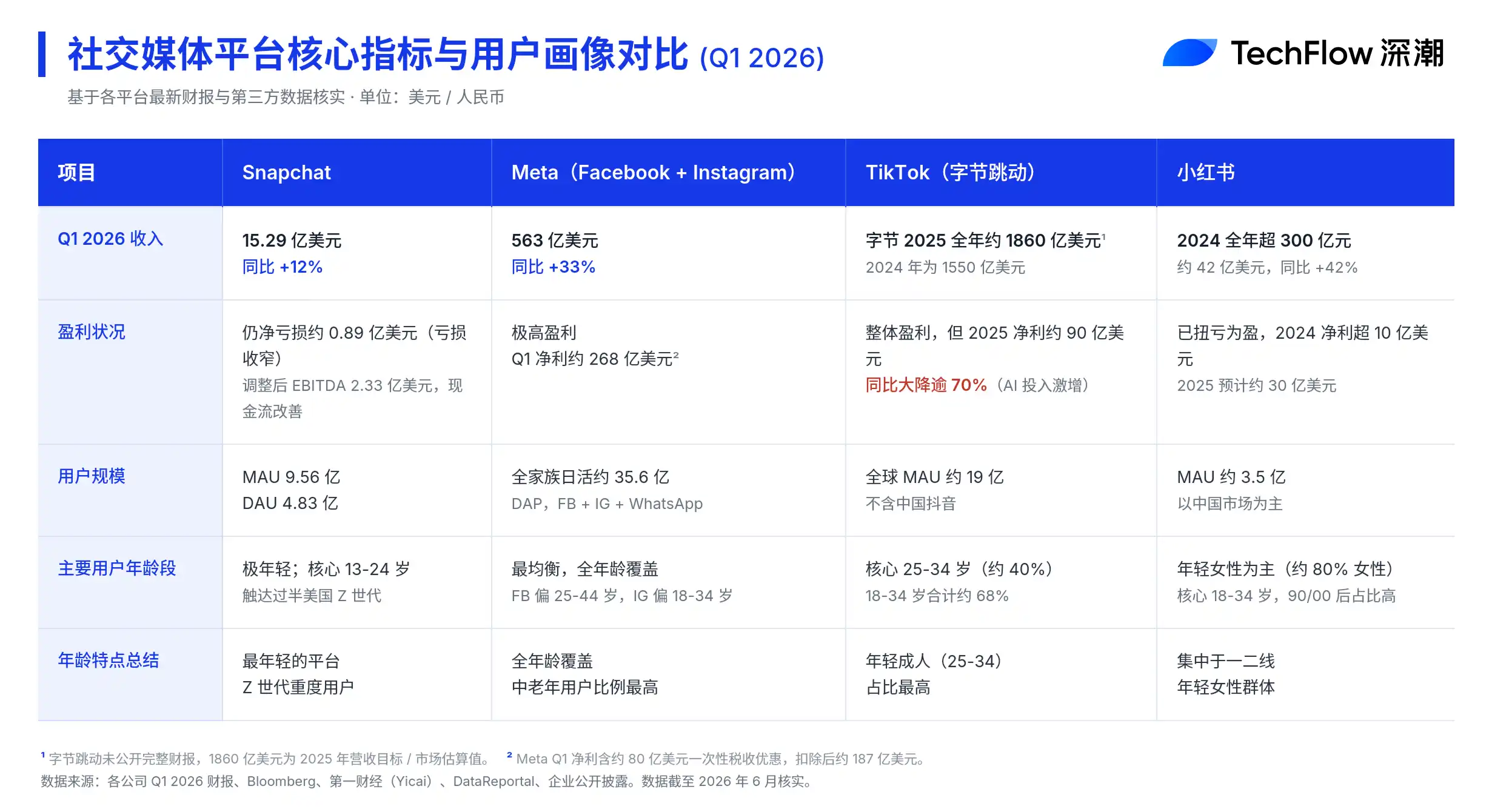
Also in content and social networking, Meta generates $56.3 billion in revenue and nearly $27 billion in net profit per quarter; ByteDance and Xiaohongshu are also already profitable.

Snapchat alone, despite growing users and revenue, still reported a net loss of $89 million in the first quarter of 2026. It has reported annual net losses every year since its IPO in 2017. The root cause is that young users are not advertisers' most favored demographic; brands prefer to allocate budgets to the main consumer group aged 25 to 45.

Youth, ironically, has become Snap's monetization burden.

A Nearly Decade-Long AR Gamble

In such a predicament, Spiegel chose to double down.

He called 2026 the company's "crucible moment." In April this year, Snap laid off about 1,000 employees, 16% of its workforce, citing AI's ability to handle a large amount of repetitive work.

Simultaneously, the company has accumulated investments exceeding $3.5 billion in the Specs AR glasses product line. Counting from the first-generation Spectacles in 2016, this high-stakes gamble has lasted nearly a decade.

To see how far this decade has taken them, we must go back to that first-generation pair of glasses.
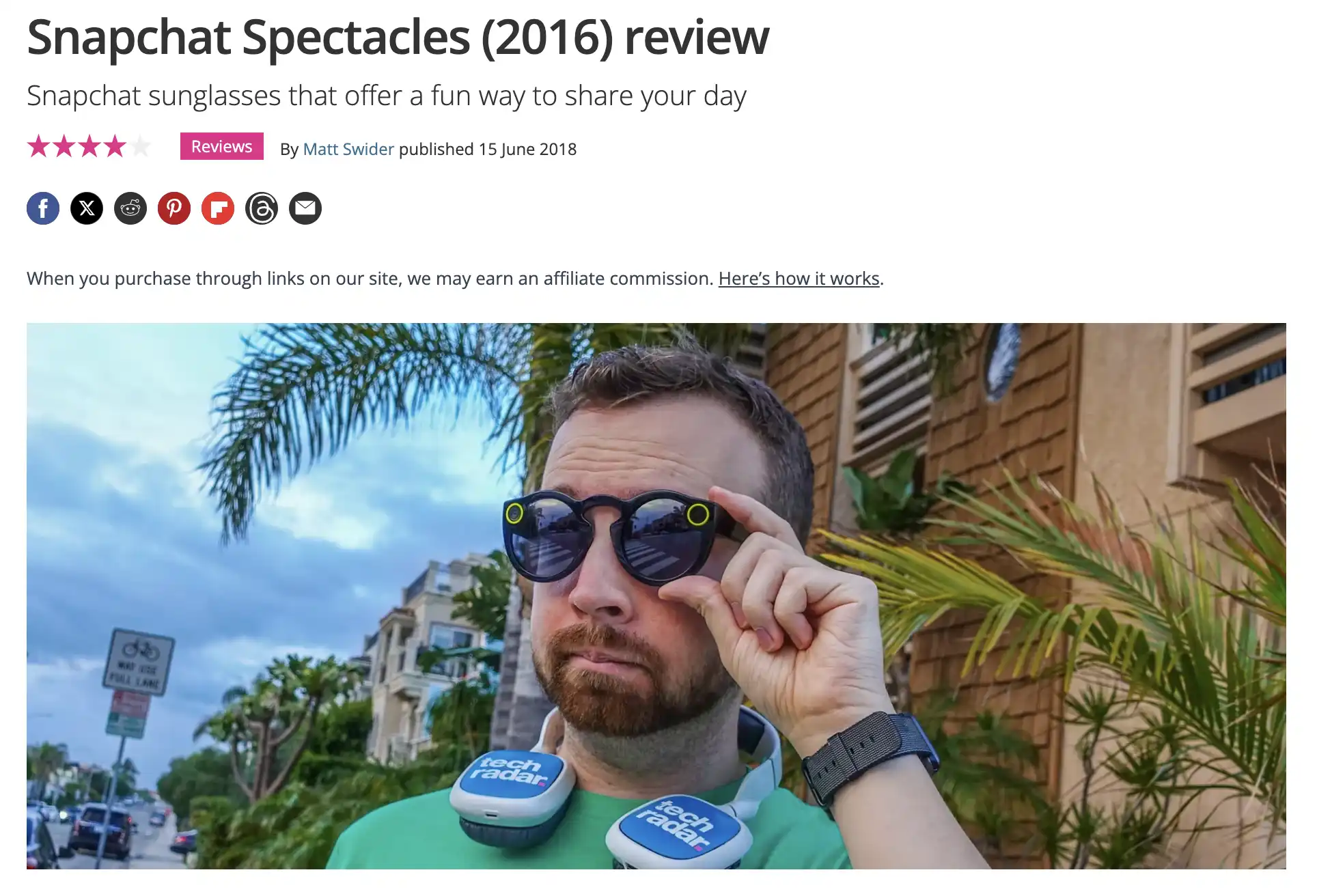
Image: The first-generation glasses from 2016

Launched in September and released in November that year, it was a pair of iconic bright yellow glasses sold via street vending machines, with a camera embedded in the frame. Strictly speaking, it wasn't truly AR; wearing it, you could only record a short circular video hands-free and share it on Snapchat. Essentially, it was more like a fun toy worn on your face.
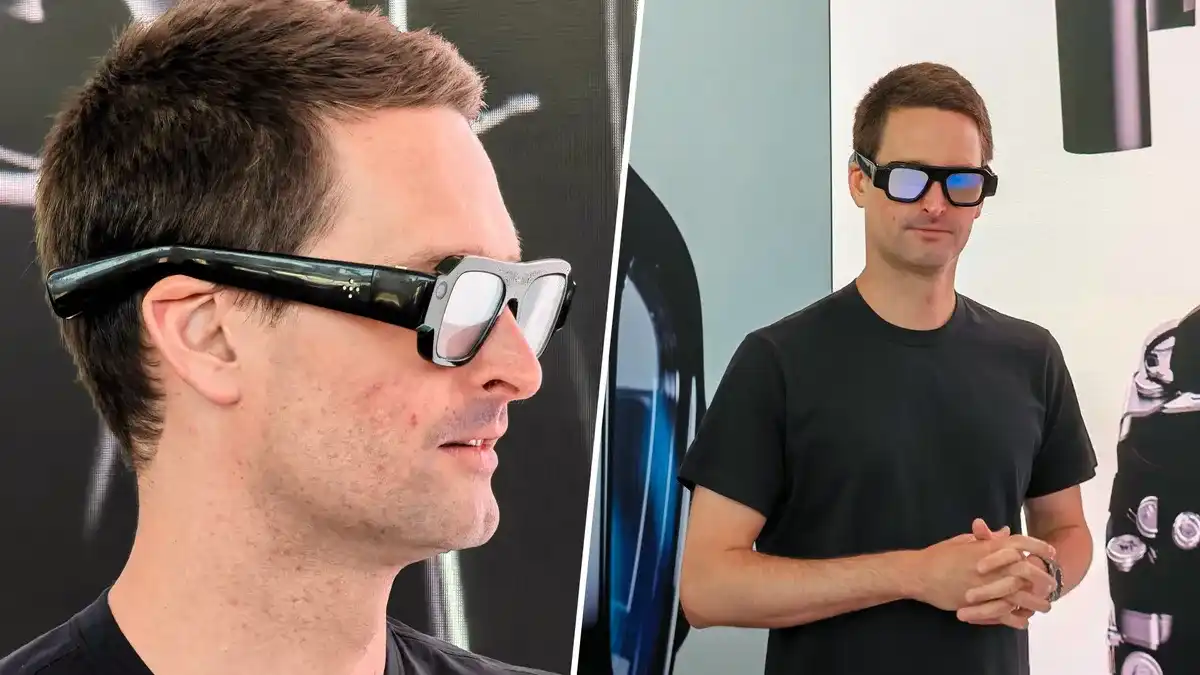
Image: Specs launched in 2026

Ten years later, Specs can overlay digital information onto real-world scenes, run AI functions, recognize gestures, and operate independently of a phone. From "glasses for recording videos" to "a spatial computer worn on the face," this is a leap spanning a decade, and it's what Spiegel truly wants to bet on.

In this whole event, what truly made investors collectively furious was the pricing, widely considered outrageous.
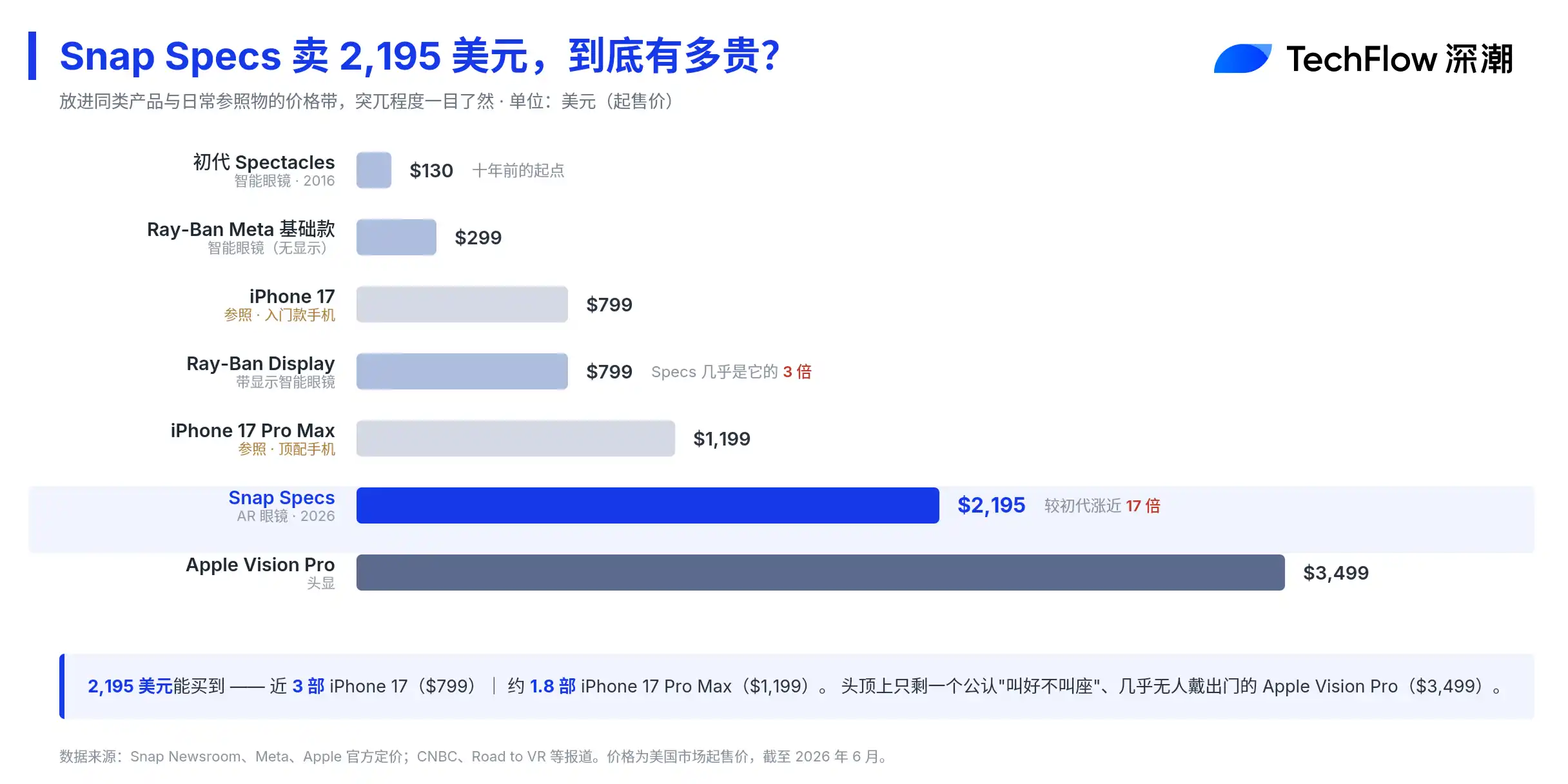
The question is, what do you get for the extra money?

Compared to the $799 Ray-Ban Display, which only has a small HUD crammed into a corner of the lens, Specs is true AR, capable of overlaying digital content into reality, recognizing gestures, and running independently of a phone. Functionally, it is indeed a tier higher.

But it weighs about 132 grams (almost twice as heavy as the former), has a battery life of only about 4 hours, and its main features—navigation, measurement, AI queries—are things a phone can already do. The $2,195 buys a "category leap," but not necessarily a mature product that fits into daily life. This might be the real source of investor unease.

When activist investor Irenic Capital publicly pressured the company to shut down or spin off the Specs division to preserve cash flow, Spiegel publicly refused, insisting on viewing it as part of the company's long-term model.

Cutting costs by laying off people on one hand, while heavily betting on a vision that hasn't seen a return in a decade on the other.

This is Snapchat's most realistic portrayal at the moment.

Ending

In 2015, Snapchat captivated the world with an AR filter like a virtual puppy; eleven years later today, its heavily-backed AR glasses are almost universally dismissed.

However, not everyone views it as a farce.

Some view it through the lens of mobile phone evolution. From the brick-like "brick phones" to today's smartphones, that path took over thirty years. The currently expensive and heavy Specs might just be an awkward, necessary step before AR glasses mature.

But in an era that generally chases short-term returns and follows the herd, is a persistent entrepreneur like Spiegel a rare anomaly in the industry, or a gambler destined to be eliminated by the market?

This question might be worth answering for every observer themselves.

Related Questions

QWhy did Snap's stock price drop significantly after the announcement of Specs?

ASnap's stock price dropped nearly 10% on the day the new AR glasses, Specs, were announced due to investor skepticism. The main concerns were the product's high price point of $2,195, which is unaffordable for Snap's core young user base, and doubts about whether the advanced AR features justified the cost when compared to more affordable alternatives like Meta's Ray-Ban glasses. Investors also questioned the wisdom of a consistently unprofitable company making such a large bet on an unproven, high-cost hardware product.

QWhat is the main challenge Snap faces in monetizing its user base?

ASnap's primary challenge in monetization stems from its core demographic: users aged 18-24 (Generation Z). While the platform is popular with this group, they are not the most favored demographic for advertisers, who prefer to target the 25-45 age range, which has higher disposable income. This 'youthful' user base has become a commercial burden, contributing to the company's ongoing annual net losses since its IPO in 2017.

QWhat technological evolution does Specs represent compared to Snap's first-generation Spectacles?

ASpecs represents a significant technological leap from the 2016 Spectacles. The original version was essentially a camera on glasses, allowing users to record short circular videos. In contrast, the new Specs are a true AR device. They can overlay digital information onto the real world, run AI functions, recognize gestures, and operate independently without a phone. This evolution marks a shift from a 'video-recording toy' to what CEO Evan Spiegel envisions as a 'spatial computer for your face.'

QHow has the competitive landscape and external factors contributed to Snap's financial struggles?

ASnap's financial struggles have been exacerbated by intense competition and external policy changes. Key competitors like Instagram and TikTok have copied its innovative features (like Stories) and captured market share. Furthermore, Apple's 2021 privacy policy update, which restricted ad tracking on iOS, severely damaged Snap's targeted advertising capabilities—a core part of its revenue model. These factors, combined with its inherent monetization challenges, have prevented Snap from regaining its 2021 stock price peak.

QWhat is the central dilemma or 'crucible moment' facing Snap and its CEO as described in the article?

AThe central dilemma, termed the 'crucible moment,' is the conflict between immediate financial pressure and long-term vision. CEO Evan Spiegel is simultaneously cutting costs (laying off 10% of the workforce) and doubling down on a massive, decade-long investment in AR hardware (over $3.5 billion for Specs) that has yet to show a return. He faces pressure from investors to abandon this costly bet to preserve cash but refuses, insisting that AR is fundamental to the company's long-term future. This positions him as either a rare visionary or a stubborn gambler in the eyes of the market.

Related Reads

Ethlabs Founded, Treasury Companies to Fund Ethereum Post-EF

Former Ethereum Foundation (EF) core researchers Ansgar Dietrichs, Barnabé Monnot, Caspar Schwarz-Schilling, Josh Rudolf, and Julian Ma announced the launch of Ethlabs, an independent non-profit R&D lab focused on Ethereum core protocol research and institutional-grade infrastructure. The initiative, backed by over 50 community participants including ETH treasury companies BitMine and Sharplink, Joseph Lubin, Hayden Adams, and Jesse Pollak, aims to make Ethereum the global economic settlement layer. This move comes amidst significant pressure on the EF, which has seen key departures and a strategic narrowing of its focus. A critical funding gap of approximately $30 million annually for core client development, following the expiration of the client incentive program, poses a near-term risk to the network's development. The context includes the evolution of ETH's value narrative. While mechanisms like EIP-1559 and the Merge previously supported the "ultrasound money" thesis, the success of L2 scaling via EIP-4844 has drastically reduced L1 fee revenue, leading to net ETH issuance and challenging that narrative. Ethlabs has listed ETH monetary economics as a primary research focus. Backing from corporate ETH treasuries like BitMine and Sharplink represents a strategic alignment, as these entities' asset values are directly tied to Ethereum's health and adoption. Their support is an investment rather than a pure donation. Ethereum's governance is shifting from a centralized EF model to a distributed network of specialized "manager nodes," including Ethlabs and a streamlined EF. While this promotes efficiency and reduces single-point failure risk, it introduces new challenges in coordination, priority alignment, and filling critical funding gaps across the decentralized ecosystem.

Foresight News4m ago

Ethlabs Founded, Treasury Companies to Fund Ethereum Post-EF

Foresight News4m ago

From Logo to Bo Niu: TRON Further Perfects Its Brand Visual Assets

On June 23rd, TRON completed a significant upgrade to its official mascot, Bo Niu. The revamped character features larger, brighter eyes, more expressive facial details, and a clearer "T" structural motif, while retaining its signature red-and-white color scheme and horned design. This refresh aims to enhance Bo Niu's approachability, emotional range, and versatility for use across social media, community interactions, offline events, and branded merchandise. The redesign focuses on creating a stronger first impression. A more open facial structure with distinct, expressive eyes and the addition of a mouth with a small fang make the character friendlier and more suitable for dynamic content like animations and emojis. Subtle brand elements are integrated, such as stylized cheek lines inspired by "signal" icons, referencing the "wave" in "TRON," and a "T" shape formed by its smile and chest markings. Bo Niu has also been given a more defined personality as "TRON's Chief Luck Officer," with traits like being playful and sweet. This persona provides a more accessible and emotionally resonant entry point to the TRON brand, contrasting with often technical Web3 narratives. This mascot upgrade is part of TRON's ongoing effort to build a comprehensive and extensible visual identity system, following its recent logo refresh. Bo Niu is positioned as a key asset to connect with users, foster community, and convey brand warmth in everyday contexts.

marsbit8m ago

From Logo to Bo Niu: TRON Further Perfects Its Brand Visual Assets

marsbit8m ago

TRON Refreshes the Bull Image, Creating a More Approachable Brand Character

TRON's official mascot "BONiu" (Wave Bull) has received a comprehensive visual upgrade. Retaining its core red-and-white color scheme, horned silhouette, and brand DNA, the refreshed character features larger, brighter eyes, more expressive facial details including a mouth with a small fang, and enhanced emotive capabilities. The redesign aims to strengthen the mascot's亲和力, emotional expressiveness, and adaptability across various scenarios. Key updates include a clearer facial structure for instant recognition, a simplified and more intuitive五官 design, and the integration of subtle brand language. The cheek blushes are now inspired by a "signal" icon, while the smile and chest lines form a stable "T" structure, creating a cohesive超级符号 for the brand. The character has also been equipped with a 12-phoneme lip-sync system to support future动画 and interactive content. Beyond its visual role, BONiu's persona has been enriched. Now titled "TRON's Chief Luck Officer," it carries playful personality tags like "foodie enthusiast" and "full-of-tricks," allowing it to engage with the community in a more approachable and relatable manner. This update provides a lower-barrier, emotionally warm entry point for users amidst the often technical and abstract narratives of Web3. This mascot revamp is part of TRON's ongoing effort to refine its visual asset system, following the earlier logo update. By evolving from a static visual into a dynamic, expressive brand角色, the new BONiu is positioned to become a key asset for connecting with users, building brand记忆, and conveying TRON's personality across社交传播, community互动,线下活动, and merchandise.

链捕手24m ago

TRON Refreshes the Bull Image, Creating a More Approachable Brand Character

链捕手24m ago

With Labour Changing Leaders, Is the Long-Suppressed UK Crypto Market About to Turn Around?

Labour leader change: Hope for UK crypto market? With Keir Starmer's resignation as Prime Minister and Labour leader, a leadership contest has begun. Andy Burnham, the former Mayor of Greater Manchester and now the overwhelming favourite to succeed, has sparked cautious optimism within the UK cryptocurrency industry. Industry figures hope Burnham, seen as more receptive to digital assets than much of the Labour establishment, could shift the party's traditionally harder line. The leadership transition is expected to be swift, with prediction markets like Polymarket assigning a 97% probability to Burnham becoming the next Prime Minister. However, this political shift comes as a comprehensive regulatory framework for crypto, established by law earlier this year, is in its final implementation phase. The Financial Conduct Authority (FCA) is finalizing detailed rules covering trading, custody, stablecoins, and market abuse, with the full regime set to go live in October 2027. While a new Prime Minister can reshuffle ministers and adjust policy priorities, the core regulatory architecture is now law and unlikely to be fundamentally overturned without significant, deliberate government intervention. The main industry hope is that a Burnham government, focusing on economic growth, will ensure the FCA's implementation is pragmatic and growth-oriented. Industry advocates seek proportionate capital requirements, a streamlined licensing process, and clear rules for staking and stablecoins. They argue that embracing the crypto sector could attract investment and listings to London's struggling markets. Despite the optimism, concerns remain that regulatory implementation may still be influenced by more sceptical factions within the Labour party.

Foresight News53m ago

With Labour Changing Leaders, Is the Long-Suppressed UK Crypto Market About to Turn Around?

Foresight News53m ago

Trading

Spot
Futures
活动图片