Silver Is Soaring, Can Tokenized Silver Amplify Leverage Further?

Odaily星球日报Published on 2026-01-27Last updated on 2026-01-27

Abstract

Silver prices have surged dramatically, breaking historical records by surpassing $117 per ounce and achieving a cumulative gain of approximately 517% since 2017—outperforming both Bitcoin and gold. With a market cap of around $6.18 trillion, silver is now the second most valuable asset globally after gold. This explosive growth has increased interest in tokenized silver as an alternative investment, particularly through leveraged contracts on exchanges and perpetual decentralized platforms (Perp DEX). Currently, the tokenized silver market has a total capitalization of about $446 million. Two tokens dominate in terms of liquidity: - **Kinesis Silver (KAG)**, with a market cap of $406 million, is backed by physically allocated and audited silver, each token representing one ounce. - **iShares Silver Trust (SLV)**, with a $39.5 million market cap, is tied to BlackRock’s SLV ETF and allows instant creation/redemption for non-U.S. users. Both tokens are traded on multiple centralized exchanges, and SLV also supports futures with up to 10x leverage. For higher leverage, platforms like Hyperliquid, Binance, and Bitget offer silver perpetual contracts with up to 20x leverage. Hyperliquid’s SILVER/USDC pair alone has seen over $1 billion in 24-hour trading volume. The rally is driven by expectations of U.S. interest rate cuts, silver’s new classification as a critical mineral (raising potential tariffs), geopolitical tensions, and its role as a more accessible safe-haven...

Original|Odaily Planet Daily(@OdailyChina)

Author|Wenser(@wenser 2010)
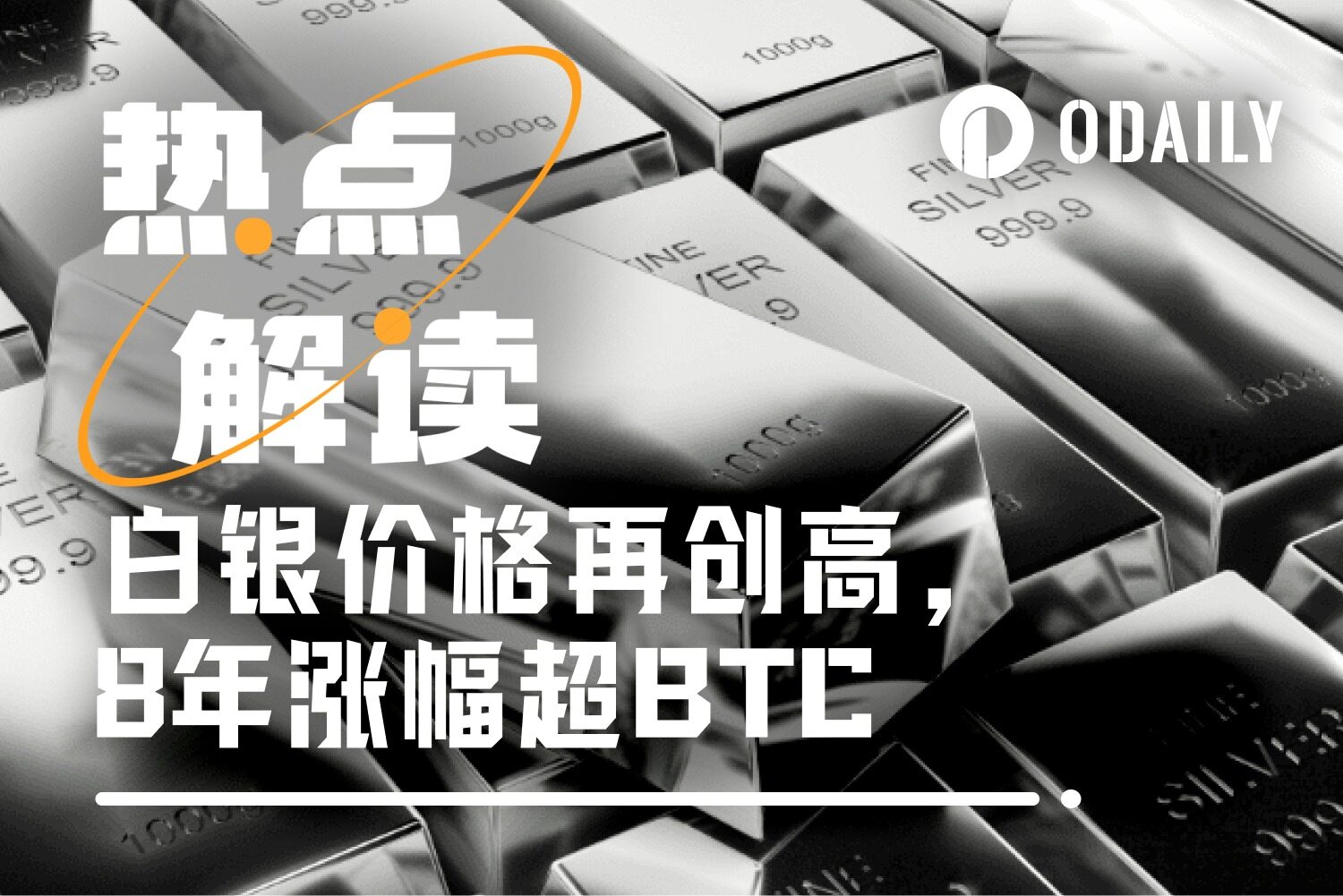
Silver, this precious metal asset once known as "poor man's gold," is sweeping through global markets with a storm-like momentum. The reason is none other than its terrifying surge.

Recently, the price of silver once broke through $117 per ounce intraday, hitting a record high. As a result, since the peak of the 2017 crypto cycle, silver has officially surpassed Bitcoin's gains (about 500%) and gold's gains (slightly less than 300%) with a cumulative increase of approximately 517%. According to data from the 8marketcap website, the current price of silver is around $110, with a market capitalization reaching $6.18 trillion, ranking second among global assets, second only to gold. Such an astonishing trend naturally triggers a frenzy in the market. Besides buying silver funds or physical silver through traditional brokerages or offline stores, tokenized silver might also be an option, especially the leveraged contracts on exchanges and on-chain Perp DEXs.

Current State of Silver Tokens: Only 2 Targets Have Relatively Good Liquidity

According to data from the Coingecko website, the overall market capitalization of the tokenized silver sector is temporarily reported at approximately $446 million, with a 24-hour increase of about 5.6%; specifically, the silver tokens with relatively good liquidity are the following 2 types:

Kinesis Silver (KAG): Market Cap Temporarily Reported at $406 Million

Like the gold token KAU, the KAG silver token is launched by Kinesis, a British digital asset utility platform registered in the Cayman Islands. Major trading platforms include Kinesis Money, BitMart, the UAE exchange Emirex, and others.

It is understood that KAG is backed by fully insured and regularly audited vaults (globally distributed storage), with each token pegged to 1 ounce of investment-grade silver; it supports global real-time payments; supports physical silver redemption; and has no storage fees.

Its potential risks are similar to those of the Tether company, which issues the XAUT gold token. This token is highly dependent on the asset credibility of the issuer and faces certain regulatory uncertainties. Furthermore, limited by its small market capitalization, the market depth is relatively average, and market fluctuations may lead to premiums or discounts, making it more reliant on trading platforms to manage order matching.

Nevertheless, information on the Coingecko website shows that KAG's 24-hour trading volume is approximately $5.5 million, already ranking second in the silver token market by trading volume.

iShares Silver Trust(SLV): Market Cap Temporarily Reported at $39.5 Million

A silver token pegged to the iShares Silver Trust, launched by Ondo Finance, holds the corresponding physical gold through the BlackRock iShares Silver Trust (SLV) ETF.

Its advantages lie in tracking a regulated traditional SLV ETF, having good liquidity, and supporting instant minting or redemption (for users outside the US); it combines traditional finance with blockchain convenience; has institutional-level endorsement; and does not require direct handling of physical silver.

Its potential risks include: heavy reliance on the asset credibility of issuers like BlackRock and Ondo; it does not support physical silver ownership or direct redemption; includes certain ETF fund management fee costs; US users are restricted from trading, and it faces potential securities regulatory restrictions.

Main trading platforms include Gate, Bitmart, Bitget, AscendEX, and other centralized exchanges.

It is worth mentioning that SLV also supports contract trading, with leverage of up to 10x.

Coingecko website information shows that SLVON's 24-hour trading volume is approximately $21.2 million, ranking first in the silver token market by trading volume.

Apart from the two major silver tokens KAG and SLVON, the silver token Silver rStock (SLVR) launched by the Solana生态 stock tokenization platform Remora Market, and the silver token Gram Silver (GRAMS) pegged to 1 gram of silver launched by Token Teknoloji A.Ş, also belong to spot tokens, but their market capitalization and liquidity are extremely low. Compared to KAG and SLVON, their price difference from the physical silver price is larger, and participation in trading is not recommended.

Silver Leverage Trading Platforms: Hyperliquid, Binance, Bitget, and Other Exchanges

In addition to spot silver tokens, many US stock tokenization trading platforms, on-chain Perp DEXs, CEXs, and DEXs have already opened leveraged contract trading related to silver, supporting leverage of up to 20x. The following are specific trading platforms for readers' reference:

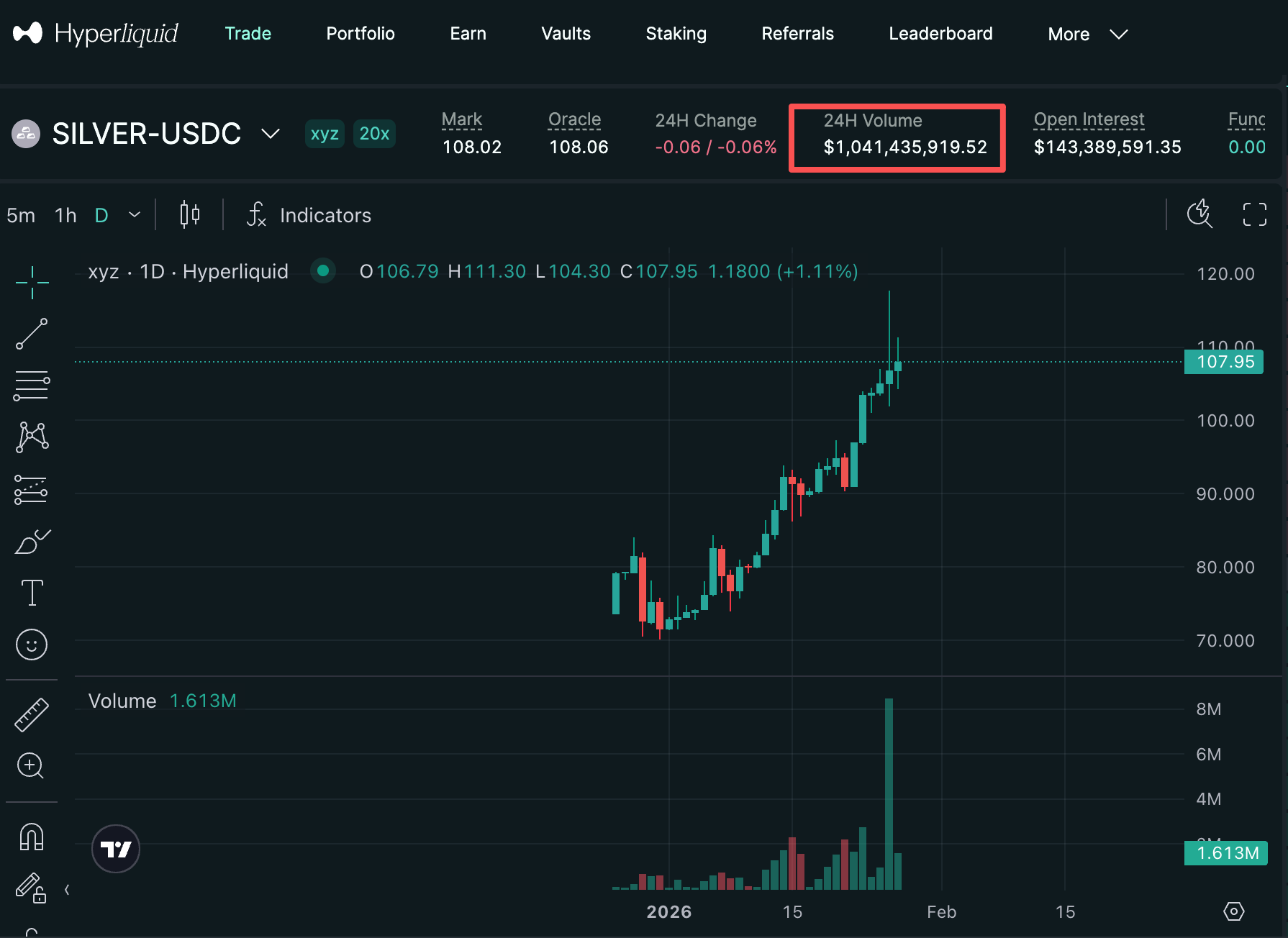
Channel One——Hyperliquid: https://app.hyperliquid.xyz/trade/xyz:SILVER, the Silver/USDC contract trading pair has a 24-hour trading volume exceeding $1 billion;
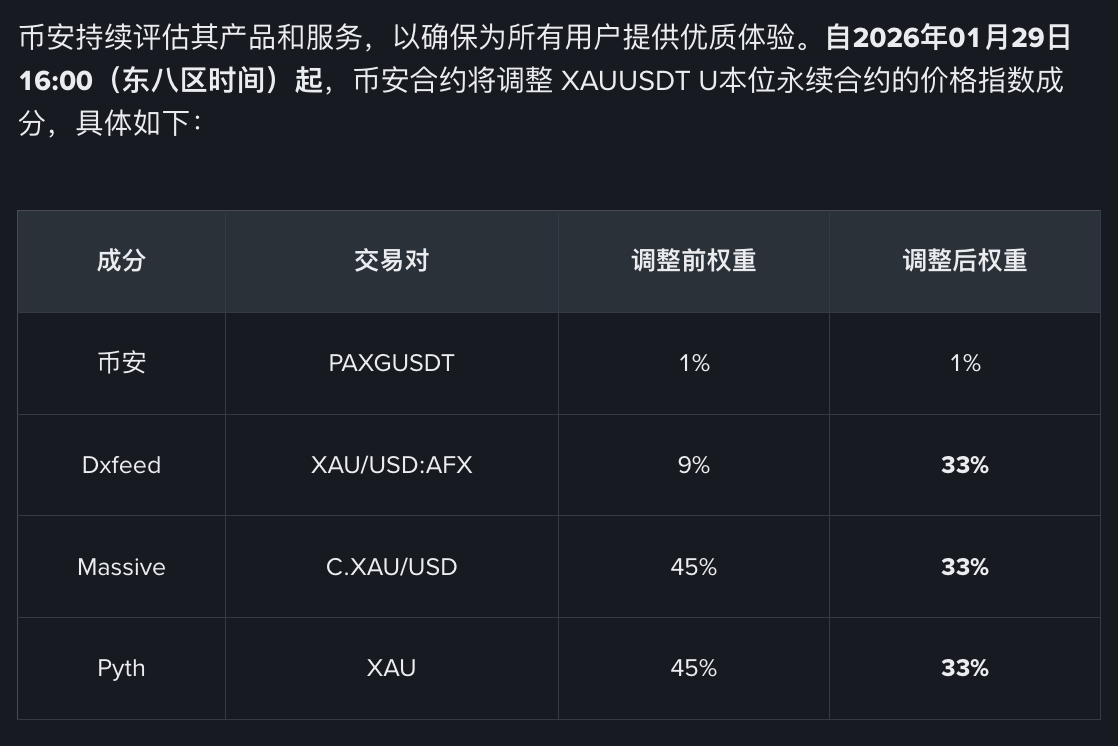
Channel Two——Binance:https://www.binance.com/zh-CN/futures/XAGUSDT, supports leveraged trading for the XAG/USDT trading pair, with leverage of up to 20x. Currently, the 24-hour trading volume is $1.32 billion. According to the official announcement, this trading pair was officially opened on January 7th; the latest news shows that Binance will change the price index composition of this contract on January 29, 2026.
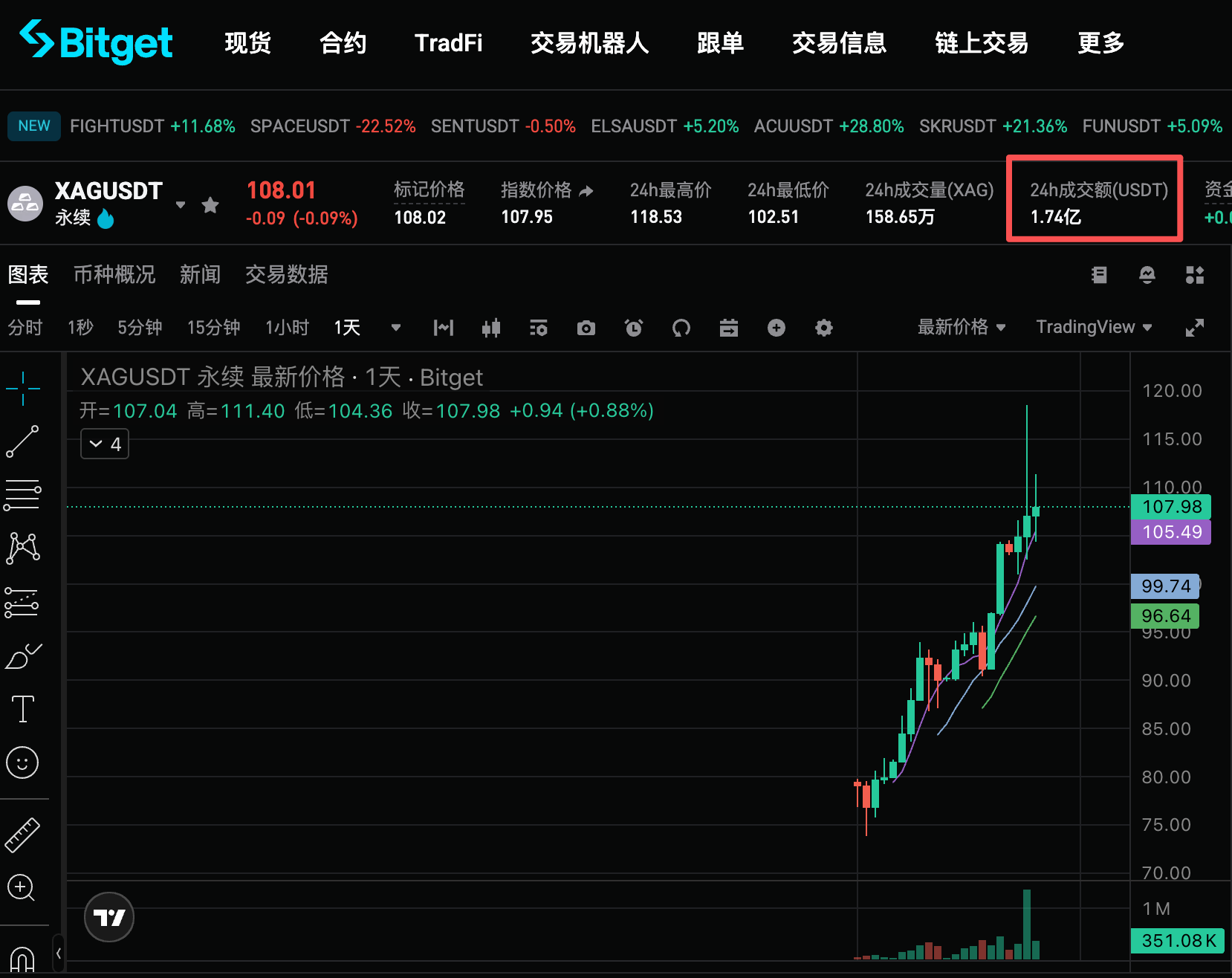
Channel Three——Bitget:https://www.bitget.site/zh-CN/futures/usdt/XAGUSDT, supports leveraged trading for the XAG/USDT trading pair, with leverage of up to 20x. Currently, the 24-hour trading volume is $174 million.
Conclusion: Trump's Hawkish Policies and Preference for Rate Cuts Will Be the Best Catalyst for Precious Metals

Looking back, Trump's rise to power, which led to tensions in the international political and economic situation, the turmoil of tariff trade wars, and his preference for Federal Reserve interest rate cuts, is the best catalyst for the rise in precious metal prices. Specifically for silver, beyond the past reasons of supply tightness and its importance as a basic raw material, risk-off assets and the US attitude are crucial.

J. Safra Sarasin strategist Claudio Wewel pointed out that the continuous surge in silver prices stems from the market's reduced expectations for US interest rate cuts and the new key mineral status that silver has acquired. The US Department of the Interior listed silver as a key mineral in November, increasing the possibility of the US imposing tariffs on this metal. He noted that this exacerbates the long-term supply tightness and prompts US importers to accelerate silver purchases. At the same time, retail investors, finding it difficult to buy gold due to its historically high prices, are turning to silver as a safe-haven asset.

In other words, the main rise in silver comes from both "scarcity" and "safe-haven nature." Combined with the recently tense situation in the Middle East again, the price peak of silver may be far from over.


Related Questions

QWhat are the two tokenized silver assets with relatively good liquidity mentioned in the article?

AThe two tokenized silver assets with relatively good liquidity are Kinesis Silver (KAG) and iShares Silver Trust (SLV).

QWhich platform offers a silver contract with up to 20x leverage and had a 24-hour trading volume of 13.2 billion USDT?

ABinance offers the XAG/USDT perpetual contract with up to 20x leverage, which had a 24-hour trading volume of 13.2 billion USDT.

QAccording to the article, what are the two main drivers behind the recent surge in silver prices?

AThe two main drivers are its 'scarcity' due to supply tensions and its 'safe-haven' nature amid geopolitical tensions and economic uncertainty.

QWhat key factor did J. Safra Sarasin strategist Claudio Wewel attribute to the reason for the price surge?

AClaudio Wewel attributed the surge to weakened market expectations for U.S. interest rate cuts and silver's new designation as a 'critical mineral' by the U.S. Department of the Interior, which increased the possibility of tariffs.

QWhat is the main potential risk associated with investing in the Kinesis Silver (KAG) token?

AThe main potential risk is its high reliance on the asset credibility of the issuer (Kinesis) and facing certain regulatory uncertainties.

Related Reads

20 Billion Valuation, Alibaba and Tencent Competing to Invest, Whose Money Will Liang Wenfeng Take?

DeepSeek, an AI startup founded by Liang Wenfeng, is reportedly in talks with Alibaba and Tencent for an external funding round that could value the company at over $20 billion. This marks a significant shift, as DeepSeek had previously relied solely on funding from its parent company,幻方量化 (Huanfang Quantitative), and had resisted external investment. The potential valuation would place DeepSeek among the top-tier AI model companies in China, comparable to competitors like MoonDark (valued at ~$18 billion) and ahead of recently listed firms like MiniMax and Zhipu. The funding—which could range from $600 million (for a 3% stake) to $2 billion (for 10%)—is seen as a move to secure resources for model development, retain talent, and support infrastructure needs, particularly as competition in inference models and AI agents intensifies. Both Alibaba and Tencent are eager to invest, not only for financial returns but also to integrate DeepSeek into their broader AI ecosystems. However, DeepSeek’s leadership is cautious about maintaining independence and may prefer financial investors over strategic ones to avoid being locked into a specific tech ecosystem. Alternative options, such as state-backed funds, offer longer-term capital and policy support but may come with slower decision-making and potential constraints on global expansion. With competing AI firms accelerating their IPO plans, DeepSeek’s window for securing optimal terms may be narrowing. The final decision will reflect a trade-off between capital, resources, and strategic independence.

marsbit41m ago

20 Billion Valuation, Alibaba and Tencent Competing to Invest, Whose Money Will Liang Wenfeng Take?

marsbit41m ago

After Losing 97% of Its Market Value, iQiyi Attempts to Use AI to Forcefully Extend Its Lifespan

After losing 97% of its market value since its 2018 peak, iQiyi is aggressively pivoting to AI in a desperate attempt to survive. At its 2026 World Conference, CEO Gong Yu announced an "AI Artist Library" with over 100 virtual performers and a new AIGC platform, "NaDou Pro," promising faster production and lower costs. This shift comes as the company faces severe financial distress: its market cap sits near delisting thresholds at $1.36 billion, with significant losses, declining membership revenue, and depleted cash flow. The AI strategy has sparked controversy. Top actors have issued legal threats against unauthorized digital replicas, while in Hengdian, over 134,000 background actors are seeing their already scarce job opportunities vanish as AI replaces them for background roles. iQiyi's move represents a fundamental shift from being a high-cost content buyer to a landlord" to becoming a "platform capitalist" that transfers production risk to creators. This contrasts with competitors like Douyin (TikTok's Chinese counterpart), which is investing heavily in *real* actor-led short dramas, betting that authentic human connection retains users better than AI-generated content. The article draws a parallel to the 1920s transition to "talkies," which made cinema musicians obsolete but ultimately enriched the art form. In contrast, iQiyi's AI drive is framed not as an artistic evolution but as a cost-cutting measure that could degrade storytelling, replacing genuine human emotion with algorithmically calculated stimulation and potentially numbing audiences' capacity for empathy. The core question remains: can a company focused solely on financial survival preserve the art of storytelling?

marsbit44m ago

After Losing 97% of Its Market Value, iQiyi Attempts to Use AI to Forcefully Extend Its Lifespan

marsbit44m ago

Only a 50% Chance of Passing This Year, Can the CLARITY Bill Succeed Before the Midterm Elections?

The CLARITY Act, which passed the House in July 2025 with strong bipartisan support (294-134), faces a critical juncture in the Senate. The Senate Banking Committee is expected to hold a markup soon, but key issues remain unresolved, including stablecoin yield provisions, DeFi regulations, and securing full Republican committee support. Other contentious points involve the Blockchain Regulatory Certainty Act (BRCA), ethics amendments for government officials, and SEC-related matters. The legislative calendar is tight, with limited time before the midterm elections. If the committee markup is delayed beyond mid-May, the chances of passage in 2026 drop significantly. Senator Cynthia Lummis has warned that failure this year could delay comprehensive crypto market structure legislation until 2030 or later. Galaxy estimates the probability of the CLARITY Act becoming law in 2026 is only about 50%. The bill provides crucial regulatory clarity by defining jurisdictional boundaries between the SEC and CFTC, establishing a path for decentralization, and bringing digital commodity intermediaries under federal regulation. Its passage is seen as vital before potential power shifts in the next Congress, which could bring less favorable leadership to key committees. The timeline is compressed, and the bill must compete for floor time with other priorities like Iran authorization and DHS appropriations. Key hurdles include finalizing the stablecoin yield compromise text, addressing law enforcement concerns about BRCA, and navigating political dynamics around SEC nominations. The outcome of the Banking Committee markup and the level of bipartisan support will be critical indicators of its future success.

marsbit1h ago

Only a 50% Chance of Passing This Year, Can the CLARITY Bill Succeed Before the Midterm Elections?

marsbit1h ago

Trading

Spot
Futures
活动图片